


Skin Longevity Assessment

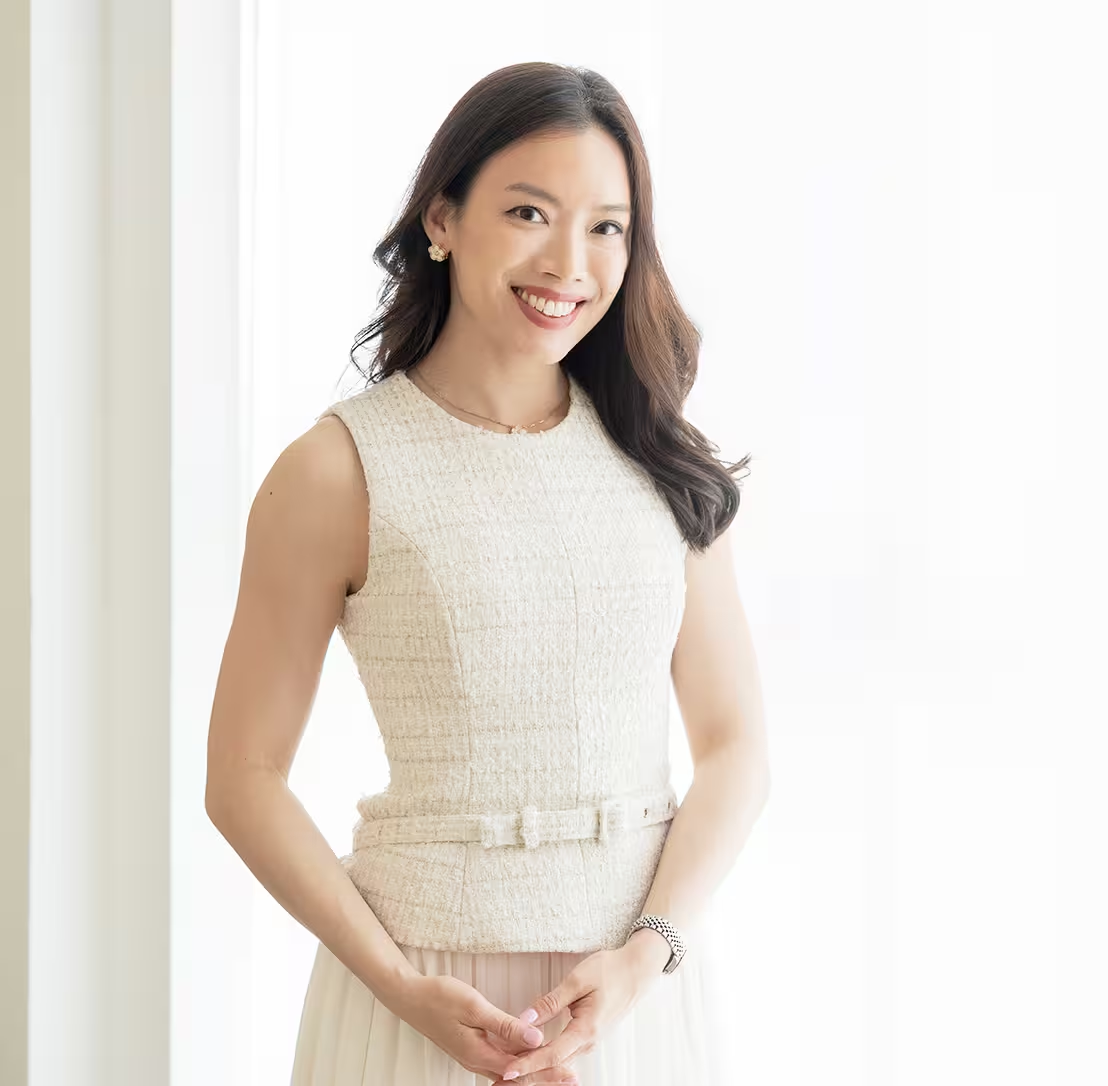
A doctor led Skin Longevity Assessment in Singapore by aesthetic doctor Dr Rachel Ho. Learn how The Skin Longevity Clinic assesses barrier health, pigmentation, collagen, inflammation, facial structure and lifestyle for healthy skin aging.

Most patients do not come to an aesthetic clinic asking for skin longevity.

They come in because their pigmentation keeps returning, their skin feels dull despite a careful routine, their pores look more visible, their face looks more tired than they feel, or their skin has become more reactive with age. Some have tried lasers. Some have tried skinboosters, facials, retinoids, acids and every brightening serum that promised radiance. Many have done their research before they enter my consultation room.

By the time they see me, the question is rarely just what aesthetic treatment should I do.

The deeper question is usually this: why is my skin changing, and what is the most sensible way to care for it from here?

That is why I created the Skin Longevity Assessment at The Skin Longevity Clinic in Singapore.

To me, skin longevity is not a marketing phrase. It is a clinical way of thinking about skin aging. It asks us to look beyond wrinkles, pigmentation and sagging as isolated concerns, and to understand how the skin is functioning as a living organ. Is the barrier strong? Is the skin inflamed? Is pigmentation stable or easily triggered? Is collagen support beginning to decline? Is the face changing structurally? Are lifestyle factors accelerating visible aging?

These are not abstract questions. They affect what treatments are suitable, what should be avoided and what needs to be done first.

What is a Skin Longevity Assessment?

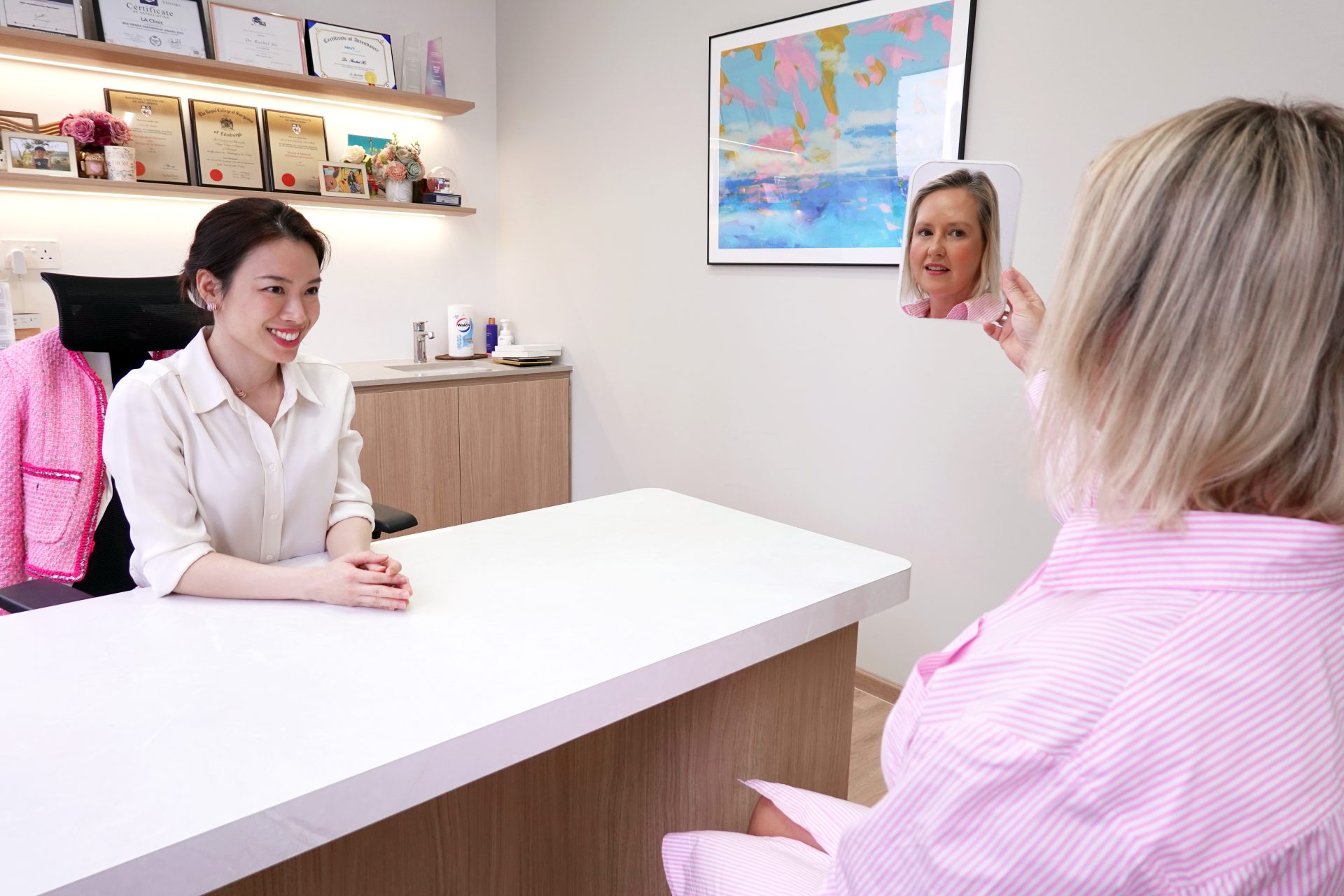
A Skin Longevity Assessment is a doctor led consultation that evaluates your skin health, skinspan and aging pattern before recommending skincare, lifestyle changes or aesthetic treatments.

At my aesthetic clinic in Singapore, I assess the skin across several key areas: barrier health, pigment stability, inflammation, collagen support, facial structure and lifestyle load. This helps me understand not only what you are seeing on the surface, but why your skin is behaving that way.

A patient may come in for pigmentation, but the underlying issue may be melasma, post inflammatory pigmentation, sun damage, irritation from skincare or a combination of all of these. Another patient may ask for fillers because her face looks tired, when the more appropriate first step may be improving skin quality, collagen support or under eye pigmentation. A patient with dullness may not need more exfoliation. She may need to stop irritating her skin.

This is why assessment matters.

A Skin Longevity Assessment is not a fixed package. It is not a shortcut to more procedures. It is a structured consultation with an aesthetic doctor to understand your skin biology, your priorities and your long term skin health before deciding what should come next.

Why skin longevity is different from conventional anti aging

Many aesthetic consultations begin with a treatment. A patient asks about a laser, filler, HIFU, skinbooster or collagen stimulating injectable, and the discussion centres around whether that treatment can help.

I prefer to begin one step earlier with my patients.

Before deciding what to do, I want to understand what your skin needs. This distinction matters because two patients can present with the same concern and need very different plans.

Skin longevity is different from conventional anti-aging because it is not only about correcting visible signs of aging. It is about helping the skin remain healthy, resilient and functional for longer.

Anti aging often asks: how do we reduce wrinkles, pigmentation or sagging?

Skin longevity asks: how do we improve the conditions that allow skin to age better?

That means looking at the skin barrier, inflammation, pigmentation tendency, collagen decline, facial structure, sun exposure, skincare habits and lifestyle. A skin longevity doctor should not only ask what treatment is available. She should ask whether your skin is ready, whether the treatment is suitable and whether the recommendation makes sense for your future skin.

This is the kind of approach I believe more patients in Singapore are looking for.

Skinspan is the idea I want more patients to understand

Most people are familiar with lifespan and healthspan. Lifespan is how long we live. Healthspan is how long we live in good health.

Skinspan applies the same idea to the skin. It refers to how long your skin remains healthy, calm, resilient, hydrated, structurally supported and able to repair itself well.

This is a more useful goal than simply trying to look younger. A face can look younger and still have angry, fragile or over treated skin. Healthy skin aging is not about erasing every line. It is about keeping the skin strong enough to age well, recover well and tolerate appropriate treatments when needed.

For women in Singapore, this is especially relevant. Our skin deals with year round ultraviolet exposure, heat, humidity, indoor air conditioning, pollution, stress, travel, long work days and, often, very ambitious skincare routines. These factors shape skinspan long before we talk about procedures in an aesthetic clinic.

Who is the Skin Longevity Assessment for?

This assessment was designed with the thoughtful patient in mind.

You may be in your 30s and wondering whether you should start collagen support, pigmentation prevention or simply improve your skin quality before bigger signs of aging appear. You may be in your 40s and noticing that your usual skincare no longer gives the same glow, or that pigmentation and laxity are becoming harder to ignore. You may be in your 50s and want to look rested, healthy and refined without looking unlike yourself.

Many of my patients are working professionals, mothers, business owners and leaders who are used to making informed decisions. They are not impressed by vague promises. They want to understand the difference between treatments, the risks for Asian skin, the role of maintenance and whether a recommendation makes sense for them.

They are also cautious, and rightly so. They do not want to look overfilled. They do not want to be sold a package they do not need. They do not want to chase every trend. They want results, but they want those results to be believable.

This is where a skin longevity approach becomes valuable. It gives us a framework for deciding what matters now, what can wait and what should not be done at all.

What does a skin longevity doctor assess?

During a Skin Longevity Assessment in Singapore, I do not look only at the concern that brought you in. I look at the skin and face as a system.

This is the difference between visiting an aesthetic clinic for a treatment and seeing an aesthetic doctor for a longer term skin longevity plan.

Barrier health

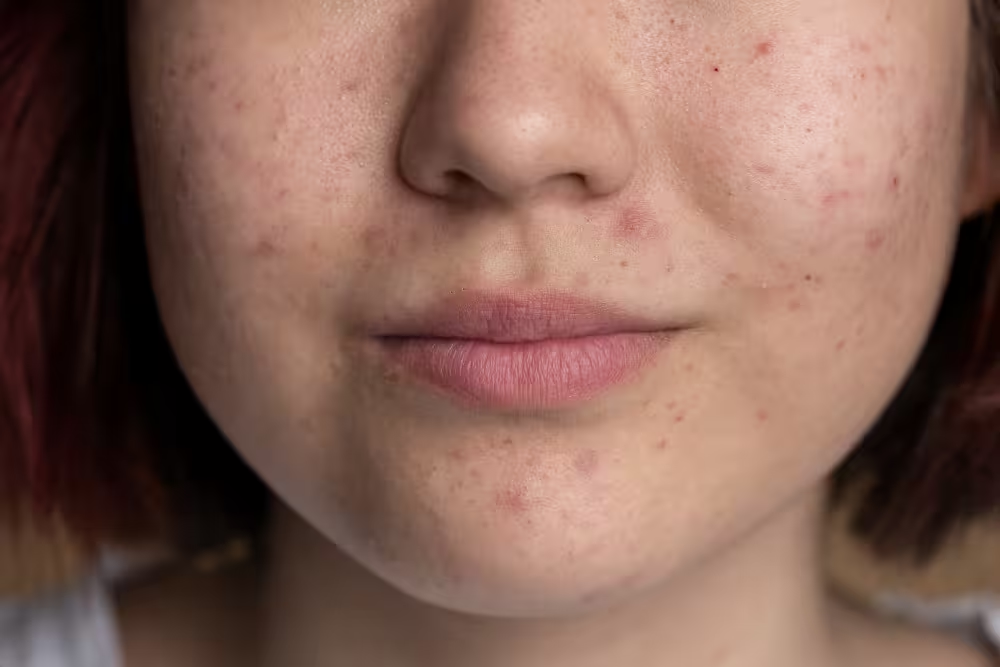
The skin barrier tells me how well your skin protects itself and how much it can tolerate. A weakened barrier may show up as dryness, stinging, flushing, roughness, breakouts, sensitivity or a pattern of reacting badly to products and treatments.

This is important because a patient with an impaired barrier may not be ready for aggressive lasers, strong acids or multiple procedures. Sometimes the most intelligent first step is not a treatment at all. It is to calm the skin, repair the barrier and reduce reactivity.

Aesthetic medicine should not punish the skin into improvement. Healthy skin aging begins with respect for the barrier.

Pigment stability

Pigmentation is one of the most common concerns I see in Singapore. It is also one of the easiest concerns to worsen if treatment is too aggressive or poorly timed.

I assess whether the pigmentation looks like melasma, sun spots, post inflammatory pigmentation or mixed pigmentation. I also look at triggers such as sun exposure, hormones, acne, irritation, heat, visible light and skincare habits.

This matters because pigment prone Asian skin needs careful planning. A laser may be helpful for one patient and unsuitable for another. A patient with melasma may need a plan that focuses on stability, inflammation control, sunscreen, visible light protection and gradual improvement rather than a dramatic one time procedure.

For pigmentation, restraint is not weakness. It is often what protects the result.

Inflammation

Inflammation is one of the quiet accelerators of skin aging. Acne, rosacea, eczema, frequent irritation, repeated breakouts and chronic redness can all affect skin quality over time.

Many patients underestimate this because inflammation does not always look dramatic. It may appear as recurring bumps, uneven texture, sensitivity, clogged pores, redness or pigmentation that lingers after every breakout.

In a skin longevity assessment, I want to know whether the skin is calm enough to treat, or whether inflammation needs to be controlled first. Calm skin usually responds better, heals better and ages better.

Collagen support

Collagen decline is part of aging, but the way it shows up differs from person to person. Some patients first notice fine lines and crepey texture. Others notice enlarged pores, acne scars becoming more obvious, reduced firmness, early laxity or a general loss of bounce.

Collagen support is not just about doing a collagen treatment. It is about deciding whether the skin needs stimulation, protection, maintenance or a combination of approaches.

This is where treatment sequencing matters. A collagen biostimulator, energy based device, laser or skin quality treatment may be useful, but only if the skin is ready and the recommendation matches the patient’s anatomy, age, downtime tolerance and goals.

Facial structure and natural identity

Skin longevity is not only about the surface of the skin. The face also changes with bone, fat, muscle, ligaments and movement. If these structural changes are ignored, patients may end up chasing skin treatments when the issue is actually support, proportion or facial balance.

At the same time, I am very careful about overcorrection. I do not believe every hollow needs to be filled or every line needs to disappear. A good aesthetic result should still look like you. It should not make your colleagues wonder what you have done.

For many women, the best result is not a transformed face. It is a face that looks rested, healthy and quietly refreshed.

Lifestyle load

Your skin does not live only in the clinic. It lives through your work deadlines, sleep debt, travel, exercise routine, diet, stress, hormones, sun exposure and skincare habits.

I ask about lifestyle because it often explains why the skin behaves the way it does. A patient who travels frequently may struggle with dehydration and sensitivity. A patient under chronic stress may have more breakouts, redness or dullness. A patient who uses too many actives may have a barrier problem disguised as poor skin quality.

This does not mean patients are blamed for their skin concerns. It means the plan has to be realistic. The best skincare routine is not the most complicated one. It is the one that supports your skin and fits your life.

You do not have to be my patient to practise skin longevity

This is something I want to say clearly. You do not need to become my patient, or visit any skin longevity clinic or aesthetic clinic, to start thinking about skin longevity.

There are simple steps that support healthy skin aging and skinspan. They are not glamorous, but they matter.

Use sunscreen daily and use enough of it.

In Singapore, ultraviolet exposure is one of the biggest drivers of pigmentation, collagen loss and uneven skin tone. A sunscreen that you use consistently is more valuable than an expensive one you dislike and apply sparingly.

Respect your skin barrier.

If your skin is always stinging, peeling, burning, flushing or breaking out, it may not be purging. It may be irritated. More active ingredients do not always mean better skin.

Use retinoids intelligently.

Retinoids can be useful in anti-aging skincare, but they are often misused. Start gently, build slowly and do not treat irritation as a sign of success.

Treat inflammation early.

Acne, eczema flares, rosacea, post inflammatory pigmentation and sensitivity are not just cosmetic annoyances. Repeated inflammation can affect skin quality over time.

Sleep and recovery matter.

This may sound obvious, but many high performing women accept poor sleep as normal. Your skin does not exist outside your biology. If recovery is poor, the skin will eventually show it.

Be selective with trends.

Not every viral treatment, skincare ingredient or device is meant for your face. The more informed you are, the more careful you should be. Popularity is not the same as suitability.

These steps are simple, but they are not simplistic. They form the foundation of skin longevity long before we talk about procedures.

What happens after a Skin Longevity Assessment?

After the assessment, we identify the main priorities for your care. This is important because not every concern should be treated at once.

For one patient, the first priority may be stabilising melasma and reducing irritation. For another, it may be controlling adult acne before addressing scars. Another patient may need collagen support because her skin is beginning to lose firmness. Someone else may need subtle structural support rather than more surface treatments.

The plan may include medical skincare, sunscreen optimisation, lifestyle advice, aesthetic treatments or a phased approach over time. Sometimes the recommendation is to pause certain products. Sometimes the recommendation is to delay a treatment until the skin is calmer. Sometimes we proceed with a treatment, but at a level and sequence that respects individual skin biology.

The treatment is chosen after the diagnosis, not before.

That is the difference between a treatment menu and a skin longevity plan.

How The Skin Longevity Clinic differs from a typical aesthetic clinic in Singapore

Many aesthetic clinics in Singapore offer similar treatments. Patients know this. They can compare lasers, injectables, skinboosters, HIFU, RF microneedling and prices very quickly.

The real difference is not always the machine. It is the thinking behind the recommendation.

A treatment focused aesthetic clinic may begin with what can be done. A skin longevity clinic begins with what should be done, and whether anything should be done at that point in time.

A treatment focused approach may aim for visible correction. A skin longevity approach considers correction, prevention, maintenance, skin health and natural identity.

A treatment focused approach may follow trends. A skin longevity doctor asks whether the treatment suits your skin biology, your risk profile and your long-term goals.

This distinction matters because aesthetic medicine is not just about access to technology. It is about judgement. The safest and most elegant results often come from choosing carefully, treating conservatively and knowing when not to push the skin further.

Why this matters to the well-researched patient

The more you know, the more difficult decisions can become. You may understand that pigmentation can be treated with lasers, but also know that melasma can rebound. You may have read about collagen biostimulators, but wonder which one is appropriate and whether you are too young or too late. You may be interested in skinboosters, but unsure whether they are for hydration, repair, collagen support or glow.

This is exactly where a doctor led assessment is useful. It organises the noise.

My role as an aesthetic doctor is not to overwhelm you with every option available. My role is to help you understand what is relevant to your skin, what is unnecessary, what carries risk and what is worth prioritising.

A good consultation should make you feel clearer, not more confused. It should make you feel respected, not pressured.

Why choose a skin longevity doctor in Singapore?

Choosing an aesthetic doctor in Singapore is not only about choosing a clinic with the latest device or the longest treatment menu. It is about choosing someone whose judgement you trust.

A skin longevity doctor looks at aging as a long-term process. The aim is not to chase every new treatment, or to treat every visible concern aggressively. The aim is to understand your skin biology, preserve healthy skin function and recommend treatments only when they fit your larger plan.

For women who want natural looking results, this matters. The goal is not to look dramatically different after every visit. The goal is to look well, rested and like yourself.

That requires restraint. It also requires a doctor who is willing to say no when a treatment is not suitable, not timely or not necessary.

Frequently asked questions about Skin Longevity Assessment

What is skin longevity?

Skin longevity is an approach to healthy skin aging that focuses on helping skin remain healthy, resilient and functional for longer. It considers skin barrier health, pigmentation, inflammation, collagen support, facial structure, lifestyle and maintenance.

What is a Skin Longevity Assessment?

A Skin Longevity Assessment is a doctor led consultation at The Skin Longevity Clinic in Singapore. It evaluates your skin health, skinspan and aging pattern before recommending skincare, lifestyle changes or aesthetic treatments.

Is skin longevity the same as anti-aging?

Skin longevity is related to anti-aging, but it is not the same. Anti aging often focuses on correcting visible signs of aging such as wrinkles, pigmentation and sagging. Skin longevity focuses on the conditions that help skin age better, including barrier strength, collagen support, inflammation control and pigment stability.

Do I need aesthetic treatments after the assessment?

Not always. Some patients may benefit from skincare changes, sunscreen optimisation, barrier repair or lifestyle adjustments before any aesthetic treatment. If treatments are recommended, they should be selected based on your skin biology and long-term goals.

Is this suitable for pigmentation and melasma in Singapore?

Yes. Pigmentation and melasma are common concerns in Singapore, especially among Asian skin types. A Skin Longevity Assessment considers pigment stability, inflammation, UV exposure, visible light, skincare irritation and treatment tolerance before recommending lasers or other options.

Is this suitable if I have never visited an aesthetic clinic before?

Yes. The assessment can be useful if you are new to aesthetic treatments and want a doctor led opinion before deciding what to do. It can also be helpful if you have tried treatments before and want a clearer long-term plan.

My point of view

I believe skin longevity is the future of aesthetic medicine because patients are becoming more discerning. They do not want to look artificially young. They want to age well, look like themselves and make decisions that still make sense years later.

Healthy skin aging is not passive. It requires daily habits, good skincare, sun protection, inflammation control and sometimes well selected treatments. It also requires the discipline not to overdo things.

As an aesthetic doctor, I see skin longevity as a commitment to better decision making. It is not dismissing treatments or trends. But it’s about become more scientific and respecting the skin as a living organ as it ages.

You do not have to be my patient to agree with this. You can adopt the principles of skin longevity wherever you are in your skincare journey. But if you are looking for a skin longevity doctor in Singapore or an aesthetic clinic in Singapore that approaches your skin this way, the Skin Longevity Assessment is where I would begin.

Not with a package. Not with a trend. Not with the strongest treatment available. But with understanding.

Book an Appointment

Begin with a personalised assessment

Book a consultation with Dr Rachel Ho for a treatment plan tailored to your skin concerns, facial ageing goals, and long-term skin health.


Begin with a clearer understanding of your skin, your options, and the approach that will suit you best.