

Q-Switched Nd:YAG (1064 nm) Laser Treatment in Singapore

Q-switched (QS) Nd:YAG 1064 nm laser is one of the most established pigment-targeting lasers in dermatology. It is used lightening hyperpigmentation and tattoo ink, and treating acne, especially for Asians and patients with darker skin. Treatment plans at The Skin Longevity Clinic are tailored to your skin type, pigment depth, and tendency for post-inflammatory hyperpigmentation, which is especially relevant in Asian skin.

What is a Q-switched laser treatment?

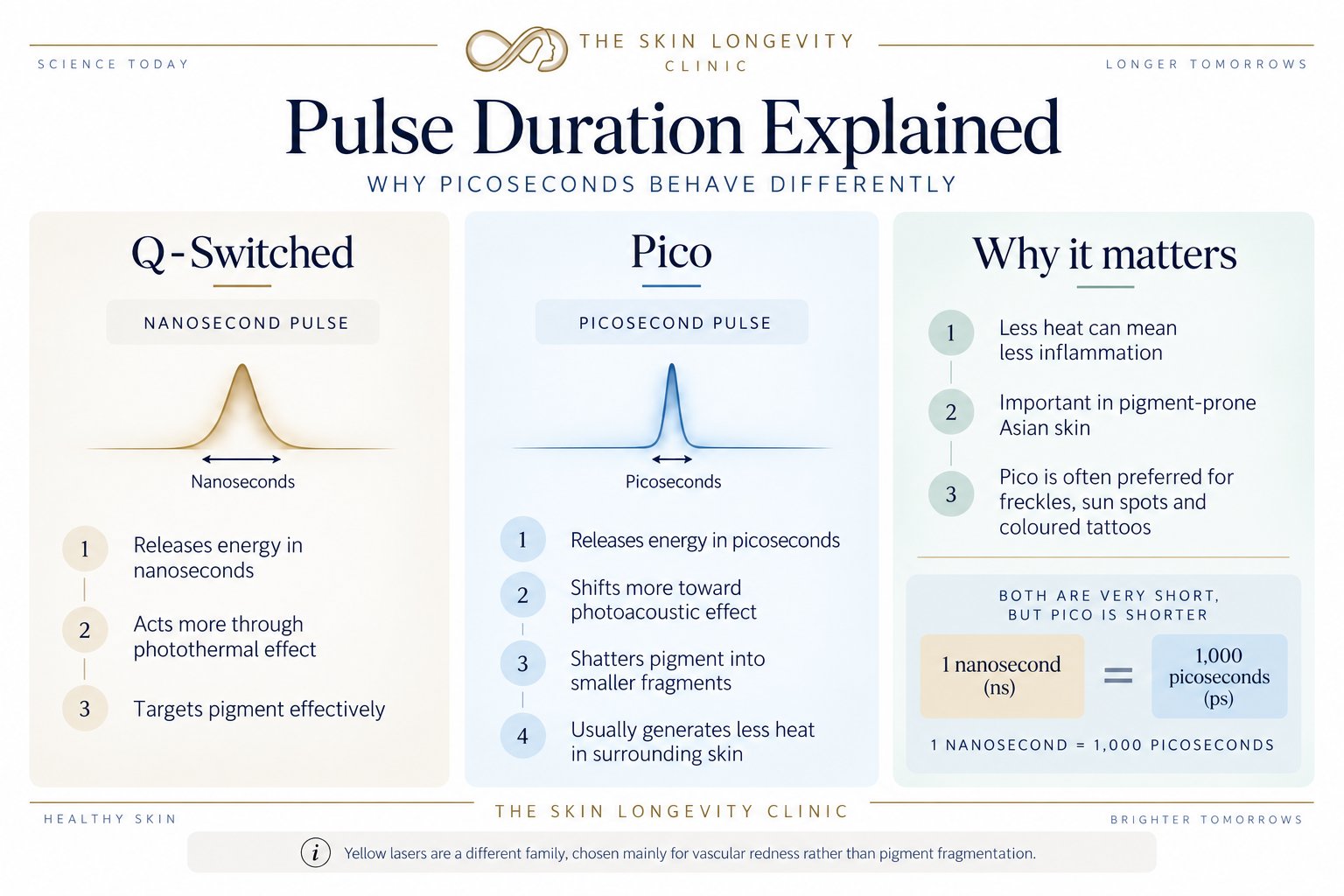
A Q-switched laser is a laser system engineered to deliver very short, high-energy pulses (in the nanosecond range). These ultra-short pulses create a photoacoustic effect that fragments pigment particles (melanin clusters or tattoo ink) into smaller pieces that the body can gradually clear. 


For the Nd:YAG 1064 nm wavelength, the light penetrates relatively deeper than shorter wavelengths and is generally safer in darker skin tones compared with some other pigment lasers, when used appropriately.

Benefits of Q-switched Nd:YAG 1064 nm

When appropriately selected and performed, QS Nd:YAG 1064 nm may help with:


  • Tattoo removal 
  • Hyperpigmentation
  • Acne
  • Skin clarity

How does the Q-switched laser treatment laser work?

Melanin or pigment particles in the skin reside in:


  • the epidermis and/or 
  • the dermis 


Q-switched laser pulses create a photoacoustic impact that breaks pigment into smaller fragments. These fragments are then cleared over time by the skin’s immune cells and lymphatic drainage channels.

How does Q-switched laser treatment laser compare to other lasers?

QS Nd:YAG 1064 vs long-pulse lasers?

  • QS is designed for pigment fragmentation (photoacoustic).
  • Long-pulse lasers are more photothermal (heat-based) and are often used for vessels, hair, or collagen remodeling.


QS Nd:YAG vs Pico lasers

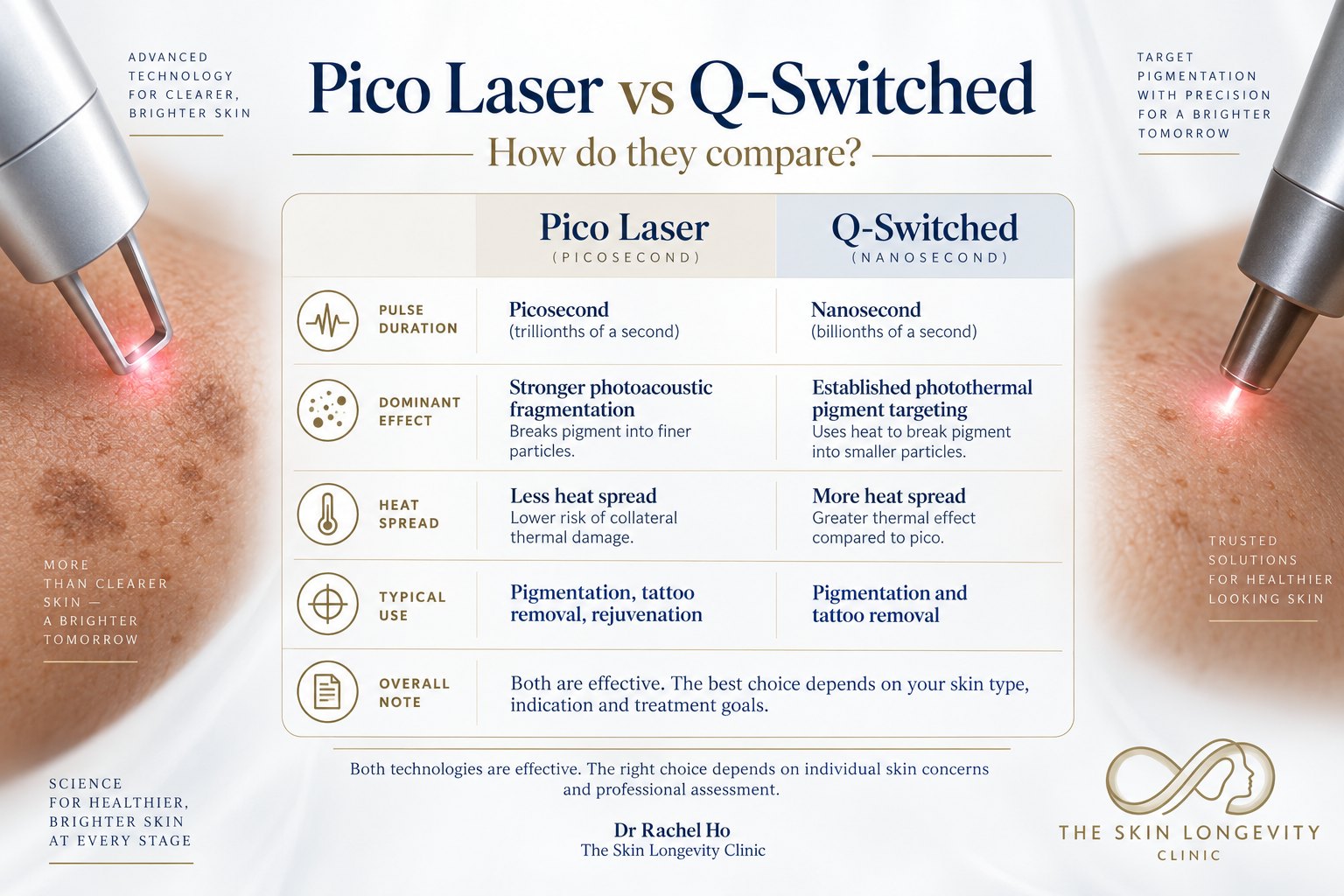
  • Picosecond lasers deliver even shorter pulses and can be more efficient for some pigments and tattoos, but treatment choice depends on lesion type, skin tone, budget, and risk profile.


QS Nd:YAG vs Fractional lasers

Fractional lasers are better for improving skin texture, pores, scars, and remodeling. They can also lighten hyperpigmentation but may carry higher PIH risk in some skin types if not selected carefully.

FAQs

What is the Q-switched laser treatment like?

A typical session at The Skin Longevity Clinic involves:

  1. Skin assessment and diagnosis  
  2. Photos and evaluation
  3. Cleansing and eye protection
  4. Laser delivery in controlled passes 
  5. Recovery treatment

Session time is usually 15–20 minutes .

Is there downtime for Q-switched laser treatment?

Most patients have minimal downtime:

  • mild redness/warmth for a few hours
  • occasionally subtle swelling
  • for targeted spots (e.g., lentigines), temporary darkening and light flaking can occur

If you are treating melasma/PIH, we typically aim for lower inflammation, because irritation itself can worsen pigment.

How soon can I see results?

  • Tattoo ink: gradual fading over multiple sessions; clearance continues between sessions as the body processes fragmented ink.
  • Hyperpigmentation and acne: often noticeable change within 1–3 sessions, over 4 weeks.

Can Q-switched laser treatment sbe combined with other aesthetic treatments?

Yes—combination plans are common in evidence-informed pigment management, but must be sequenced carefully to avoid irritation. Q-switched laser treatment can be combined with chemical peels and other hyperpigmentation medical treatments. 


Key principle: more aggressive is not better for pigment-prone skin. Over-treating increases PIH risk.

How safe are Q-switched Nd:YAG treatments?

In the hands of experienced doctors and the right diagnosis and settings, QS Nd:YAG 1064 is widely used and can be safe across many skin types. 

That said, reputable medical literature highlights specific risks, especially with repeated “laser toning” for melasma:

  • Rebound hyperpigmentation
  • Mottled hypopigmentation (rare but significant; risk increases with overly frequent or overly aggressive protocols, and in darker skin tones) 

This is why your consultation and evaluation matters: the safest laser is the one used for the right diagnosis, with skin-type appropriate parameters, and with a plan that protects the skin barrier and reduces inflammation.

Doctor Rachel’s Takeaway

Q-switched Nd:YAG 1064 nm is an established laser treatment in dermatology for pigment, tattoo ink and acne. The best outcomes come from matching the laser physics to your pigment biology: where the pigment sits, why it formed, and how your skin responds to inflammation. Evidence reviews and clinical studies consistently show that results are achievable, but complications can occur when protocols are overly aggressive, so treatment should be medically guided and combined with long-term pigment control strategies.