Dark eye circles can remain visible even when you feel well rested, because pigmentation, underlying vessels and facial contours all influence their appearance1,2. Treatment selection begins with identifying which features are contributing, rather than choosing a procedure from the colour alone1.
At The Skin Longevity Clinic, Dr Rachel Ho assesses pigmentation, vascular visibility, hollowing and skin quality before discussing treatment. The plan should explain the intended improvement, its limitations and whether skincare, a procedure or further medical assessment is appropriate.
What happens during assessment?
Assessment considers skin colour, thickness, wrinkles, swelling and the transition between the lower eyelid and cheek4. Previous filler, changes during smiling and the degree of cheek support can influence treatment suitability4.
Describe when the darkness began, whether it changes during the day and any itching, swelling or previous procedures. Dr Rachel Ho’s guide to dark eye circles explains the underlying causes in greater detail.
Dark eye circles, also called periorbital dark circles, describe darkness beneath the eyes1. A clinical classification separates them into pigmented, vascular, structural and mixed patterns1.
Brown or grey brown darkness may involve increased melanin, while vessels and underlying tissues can show through thin eyelid skin2. Tear trough hollows and adjacent eye bags can cast shadows, with the appearance changing according to lighting and facial position2.
Inflammation, eczema and repeated rubbing can also contribute to pigmentation18. Persistent itching or flaking therefore deserves assessment before an aesthetic treatment is selected18.
A National Skin Centre study screened 1,000 clinic attendees and examined 200 people with periorbital hyperpigmentation3. It identified several contributing patterns, providing Singapore clinical evidence for assessing the cause rather than treating every dark circle alike3.
Which dark eye circle treatment may be suitable?
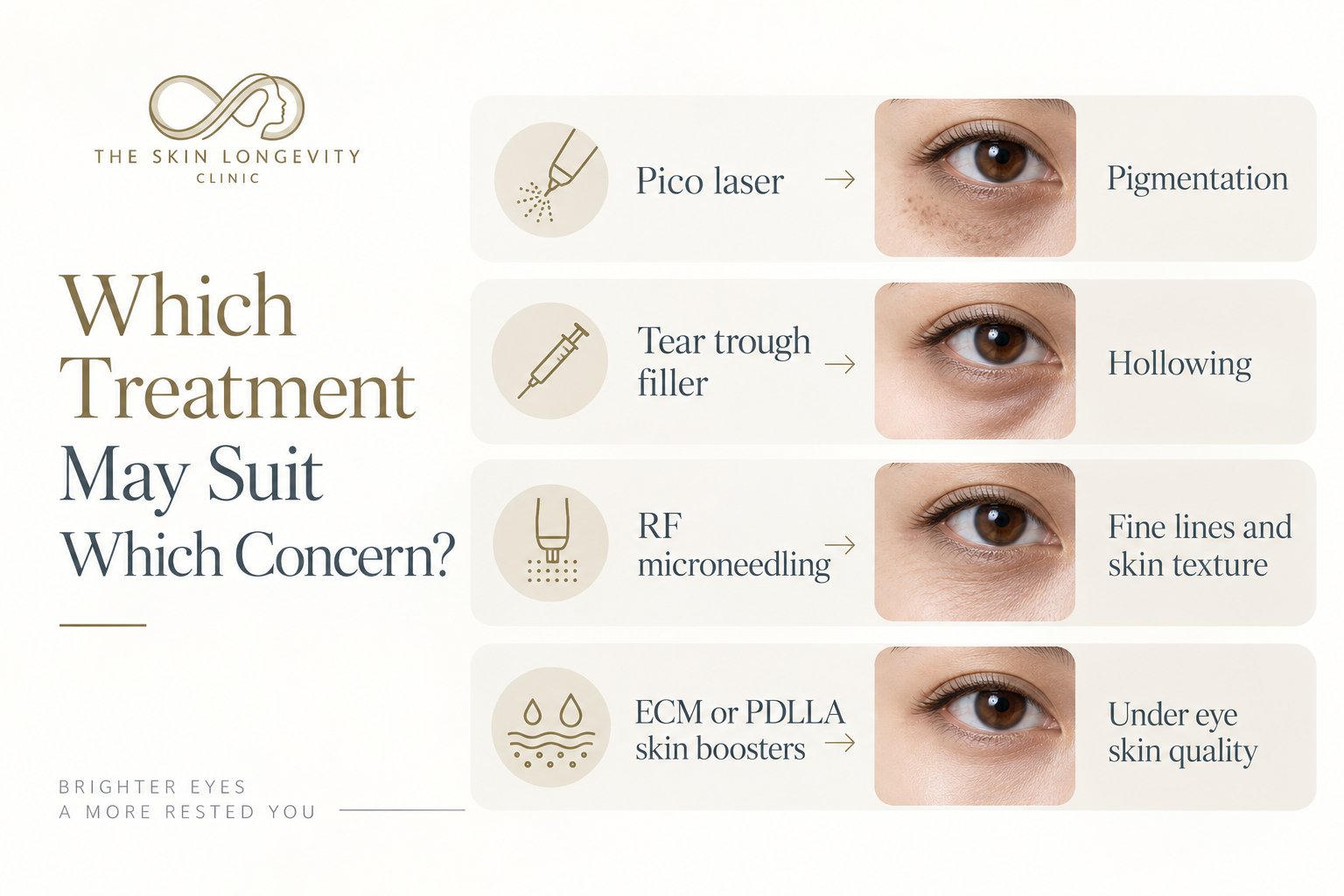
Which treatment may suit which concern.
The treatment target may be pigment, a hollow, a visible vessel or a skin quality concern1,4. Several features can coexist, and each proposed treatment should have a clearly defined purpose1,4.
Main finding
Approach that may be considered
Important distinction
Pigmentation
Suitable skincare and selected pigment laser treatment
Laser results vary, and pigmentation can worsen5,6
Vascular colour
Assessment of visible vessels, skin thickness and associated inflammation
Pigment treatment alone may leave vascular colour unchanged2
Tear trough hollowing
Hyaluronic acid filler, with cheek support where indicated
Filler changes contour rather than removing melanin8
Fine wrinkles and mild skin laxity
Selected RF microneedling
Skin improvement should be distinguished from pigment removal10
Reduced skin quality
Selected ECM or PDLLA skin boosters
Evidence is formulation specific and remains preliminary11,12
Mixed features
A staged plan addressing the relevant contributors
Further treatment should depend on reassessment4
Skincare and treatment of inflammation
Gentle skincare, sun protection and management of eyelid irritation are useful foundations when inflammation or pigmentation contributes18. Selected topical ingredients may improve pigment related concerns, although the eyelid area requires attention to tolerability18.
A cream that improves dryness may leave a structural shadow unchanged2. Dr Rachel Ho’s article Do Eye Creams Work? explains the evidence for ingredients and the limits of topical skincare.
Pico laser for pigmented dark circles
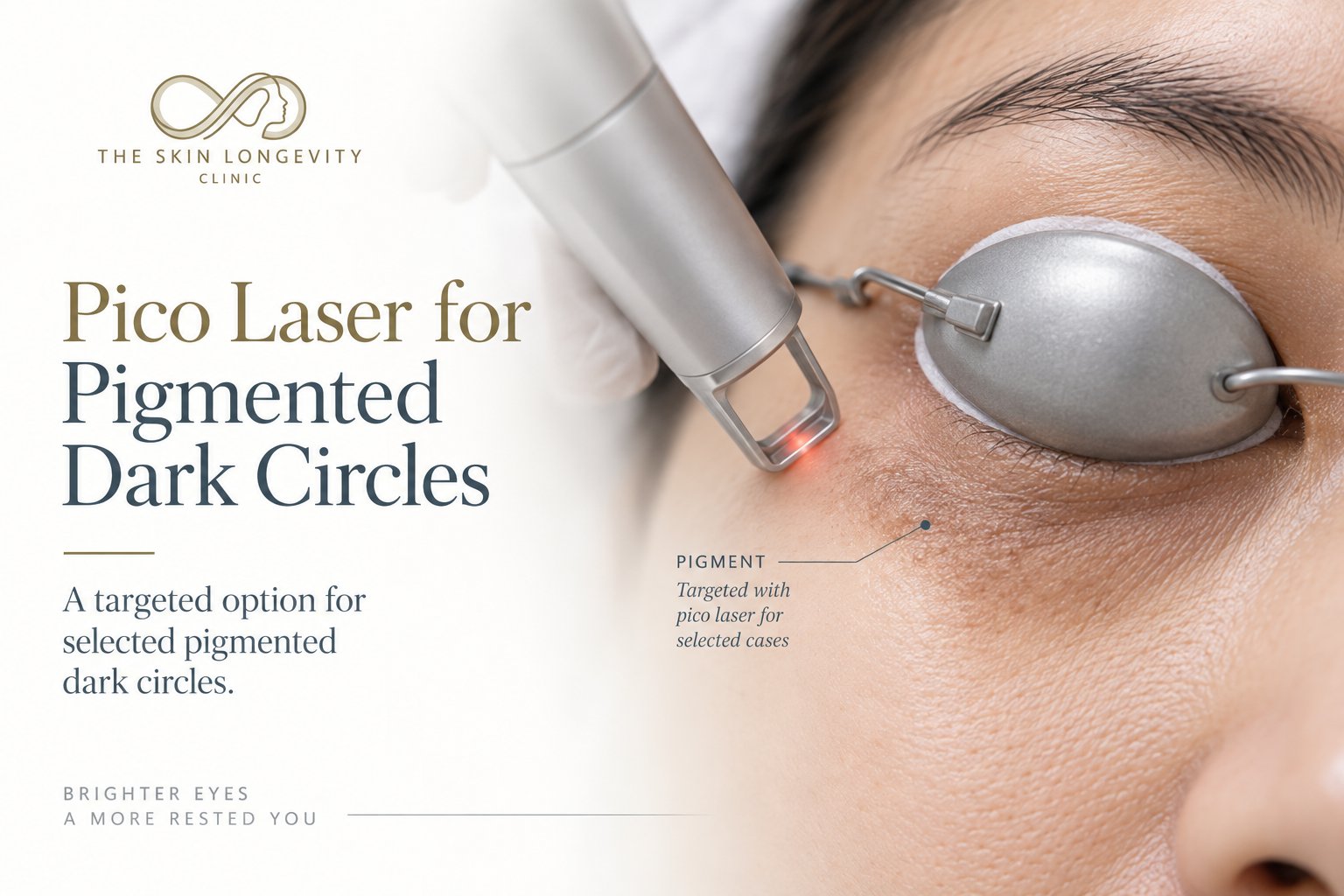
Pico laser for pigmented dark circles.
Pico laser uses very short pulses of laser energy and has been studied for infraorbital pigmentation5. Its potential role is greatest when pigment contributes to the darkness, rather than a shadow caused mainly by hollowing1,5.
Treatment involves applying selected laser pulses after assessment, with eye protection appropriate to the device and treatment area7. The wavelength and protocol require individual consideration rather than assuming that all pico systems produce the same result5,6.
Small prospective studies reported improvement after three treatments with a fractional 755 nm picosecond laser, while a separate group receiving one treatment with another picosecond system showed no significant improvement5. The different schedules and study groups prevent a straightforward claim that one wavelength is universally better5.
Another small study reported post inflammatory hyperpigmentation following treatment for pigmented dark circles6. Our pico laser guide explains the broader treatment category, while consultation determines whether it is appropriate for the under eye concern.
What about blue or purple dark circles?
A discrete visible vein differs from diffuse colour showing through thin skin2. Assessment should also consider swelling and inflammation, which can affect the appearance2.
Selected vessel directed treatments are discussed in the medical literature, but suitability depends on the finding and treatment area2. Further evaluation or referral may be appropriate when the concern falls outside the proposed treatment’s scope.
Tear trough filler and cheek support
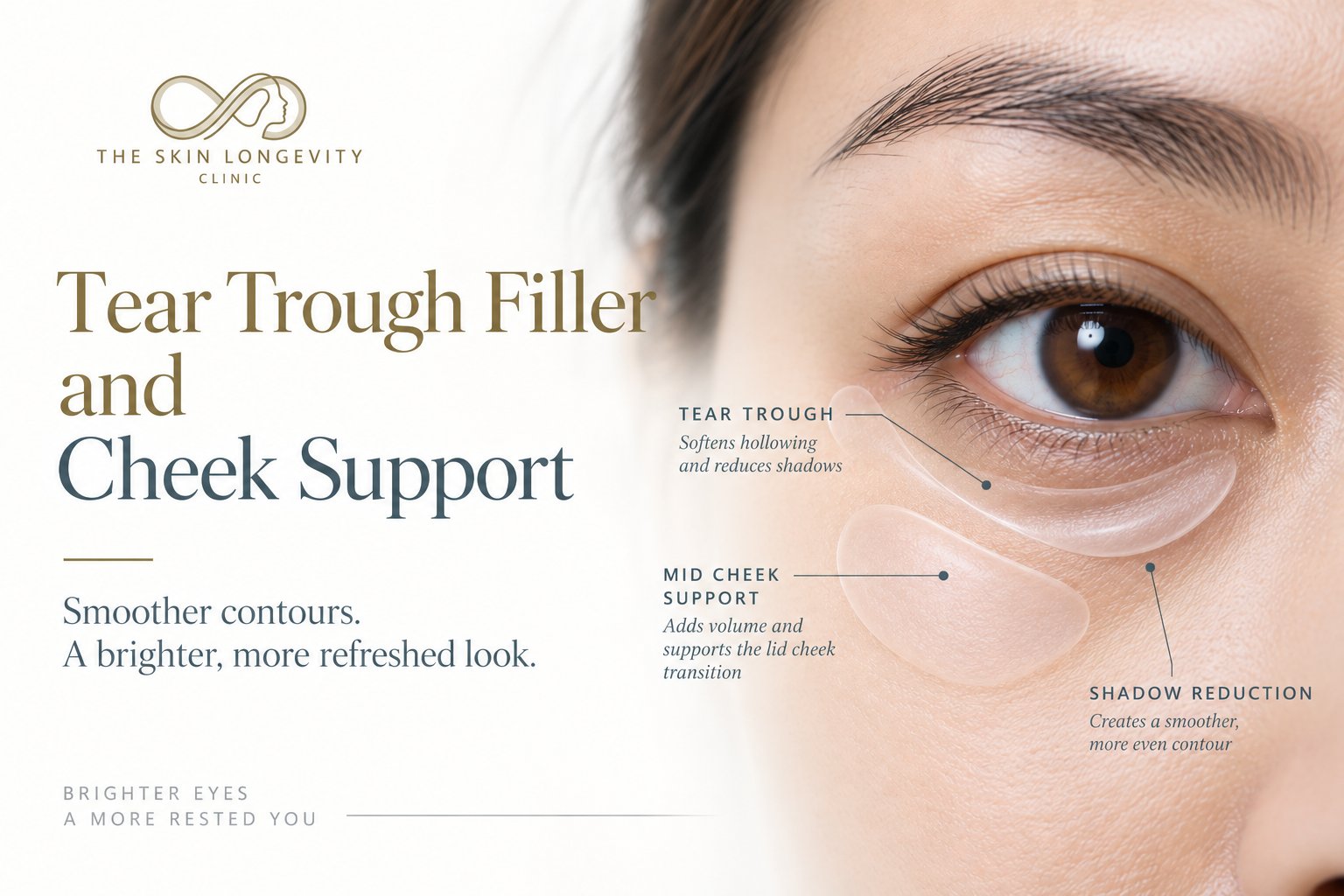
Tear trough filler and cheek support.
Hyaluronic acid filler can soften a tear trough depression and reduce the shadow created by that contour8. It is most relevant when hollowing contributes to the darkness and the surrounding anatomy is suitable8.
Cheek filler may also be considered when reduced midface support contributes to the lower eyelid and cheek transition8. Published work in Japanese patients describes different approaches according to facial structure and the appearance during smiling, rather than routinely filling every tear trough8.
After assessment and preparation, filler is placed using a needle or cannula13. Existing puffiness, very thin skin or previous filler complications can make treatment less straightforward4.
A meta analysis of 31 reports involving 2,556 participants found a pooled satisfaction rate of 91 per cent after hyaluronic acid treatment for tear trough deformity9. This concerns correction of hollowing and should not be interpreted as a success rate for all dark circles9.
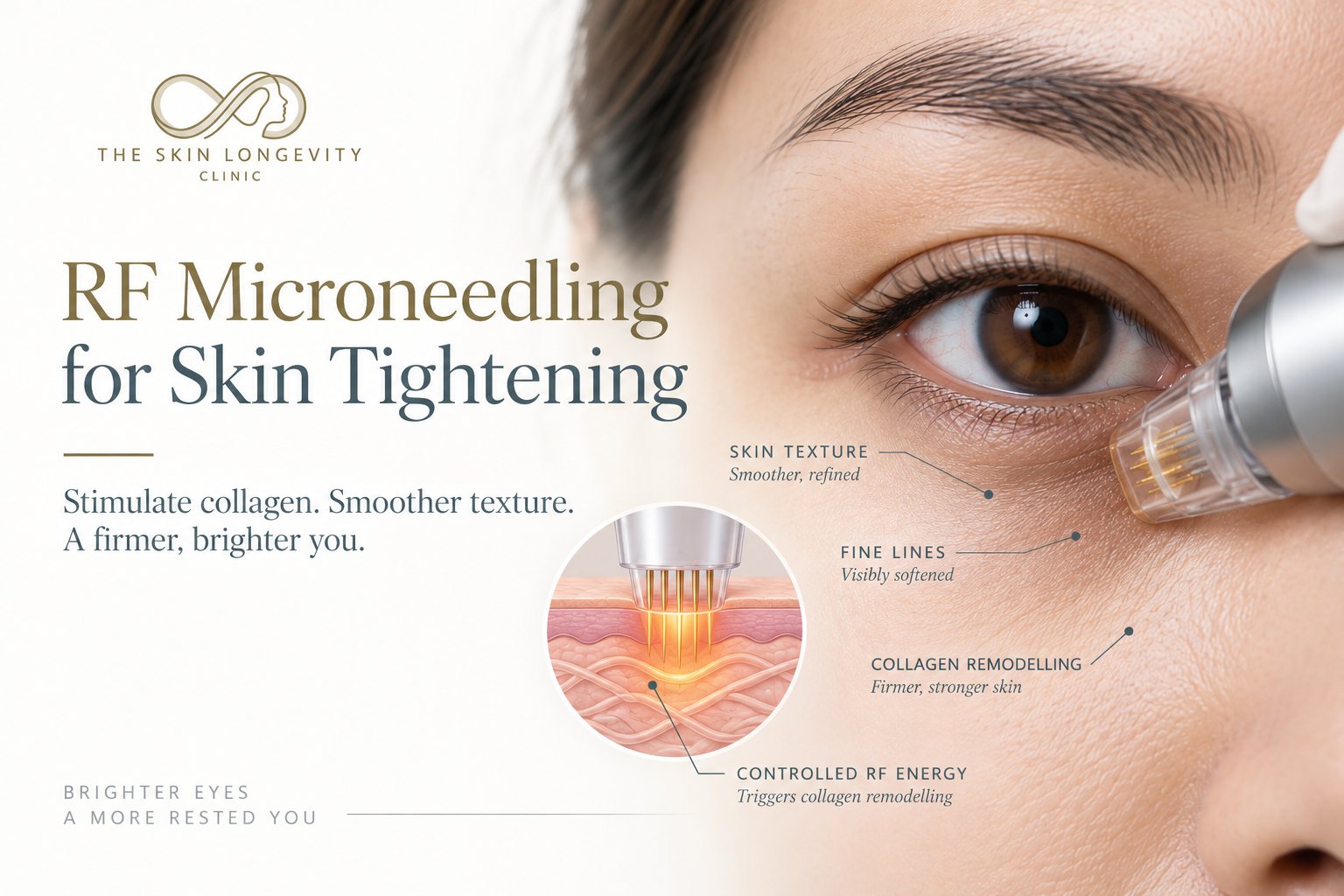
RF microneedling delivers radiofrequency energy through fine needles to produce controlled heating within the skin16. It is considered for selected wrinkles and skin texture concerns around the eyes10.
Treatment generally involves skin preparation, numbing and application of a microneedle device to the selected area. The device and treatment parameters must be appropriate for the skin being treated.
A prospective study involving 21 women with mixed dark circles reported improvements in overall appearance and periorbital wrinkles10. Changes in melanin measurements were not statistically significant, so the findings support a skin and appearance benefit rather than established pigment removal10.
Our RF microneedling guide explains the procedure. A treatment directed at skin texture should have different expectations from one intended to correct a hollow or reduce pigment.
ECM skin boosters for under eye skin quality
ECM and PDLLA skin boosters for under eye skin quality.
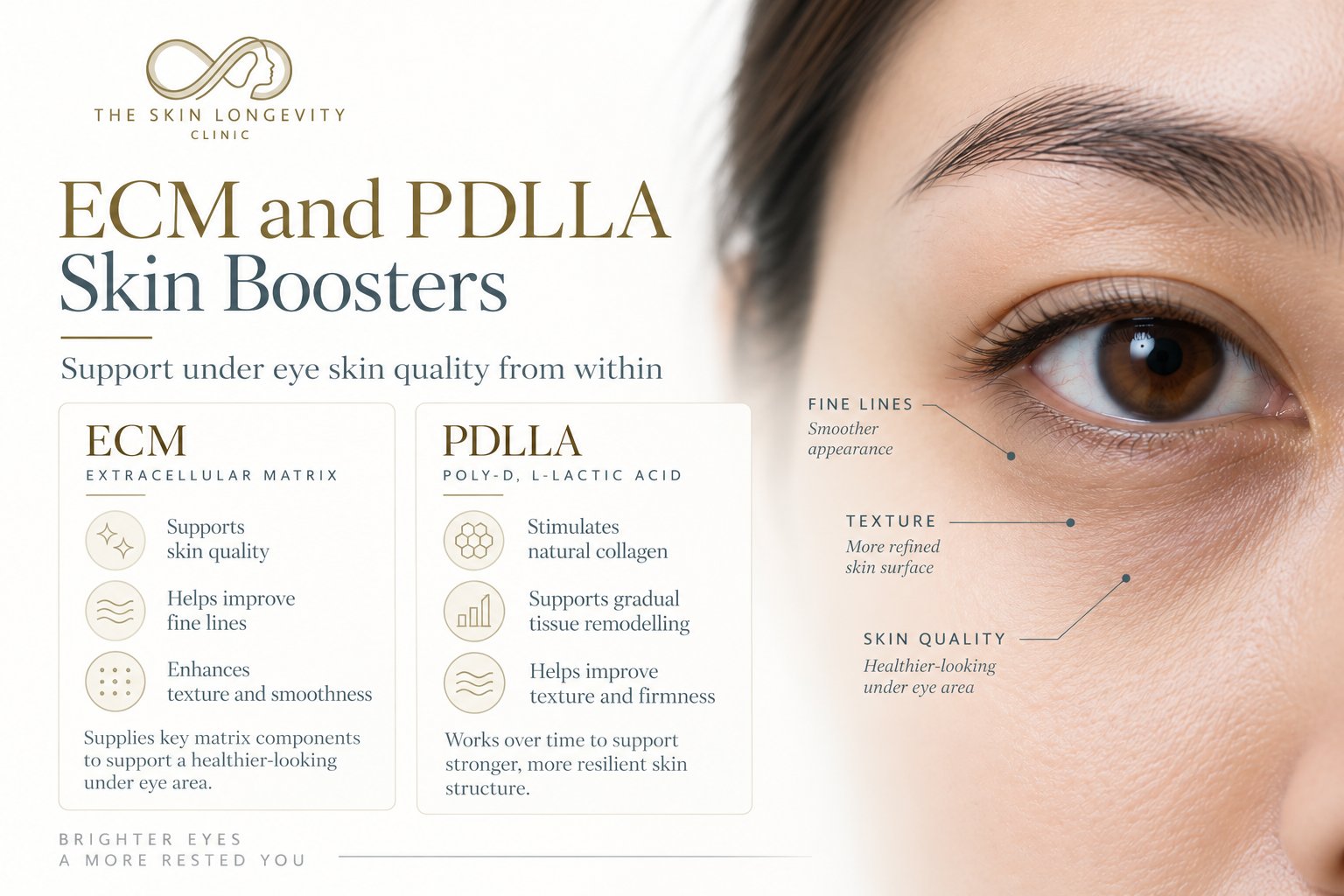
Some ECM skin boosters contain processed human acellular dermal matrix, derived from donor skin with its cellular components removed11. The material is being investigated for tissue remodelling and improvements in skin quality11.
A 2026 randomised trial compared one preparation with hyaluronic acid in 20 adults with cheek roughness11. Over 20 weeks, researchers reported improvements in measurements including skin density, elasticity, wrinkles and hydration11.
This was a facial skin restoration study rather than a trial demonstrating clearance of a defined dark circle subtype11. Its findings should therefore be interpreted as preliminary and specific to the formulation studied11.
Treatment involves injections into selected areas, with the material and tissue source explained during consent11. Our ECM skin booster under eye article discusses its potential role when fine wrinkles or crepiness accompany darkness.
PDLLA skin boosters
PDLLA means poly D,L lactic acid, a biodegradable material used in collagen stimulating injectables12. Some preparations combine PDLLA with hyaluronic acid and are being studied for under eye contour and skin quality concerns12.
A prospective study of 15 women in Singapore and Malaysia evaluated three monthly treatments with one PDLLA and hyaluronic acid formulation12. Investigators and patients reported improvements in tear trough appearance and skin quality ratings12.
The study was small, uncontrolled and used subjective assessments12. It provides preliminary evidence for under eye rejuvenation, rather than proof that PDLLA removes melanin or treats every vascular dark circle12.
Treatment is delivered through injections, and the preparation and placement depend on the product12. Our guide to PDLLA and hyaluronic acid skin boosters explains their components and the questions to discuss before treatment.
How do dark circles differ from eye bags?
Dark circles, eye bags or tear troughs?
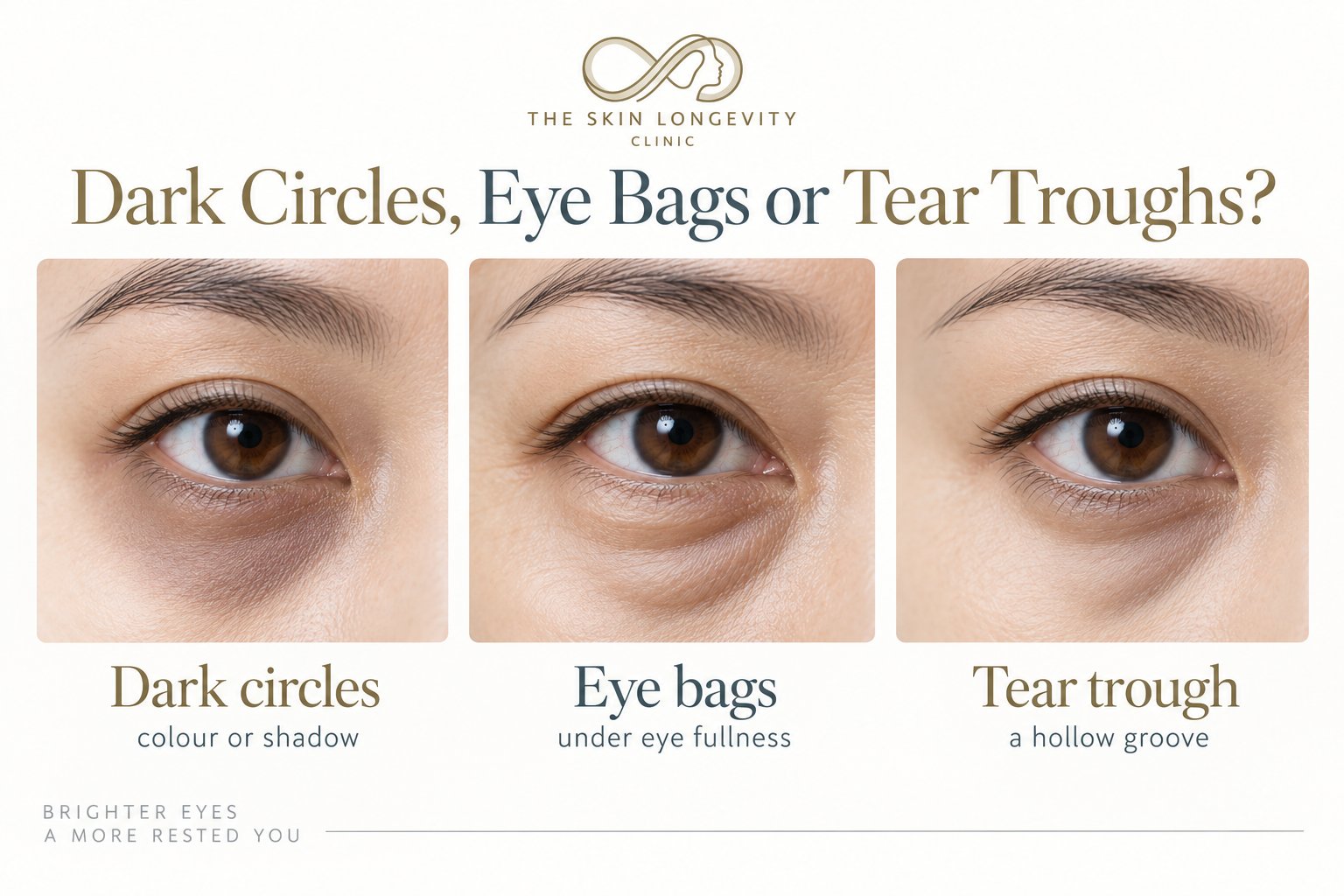
Eye bags describe fullness beneath the lower eyelid, while tear troughs are depressions and dark circles describe colour or shadow2. These features can occur together without requiring the same treatment2.
Prominent bags or substantial skin excess may warrant a different assessment from pigment related darkness4. Our eye bag treatment guide explains the available approaches and when surgical assessment may be more appropriate.
What recovery should you expect?
Recovery depends on the treatment, product and individual response10,13. Injections can cause bruising or swelling, while RF microneedling may produce temporary redness and discomfort10,13.
Early swelling can affect the apparent contour after filler, so the result should be reviewed after the initial reaction settles13. Persistent or worsening symptoms deserve earlier assessment rather than waiting for a routine appointment13.
Follow the written instructions for the procedure performed. Confirm how to contact the clinic with concerns and when the result will be reviewed before leaving.
What are the risks?
Filler can cause swelling, visible irregularities and bluish discolouration, with rare vascular complications affecting the skin or vision13. Nodules following PDLLA tear trough injections and vascular injury after facial injections containing acellular dermal matrix have also been reported14,15.
RF microneedling carries risks beyond temporary redness16. The US FDA has warned about reports of burns, scarring, unwanted fat loss and nerve damage with certain uses of these devices16.
Sudden blurred vision or loss of vision after a facial injection requires emergency care13. In Singapore, call 995 and explain that a facial injection was recently performed13,17.
Increasing pain or unusually pale or dusky skin requires immediate assessment by the treating doctor13. These symptoms should not be left until a routine review13.
Published schedules differ between laser protocols, RF treatments and injectable preparations5,10,11,12. A course studied for one product should not automatically be applied to another.
The proposed plan should state when progress will be assessed and what would justify further treatment. For mixed concerns, reassessment helps determine which contributing feature still needs attention4.
Can dark circles be permanently removed?
Inherited pigmentation, facial anatomy and continuing skin changes can influence the appearance over time18. Treatment should therefore be discussed in terms of improvement in the identified concern rather than guaranteed permanent removal18.
Durability also depends on the procedure and the outcome being measured9,11,12. A study showing improved hydration or hollowing does not establish permanent correction of every source of under eye darkness.
How much does dark eye circle treatment cost in Singapore?
The quotation should reflect the procedure, treatment area, amount of injectable material where relevant and anticipated number of sessions. Ask whether it includes both sides, consultation, numbing, GST, aftercare and review appointments.
A single session price should be distinguished from the expected cost of a course. Our guide to your first aesthetic clinic consultation includes questions to raise before agreeing to treatment.
Arrange a dark eye circle assessment
Bring details of previous under eye procedures, current skincare and any history of swelling or irritation. The consultation should help you understand which features can be improved and whether the expected change is worthwhile for you.
The Skin Longevity Clinic is located at Scotts Medical Center, 9 Scotts Road, Singapore 228210. Arrange a consultation to discuss suitable options with Dr Rachel Ho.
Scientific and clinical references
Huang YL, Chang SL, Ma L, Lee MC, Hu S. Clinical analysis and classification of dark eye circle. International Journal of Dermatology. 2014;53(2):164 to 170. PMID 23879616.
Vrcek I, Ozgur O, Nakra T. Infraorbital dark circles: A review of the pathogenesis, evaluation and treatment. Journal of Cutaneous and Aesthetic Surgery. 2016;9(2):65 to 72. PMID 27398005.
Ranu H, Thng S, Goh BK, Burger A, Goh CL. Periorbital hyperpigmentation in Asians: An epidemiologic study and a proposed classification. Dermatologic Surgery. 2011;37(9):1297 to 1303. PMID 21682796.
Liew S, Doreian S, Kunathathorn W, et al. Lower eyelid dark circles: Tear trough and lid cheek junction. A stepwise assessment framework. Aesthetic Surgery Journal. 2024;44(7):NP476 to NP485. PMID 38489829.
Vanaman Wilson MJ, Jones IT, Bolton J, Larsen L, Wu DC, Goldman MP. Prospective studies of the efficacy and safety of the picosecond 755, 1,064, and 532 nm lasers for the treatment of infraorbital dark circles. Lasers in Surgery and Medicine. 2018;50(1):45 to 50. PMID 29135036.
AlRamthan A, Shaban M, AlSaqer F, Alkhazi H, Shamsaldeen O, Ashour L. Evaluation of the effectiveness of picosecond KTP and fractional thulium lasers on pigmented type periorbital dark circles. Lasers in Medical Science. 2024;39:173. PMID 38969818.
Glover C, Richer V. Preventing eye injuries from light and laser based dermatologic procedures: A practical review. Journal of Cutaneous Medicine and Surgery. 2023;27(5):509 to 515. PMID 37533142.
Kato K, Kajiwara T, Furuyama N, Liew S. Filler based correction of tear trough depressions and eye bags in Japanese patients: A classification system and treatment algorithm. Journal of Cosmetic Dermatology. 2023;22(2):439 to 448. PMID 36208029.
Liu X, Gao Y, Ma J, Li J. The efficacy and safety of hyaluronic acid injection in tear trough deformity: A systematic review and meta analysis. Aesthetic Plastic Surgery. 2024;48(3):478 to 490. PMID 37684413.
Wu X, Liu Y, Zhu J, Yu W, Lin X. A prospective trial of the microneedle fractional radiofrequency system application in the treatment of infraorbital dark circles. Clinical, Cosmetic and Investigational Dermatology. 2022;15:1293 to 1300. PMID 35836477.
Lee YI, Chau NH, Nguyen NH, et al. Injectable particulated human acellular dermal matrix booster for skin restoration: An integrated randomized, split face, double blinded clinical trial and preclinical study. International Journal of Molecular Sciences. 2026;27(5):2193. PMID 41828422.
Young SM, Lau EKH. Hybrid biostimulator and hyaluronic acid injectable for tear trough rejuvenation. Aesthetic Plastic Surgery. 2026;50:5337 to 5343. PMID 42493592.
Zein M, Tie Shue R, Pirakitikulr N, Lee WW. Complications after cosmetic periocular filler: Prevention and management. Plastic and Aesthetic Research. 2020;7:44. PMID 33102629.
Seo SB, Wan J, Yi KH. Energy based device management of nodular reaction following poly D,L lactic acid injection for tear trough rejuvenation. Journal of Cosmetic Dermatology. 2025;24(1):e16575. PMID 39283001.
Sung SW, Lee SY, Seok J, Kim BJ. Vascular complication following injection of particulated human acellular dermal matrix: A case report. Journal of Cosmetic Dermatology. 2026;25(7):e71049.
US Food and Drug Administration. Potential risks with certain uses of radiofrequency microneedling. Safety communication. October 15, 2025.
Singapore Civil Defence Force. Emergency Medical Services. Official guidance on emergency ambulance assistance through 995.
Sarkar R, Ranjan R, Garg S, Garg VK, Sonthalia S, Bansal S. Periorbital hyperpigmentation: A comprehensive review. Journal of Clinical and Aesthetic Dermatology. 2016;9(1):49 to 55. PMID 34657363.