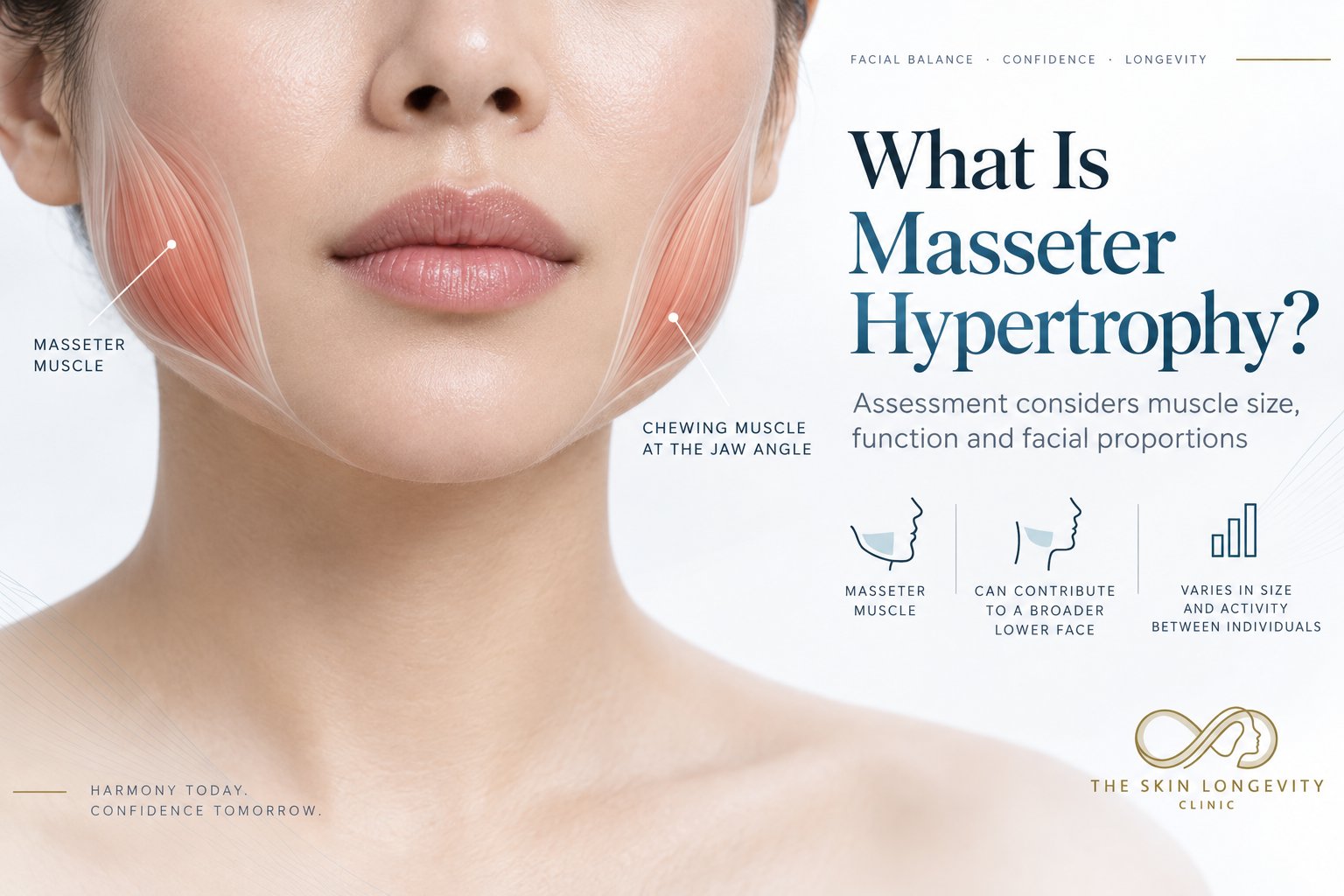
Masseter hypertrophy means enlargement of a chewing muscle at the side of the jaw, which can contribute to a wider or more angular lower face1. Treatment may reduce this muscular prominence, while jawbone shape, facial fat and skin continue to influence the overall contour2,3.
At The Skin Longevity Clinic, Dr Rachel Ho assesses the cause of jaw fullness, facial proportions and chewing function before discussing treatment. The consultation considers the change you would like to achieve alongside the features and function you want to preserve.
What causes enlarged masseter muscles?
Masseter hypertrophy: the chewing muscle at the jaw angle.
The masseter helps close the jaw during chewing and clenching1. Repeated loading from clenching, grinding or chewing habits can contribute to enlargement, although individual anatomy and inherited factors also play a role1.
Masseter prominence can affect one or both sides and may occur with or without discomfort1. Jaw tightness, tooth wear or morning muscle fatigue should prompt consideration of bruxism as a separate concern5.
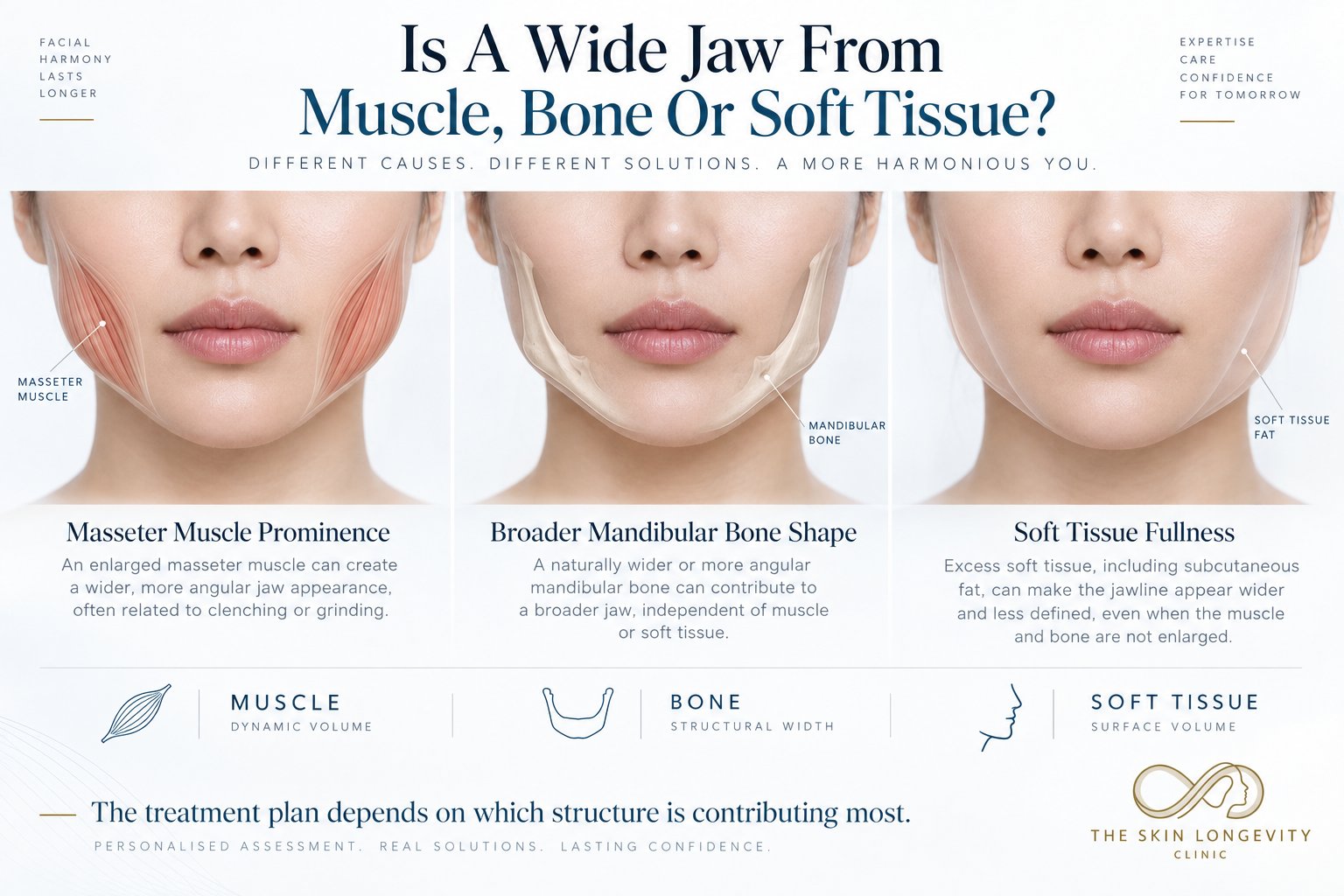
Muscle, bone or soft tissue: the plan depends on which structure contributes most.
Examination considers the lower face at rest and while you clench, allowing the doctor to assess muscle prominence alongside the jawbone and surrounding soft tissue2. The degree of narrowing that may be achievable depends on how much of the original width comes from the muscle2.
Ultrasound can provide additional information about muscle thickness and neighbouring structures when clinically useful2. Research examining 42 patients demonstrated variation in these features, supporting individual assessment rather than a standard treatment plan2.
The clinic’s assessment also considers other explanations for fullness near the jaw angle, including salivary gland or dental concerns. Further investigation or referral may be appropriate when the examination suggests another cause.
Our guide to masseter hypertrophy and jaw slimming explains the anatomical differences in greater detail. During consultation, describe whether your main concern is appearance, clenching, discomfort or a combination.
Which approach may suit your concern?
Jaw slimming is most relevant when enlarged masseter muscles contribute substantially to lower face width2,3. Grinding, dental damage and jaw joint symptoms require their own assessment, even when the muscles also appear prominent5,6.
Main finding
Approach that may be considered
Purpose
Prominent masseter muscles and a preference for less width
Assessment for muscle reducing treatment
Reduce the muscular contribution to the contour3
Frequent awake clenching
Awareness strategies and management of contributing habits
Reduce repeated clenching during daily activities5
Grinding with tooth wear or sensitivity
Dental assessment and protection where indicated
Address dental consequences rather than appearance alone5
Jaw pain or restricted movement
Dental or orofacial pain assessment
Establish the cause and discuss appropriate management6
Width mainly related to bone, fat or skin
Broader facial assessment
Avoid expecting muscle treatment to correct a different anatomical concern2
Leaving the facial contour unchanged is also an option. Any clenching or dental symptoms can be assessed independently of a decision about cosmetic treatment.
What are the alternatives to injections?
For awake clenching, increasing awareness of jaw tension and changing the resting jaw position may help reduce habitual muscle activity5. Stress management can also be considered when stress contributes to the behaviour5.
A dentist may recommend a mouth guard to protect teeth from grinding related damage5. Its purpose differs from cosmetic muscle reduction, and the treatment plan should distinguish dental protection from a change in facial width5.
Our bruxism assessment guide explains these options. Dental or sleep assessment may be appropriate when the history indicates concerns extending beyond muscle prominence5.
How does botulinum toxin treatment work?
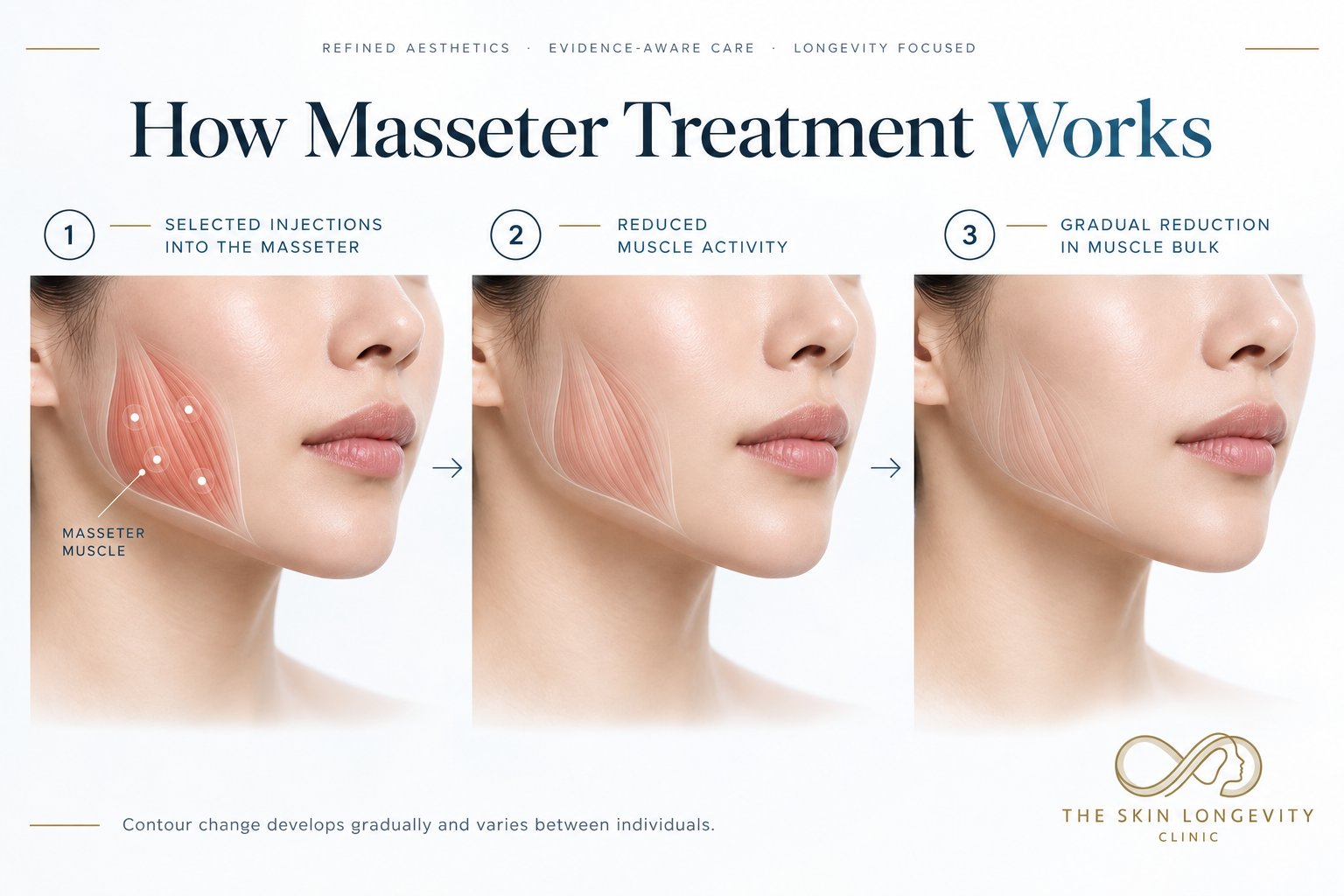
How masseter treatment works. Contour change develops gradually and varies between individuals.
Botulinum toxin temporarily reduces nerve signalling to the treated muscle, decreasing its contraction strength7. Reduced activity can be followed by a gradual decrease in masseter bulk and a narrower lower facial contour in suitable patients3.
This is a treatment directed at muscle rather than a procedure intended to reshape the mandible2,3. The expected benefit should therefore relate to the muscular component identified during assessment2.
What does the procedure involve?
Following assessment and skin preparation, the doctor uses a fine needle to place the prescribed treatment into selected areas of the masseter3. Planning considers the size and activity of each side, existing asymmetry and the desired degree of change2.
Before treatment, disclose previous injections, allergies, medicines, neuromuscular conditions and any swallowing or breathing difficulties7. Pregnancy and breastfeeding also need discussion, while infection at the proposed injection site or known hypersensitivity can make treatment unsuitable7.
How is the amount of treatment decided?
The amount is selected according to the formulation, muscle characteristics and treatment goals1. Potency units are specific to each botulinum toxin preparation and should not be treated as directly interchangeable7.
A unit count alone therefore provides an incomplete comparison between treatment plans. Ask how the proposed plan relates to your anatomy and what would be assessed before any further treatment.
When do jaw slimming results become visible?
When results become visible. Study checkpoints shown; individual timing varies.
Visible contour change develops gradually rather than immediately after injection3. In a controlled trial, improvement was recorded at the first assessment around one month, with the greatest measured reduction in lower facial volume around three months3.
Improvement remained evident through six months in the study groups3. These are research checkpoints rather than a guaranteed timetable for an individual patient3.
What does the clinical evidence show?
A phase 3 trial involving 376 adults with marked or very marked masseter prominence found greater improvement with treatment than placebo4. At three months, 51.2 per cent of treated participants achieved at least a two grade improvement on the investigator’s prominence scale, compared with 2.2 per cent receiving placebo4.
The manufacturer funded the trial, which evaluated one preparation in a selected population4. Its results support treatment of substantial muscle prominence rather than a promise that every broad jaw will become a particular shape4.
For a fuller discussion of the studies and treatment comparisons, read Dr Rachel Ho’s jaw slimming and masseter treatment guide. Bring any questions about the expected degree of change to your consultation.
What recovery and side effects should you expect?
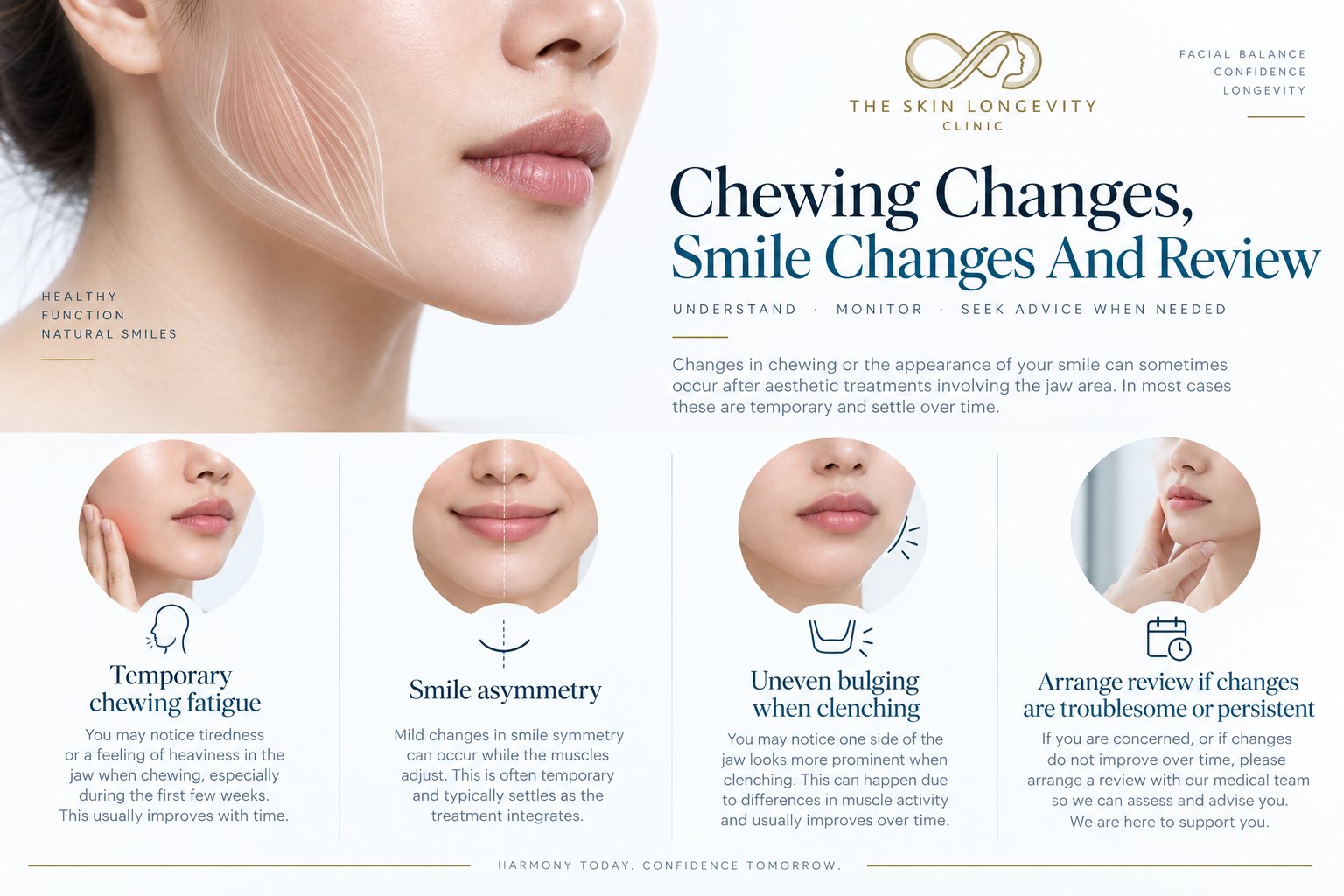
Chewing and smile changes: usually temporary, with review if troublesome or persistent.
Local soreness and bruising can occur, and temporary chewing fatigue is a recognised effect of masseter injections8. These possibilities should be discussed before treatment, particularly when chewing comfort is already a concern8.
Changes in smiling, uneven bulging during clenching, cheek hollowing and sagging have also been reported8. Their occurrence varies with the patient and treatment, so published rates from one clinical series should not be assumed to apply universally8.
Report troublesome chewing fatigue, a new smile change or an unexpected contour so that it can be examined. Follow the written aftercare instructions and confirm when review is planned.
New difficulty swallowing, speaking or breathing after treatment requires immediate medical attention7. For a medical emergency in Singapore, call 99513.
What happens at review?
Review should consider the developing contour, how the jaw feels during use and whether any asymmetry has appeared. Explain what has changed since treatment and whether the concern is visible at rest, during smiling or only when clenching.
A jaw that still appears wide may reflect the contribution of bone or soft tissue, as well as the time needed for muscle reduction2,3. Reassessment is more useful than automatically increasing treatment because an early photograph looks similar.
Can masseter treatment stop teeth grinding?
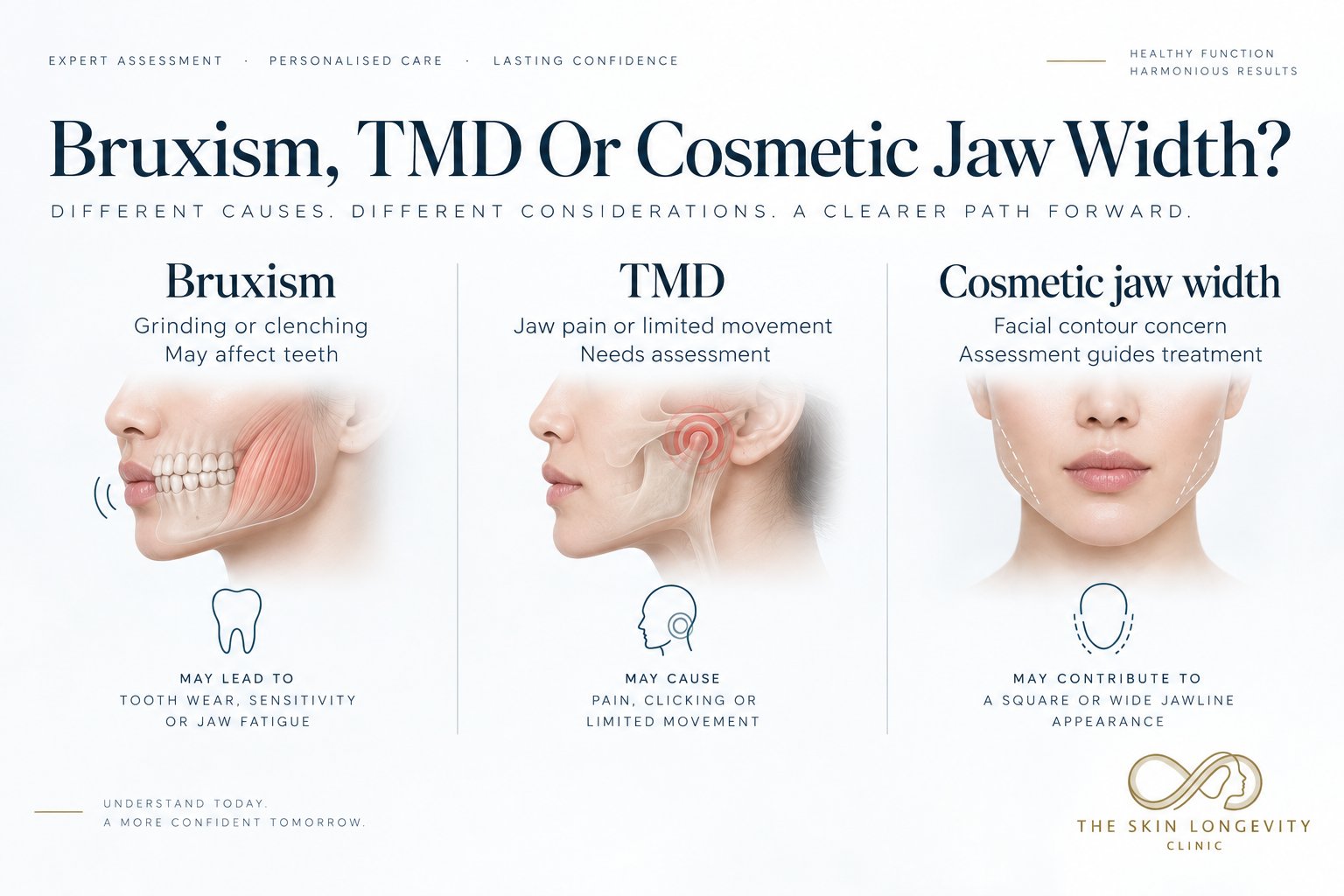
Bruxism, TMD or cosmetic jaw width: different causes, different considerations.
Treatment can reduce the intensity of masseter contractions during sleep bruxism, but this differs from stopping the underlying episodes9. In a placebo controlled trial, injections reduced the intensity of recorded muscle activity without significantly reducing the generation of bruxism episodes9.
That distinction helps explain why dental protection or management of contributing habits may remain relevant5,9. A cosmetic improvement in jaw width should not be interpreted as confirmation that grinding has stopped9.
How does this differ from treating jaw joint pain?
Temporomandibular disorders involve the jaw joint or associated muscles and can cause pain and impaired movement6. Their assessment and treatment goals differ from reducing cosmetic muscle prominence6.
For chronic TMD pain lasting at least three months, a 2023 clinical guideline supported several conservative approaches and conditionally recommended against botulinum toxin injections6. That recommendation concerns chronic pain management rather than cosmetic jaw slimming6.
How does jaw slimming differ from chin filler?
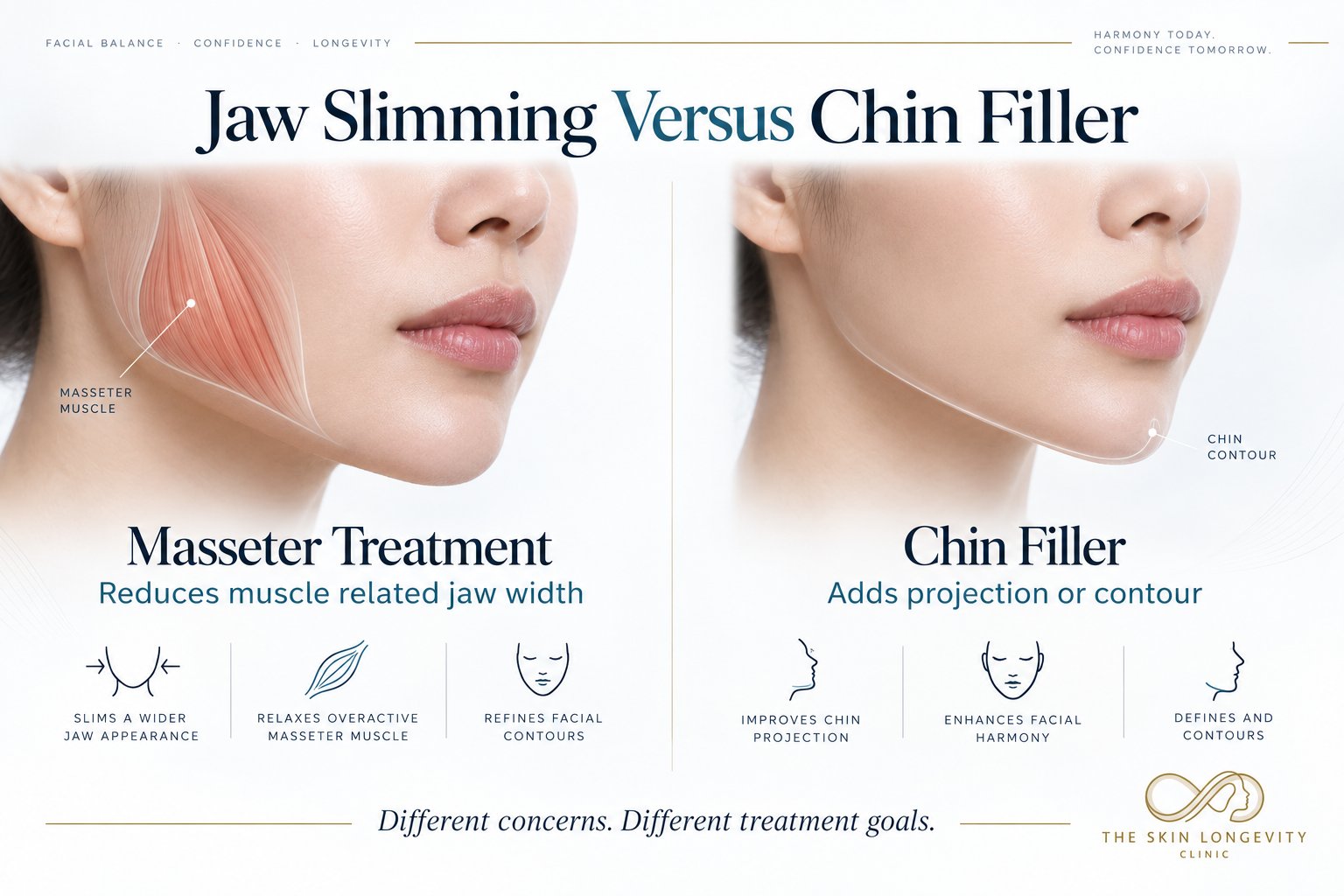
Jaw slimming versus chin filler: different concerns, different treatment goals.
Masseter treatment aims to reduce selected muscle prominence, while chin filler adds volume to change projection or contour3,12. Each therefore needs a separate anatomical reason rather than being included automatically in a combined plan.
Our chin filler guide explains the assessment and risks of that procedure. A discussion about facial proportions should also establish which existing features you would prefer to retain.
Scientific and clinical references
Ferrillo M, Sommadossi E, Raciti L, et al. The role of botulinum toxin for masseter muscle hypertrophy: A comprehensive review. Toxins. 2025;17(2):91. doi:10.3390/toxins17020091.
Li Z, Chi Y, Chen C, et al. A comprehensive ultrasound evaluation approach of lower facial structure before masseter muscle botulinum toxin injection. Aesthetic Surgery Journal. 2023;43(4):NP283 to NP292. doi:10.1093/asj/sjac336.
Liew S, Jones D, Dayan S, et al. A controlled phase 2b trial to assess the efficacy and safety of a single intervention of onabotulinumtoxinA for treating masseter muscle prominence. Aesthetic Surgery Journal. 2025;45(10):1043 to 1050. doi:10.1093/asj/sjaf042.
Sun J, Wang L, Wu Y, et al. OnabotulinumtoxinA treatment for masseter muscle prominence: 6 month safety and efficacy results, including patient reported outcomes, from a phase 3, randomized, placebo controlled, multiregional trial. Aesthetic Surgery Journal. 2026;46(5):486 to 494. doi:10.1093/asj/sjaf204.
National Institute of Dental and Craniofacial Research. Bruxism. Patient guidance on assessment, behavioural strategies and dental protection. Reviewed March 2025.
Busse JW, Casassus R, Carrasco Labra A, et al. Management of chronic pain associated with temporomandibular disorders: A clinical practice guideline. BMJ. 2023;383:e076227.
AbbVie. OnabotulinumtoxinA prescribing information. Sections covering contraindications, potency units, interactions, pregnancy, lactation and swallowing or breathing difficulties.
Peng HLP, Peng JH. Complications of botulinum toxin injection for masseter hypertrophy: Incidence rate from 2036 treatments and summary of causes and preventions. Journal of Cosmetic Dermatology. 2018;17(1):33 to 38. doi:10.1111/jocd.12473.
Shim YJ, Lee HJ, Park KJ, Kim HT, Hong IH, Kim ST. Botulinum toxin therapy for managing sleep bruxism: A randomized and placebo controlled trial. Toxins. 2020;12(3):168. doi:10.3390/toxins12030168.
Hong SW, Kang JH. Decreased mandibular cortical bone quality after botulinum toxin injections in masticatory muscles in female adults. Scientific Reports. 2020;10:3623.
Kostenuik P, Mallya SM, Hopfinger R, et al. Longitudinal computed tomography indicates no negative impact of onabotulinumtoxinA on mandibular bone density in a 12 month, double blind, randomized, repeat treatment, placebo controlled study in healthy adults with masseter muscle prominence. Aesthetic Surgery Journal. 2026;46(1):76 to 85. doi:10.1093/asj/sjaf167.
Xie Y, Zhao H, Wu W, et al. Chin augmentation and treatment of chin retrusion with a flexible hyaluronic acid filler in Asian subjects: A randomized, controlled, evaluator blinded study. Aesthetic Plastic Surgery. 2024;48(5):1030 to 1036.
Singapore Civil Defence Force. Emergency Medical Services. Official guidance on emergency ambulance assistance through 995.
Clinical studies have documented improvement through six months after a single treatment3,4. The duration for an individual depends on the response and the outcome being assessed, rather than a fixed expiry date.
Further treatment should follow review of the remaining prominence, chewing function and any unwanted changes. Our article on how long botulinum toxin lasts explains why muscle activity and visible contour can follow different timelines.
What is known about repeated treatment?
Research on mandibular bone changes has produced different findings in different patient groups10,11. An observational study in women with TMD reported changes in cortical bone measures after treatment involving both masseter and temporalis muscles10.
A controlled analysis of 123 healthy adults with masseter prominence found no clinically significant change in mandibular bone density after one or two treatments over one year11. These results are reassuring for the schedule studied, while the effects of frequent treatment continued over many years are less established11.
What should you clarify about treatment costs?
Ask for the proposed plan and fees before deciding whether to proceed. Clarify whether the quotation includes consultation, the agreed treatment area, GST and review appointments, and whether additional treatment would be charged separately.
Our guide to your first aesthetic clinic consultation includes questions about costs, consent and aftercare. You should have enough information to consider the plan without needing to make an immediate decision.
Arrange a masseter assessment in Singapore
Bring details of previous injections, your usual medicines and any dental treatment for grinding or jaw discomfort. The consultation should clarify the cause of the fullness, the likely benefit of treatment and how the result will be reviewed.
The Skin Longevity Clinic is located at Scotts Medical Center at Pacific Plaza, 9 Scotts Road, Singapore 228210. Arrange a consultation to discuss your concern with Dr Rachel Ho.