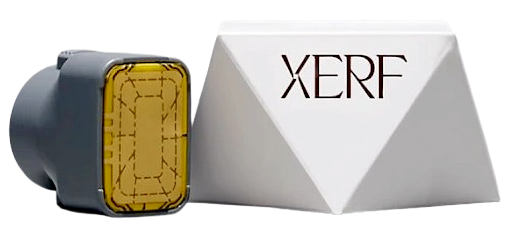


XERF Singapore Skin Tightening Treatment

XERF is a radiofrequency skin tightening treatment for selected patients who want firmer skin, improved facial definition and collagen support without surgery. It has gained attention in Singapore because it uses dual frequency radiofrequency technology and is often discussed for lower face, jawline and neck concerns.


At The Skin Longevity Clinic, XERF is assessed as part of a broader treatment plan. The decision is based on skin thickness, facial volume, ageing pattern, inflammation, pigment risk and recovery capacity. This matters because skin tightening is only useful when the main concern is laxity or collagen loss, rather than volume loss, pigmentation, acne scars or advanced tissue descent.

What is XERF?


XERF is a non surgical radiofrequency treatment designed for skin tightening and collagen support. The system combines 6.78 MHz and 2 MHz radiofrequency energy to deliver treatment across different tissue depths. Its aim is to create controlled heating in the skin and deeper support layers, while protecting the skin surface1,2


Radiofrequency has been used in aesthetic medicine for many years. In skin tightening, controlled heat can cause immediate collagen contraction and trigger a wound healing response that supports new collagen formation over time. Clinical studies on monopolar radiofrequency have reported improvement in skin laxity, jowls, nasolabial folds and facial firmness in selected patients3-5


XERF should therefore be understood as a collagen support and skin tightening treatment. It is not a replacement for surgery, fillers, pigment lasers or acne scar resurfacing. Its value depends on matching the technology to the correct facial concern.


What are the benefits of XERF treatments?


XERF may be considered for patients with mild to moderate skin laxity, reduced firmness, early jawline softening, lower face heaviness or mild neck laxity. It may also suit patients who prefer a needle free treatment and want gradual improvement with minimal disruption to work or daily activities.


The potential benefits include improved skin firmness, subtle tightening, better jawline definition and collagen support over time. Some patients may notice early firmness soon after treatment, while collagen related improvement usually develops gradually over weeks to months.


XERF may appeal to patients who want a treatment that fits a busy schedule. However, minimal downtime should not be confused with universal suitability. Patients with significant sagging, marked facial volume loss, active inflammation or unstable pigmentation may need another treatment direction first.

How does XERF work?


XERF works by delivering radiofrequency energy into the skin and deeper tissue layers. This energy is converted into heat. When the temperature and depth are appropriate, the heat can support collagen contraction, collagen remodelling and tissue tightening.


The face is not a flat surface. The skin around the eyes is thinner. The cheeks and lower face have different tissue thickness. The neck is more delicate. This is why treatment planning should consider anatomy, skin thickness and where the laxity is coming from.


XERF’s dual frequency design allows energy delivery across different depths. This is relevant for patients whose concerns involve both dermal collagen loss and deeper soft tissue laxity. The clinical goal is gradual firmness and support, rather than an instant dramatic lift.


What is the XERF procedure like?


The XERF procedure begins with a consultation and facial assessment. Dr Rachel Ho will assess the patient’s skin quality, skin thickness, laxity pattern, facial volume, pigment risk, medical history and treatment goals.


The skin is cleansed before treatment. During the procedure, the XERF handpiece is applied to the skin and radiofrequency energy is delivered in controlled pulses. Patients usually feel warmth or heat during treatment. Comfort varies between individuals and between treatment areas.


Common treatment areas include the cheeks, lower face, jawline, submental area and neck. Treatment plans may differ according to facial structure and degree of laxity. Some patients need whole face tightening. Others may benefit from focused lower face or jawline treatment.


After treatment, there may be temporary warmth, mild redness or tenderness. Most patients can return to normal daily activity soon after, although individual recovery differs.

FAQs

How long does it take to see results from XERF?

XERF results develop gradually. Some patients may notice early tightening or improved firmness soon after treatment. More meaningful collagen related changes often appear over several weeks to months.


This timing is expected because collagen remodelling is a biological process. Radiofrequency energy creates a controlled stimulus, but the skin still needs time to respond, repair and remodel. Studies on monopolar radiofrequency have shown improvement at follow up points over several weeks to months, with facial firmness and laxity changes developing progressively3,6


Patients should avoid judging final results too early. A review plan helps determine whether the response is adequate, whether maintenance is needed, or whether another treatment type would better address the remaining concern.

How long do results of XERF last?

The duration of XERF results varies. It depends on age, skin quality, degree of laxity, collagen response, lifestyle, weight change, sun exposure and maintenance treatments.


For many collagen based treatments, results are gradual and require maintenance. Some patients may benefit from periodic sessions, while others may combine XERF with skincare, skinboosters, collagen biostimulators or other treatments depending on the diagnosis.


Long term results are also influenced by the underlying ageing pattern. A patient with good facial volume and mild laxity may respond differently from a patient with facial deflation and heavier tissue descent.

Is there downtime for XERF?

XERF is usually associated with minimal social downtime. Patients may experience temporary redness, warmth, swelling or tenderness. These effects are usually mild and short lived.


Energy based treatments still need medical assessment. Burns, pigment change, prolonged swelling or contour irregularity are uncommon but possible if patient selection, technique or settings are inappropriate. This is especially relevant for pigment prone skin, active inflammation, rosacea flares, eczema or recent irritation.


Patients should follow aftercare instructions and avoid adding irritating skincare actives immediately after treatment unless advised.

Can XERF be combined with other aesthetic treatments?

XERF can be combined or sequenced with other aesthetic treatments when appropriate. The timing depends on the patient’s skin, the treatment area and the reason for combination therapy.


For example, patients with pigmentation may need sunscreen, pigment control and laser treatment rather than XERF alone. Patients with acne scars or pores may need RF microneedling, fractional laser or resurfacing. Patients with volume loss may need dermal fillers or collagen biostimulators. Patients with expression lines may need botulinum toxin.


Combination treatment can be useful when different layers are ageing at the same time. The sequence matters because doing too much too quickly can increase irritation, swelling or pigment risk. At The Skin Longevity Clinic, XERF is positioned within a treatment plan rather than added as a routine extra step.

Who may be suitable for XERF?

XERF may be suitable for patients with early skin laxity, reduced firmness, mild jawline softening, good facial volume and realistic expectations. It may also suit patients who want a non surgical and needle free approach to skin tightening.


Patients with marked volume loss may need volume support before or instead of tightening. Patients with advanced sagging may need a surgical opinion. Patients whose main concerns are pigmentation, acne scars, active acne or rosacea may need other treatments first.


The most suitable candidate is not simply the patient who wants tighter skin. It is the patient whose ageing pattern is likely to respond to radiofrequency tightening.

Doctor Rachel’s Takeaway

XERF is a useful treatment option for selected patients with skin laxity and collagen loss, but it should not be chosen simply because it is new or popular. The more important question is whether radiofrequency tightening matches the patient’s facial structure, skin biology and recovery capacity.

A blurred jawline can come from several causes. It may be skin laxity, collagen loss, facial volume loss, fat distribution or deeper support changes. XERF makes sense when RF tightening addresses the main cause.


At The Skin Longevity Clinic, I assess XERF as part of a broader plan. I look at skin thickness, facial volume, ageing pattern, inflammation, pigment risk and recovery capacity before recommending treatment. This helps patients understand what XERF can do, what it cannot do and whether another treatment may be more appropriate.


The best aesthetic treatment is the one that fits the diagnosis.

References

  1. XERF Structural Skin Tightening. Cynosure. 2026. 
  2. XERF RF Skin Tightening. Cynosure Lutronic ANZ. 2026. 
  3. Radiofrequency Facial Rejuvenation: Evidence Based Effect. El Domyati M, El Amar A, Medhat W, Moawad O, Brennan D, Mahoney MG, Uitto J. Journal of the American Academy of Dermatology. 2011. Volume 64, Issue 3. 
  4. Monopolar Radiofrequency Treatment for Facial Laxity: Histometric Analysis. Zelickson B, et al. Dermatologic Surgery. 2004. Volume 30, Issue 4. 
  5. Monopolar Radiofrequency Treatment for Facial Laxity: A Clinical Trial. Wollina U. Journal of Cutaneous and Aesthetic Surgery. 2011. Volume 4, Issue 1. 
  6. Efficacy and Safety of Monopolar Radiofrequency for Skin Tightening: A Systematic Review. Shin JM, et al. Cosmetics. 2024. Volume 11, Issue 3. 
  7. Evaluation of Improvement in Skin Laxity and Oiliness After Monopolar Radiofrequency Treatment. Suh DH, et al. Journal of Cosmetic Dermatology. 2025. 
  8. Skin Tightening Following Multisource, Phase Controlled Radiofrequency Treatment. Tanaka Y, et al. Journal of Clinical and Aesthetic Dermatology. 2019. Volume 12, Issue 12.