

ECM Skin boosters in Singapore: Extracellular Matrix Skin booster Treatment for Skin Quality

Many patients ask about Skin boosters when their skin starts to look tired, dry, crepey or less luminous despite regular skincare. Some notice that makeup sits less smoothly. Others feel that their skin looks thinner, more fragile or less firm than before.


ECM Skin boosters, also known as Extracellular Matrix Skin boosters, are designed for patients who want improvement in skin quality rather than facial reshaping. At The Skin Longevity Clinic, ECM Skin boosters are assessed as part of a broader skin quality plan that considers hydration, dermal support, inflammation, pigment stability, collagen health and recovery capacity.

What are ECM Skin boosters?


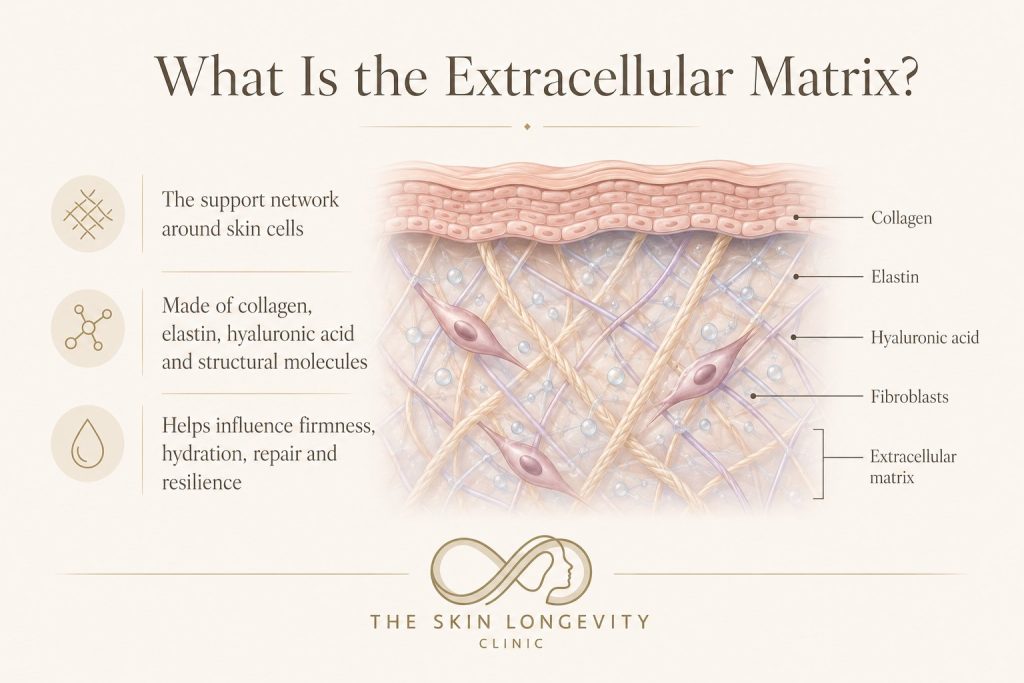
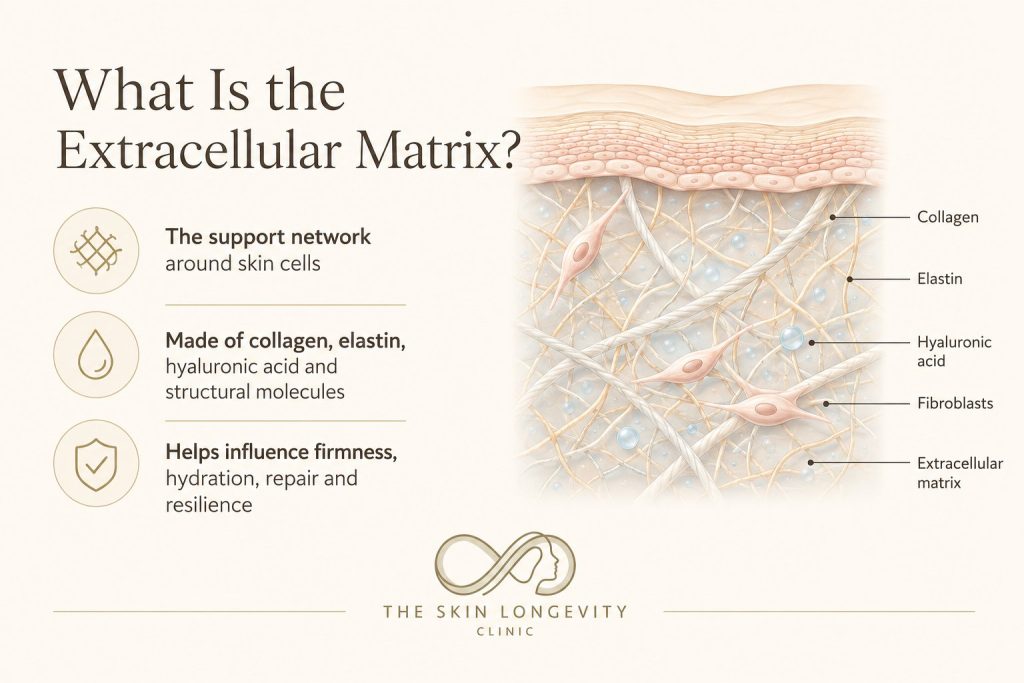
ECM Skin boosters are injectable skin quality treatments that focus on the extracellular matrix, or ECM. The extracellular matrix is the supportive environment around skin cells. It contains collagen, elastin, hyaluronic acid, glycosaminoglycans and other structural molecules that help influence firmness, hydration, elasticity and repair1,2.


A recently published randomised, split face, double blinded clinical trial studied an injectable particulate human acellular dermal matrix, or phADM, as an ECM based Skin booster. The study compared phADM on one side of the face with hyaluronic acid on the other side in 20 adults with moderate cheek roughness over 20 weeks. The researchers also used laboratory, ex vivo human skin and in vivo animal models to explore the biological mechanisms behind the clinical findings1.


This is relevant because many conventional Skin boosters mainly work through hydration, short lived volumisation or inflammatory collagen stimulation. ECM based Skin boosters aim to support the dermal environment more directly by providing a biologically derived scaffold that may encourage constructive dermal remodelling1.
What are the benefits of ECM Skin boosters?


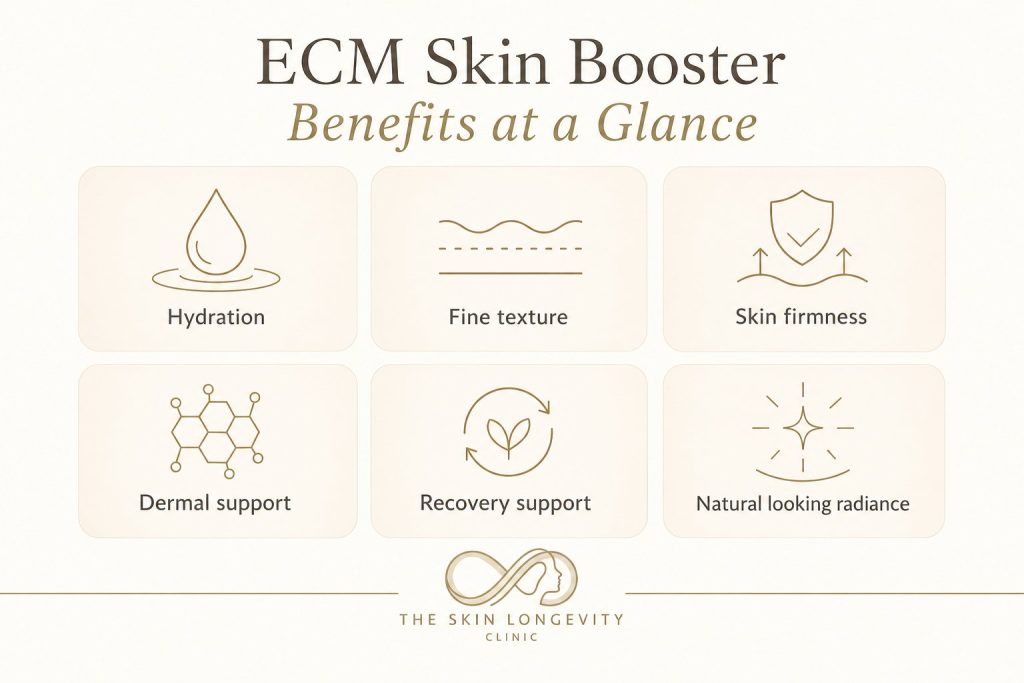
ECM Skin boosters may be considered for patients with dry or tired looking skin, fine texture, crepey skin quality, early firmness change, dullness or skin that appears less resilient. They may also be considered as part of a maintenance plan for patients who want gradual skin quality improvement without adding obvious volume.


In the 2026 phADM study, the treated side showed greater improvements than the hyaluronic acid treated side in several measured skin parameters. These included skin density, skin volume, elasticity, wrinkle depth, pore area, hydration and barrier related parameters across multiple time points. No serious adverse events were observed during the clinical study1.


These findings are promising because they suggest that ECM focused Skin boosters may do more than hydrate the skin temporarily. The study also reported laboratory findings that phADM enhanced fibroblast proliferation, extracellular matrix synthesis, hyaluronan production, collagen and elastin related activity, and suppression of inflammatory cytokines in activated macrophages.


Patients should interpret this evidence with balance. The clinical study involved 20 adults, which is useful but still small. Treatment outcomes can vary depending on the product used, injection technique, skin condition, treatment area and individual recovery response.

How do ECM Skin boosters work?


ECM Skin boosters work by supporting the dermal environment. The dermis is where collagen, elastin, fibroblasts and hyaluronic acid contribute to skin strength, hydration, elasticity and repair. With age and ultraviolet exposure, the extracellular matrix becomes more fragmented and less organised. This can contribute to thinner, less elastic and less hydrated skin.


The 2026 study is useful because it connects clinical improvement with biological mechanisms. In ex vivo human skin, phADM showed homogeneous dermal distribution and preservation of extracellular matrix architecture. In UVB irradiated human skin, it was associated with restoration of basement membrane related proteins such as nidogen I and collagen IV1.


In the laboratory, phADM treatment increased hyaluronic acid synthase and hyaluronic acid production in skin cells. It also increased collagen I, collagen III, elastin and growth factors in human dermal fibroblasts. These findings suggest that ECM based Skin boosters may support a broader dermal repair environment, although laboratory results do not always translate directly into the same degree of clinical effect in every patient.


At The Skin Longevity Clinic, the focus is on fitting the diagnosis. Dryness, fine texture, acne scars, pigment, laxity and facial volume loss may look similar to patients in the mirror, but they require different treatment directions.

FAQs

What is the ECM Skin booster procedure like?

The procedure begins with a consultation and skin assessment. Dr Rachel Ho will assess skin quality, hydration, texture, collagen support, pigmentation, inflammation, sensitivity, medical history and recovery tolerance.


The skin is cleansed and prepared before treatment. Depending on the treatment protocol, the ECM Skin booster may be placed into the skin using small injection points or a controlled delivery technique. The aim is to support skin quality without adding inappropriate volume.


Patients may feel mild discomfort during treatment. Temporary redness, small bumps, swelling, tenderness or bruising can occur after treatment. These usually settle, although individual recovery varies.


Aftercare is important. Patients may be advised to avoid strong skincare actives, excessive heat, heavy exercise, alcohol or facial massage for a short period, depending on the treatment performed.

How long does it take to see results from ECM Skin boosters?

Results are usually gradual. Some patients may notice that the skin feels more hydrated or comfortable in the early period. Texture, firmness and radiance may improve over the following weeks as the skin responds.


In the phADM study, skin parameters were assessed over 20 weeks, which is helpful because ECM remodelling is not expected to behave like an instant surface treatment. The study reported improvements in objective and subjective measures at multiple time points, including skin density, hydration, barrier related measures, wrinkle depth and pore area1.


The timing depends on the product used, skin condition, treatment area, number of sessions and the patient’s biological response. Patients with stable skin and good recovery capacity may respond differently from patients with active inflammation, sensitivity or disrupted barrier function.


A review allows the doctor to assess whether the treatment has improved the intended concern and whether maintenance or combination treatment is appropriate.

How long do ECM Skin booster results last?

Duration varies. It depends on the product, treatment protocol, age, skin quality, lifestyle, sun exposure, inflammation, stress, weight change and maintenance plan.

The 2026 study followed participants for 20 weeks after treatment and suggested durable dermal remodelling within that study period. The authors concluded that phADM functioned as a restorative skin Skin booster that promoted dermal remodelling and functional rejuvenation with a favourable safety profile.

In real world practice, many skin quality treatments are maintained through periodic sessions rather than a single permanent treatment. A patient with mild dehydration and good skin stability may need a different plan from a patient with crepey skin, acne scarring or menopausal skin change.

Is there downtime for ECM Skin boosters?

ECM Skin boosters usually have limited social downtime, but they are still injectable medical aesthetic treatments. Temporary redness, swelling, bumps, tenderness or bruising can occur at injection sites.


Minimal downtime does not mean zero risk. Infection, prolonged swelling, nodules, unevenness, allergic reaction or vascular complications are uncommon but possible with injectable treatments. Proper assessment, sterile technique and appropriate aftercare are important.


Patients with active acne, eczema, rosacea flare, skin infection or unstable pigmentation may need to stabilise the skin before proceeding.

ECM Skin Boosters Compared With Other Treatment Directions

Treatment direction Often considered for How it differs from ECM Skin Boosters
Lasers Pigmentation, redness, texture or scars Targets pigment, vessels, water or resurfacing needs
RF microneedling Acne scars, pores, dermal remodelling Uses microneedles with radiofrequency energy
HIFU or RF tightening Laxity and firmness Energy based tightening rather than injectable skin quality support
Dermal fillers Volume loss, hollowing, structural support Restores volume rather than improving skin quality alone
Botulinum toxin Movement lines and selected muscle concerns Relaxes muscles rather than improving hydration or dermal support

Can ECM Skin boosters be combined with other aesthetic treatments?

Yes, ECM Skin boosters may be combined or sequenced with other aesthetic treatments when appropriate. The sequence depends on the diagnosis.


Patients with pigmentation may need sunscreen, pigment control and lasers. Patients with acne scars may need RF microneedling, fractional laser, subcision or collagen support. Patients with laxity may need HIFU, radiofrequency tightening or collagen biostimulators. Patients with hollowing or facial deflation may need dermal fillers or structural support.


ECM Skin boosters can be useful when the main concern is skin quality, hydration, fine texture or dermal support. Combination treatment may be helpful when several layers are contributing to the concern, but doing too much too quickly may increase swelling, irritation or downtime.


At The Skin Longevity Clinic, the treatment plan is sequenced according to skin readiness and clinical priority.

Who may be suitable for ECM Skin boosters?

ECM Skin boosters may be suitable for patients who want natural looking improvement in skin quality, hydration, crepey texture, early firmness change or tired looking skin.


They may be especially relevant for patients who do not need facial reshaping, but want their skin to feel healthier, smoother and more resilient. They may also suit patients who want a gradual treatment that supports skin quality over time rather than an immediate contouring effect.


Patients whose main concerns are deep pigmentation, acne scars, marked volume loss, advanced sagging or active inflammation may need a different treatment first. The most suitable patient is one whose skin concern matches what ECM Skin boosters are designed to improve.

Doctor Rachel’s Takeaway

ECM Skin boosters are best understood as skin quality treatments. They are not fillers for facial volume, lasers for pigmentation or lifting treatments for sagging. Their role is more specific: to support hydration, fine texture, dermal quality and early firmness changes in suitable patients.


The new phADM study is interesting because it supports the idea that an ECM focused Skin booster can influence more than superficial hydration. In that study, improvements were seen in skin density, elasticity, wrinkle depth, pore area, hydration and barrier related parameters, while laboratory work suggested activity in fibroblast function, ECM synthesis, hyaluronic acid production and inflammation related pathways.


At The Skin Longevity Clinic, I assess ECM Skin boosters within the context of the patient’s skin biology. I look at hydration, texture, collagen support, inflammation, pigment stability and recovery capacity before recommending treatment.


The best Skin booster is not the newest one or the most talked about one. It is the one that fits the diagnosis.


For patients considering ECM Skin boosters in Singapore, a doctor led consultation can help clarify whether the concern is truly skin quality, or whether another treatment such as laser, RF microneedling, HIFU, radiofrequency tightening, dermal fillers or collagen biostimulators would be more appropriate.

References

  1. Injectable Particulated Human Acellular Dermal Matrix Skinbooster for Skin Restoration: An Integrated Randomized, Split Face, Double Blinded Clinical Trial and Preclinical Study. Lee YI, Chau NH, Nguyen NH, Ham S, Baek Y, Kim J, Lee JH. International Journal of Molecular Sciences. 2026. Volume 27, Issue 5.
  2. Role of the Extracellular Matrix in Skin Aging and Dedicated Treatment. Sparavigna A. Plastic and Aesthetic Research. 2020.
  3. The Effectiveness of Injectable Hyaluronic Acid in the Improvement of the Facial Skin Quality: A Systematic Review. Ghatge AS, et al. Dermatologic Therapy. 2023.
  4. Injectable Non Animal Stabilized Hyaluronic Acid as a Skinbooster: An Expert Consensus. Belmontesi M, et al. Journal of Drugs in Dermatology. 2018.
  5. Skin Aging from Mechanisms to Interventions: Focusing on Dermal Aging. Shin SH, Lee YH, Rho NK, Park KY. Frontiers in Physiology. 2023. Volume 14.