

12 Mar Lifting Sagging Skin Without Surgery: The Role of Non-Surgical Regenerative Aesthetics
By Dr Rachel Ho | Aesthetic Doctor, Founder, The Skin Longevity Clinic, Singapore
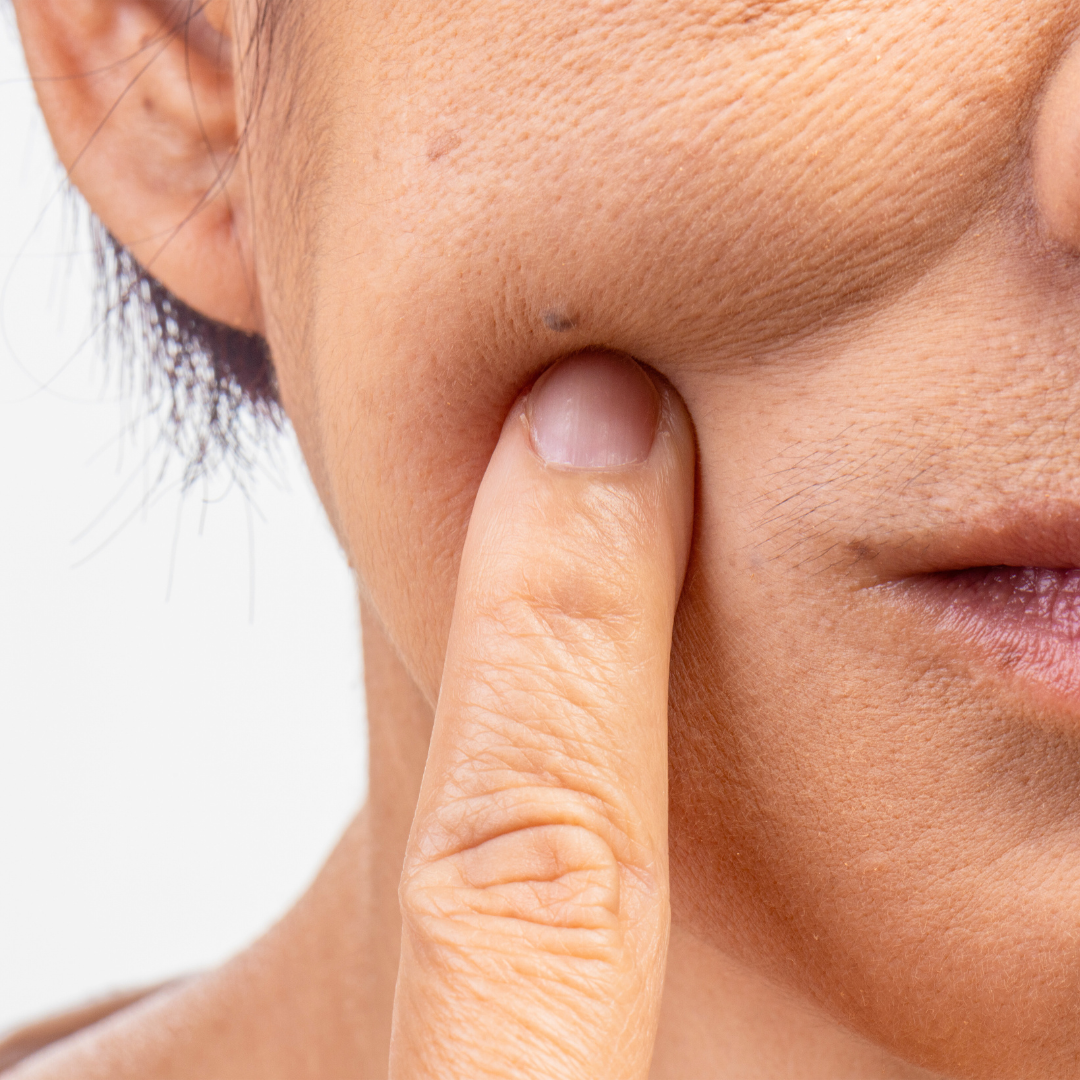
Many people first notice facial sagging in photos, on video calls, or when they look more tired than they feel. It often starts subtly with the eyelids look heavier, the cheeks seem flatter, the laugh lines deepen, the jawline softens, or the lower face begins to look less defined. That can feel unsettling, especially when the change is gradual enough that you cannot quite name it, but obvious enough that you know your face looks different. Facial ageing is rarely just sagging per se. It is usually a combination of changes happening across several anatomical planes at once.
What Does Facial Sagging Actually Look Like?
Facial sagging is a gradual, multi-layered redistribution of tissue with are recognisable and consistent clinical signs such as:
• Nasolabial Folds (Laugh Lines)
These are the lines running from the sides of the nose to the corners of the mouth. In youth, they are shallow or absent. As soft tissue descends and mid-face volume redistributes, these folds deepen — not because lines are forming, but because the cheek tissue that once sat above them has migrated downward, creating a fold in its wake.
• Jowls and Loss of Jawline Definition
One of the most common early complaints, particularly from the mid-30s onward, is a softening of the jawline. The skin and fat compartments of the lower face, no longer held in position by adequate soft tissue support, begin to descend over the mandibular border. The result is a loss of jawline definition as the jaw descends into the neck.
• Hooded Upper Eyelids
Descent of the brow and forehead tissues causes the soft tissue above the upper lid to fold forward and downward, reducing the visible lid space. What appears to be an eyelid problem is, in many cases, a brow position problem is a manifestation of volume loss and gravitational descent in the upper face.
• Marionette Lines
Lines extending downward from the corners of the mouth give the lower face a downturned, heavy appearance. Again, this is a structural issue: the ligamentous supports that tether the skin to underlying bone weaken over time, allowing tissue to descend into these predictable patterns.
• A General Sense of Heaviness or Looking tired
Patients often describe their concern simply as looking tired due a downward drag to features that once appeared lifted and alert. This is perhaps the most holistic expression of facial sagging: not one line or one fold, but an overall loss of vertical support across the face.
Why Does Sagging Occur? The Science Across the Facial Planes
To understand why the face sags, we must remember that the face is as a series of interconnected layers, each of which undergoes distinct age-related changes. Facial ageing is a three-dimensional process occurring simultaneously across the skin, soft tissue, fat compartments, and bone.
The Skin Layer: Collagen and Elastin Loss
The dermis is the structural foundation of the skin. It is composed primarily of collagen (predominantly Type I and Type III) and elastin fibres, synthesised by fibroblasts. From the mid-20s onward, collagen production begins to decline — at approximately 1% per year — while enzymatic degradation continues. The result is a progressively thinner, less resilient dermis that cannot maintain the same tension and recoil it once could. Elastin fibres, responsible for the skin’s ability to snap back, undergo fragmentation with UV exposure and chronological ageing. The skin becomes lax.
The Subcutaneous Fat: Compartment Redistribution
The face is not padded with a single sheet of fat. It contains discrete anatomical fat compartments — including the malar, nasolabial, buccal, and jowl compartments — each with its own blood supply, ligamentous attachments, and ageing behaviour. Some compartments atrophy and deflate with age, contributing to hollowing (particularly in the temples, tear troughs, and mid-cheeks). Others may hypertrophy or descend. The net effect is a shifting of volume from areas of youthful fullness toward the lower face and jowl region.
The SMAS and Retaining Ligaments: The Structural Scaffolding
Beneath the subcutaneous fat lies the Superficial Musculo-Aponeurotic System, or SMAS, a fibromuscular layer that connects facial muscles to the overlying skin and plays a central role in facial movement and support. The SMAS is anchored to the underlying bone via retaining ligaments: the zygomatic, mandibular, and masseteric ligaments, among others.
With age, these ligaments elongate and weaken. The SMAS loses tone. The soft tissue that once sat in a lifted, anterior position begins to descend in the direction of gravity. This is why SMAS-level interventions such as surgical facelifts or, non-surgically, HIFU produce more meaningful lifting results.
The Bony Scaffold: Skeletal Resorption
Perhaps the most underappreciated contributor to facial ageing is the skeleton itself. The facial bones undergo continuous remodelling throughout life, and with age, certain regions demonstrate measurable resorption. The orbital rim expands, deepening the under-eye hollow. The maxilla retracts, reducing support to the midface and lips. The mandible undergoes resorption at the chin and angle, weakening the structural base on which all overlying tissue rests.
This bony volume loss cannot be addressed by skin tightening alone. It is a key reason why injectable volumisation — strategically placed — remains an important component of a comprehensive rejuvenation plan.
Ultimately, facial ageing is not solely a skin problem. It is a structural problem that happens to show up on the surface.
Non-Surgical Treatment Options: What They Are and How They Work
The non-surgical landscape for facial sagging has expanded considerably in the last decade. Each modality targets a different anatomical layer and addresses a different component of the ageing process. Understanding what each treatment does — and does not do — is essential to setting realistic expectations and building an effective plan.
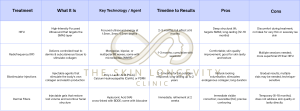
1. High-Intensity Focused Ultrasound (HIFU)
HIFU uses focused ultrasound energy to create precise thermal coagulation points at targeted depths within the tissue — specifically at 1.5mm (dermis), 3mm (deep dermis and subcutaneous tissue), and 4.5mm (the SMAS layer). The controlled thermal injury stimulates a wound-healing response, triggering neocollagenesis and, crucially, contraction and lifting of the SMAS — the same layer addressed in a surgical facelift.
Because HIFU targets the deepest non-surgical layer of the face, it isa non-invasive modality capable of producing a genuine structural lift. Treatment sessions typically last 60 to 90 minutes, and most patients experience mild to moderate discomfort during the procedure, which resolves shortly after. The inflammatory cascade initiated by HIFU is gradual: initial tightening is noticeable within weeks, with full collagen remodelling occurring over 3 to 6 months. Results typically endure for 12 to 18 months.
• Key active agent: Focused ultrasound energy at specific tissue depths
• Timeline: 2–3 months for visible lift; full effect at 6 months
• Ideal for: Jawline definition, jowl reduction, brow lifting, neck laxity
2. Radiofrequency (RF) and Microneedling RF (MNRF)
Radiofrequency technology delivers controlled thermal energy into the dermis and subcutaneous layer through electrical current. The heat generated, typically between 40–70°C within target tissue, disrupts existing collagen fibre architecture and stimulates robust neocollagenesis. Monopolar RF systems penetrate more deeply; bipolar systems are more superficial and precise; newer combined platforms offer layered treatment.
Microneedling RF (MNRF) combines the controlled micro-injury of microneedling with insulated needles that deliver RF energy directly to a specified tissue depth, bypassing the epidermis and targeting the deeper dermis with precision. This combination is particularly effective for skin laxity, textural improvement, enlarged pores, and early jowling. RF treatments are generally more comfortable than HIFU and deliver meaningful improvements in skin quality alongside modest lifting effects. Multiple sessions (typically 3 to 6) are recommended for optimal results.
• Key active agent: Radiofrequency electrical energy (thermal stimulation)
• Timeline: 1–3 months per session; cumulative improvement with a course
• Ideal for: Skin quality, early laxity, texture, under-eye area
3. Biostimulator Injections
Biostimulators represent a distinct category of injectables that stimulate the body’s own collagen and elastin synthesis. The most established biostimulators in clinical use include hyaluronic acid, Poly-L-Lactic Acid (PLLA), which acts as a scaffold for fibroblast activation and gradual volumisation through endogenous collagen production; Calcium Hydroxylapatite (CaHA), a mineral-based agent that provides immediate but modest volume while triggering sustained collagen stimulation; and Polynucleotides (PDRN/PN), derived from purified salmon DNA fragments, which have been shown to activate fibroblast proliferation and tissue repair pathways.
Unlike hyaluronic acid fillers, biostimulators do not provide immediate volume correction. Their results emerge gradually over 2 to 3 months as new collagen is laid down, producing a natural-looking improvement in skin firmness, elasticity, and volume that can last up to 18 to 24 months. They are particularly well-suited to patients who want structural improvement without an obvious “filled” appearance.
• Key active agents: Hyaluronic acid, Poly-L-Lactic Acid (PLLA), Calcium Hydroxylapatite (CaHA), Polynucleotides (PDRN)
• Timeline: 2–3 months for full collagen response; results lasting up to 24 months
• Ideal for: Volume restoration, skin quality, diffuse tissue laxity
5. Dermal Fillers
Dermal fillers are most commonly composed of cross-linked hyaluronic acid (HA) work by physically replacing lost volume in specific anatomical compartments. HA is a naturally occurring polysaccharide present in the skin’s extracellular matrix; when injected in its cross-linked, gel form, it integrates with surrounding tissue and provides immediate structural support and volumisation.
Strategic filler placement can recontour the cheeks, restore the bony projection lost through skeletal resorption, lift and redefine the jawline, address hollowing in the tear troughs and temples, and subtly elevate descending soft tissue by restoring the scaffolding beneath it. Fillers do not tighten skin or address intrinsic laxity — but in the context of a comprehensive treatment plan, they are an extraordinarily powerful tool for facial architecture. HA fillers are fully reversible with hyaluronidase and generally last between 9 and 18 months depending on the product, placement, and individual metabolism.
• Key active agent: Cross-linked Hyaluronic Acid (HA) with BDDE stabiliser
• Timeline: Immediate; settling and refinement at 2 weeks
• Ideal for: Structural volume restoration, jawline definition, targeted contouring
Why am I not seeing results from my lifting treatments
Ageing occurs across multiple anatomical planes simultaneously, and no single modality addresses all of them.
A patient who undergoes HIFU for structural lifting will benefit from SMAS-level tightening and improved jawline definition but if they also have significant volume loss in the mid-cheeks, the lifted skin has less to sit on, and results will be suboptimal. A patient who receives filler in the cheeks without addressing underlying skin laxity may find that the added volume, without tone, produces a heaviness rather than a lift. And a patient who focuses only on surface-level microneedling, however diligently performed, is working at the wrong depth to address structural descent.
The most effective outcomes come not from choosing the “best” treatment, but from choosing the right combination of treatments for the right layers of your specific anatomy.
This is why combination treatment protocols that address the skin, the soft tissue, and the structural scaffold in a sequenced, coordinated approach consistently outperform single-modality strategies by addressing the different aspects of facial aging. The appropriate combination, timing, and sequence will differ for every individual based on age, the degree of change across each anatomical layer, skin quality, lifestyle, and the outcome they are hoping to achieve.
It also means that not every patient needs every treatment. Some may respond beautifully to HIFU alone in the early stages. Others may benefit from a carefully placed biostimulator alongside a course of RF. The key is a thorough, layered assessment, not a protocol applied uniformly because it worked for someone else.
Lifiting Sagging with What Works For You — Not Against You
There is no universal prescription for skin longevity. Your face is not the same as anyone else. What works for one person may be unnecessary, or even counterproductive, for another.
At The Skin Longevity Clinic, Dr Rachel Ho takes a whole-face, whole-person approach to facial assessment. Before any treatment recommendation is made, she evaluates the full picture: the quality and thickness of your skin, the degree of change across each anatomical layer, your facial proportions and natural structure, your lifestyle factors and the skincare foundation already in place.
The conversation does not end after your first appointment. Skin longevity is a long-term relationship with your skin, with the factors that influence it, and with a clinician who understands how to support it over years, not just sessions.
Begin With a Conversation at The Skin Longevity Clinic with Dr Rachel Ho
If you have been looking at your face and noticing changes you cannot quite name, this is worth understanding. This is because the earlier the conversation, the more options you have, and the more natural and sustainable the results.
Dr Rachel Ho sees patients of all ages, skin types, and concerns at The Skin Longevity Clinic in Singapore. A consultation is not a commitment to treatment. It is simply a chance to understand your skin properly and to know what is working for you, not against you.