

02 May Skin Longevity Assessment in Singapore: What It Measures and Who It Is For
By Dr Rachel Ho | Aesthetic Doctor, Founder, The Skin Longevity Clinic, Singapore
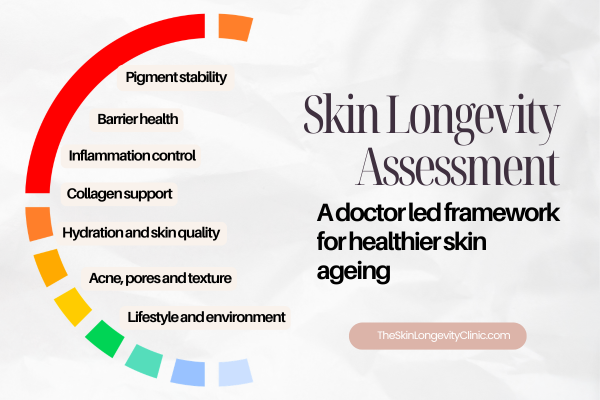
A skin longevity assessment is a doctor led evaluation of how your skin is ageing, functioning and responding to stress. It looks beyond visible concerns such as pigmentation, pores, wrinkles and dullness, so that treatment decisions can be based on skin health rather than trends. For patients searching for a skin longevity clinic Singapore, the aim is often clarity. They want to know what their skin needs, what can wait, what should be avoided and which treatments are genuinely suitable for their goals. At The Skin Longevity Clinic in Singapore, Dr Rachel Ho focuses on skin longevity, refined rejuvenation and personalised aesthetic care. Her clinic describes skin longevity as an approach that considers barrier strength, inflammation control, pigment stability and collagen integrity as part of healthy skin ageing.
: Standard skin assessment versus skin longevity assessment
General Skin assessment
Skin longevity assessment
Looks at what is visible today.
Looks at visible concerns and underlying skin behaviour
Often focuses on spots, pores, wrinkles and sagging in isolation
Reviews pigment, barrier, inflammation, collagen, hydration and lifestyle factors
May lead directly to product or procedure suggestions
Starts with diagnosis, suitability and skin readiness
Useful for simple cosmetic review
Useful for prevention, maintenance and long term planning
May not fully assess sensitivity or treatment risk
Considers irritation, pigment risk and recovery capacity
Focuses on today
Focuses on today and future skin resilience
Raphael
Thornton
Shelby
Dunlap
| General Skin assessment | Skin longevity assessment |
|---|---|
| Looks at what is visible today. | Looks at visible concerns and underlying skin behaviour |
| Often focuses on spots, pores, wrinkles and sagging in isolation | Reviews pigment, barrier, inflammation, collagen, hydration and lifestyle factors |
| May lead directly to product or procedure suggestions | Starts with diagnosis, suitability and skin readiness |
| Useful for simple cosmetic review | Useful for prevention, maintenance and long term planning |
| May not fully assess sensitivity or treatment risk | Considers irritation, pigment risk and recovery capacity |
| Focuses on today | Focuses on today and future skin resilience |
| Raphael | Thornton |
| Shelby | Dunlap |
What is a skin longevity assessment, and how does it differ from a general consultation?
A skin longevity assessment is a structured consultation that evaluates your skin health, skinspan and ageing pattern before treatment is recommended. It considers what is happening on the surface of the skin, as well as the biological and lifestyle factors that influence how the skin behaves over time.
This is different from a simple facial analysis. A standard analysis may describe what is visible, while a skin longevity assessment asks why the concern is happening, how stable the skin is and whether the skin is ready for treatment.
At The Skin Longevity Clinic, the assessment framework includes barrier health, pigment stability, inflammation, collagen support, facial structure and lifestyle load. This gives the doctor a more complete view of the skin before deciding what should come next.
Why skin longevity matters
Skin ageing is not caused by age alone. Scientific reviews on the skin ageing exposome identify ultraviolet exposure, pollution, tobacco exposure and other lifestyle factors as contributors to visible ageing and structural skin changes.
This explains why two people of the same age can have very different skin concerns. One person may develop pigmentation and dullness, while another may notice redness, sensitivity, adult acne or early loss of firmness.
Skin longevity focuses on helping the skin stay healthier and more resilient for longer. The goal is not to erase every line, but to preserve function, improve skin quality and make treatment choices that still make sense years later.
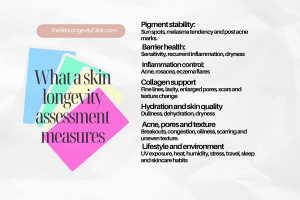
A skin longevity assessment reviews multiple domains of skin health, including pigment behaviour, barrier function, inflammation, collagen support, hydration and environmental exposure.
What does a skin longevity assessment measure?
A skin longevity assessment measures visible concerns, functional skin health and future risk factors. It should not be reduced to a single skin score, because a number alone cannot explain the full clinical picture.
A good skin assessment Singapore should usually consider pigmentation, redness, pores, wrinkles, texture, acne tendency, hydration, barrier function, sensitivity, sun exposure, collagen related changes and treatment tolerance. These findings are then interpreted together with your medical history, skincare routine, lifestyle and aesthetic goals.
1. Pigmentation and uneven tone
Pigmentation is one of the most common concerns in Singapore. Brown patches, sun spots, melasma and post acne pigmentation can look similar, but they do not always behave in the same way.
A skin longevity assessment helps identify whether pigmentation is stable, easily triggered or linked to inflammation. This matters because pigment prone Asian skin can worsen if treatment is too aggressive or poorly timed.
2. Sun damage and environmental exposure
Sun exposure is a major driver of pigmentation, roughness and collagen breakdown. In Singapore, ultraviolet exposure is relevant throughout the year, even for people who spend much of the day indoors.
The assessment should review sunscreen use, commuting habits, outdoor activities, travel, skincare photosensitivity and previous treatment history. This helps create a plan that treats existing concerns while reducing the chance of recurrence.
3. Skin barrier health
The skin barrier affects hydration, comfort, sensitivity and recovery after treatment. When the barrier is weak, the skin may sting, flush, peel, feel tight, break out or react badly to products that previously seemed harmless.
Barrier assessment is important because irritated skin is often not ready for aggressive procedures. Research also supports transepidermal water loss as a widely used objective measure of skin barrier function in healthy skin and skin disease.
4. Inflammation and sensitivity
Inflammation can appear as acne, redness, rosacea tendency, eczema flares, recurrent irritation or lingering marks after breakouts. Even when it looks mild, repeated inflammation can affect pigmentation, texture and overall skin quality.
A careful assessment helps decide whether the first priority should be calming the skin rather than treating lines, spots or pores. In many cases, calm skin responds better, heals better and tolerates treatment more predictably.
5. Collagen support and firmness
Collagen related ageing may show as fine lines, crepey texture, reduced firmness, enlarged pores, acne scars becoming more visible or a gradual loss of bounce. These changes are often subtle at first, which is why early assessment can be useful.
Research on photoageing describes the role of extracellular matrix changes, including collagen and elastin fibre breakdown, in the development of visible skin ageing.
A skin longevity assessment does not mean every patient needs a collagen treatment. It helps decide whether the skin needs protection, stimulation, maintenance, resurfacing or simply better daily support.
6. Hydration and skin quality
Dehydrated skin can look dull, tired and lined even when it is not severely aged. In Singapore, this can still happen despite humidity because air conditioning, travel, over cleansing, active skincare and barrier disruption can affect water balance.
The assessment should separate dehydration from true dryness, sensitivity and barrier damage. This distinction matters because adding stronger actives may worsen skin that actually needs repair.
7. Acne tendency, pores and texture
Adult acne, clogged pores and acne marks can affect skin quality well beyond the teenage years. They may also complicate pigmentation and make the skin appear uneven under light.
A skin longevity assessment reviews active breakouts, oiliness, congestion, post inflammatory pigmentation and textural marks. This helps decide whether the plan should begin with acne control, pigment management, resurfacing, barrier support or a combination of these.
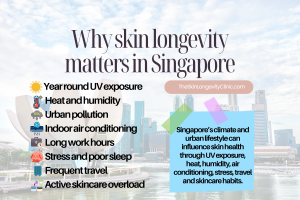
Singapore’s climate and urban lifestyle can influence skin health through UV exposure, heat, humidity, air conditioning, stress, travel and skincare habits.
Who is a skin longevity assessment for?
A skin longevity assessment is suitable for adults above 25 who want a clearer and more evidence based understanding of their skin. It is particularly useful when the goal is prevention, maintenance, natural looking improvement and better treatment selection.
It is also helpful for professionals, executives, founders and frequent travellers who prefer structured decision making. Many discerning patients do not want to chase every new treatment, and they value a plan that explains what is necessary, what is optional and what may not be suitable.
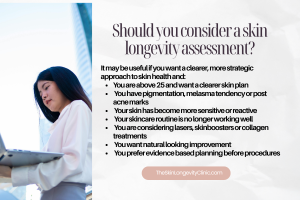
A skin longevity assessment may be helpful for adults who want a structured plan for pigmentation, sensitivity, collagen support, acne, texture or long term skin maintenance.
You may benefit from a skin longevity assessment if:
You may benefit if you have pigmentation, melasma tendency, dullness, sensitivity, redness, fine lines, enlarged pores, acne marks, rough texture, dehydration or reduced firmness. You may also benefit if your usual skincare is no longer working or your skin has become more reactive with age.
The assessment is also useful before aesthetic treatments such as lasers, skinboosters, collagen stimulating treatments, resurfacing procedures or injectables. It allows the doctor to assess whether your skin is ready and whether the treatment fits your longer term goals.
Who may not need a detailed assessment?
Not every patient needs an extensive skin longevity assessment. If you have one straightforward concern and already know what you need, a focused medical consultation may be sufficient.
It may also be less relevant for someone who wants a single procedure without interest in prevention, maintenance or skin health planning. Skin longevity is most valuable when the goal is steady improvement and thoughtful ageing rather than a quick cosmetic change alone.
Why a skin longevity assessment matters in Singapore
| Concept | Why it matters | Clinical takeaway |
|---|---|---|
| Skin ageing exposome | UV exposure, pollution, lifestyle and environment can influence visible skin ageing. | A skin longevity plan should include daily habits, not only procedures. |
| Skin barrier function | Reactive or irritated skin may tolerate active skincare and procedures poorly. | Barrier repair may need to come before stronger treatments. |
| Pigment behaviour | Hyperpigment prone skin can darken after irritation or overly aggressive treatment. | Treatment should be measured, especially for melasma prone skin. |
| Collagen support | Collagen changes affect firmness, pores, scars and skin quality. | Collagen focused treatments should be selected and sequenced carefully. |
What happens after the assessment?
After the assessment, your doctor should explain the key findings in clear and practical language. A good plan should include skincare priorities, sunscreen advice, suitable treatments, expected timelines, downtime, maintenance and what should be avoided.
The treatment should follow the diagnosis, not the other way around. Sometimes the best first step is barrier repair, acne control, sunscreen optimisation or simplifying skincare before any procedure is considered.
At The Skin Longevity Clinic, consultations are described as personalised and tailored to skin concerns, facial ageing goals and long term skin health. This approach is especially relevant for patients who want refined results without looking over treated.
Why choose a skin longevity clinic Singapore?
A skin longevity clinic Singapore should understand the realities of ageing skin in a tropical urban environment. Heat, humidity, ultraviolet exposure, visible light, pollution, air conditioning, stress and frequent travel can all affect pigmentation, hydration, inflammation and skin resilience.
The value of this approach lies in precision and restraint. A thoughtful assessment can prevent unnecessary treatment, reduce avoidable irritation and help patients choose options that suit their skin biology rather than market trends.
For well informed patients, this matters. The best aesthetic result is often not a dramatic change, but skin that looks healthier, calmer, more refined and still recognisably your own.
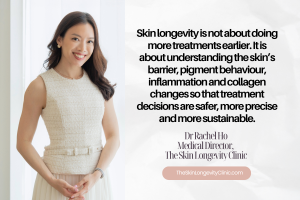
Dr Rachel Ho explains why a skin longevity assessment should focus on skin behaviour, treatment suitability and long term skin resilience.
Frequently asked questions about Skin Longevity Asseessments
Is a skin longevity assessment the same as a normal skin analysis?
No, a skin longevity assessment is broader than a normal skin analysis. It considers visible concerns, barrier function, inflammation, pigmentation behaviour, collagen support, lifestyle factors and treatment suitability.
A generic skin analysis may be useful, but it should not replace medical judgement. The most important step is how the doctor interprets the findings and turns them into a sensible plan.
Is a skin assessment in Singapore useful before aesthetic treatment?
Yes, a skin assessment in Singapore can be very useful before aesthetic treatment. It helps identify whether your skin is stable enough for lasers, injectables, resurfacing, skinboosters or collagen focused procedures.
This is especially important for patients with pigmentation, melasma, sensitivity, acne or a history of reacting poorly to treatments. In these cases, the safest plan may involve preparation before treatment begins.
Do I need treatments after a skin longevity assessment?
No, not every patient needs a procedure after the assessment. Some patients may benefit most from sunscreen correction, barrier repair, skincare simplification or monitoring.
If treatment is recommended, it should be chosen because it suits your skin and goals. It should not be recommended simply because it is available.
Is this suitable for adults in their late 20s or early 30s?
Yes, adults in their late 20s and early 30s can benefit from a skin longevity assessment. This is often when early pigmentation, texture changes, acne marks, dehydration, barrier issues and preventive collagen planning become more relevant.
The aim at this stage is not to over treat. The aim is to build habits and choose interventions carefully so that the skin remains healthy and resilient over time.
Is this suitable for melasma and pigmentation in Singapore?
Yes, a skin longevity assessment is relevant for melasma and pigmentation in Singapore. It helps assess pigment stability, inflammation, sun exposure, visible light exposure, skincare irritation and treatment tolerance.
This is important because pigmentation prone skin often needs a measured plan. Gentle consistency is usually safer than aggressive treatment that produces short term brightness but increases the risk of rebound.
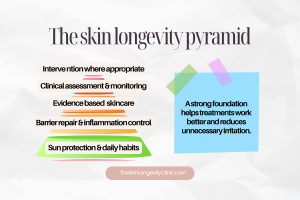
The skin longevity pyramid shows why sun protection, barrier health, skincare and clinical assessment should come before procedures.
Final takeaway on Skin Longevity Asssessments
A skin longevity assessment is for patients who want to understand their skin before deciding what to do next. It measures pigmentation, barrier health, inflammation, collagen support, hydration, skin quality and treatment suitability in a structured way.
For those searching for a skin longevity clinic Singapore or a professional skin assessment Singapore, the most valuable approach is clear, evidence based and personalised. The goal is healthier skin, better decisions and natural looking improvement that remains elegant over time.