


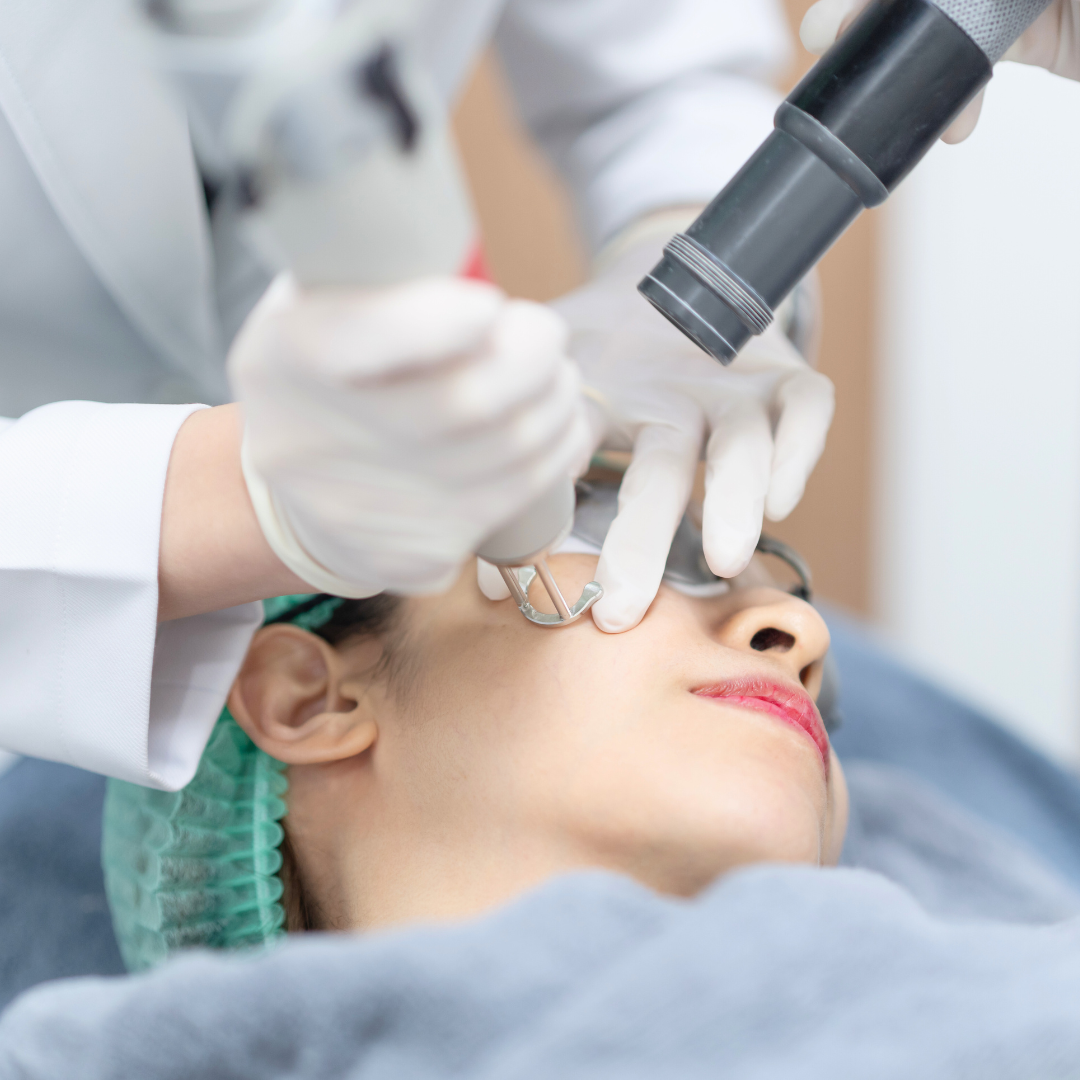
07 Mar Is Pico Laser the Best Treatment for Dark Spots?
By Dr Rachel Ho | Aesthetic Doctor, Founder, The Skin Longevity Clinic, Singapore
Dark spots are one of the most common concerns among my patients. Whether the diagnosis is melasma, solar lentigines, post-inflammatory hyperpigmentation from acne, or Hori’s naevus, my patients are looking for the same outcome of treating and preventing their hyperpigmentation.
A newer generation of laser technology emerged in 2012 and is becoming the preferred tool in evidence-based clinical practice for treatment of dark spots and dullness. Pico laser, named for the extraordinarily brief pulse durations it delivers, measured in picoseconds, or trillionths of a second. Pico second technology represents a meaningful clinical advance in how we treat dark spots, especially in patients with darker skin . In this review, let’s discuss why pico laser is generating so much interest, how it works, how it compares to Q-switched technology, and why it is particularly well-suited to Asian skin.
Why Is Pico Laser Becoming Popular?
Pico laser has become popular in Asia, especially Singapore, because it can target pigment with high precision while reducing unnecessary heat spread into surrounding skin. Majority of Singaporeans and Asians have Fitzpatrick skin types III to V i.e. higher baseline melanin content in their epidermis1. This means that any laser treatment generating significant heat within the skin carries a risk of further triggering hyperpigmentation, a complication known as post-inflammatory hyperpigmentation or PIH2,3.
The ultra-short pulse duration of picosecond lasers allows for more efficient energy transmission and less heat diffusion into surrounding tissue4-6. The result is a treatment with demonstrably improved efficacy and a substantially lower risk profile for the skin types most commonly seeking treatment for pigmentation4-7.
Clinically, picosecond laser technology is also supported by robust evidence for treatment of hyperpigmentation and tattoo pigment clearance8-13. Multiple studies report effective pigment reduction with a favorable side effect profile when parameters are chosen appropriately8-13.
How Pico laser works in lightening dark spots
Most dark spots involve excess melanin in the epidermis, dermis, or both. Pico laser delivers energy in extremely short pulses that break pigment into smaller particles through a pressure wave effect rather than primarily through heat4-7. This effect is called the photoaccoustic effect.
In a clinical context, picosecond lasers have shown measurable improvement in conditions driven by hyperpigmentation. For example, published work in Asian patients suggests picosecond laser treatment can reduce melanin content with fewer adverse events compared with certain nanosecond lasers alternatives in challenging pigment cases such as melasma and post inflammatory hyperpigmentation8, 14-17.
The key for skin longevity is sufficient pigment fragmentation while minimising collateral injury that can trigger rebound pigmentation, especially in Asian skin types that are more reactive to inflammation.
How does pico laser differ from Q-switched laser?
Both pico laser and q-switched laser treatments have a place in clinical practice. Their physics and evidence helps guide which is most appropriate for a given patient and indication.
Mechanism of Action
The Q-switched laser delivers energy in nanosecond pulses and works primarily through a photothermal mechanism. Rapid heating of melanin granules causes them to fragment through thermal expansion. The pico laser delivers energy in picosecond pulses and produces a predominantly photomechanical effect, fracturing pigment through acoustic pressure waves with significantly less heat generation in surrounding tissue4-6.
Efficacy in Pigmented Lesions
Both technologies are effective for treating epidermal pigmentation including solar lentigines and freckles. For dermal pigmentation, such as Hori’s naevus and Nevus of Ota, pico laser has demonstrated superior results in peer-reviewed research8,17.
For melasma, which is arguably the most common and most challenging pigmentation condition in Asian patients, a 2023 systematic review and meta-analysis published in Lasers in Medical Science, which included six randomised controlled trials, found that 1064 nm pico laser significantly reduced the melasma area and severity index with no significant side effects18.
Risk of Post-Inflammatory Hyperpigmentation
Evidence shows that for Asian and darker-skinned patients, pico lasers have a lower risk of PIH as compared to Q-switched lasers. Pico laser, because of its predominantly photomechanical mechanism and reduced thermal diffusion, carries a lower risk of PIH4-7.
Number of Laser Sessions Required
Pico lasers generally achieve the same or superior clinical endpoints in fewer treatment sessions than Q-switched nanosecond lasers, due to more efficient pigment fragmentation. Published estimates suggest pico laser typically requires two to five sessions for most benign pigmented lesions, while Q-switched lasers may require four to eight sessions for comparable results, depending on the type and depth of pigmentation10, 16, 19-21.
Why Pico Laser Is the Preferred Choice for Treating Hyperpigmentation in Asian Skin
In summary, Asian skin types typically have a higher baseline melanin content which makes the skin more reactive to heat. This reactivity increases the risk of complications like worsening of dark spots or thermal injury when using traditional heat based lasers. Because pico lasers rely more heavily on photoacoustic effects rather than heat, they can treat pigment with less thermal diffusion in surrounding tissue. This may reduce the risk of triggering additional pigmentation in reactive skin.
Pico Laser, Skin Longevity, and Long-Term Skin Health
Pico laser represents one of the newer and leading technologies for the treatment of hyperpigmentation. When used appropriately, it can effectively lighten dark spots while minimising unnecessary thermal damage to surrounding tissues, especially in Asian skin.
From a skin longevity perspective, this matters because pigment stability is one of the hallmarks of skin longevity. Treatments that respect the biology of melanocytes and the skin barrier are more likely to produce stable results over time.
When combined with sun protection, topical pigment control, and a thoughtful long term treatment strategy, pico laser treatments can improve clarity without compromising skin longevity. Always understand your skin biology before choosing treatments for sustainable results and skin health.
References
1. Assessment of skin types, skin colours and cutaneous responses to ultraviolet radiation in an Asian population. Wee et al. Photodermatol Photoimmunol Photomed. 1997 Oct-Dec;13(5-6):169-72.
2. Adverse Events of Nonablative Lasers and Energy-Based Therapies in Subjects with Fitzpatrick Skin Phototypes IV to VI: A Systematic Review and Meta-Analysis. Hu et al. Aesthet Surg J. 2022 Apr 12;42(5):537-547.
3. Interventions to Prevent Postinflammatory Hyperpigmentation After Laser and Energy-Based Device Treatments: A Systematic Review and Network Meta-Analysis. Wongdama et al. Lasers Surg Med. 2026 Jan 14.
4. Lasers and Energy-Based Devices for Treatment of Pigmented Lesions With Histologic and Ultrastructural Imaging Correlation: A Systematic Review. Lee et al. Dermatol Surg. 2026 Mar 1;52(3):239-246.
5. Nonlinear absorption-based analysis of energy deposition in melanosomes for 532-nm short-pulsed laser skin treatment. Shimojo et al. Lasers Surg Med. 2023 Mar;55(3):305-315.
6. Evolution of the Picosecond Laser: A Review of Literature. Torbeck et al. Dermatol Surg. 2019 Feb;45(2):183-194.
7. Treatment of facial and non-facial lentigines with a 730 nm picosecond titanium: Sapphire laser is safe and effective. Kauvar et al. Lasers Surg Med. 2022 Jan;54(1):89-97.
8. Comparative appraisal with meta-analysis of picosecond versus nanosecond lasers for hyperpigmented disorders and tattoos. Wu et al. Lasers Med Sci. 2025 Nov 4;40(1):465.
9. The efficacy and the adverse reactions of laser-assisted tattoo removal – a prospective split study using nanosecond and picosecond lasers. Baumler et al. J Eur Acad Dermatol Venereol. 2022 Feb;36(2):305-312.
10. Evaluation of the safety and efficacy of the dual wavelength picosecond laser for the treatment of benign pigmented lesions in Asians. Kung et al. Lasers Surg Med. 2019 Jan;51(1):14-22.
11. Treatment of facial pigmented disorders with a 785-nm picosecond Ti:sapphire laser in Asians: A report of three cases. Hong et al. Dermatol Ther. 2022 Dec;35(12):e15919.
12. Clinical Evaluation of Safety and Efficacy of a 670-nm Picosecond Laser for Treatment of Benign Pigmented Lesions in Asians. Evangelista et al. Dermatol Surg. 2021 May 1;47(5):e153-e158.
13. Safety and Efficacy of a Novel 730 nm Picosecond Titanium Sapphire Laser for the Treatment of Benign Pigmented Lesions. Lipp et al. Lasers Surg Med. 2021 Apr;53(4):429-434.
14. A Prospective, Split-Face, Randomized Study Comparing Picosecond to Q-Switched Nd: YAG Laser for Treatment of Epidermal and Dermal Pigmented Lesions in Asians. Ungaksornpairote et al. Dermatol Surg. 2020 Dec;46(12):1671-1675.
15. 755-nm Picosecond vs. Nanosecond Alexandrite Lasers for Tattoo Removal: A Randomized, Split-Tattoo Clinical Trial. Ma et al. Plast Reconstr Surg. 2026 Feb 23.
16. Treatment of Laser-Responsive Dermal Pigmentary Conditions in Type III-IV Asian Skin With a 755-nm Picosecond Pulse Duration Laser: A Retrospective Review of Its Efficacy and Safety. Koh et al. Dermatol Surg. 2020 Nov;46(11):e82-e87.
17. Comparing the efficacy and safety of a 730-nm picosecond laser with a 532-nm Q-switched Nd:YAG laser for facial pigmented disorders: a retrospective comparative study. Lin et al. Eur J Med Res. 2026 Mar 4.
18. Efficacy and safety of picosecond laser for the treatment of melasma: a systematic review and meta-analysis. Feng et al. Lasers Med Sci. 2023 Mar 10;38(1):84.
19. Prospective comparison study of a 550 picosecond 755 nm laser vs a 50 ns 755 nm laser in the treatment of nevus of Ota. Imagawa et al. Lasers Med Sci. 2023 Jan 26;38(1):55.
20. Comparison of a picosecond alexandrite laser versus a Q-switched alexandrite laser for the treatment of nevus of Ota: A randomized, split-lesion, controlled trial. Ge et al. J Am Acad Dermatol. 2020 Aug;83(2):397-403.
21. A split-face, single-blinded, randomized controlled comparison of alexandrite 755-nm picosecond laser versus alexandrite 755-nm nanosecond laser in the treatment of acquired bilateral nevus of Ota-like macules. Yu et al. J Am Acad Dermatol. 2018 Sep;79(3):479-486.