

Lorient Element Skinbooster Singapore

Patients often ask about skinbooster treatments when their skin looks dull, uneven or tired despite a regular skincare routine. Some are concerned about melasma, post acne marks, patchy pigmentation or a general loss of brightness. Others want a treatment that supports skin clarity without making the face look filled or altered.


Lorient Element Skinbooster is a professional skinbooster used in clinic for selected patients with pigmentation, dullness and uneven skin tone. At The Skin Longevity Clinic, it is assessed as part of a broader skin quality plan that considers pigment type, inflammation, skin barrier function, sun exposure, trigger control and recovery capacity.


The aim is clearer, brighter and more even looking skin in suitable patients, without treating every pigmentation concern as though it has the same cause.

What is Lorient Element Skinbooster?


Lorient Element Skinbooster is a professional topical skinbooster developed to complement in clinic aesthetic procedures. It is commonly discussed for pigment focused concerns such as melasma, uneven skin tone, dullness and post inflammatory pigmentation.


The treatment should be understood as part of a clinical protocol rather than a simple home serum. In practice, the skin needs to be assessed first, because pigmentation can have several causes. Melasma, freckles, sun spots, post acne marks and pigment from irritation can look similar to patients, but they behave differently.


At The Skin Longevity Clinic, Dr Rachel Ho assesses the pigment pattern, skin sensitivity, barrier status and treatment history before deciding whether Lorient Element Skinbooster is appropriate.
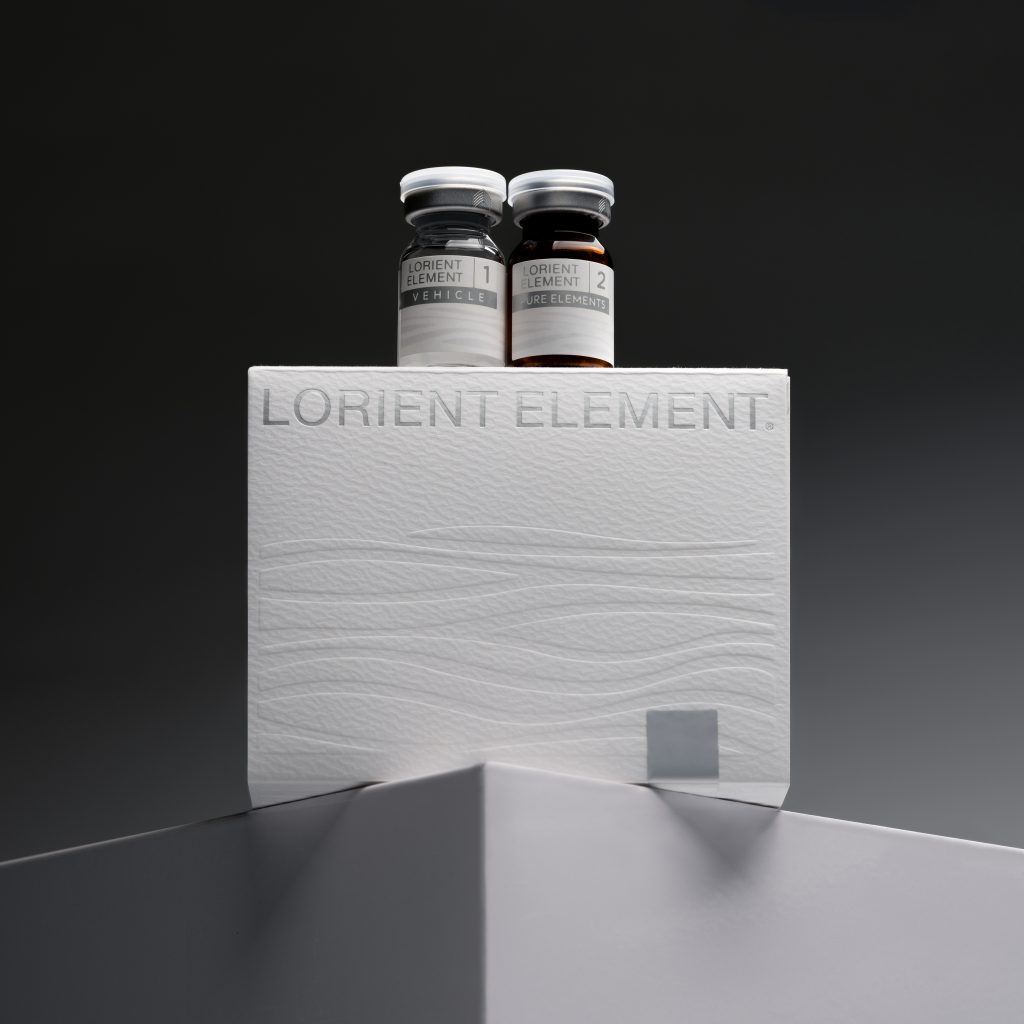
What are the benefits of Lorient Element Skinbooster?


Lorient Element Skinbooster may be considered for patients who want support for pigmentation, dullness and uneven skin tone. It may also be useful as part of a treatment plan after selected procedures when the aim is to support a brighter and more even complexion.


Potential benefits may include improved radiance, more even looking skin tone, support for pigment control and improvement in dullness. These outcomes depend on the diagnosis, delivery protocol, sun protection, skincare routine and the patient’s tendency to develop recurrent pigmentation.


This is especially relevant in Singapore, where ultraviolet exposure, heat, inflammation and hormonal triggers can worsen pigmentation. A skinbooster alone cannot control these triggers. A proper plan should include sunscreen, pigment stabilisation and realistic maintenance.

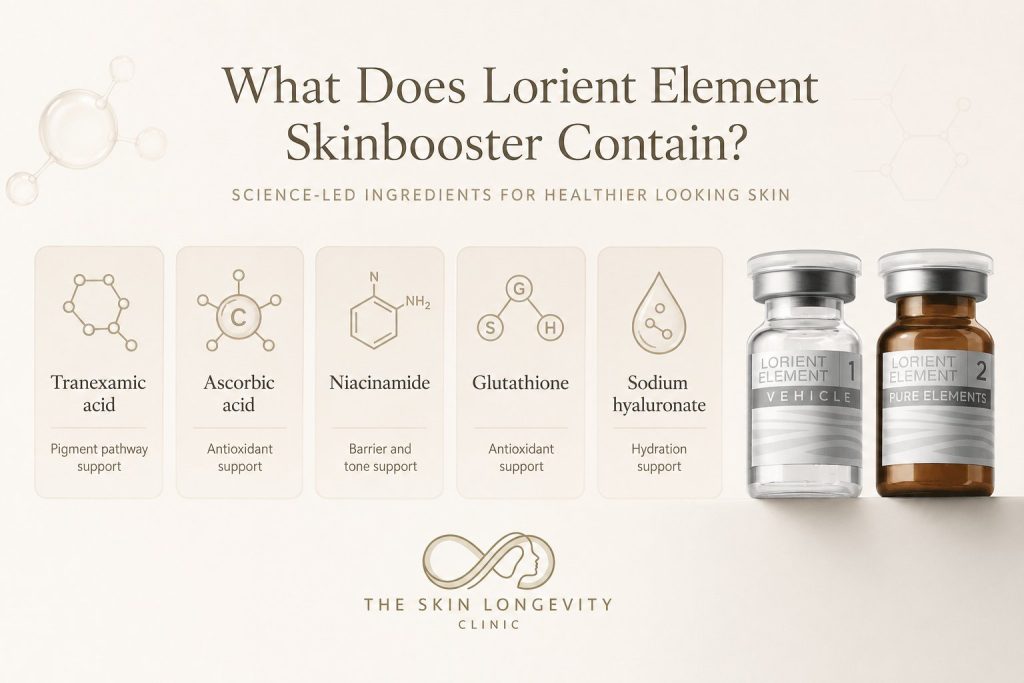
What does Lorient Element Skinbooster contain?

Lorient Element consists of active ingredients used to treat hyperpigmentation an dimprove photodamage in the skin. These active ingredients include: 

How does Lorient Element Skinbooster work?


Lorient Element Skinbooster works through a pigment focused combination approach. Instead of relying on one ingredient, it combines brightening, antioxidant, hydrating and pigment regulating ingredients.

FAQs

What is the Lorient Element Skinbooster procedure like?

The treatment begins with a consultation and skin assessment. Dr Rachel Ho will assess the patient’s suitability and type of hyperpigmentation.  


The skin is cleansed and prepared. In The Skin Longevity Clinic, Lorient Element Skinbooster may be applied as part of a professional protocol that improves delivery. The method should be individualised because sensitive, acne prone, melasma prone or recently irritated skin may need a gentler plan.


Patients may feel mild warmth, tingling or sensitivity depending on the accompanying procedure. Temporary redness or tightness may occur. Recovery varies according to the skin condition and delivery method used.


Aftercare is important. Patients are usually advised to avoid unnecessary heat exposure, strong actives and excessive sun exposure immediately after treatment. Sunscreen is essential because pigment treatment is difficult to maintain without photoprotection.

How long does it take to see results from Lorient Element Skinbooster?

Some patients may notice a fresher or brighter appearance in the early period. More meaningful changes in pigmentation and uneven tone usually require time, consistency and trigger control.


Melasma and post inflammatory pigmentation often require ongoing management. Results may depend on sun exposure, heat exposure, hormones, acne activity, irritation, skincare compliance and whether pigment is superficial or mixed.


A review plan allows the doctor to assess whether the skin is responding appropriately and whether Lorient Element should be repeated, combined or replaced with another treatment direction.

How long do results of Lorient Element Skinbooster last?

The duration of results of Lorient Element Skinbooster varies. Pigment improvement can fade if triggers like sun exposure, heat, inflammation, acne flares and hormonal changes cause recurrence. Patients with stable pigment and good skincare habits maintain results better than patients with ongoing inflammation or inconsistent photoprotection.


For many patients, Lorient Element Skinbooster is best seen as part of a maintenance strategy rather than a one time correction. A sustainable plan includes sunscreen, pigment control skincare, in clinic treatments and periodic review.

Is there downtime for Lorient Element Skinbooster?

Downtime depends on how the skinbooster the procedure it is paired with. The topical solution itself is designed for professional use, but redness, tingling, tightness or mild sensitivity may occur after treatment, especially if the skin has been prepared with an in-clinic procedure.


Patients with sensitive skin, rosacea, eczema, active acne or unstable melasma may need additional caution. A calmer skin barrier usually tolerates treatments more predictably.


The clinic will advise on aftercare, skincare restrictions and sun protection after treatment.

Can Lorient Element Skinbooster be combined with other aesthetic treatments?

Yes, Lorient Element Skinbooster may be combined or sequenced with other aesthetic treatments.


For pigmentation, especially melasma, it can be considered alongside chemical peels or selected laser treatments. For dullness and texture, it may be paired with skin quality treatments.

Who may be suitable for Lorient Element Skinbooster?

Lorient Element Skinbooster may be suitable for patients with dullness, uneven tone, post inflammatory pigmentation, selected melasma patterns or skin that needs pigment focused support after clinical assessment.


Patients whose main concerns are deep wrinkles, significant laxity, acne scars, volume loss or structural facial ageing may need a different treatment direction. A patient with skin laxity may need radiofrequency tightening or HIFU. A patient with acne scars may need RF microneedling or resurfacing. A patient with volume loss may need structural support.


The most suitable candidate is one whose concern matches pigment support and skin radiance rather than lifting, filling or scar remodelling.

Doctor Rachel’s Takeaway

Lorient Element Skinbooster is best understood as a pigment focused skinbooster for patients with dullness, uneven tone and pigmentation concerns like melasma. Its ingredient profile is clinically interesting because it brings together tranexamic acid, ascorbic acid, niacinamide, glutathione and sodium hyaluronate in a professional protocol.


At The Skin Longevity Clinic, Dr Rachel assesss Lorient Element Skinbooster within the context of the patient’s skin biology. Because the best skinbooster is the one that  addresses the patient’s diagnosis and the longer term plan.

References

  1. Lorient Element Product Information. Church Pharmacy. 2026. 
  2. High End Aesthetic Brand Lorient Gains Global Prestige at IMCAS 2026. Business Wire. 2026. 
  3. Lorient Element Product Overview. Multifrax Asia. 2026. 
  4. Tranexamic Acid for Hyperpigmentation Disorders. AlJabr A, et al. Dermatology and Therapy. 2026. 
  5. Tranexamic Acid for the Treatment of Hyperpigmentation and Telangiectatic Disorders Other Than Melasma. Chen T, et al. Clinical, Cosmetic and Investigational Dermatology. 2024. 
  6. Mechanistic Basis and Clinical Evidence for the Applications of Nicotinamide in Skin Aging Control and Pigmentation. Boo YC. Antioxidants. 2021. Volume 10, Issue 8. 
  7. Mechanistic Insights into the Multiple Functions of Niacinamide. Marques C, et al. International Journal of Molecular Sciences. 2024. Volume 25, Issue 9. 
  8. Exploring the Safety and Efficacy of Glutathione in Skin Lightening Therapies. Alzahrani TF, et al. Clinical, Cosmetic and Investigational Dermatology. 2025. 
  9. Topical Tranexamic Acid as a Promising Treatment for Melasma. Ebrahimi B, Naeini FF. Journal of Research in Medical Sciences. 2014. Volume 19, Issue 8.