
PLLA Collagen Biostimulator Singapore: Results and Safety

PLLA Collagen Biostimulator in Singapore

Poly L lactic acid, usually shortened to PLLA, is a biodegradable injectable material used to support gradual collagen formation and restore selected areas of facial volume loss. Unlike a hyaluronic acid gel, its main effect develops progressively as the surrounding tissue responds to the PLLA particles.

At The Skin Longevity Clinic in Singapore, PLLA collagen biostimulator treatment is considered within a wider assessment of facial structure, skin quality, volume distribution and ageing pattern. The aim is to decide whether gradual collagen remodelling, precise filler placement, an energy based treatment or a combination plan is most appropriate.

PLLA collagen biostimulators are best suited to selected patients who want progressive improvement in diffuse tissue support and understand that the result takes time to develop. Published studies report benefits in facial volume, wrinkles, elasticity and skin quality, although outcomes vary according to the formulation, treatment technique and individual response1,2.

PLLA collagen biostimulator at a glance

What is PLLA?

Poly L lactic acid, a biodegradable particulate injectable used to promote collagen remodelling

What is the main purpose?

Gradual improvement in diffuse facial volume loss, tissue support and selected skin quality concerns

When do results appear?

Changes build over several weeks to months rather than appearing fully on treatment day

How many sessions are needed?

A staged course is common, but the number of sessions and vials depends on the face and treatment goal

How long can results last?

A published randomised study found continuing benefit up to 25 months after the final treatment in the study population

Can PLLA be dissolved?

Hyaluronidase does not dissolve PLLA because it is not a hyaluronic acid gel

What is the downtime?

Temporary swelling, tenderness, redness or bruising may occur

What are the important risks?

Nodules, delayed inflammation, infection, asymmetry and rare vascular complications

What is a PLLA collagen biostimulator?

A collagen biostimulator is an injectable material that produces a controlled tissue response and encourages the skin to remodel its extracellular matrix. PLLA is one category of collagen stimulator used in aesthetic medicine.

PLLA particles are reconstituted in sterile fluid and placed in selected tissue planes. The fluid can create temporary fullness immediately after treatment, but this settles. The longer term change comes from the biological response around the particles, including macrophage signalling, fibroblast activity and new collagen formation as the material gradually degrades1,3.

PLLA is also sometimes described as a collagen stimulating filler or biostimulatory injectable. These terms refer to the same general treatment category, although PLLA differs from hyaluronic acid filler in its mechanism, timing and reversibility.

For a wider comparison of PLLA, calcium hydroxylapatite, PDLLA and polycaprolactone, read our guide to collagen biostimulator treatments in Singapore.

What can PLLA collagen biostimulator treatment improve?

PLLA collagen biostimulators may be considered when the main concern is a broad reduction in facial support rather than one small line or sharply defined contour. Potential treatment goals include:

  • Diffuse facial volume loss
  • Temple or lateral cheek hollowing
  • Reduced midface support
  • Softening of selected facial folds
  • Early lower face deflation
  • Reduced firmness and elasticity
  • Fine textural changes associated with collagen decline


Clinical reviews report improvements in facial volume, elasticity, wrinkle severity and skin quality after PLLA collagen biostimulators treatment. Study methods and treatment protocols vary, so the degree of improvement cannot be predicted from the product category alone1,2.

Which areas can be treated with a PLLA collagen biostimulator?

PLLA collagen biostimulator may be used in selected areas where gradual and diffuse support is appropriate. Commonly assessed areas include the temples, cheeks, lateral face and parts of the lower face.

Thin, highly mobile or anatomically delicate areas require more caution. PLLA collagen biostimulators are generally less suited to precise lip shaping, fine tear trough correction or small contour adjustments where an immediately visible and reversible gel may offer better control. Periorbital placement has also been associated with a higher risk of palpable papules or nodules in published reports4.

Treatment planning for an Asian face should consider facial width, projection, bone structure, soft tissue distribution, skin thickness and the patient’s own aesthetic goals. Ethnicity alone does not determine which injectable is suitable.

PLLA versus hyaluronic acid filler

PLLA and hyaluronic acid filler can both address facial volume loss, but they do so differently.

Feature PLLA collagen biostimulator Hyaluronic acid filler
Main effect Gradual collagen remodelling and diffuse tissue support Immediate gel volume and contour
Result timing Develops progressively Visible immediately, with refinement after swelling settles
Best suited to Broader volume loss and gradual support Precise contouring and localised volume correction
Treatment course Commonly staged across more than one session May be completed in one session, depending on the goal
Reversibility Cannot be dissolved with hyaluronidase Can usually be reduced with hyaluronidase
Maintenance Often planned over a longer interval Depends on product, area and tissue movement

A patient may benefit from one category, both categories in different areas or neither. The decision should be based on the cause of the visible change rather than a preference for one injectable name.

Read our guide to dermal fillers in Singapore for a broader explanation of immediate volumisation and structural contouring.

PLLA collagen biostimulators versus energy based collagen treatment

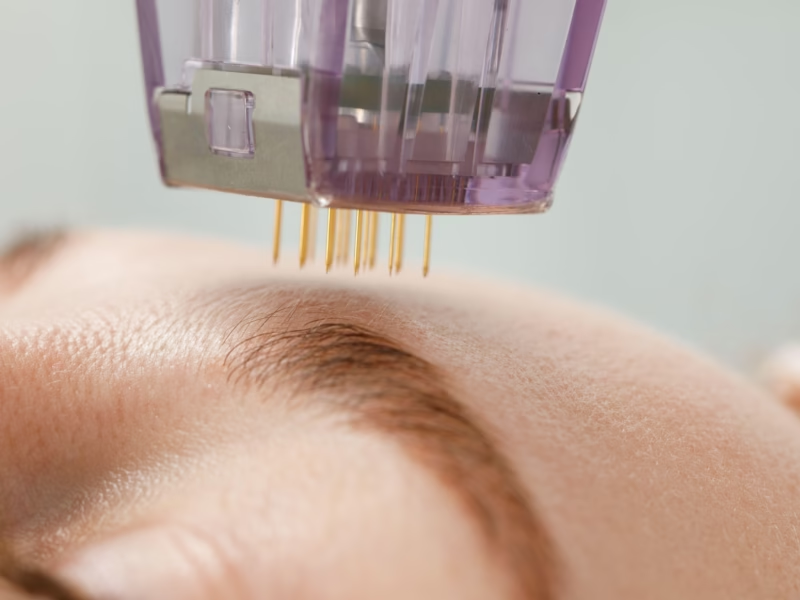
Radiofrequency, laser and ultrasound treatments stimulate collagen through controlled energy delivery. PLLA collagen biostimulators uses an injectable particulate stimulus instead.

Energy based treatments may be more relevant when the main concern is skin texture, pores, acne scars or superficial laxity. PLLA collagen biostimulators may be more suitable when diffuse volume loss and reduced tissue support are more prominent. Some patients benefit from a staged combination, provided the skin is allowed to recover between procedures.

The timing should be planned by the treating doctor because performing another procedure before the tissue has healed may increase inflammation around an injectable implant5.

What happens during a PLLA collagen biostimulators consultation?

The consultation begins by identifying the cause of the facial change. Hollowing may reflect bone remodelling, fat loss, ligament change, muscle activity, skin laxity or a combination of these factors.

Dr Rachel Ho will usually review:

  1. The areas that concern you
  2. Your medical history and current medication
  3. Previous fillers, biostimulators and energy based treatments
  4. Facial anatomy, skin thickness and volume distribution
  5. History of keloids, hypertrophic scars or delayed inflammatory reactions
  6. The degree of improvement you expect
  7. Whether a gradual, non reversible treatment suits your preferences

Clinical photographs may be taken to document the starting point and support treatment planning. The consultation should also clarify alternatives, the estimated course, likely downtime and complete cost before treatment begins.

What happens during treatment?

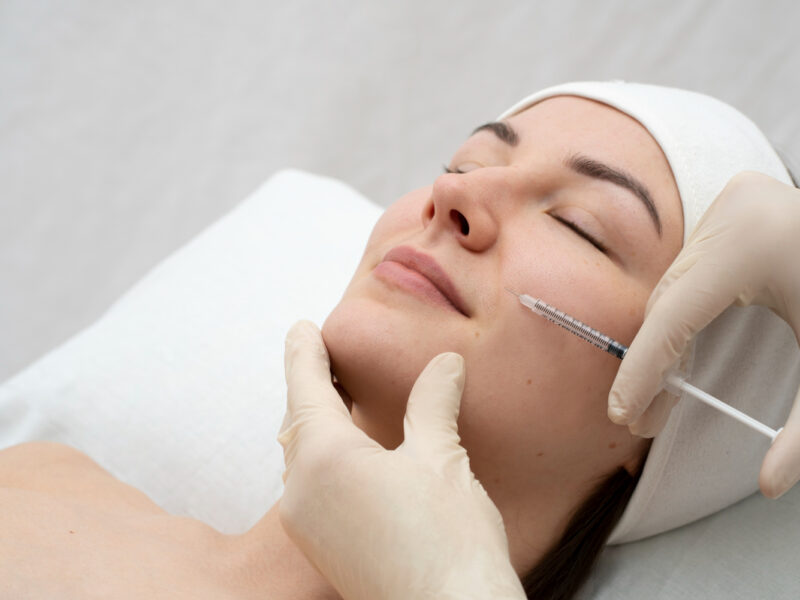
The face is cleansed, disinfected and mapped according to anatomy. Numbing or local anaesthesia may be used, followed by injections with a needle or cannula selected for the area and treatment plan.

Some PLLA collagen biostimulators protocols include post treatment massage to improve particle distribution. Instructions vary with the exact formulation, dilution, injection depth and treatment area, so patients should follow the aftercare provided by their own doctor rather than applying a universal online rule.

A review is usually arranged because collagen develops gradually. The response to the first session helps guide whether further treatment is appropriate.

When do PLLA collagen biostimulators results appear?

Temporary swelling and the fluid used to carry the PLLA particles can create early fullness. This initial effect settles, after which collagen remodelling develops progressively.

Visible improvement usually becomes clearer over the following weeks and months. Published trials have evaluated a staged series rather than one universal session, and one randomised study found continued improvement through month 25 after the final treatment.6

That study does not guarantee that every patient will obtain the same duration. Longevity is influenced by the treatment area, quantity used, anatomy, age related change, lifestyle and the individual tissue response.

How many sessions and vials of PLLA collagen biostimulators are needed?

The number of sessions cannot be estimated accurately from age alone. A patient with mild lateral cheek deflation may need a different plan from someone with marked temple hollowing and widespread volume loss.

The treatment plan may depend on:

  • Baseline facial volume
  • Number and size of treatment areas
  • Skin thickness
  • Previous injectables
  • Desired degree of correction
  • Response to the first session
  • Whether other treatments are being combined
  • Budget and preferred treatment pace

A price per vial does not show the complete cost when several vials or sessions may be recommended. The clinic will provide an individual quotation after assessment, including the proposed treatment course and review schedule.

What are the side effects of PLLA collagen biostimulators?

Common short term reactions include swelling, redness, tenderness, bruising and temporary firmness at injection sites. These reactions generally settle, although the duration varies between patients4.

Less common complications include palpable papules, nodules, delayed inflammatory reactions, infection, product maldistribution and asymmetry. Nodules can arise from product clustering, superficial placement, inflammation or a foreign body response, and they may appear weeks or months after treatment.

All injectable procedures also carry a rare risk of accidental vascular injection. This can cause reduced blood supply, skin injury and, in exceptional cases, visual damage. A recent review identified confirmed reports of visual loss following PLLA biostimulator injections, reinforcing the importance of anatomical knowledge, careful technique and early recognition of vascular symptoms7.

PLLA collagen biostimulators cannot be dissolved with hyaluronidase. Complication management depends on the diagnosis and may require medication, injection into a nodule, ultrasound assessment, drainage or another specialist led approach.

Who should delay or avoid PLLA treatment?

Treatment is generally deferred when there is active acne, infection, dermatitis, a rash or inflammation in the planned injection area. A known allergy to the formulation and a history of keloid or hypertrophic scar formation are recognised contraindications for established PLLA injectable products5.

Pregnancy and breastfeeding are also common reasons to postpone elective PLLA injections because adequate safety studies are unavailable. Autoimmune disease, granulomatous conditions, anticoagulant use, previous permanent fillers and unexplained reactions to earlier injections require individual medical review rather than an automatic treatment plan5.

What PLLA collagen biostimulators cannot achieve

PLLA collagen biostimulators may improve tissue support, but it cannot reproduce a surgical facelift. Substantial jowling, marked neck laxity or advanced tissue descent may require a different treatment category.

Precise changes to the lips, nose, chin or tear trough may be better served by another injectable when immediate shaping and reversibility are priorities. PLLA also does not replace treatment for active acne, pigmentation, rosacea or a damaged skin barrier.

Collagen stimulation should be one part of a broader ageing plan. Sun protection, inflammation control, skincare, facial movement and structural change continue to influence the final result.

Dr Rachel Ho’s clinical perspective on PLLA collagen biostimulators

PLLA works best when the clinical problem is diffuse loss of support rather than a small contour defect. I consider it for patients who accept gradual improvement and understand that the material cannot be dissolved with hyaluronidase.

When a patient needs immediate definition, a precise local correction or greater reversibility, hyaluronic acid filler may be more appropriate. The treatment choice should follow facial anatomy and the cause of the ageing change, rather than the popularity of one injectable category.

PLLA collagen biostimulators treatment at The Skin Longevity Clinic

Dr Rachel Ho is the founder of The Skin Longevity Clinic and has more than 16 years of clinical experience in Singapore. Her approach integrates skin quality, facial structure, movement, proportion and long term treatment planning before an injectable is recommended.

The clinic is located at 9 Scotts Road, #06-05 Scotts Medical Center at Pacific Plaza, Singapore 228210, near Orchard Road.
FAQs

Is PLLA a filler or a collagen biostimulator?

PLLA belongs to the collagen biostimulator category and is also classified within the wider family of injectable dermal implants. It can restore volume, but much of the visible change develops through gradual collagen remodelling rather than an immediately persistent gel.

What is the difference between a collagen stimulator and a collagen biostimulator?

The terms are commonly used for the same treatment category. Collagen biostimulator is the more technical term, while collagen stimulator is often used in patient searches and everyday discussion.

How long does PLLA last?

A randomised clinical study found continued improvement up to 25 months after the final treatment session. Individual duration varies, and published outcomes from one formulation or protocol should not be applied automatically to every PLLA product.6

How many PLLA sessions will I need?

A staged course is common, but the number of sessions depends on baseline volume loss, treatment area, product quantity and response. A doctor should assess the face before estimating the likely course.

Is one vial enough?

One vial may be appropriate for a limited treatment goal, while wider volume loss may require more. The complete plan is more informative than the number of vials used at one appointment.

Can PLLA be dissolved?

Hyaluronidase does not dissolve PLLA. Patients who place a high value on reversibility may prefer a hyaluronic acid filler or another treatment approach.

Can PLLA be used under the eyes?

The eye area has thin skin and a greater risk of visible or palpable papules after superficial particulate placement. PLLA is therefore not usually the first choice for a fine tear trough correction.4

Can PLLA lift sagging skin?

PLLA may improve support and firmness in selected patients, but it cannot reproduce surgical lifting. The degree of laxity and the anatomical cause should be assessed before treatment is selected.

Is PLLA suitable for Asian faces?

PLLA may be suitable for Asian patients when facial structure, skin thickness, volume distribution and personal goals are considered individually. A standard number of vials or one facial template should not be applied to every patient.

Can PLLA be combined with radiofrequency or laser?

Combination treatment may be appropriate when volume loss, skin texture and laxity overlap. The procedures should be sequenced with sufficient recovery time because treatment performed during an active tissue response may increase inflammation.

How much does PLLA treatment cost in Singapore?

The cost depends on the number of vials, areas treated, number of sessions and follow up plan. A written quotation can be provided after medical assessment.

References

  1. Signori R, et al. Efficacy and Safety of Poly L Lactic Acid in Facial Aesthetics: A Systematic Review. Polymers. 2024. PMID 39339028.
  2. Ferreira ACM, et al. Efficacy, Durability and Safety of Collagen Biostimulators Based on PLLA and CaHA in the Face. Aesthetic Plastic Surgery. 2025. PMID 41184662.
  3. Ouyang R, et al. Advances in Poly L Lactic Acid Injections for Facial and Neck Rejuvenation. 2025.
  4. Vleggaar D, Fitzgerald R, Lorenc ZP. Understanding, Avoiding and Treating Potential Adverse Events Following Injectable PLLA. Journal of Drugs in Dermatology. 2014. PMID 24719076.
  5. United States Food and Drug Administration. Summary of Safety and Effectiveness Data for an Injectable PLLA Implant.
  6. Brandt FS, et al. Investigator Global Evaluations of Injectable PLLA Versus Human Collagen. Aesthetic Surgery Journal. 2011.
  7. Visual Loss in Biostimulator Injectables: A Review of Incidence, Risk and Management. 2025. PMID 41263987.