Perimenopause and Menopause Skin Treatments in Singapore

Written and medically reviewed by Dr Rachel Ho
Aesthetic Doctor and Founder, The Skin Longevity Clinic, Singapore
Updated September 2026

Many women describe a similar change in their forties and fifties. Skin that had been predictable suddenly feels drier, more sensitive or less firm, while jawline acne, pigmentation and facial hollowing may appear at the same time.

These changes are real, but they do not represent perimenopausal or menopausal skin related changes entirely. Perimenopause can influence collagen, hydration, barrier function, sebum and pigment behaviour, while chronological ageing, ultraviolet exposure, genetics, weight change, smoking, illness and previous treatments continue to contribute3,4,5.

A useful menopause and perimenopause skin treatment plan in Singapore begins by separating dryness from dermatitis, wrinkles from laxity, and skin laxity from true facial volume loss. Skincare, botulinum toxin, ECM skin boosters, collagen biostimulators, XERF, hybrid cooperative complexes, Pico laser, chemical peels and PRX Plus perform different jobs and should be selected according to the concern rather than age alone.

Aesthetic treatment can improve specific skin and facial concerns, but it does not treat the hormonal changes from perimenopause and menopause. Hot flushes, abnormal bleeding, vaginal or urinary symptoms, significant mood changes, bone health and menopause hormone therapy require assessment by a GP, family physician, gynaecologist or menopause clinician2.

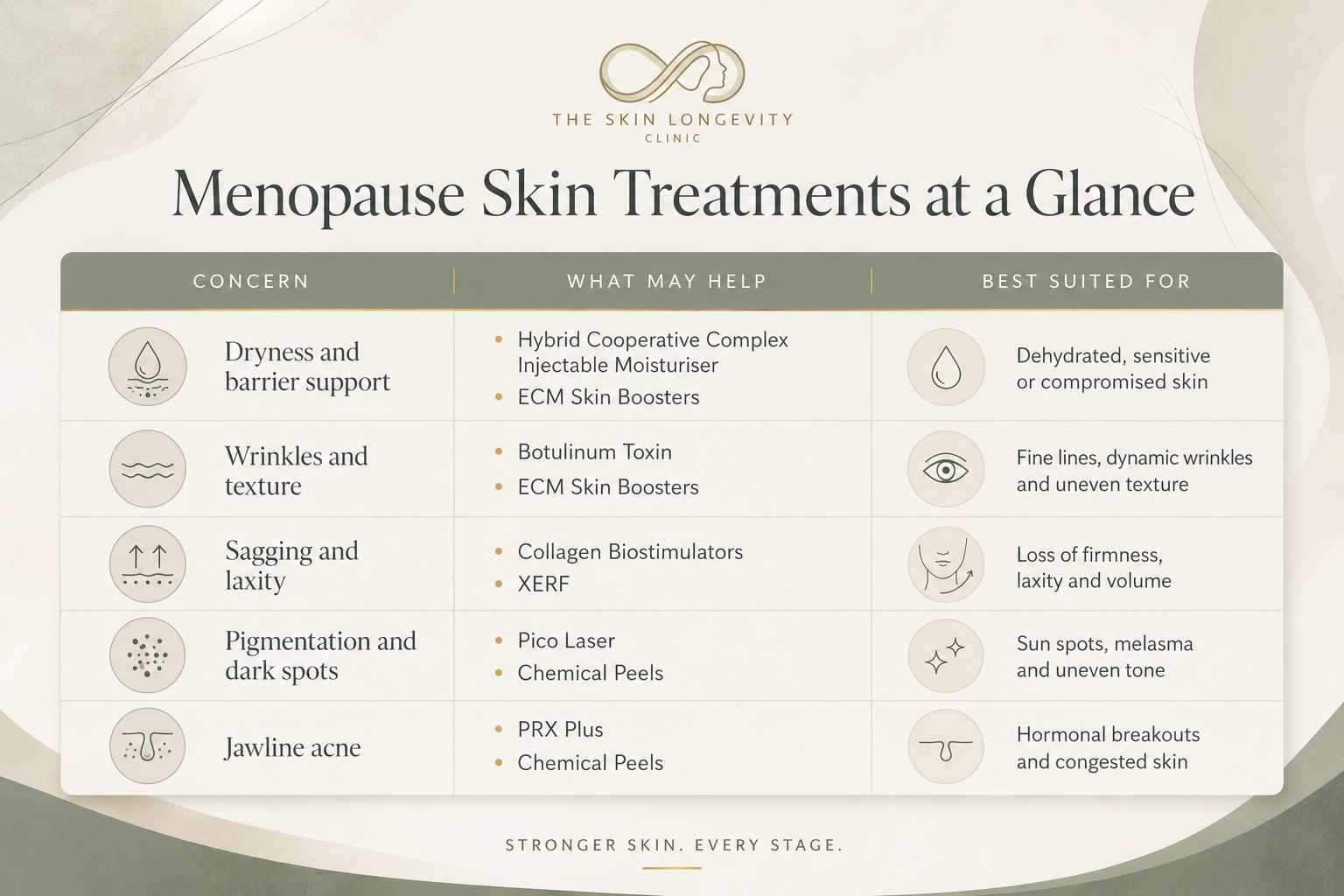
Menopause and perimenopause skin treatments at a glance

Skin or facial concern What may be contributing Useful first step Treatments that may be considered
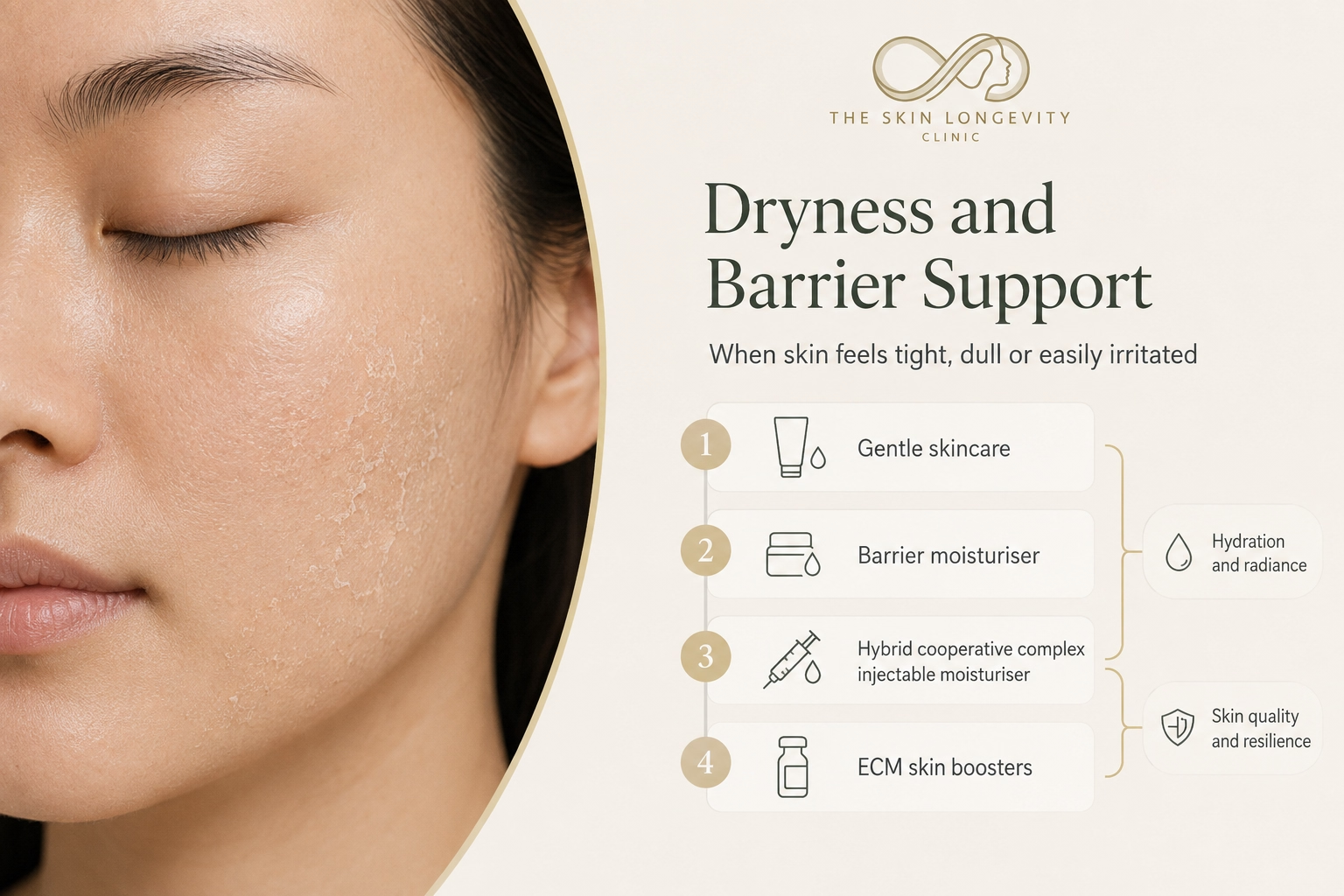
Dry, tight or sensitive skin Reduced moisture retention, altered barrier lipids, lower sebum, irritating skincare or dermatitis3,4 Simplify skincare and stabilise the barrier Barrier skincare, hybrid cooperative complex injectable moisturiser, selected hyaluronic acid skin boosters and ECM skin boosters
Fine lines and crepey texture Collagen change, reduced hydration, dermal thinning, facial movement and sun exposure3,5 Distinguish dehydration from fixed dermal ageing Retinoids where tolerated, injectable moisturiser, ECM skin boosters, collagen biostimulators, PRX Plus and selected chemical peels
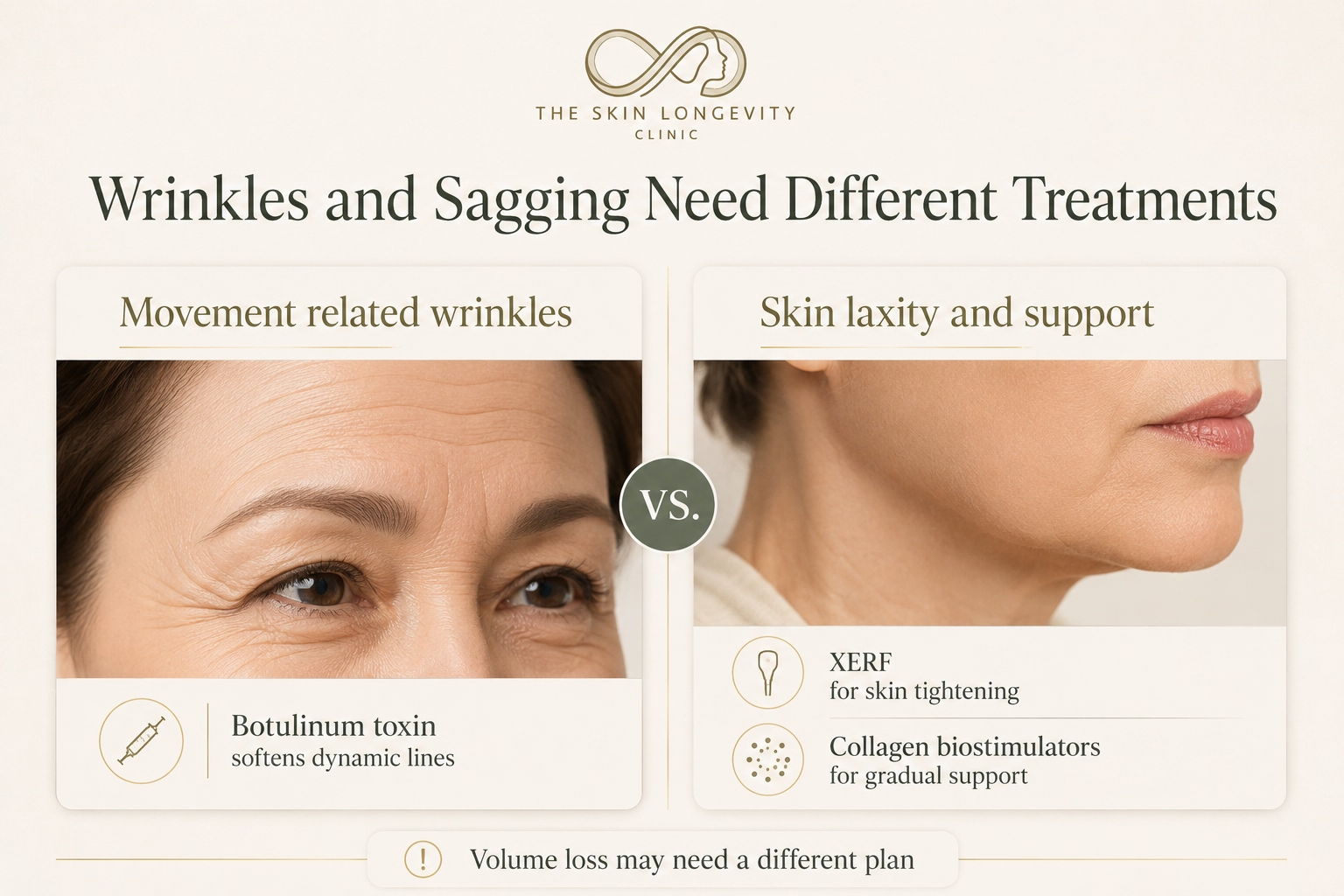
Forehead lines, frown lines and crow’s feet Repeated facial muscle movement, sometimes combined with fixed creasing Assess the line at rest and during expression Botulinum toxin for the movement related component10
Early facial or neck laxity Reduced dermal support, ligament change, facial fat redistribution and skeletal ageing Determine whether laxity, hollowing or both are present XERF, focused ultrasound and selected collagen biostimulators
Flattened cheeks or facial hollowing Loss or redistribution of facial fat, weight change and deeper structural ageing Assess the superficial fat compartments and facial proportions Hybrid cooperative complex for structure, dermal fillers or collagen biostimulators
Melasma, sun spots or uneven pigmentation Ultraviolet exposure, visible light, inflammation, hormonal influences and pigment depth Diagnose the type of pigmentation before treatment Pico laser, Q switched laser, chemical peels, PRX Plus and appropriate pigment regulating skincare
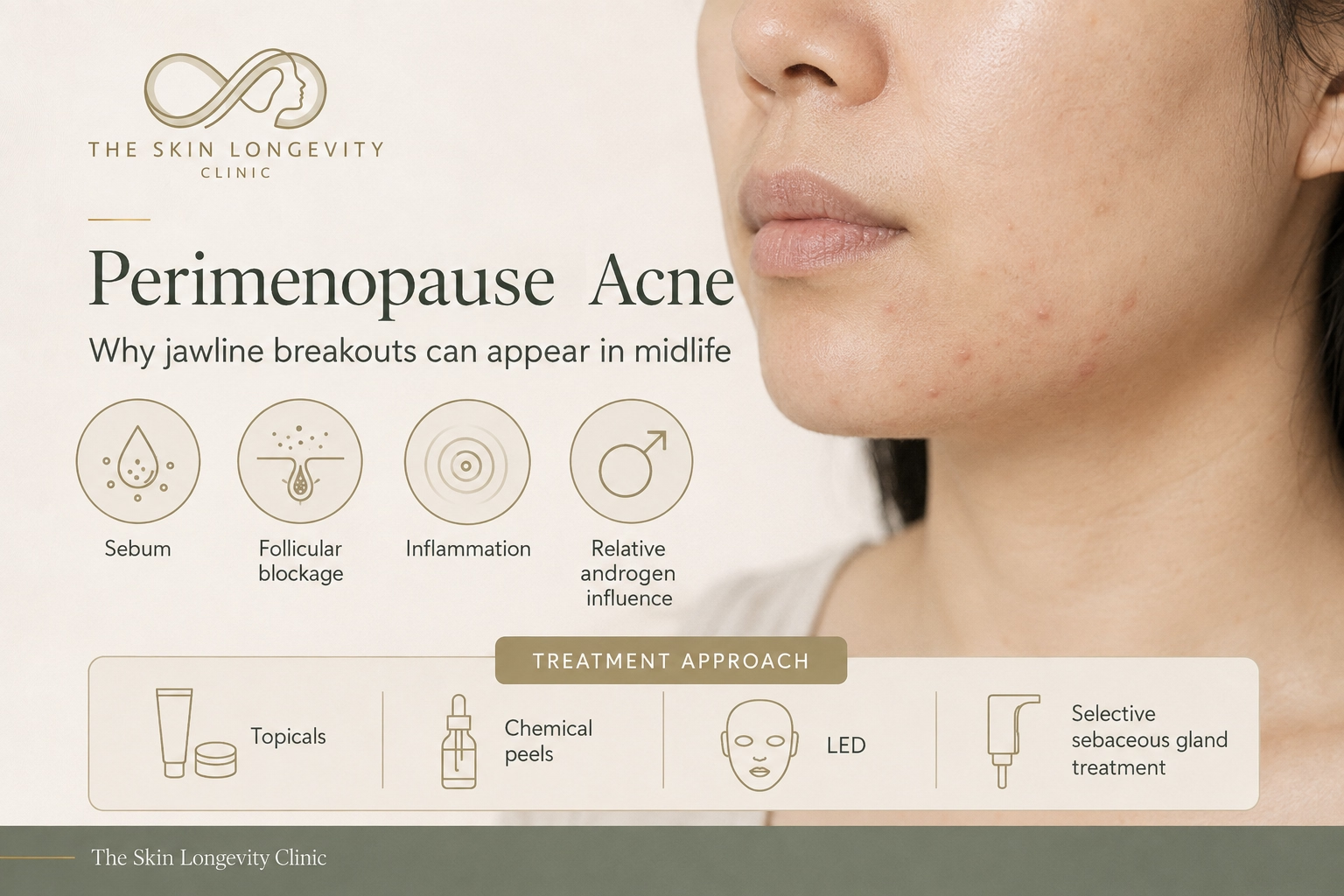
Jawline acne Sebum, follicular blockage, inflammation and relative androgen influence18,19 Confirm that the bumps are acne and grade their severity Medical acne treatment, with LED, chemical peels or selective sebaceous gland treatment used selectively
Hair thinning or shedding Female pattern hair loss, telogen effluvium, thyroid disease, iron deficiency, nutrition or scalp disease Obtain a medical diagnosis Treatment should follow the cause rather than menopausal status alone

This table provides a starting framework rather than a treatment prescription. Most aesthetic procedures have been studied in general adult populations rather than specifically in women during perimenopause, so evidence should not be transferred automatically to every menopausal patient3.

What are perimenopause and menopause?

Perimenopause is the transition during which ovarian function becomes less predictable and menstrual cycles begin to change. The early transition can include a persistent difference of at least seven days between consecutive cycles, while the later transition may include gaps of at least 60 days without menstruation1.

Menopause is diagnosed retrospectively after 12 consecutive months without a menstrual period when another cause is absent1,2. Singapore’s average age of natural menopause is approximately 49 years, although individual timing varies considerably2.

Skin changes can begin during perimenopause while periods are still occurring. A woman therefore does not need to have reached the final menstrual period before noticing dryness, sensitivity, adult acne or reduced resilience1,3.

How do perimenopause and menopause affect the skin?

Oestrogen receptors are present within keratinocytes, fibroblasts, sebaceous glands, hair follicles and cutaneous blood vessels. Changes in ovarian oestrogen can therefore influence several layers and functions of the skin rather than one visible feature alone3,5.

Menopause has been associated with changes in collagen synthesis, elasticity, epidermal thickness, skin hydration, barrier lipids and wound repair3,4,5. The size of these changes differs between women, and the evidence does not support calculating an individual woman’s collagen loss from her age alone3.

Ultraviolet exposure remains a major source of collagen damage and pigmentation throughout this transition. Singapore’s year round ultraviolet exposure makes daily photoprotection especially relevant, although sunscreen cannot correct facial hollowing or significant laxity once these are established.

Facial ageing also occurs below the skin. Bone remodels, ligaments change, fat compartments lose or redistribute volume and muscles continue to fold the overlying skin, which is why one surface treatment cannot address every midlife facial change.

Why menopause skin treatment begins with diagnosis

Dryness, wrinkles, sagging and hollowing are often placed together under the term ageing, even though they arise from different structures. A moisturiser may improve an impaired barrier, but it cannot replace lateral cheek volume, while a tightening treatment cannot control active eczema or melasma.

The same distinction applies to wrinkles. A line that appears when the brows lift is driven partly by muscle movement, while a crease that remains visible at rest also reflects changes within the skin.

A menopause skin consultation should therefore review skin sensitivity, current skincare, pigmentation, acne, previous procedures, weight change, hormone therapy, medication and facial anatomy. The presence of perimenopause provides context, but it does not replace a skin diagnosis.

At The Skin Longevity Clinic, a Skin Longevity Assessment in Singapore examines barrier health, inflammation, pigment stability, dermal support and facial structure before treatment is recommended. The assessment helps determine whether skincare, an injectable, an energy treatment or simple observation is the more appropriate next step.

Menopause and perimenopause dry skin and sensitivity

Dryness during perimenopause may reflect reduced sebum, altered barrier lipids and lower water retention within the skin3,4. Air conditioning, hot showers, strong cleansers, retinoids, exfoliating acids, eczema and rosacea can add to the problem.

The first step is usually a simpler routine. A gentle cleanser, moisturiser and sunscreen often provide a more useful foundation than layering several active serums onto skin that already stings.

Moisturisers containing combinations of humectants and barrier lipids can support different parts of the hydration system. Glycerin and hyaluronic acid attract water, while ceramides, cholesterol, fatty acids and suitable occlusives help reduce water loss.

Readers whose skincare suddenly causes burning or flaking can read Damaged Skin Barrier Singapore: Signs, Repair and Treatment. The clinic’s broader guide to Dry Skin and Skin Hydration Treatments in Singapore also explains how xerosis, dehydration and inflammatory skin disease differ.

Hybrid cooperative complex injectable moisturiser

A hybrid cooperative complex injectable moisturiser contains stabilised complexes of high and low molecular weight hyaluronic acid. It is used as an injectable skin quality treatment rather than a conventional volumising filler.

A 2025 meta analysis of local hyaluronic acid injections found significant improvements in hydration and radiance, while improvements in elasticity and melanin index did not reach statistical significance7. This distinction means that injectable hyaluronic acid should primarily be discussed as a hydration and skin quality treatment rather than a treatment for pigmentation or major sagging7.

A small study in Chinese patients reported improvement in superficial hydration and transepidermal water loss after treatment with a specific hybrid cooperative complex formulation8. The findings are relevant to Asian skin, although they remain product specific and were not designed specifically for menopausal women8.

The clinic’s guide to Hybrid Cooperative Complex Injectable Moisturiser explains the treatment, likely injection related effects and how it differs from fillers or particulate collagen stimulators. It may be considered when dehydration, fine texture and early skin quality change are more important than facial reshaping.

ECM skin boosters

ECM skin boosters contain extracellular matrix material intended to support the dermal environment. Some formulations use processed human acellular dermal matrix, which differs biologically from hyaluronic acid and particulate collagen biostimulators.

A 2026 randomised split face study in 20 adults compared a particulate human acellular dermal matrix booster with hyaluronic acid for cheek roughness and other skin quality measures9. The early findings are promising, but the sample was small and the study did not focus on women with menopausal skin9.

ECM skin boosters may be considered when the concern is crepey texture, reduced resilience or dermal quality rather than marked facial hollowing. Readers can review ECM Skin Boosters in Singapore for the evidence, processing considerations, risks and differences from conventional skin boosters.

Active dermatitis, infection, acne flares or unstable pigmentation should be controlled before an injectable skin treatment. Limited downtime still includes possible swelling, bruising, tenderness, infection, nodules and rare vascular complications.

Fine lines, crepey skin and rough texture

Fine lines during menopause may reflect dehydration, collagen change, cumulative sun exposure and repeated movement. Treatment works best when these contributors are separated rather than treated as one wrinkle problem.

Retinoids and daily skincare

Topical tretinoin has evidence for improving fine wrinkling, mottled pigmentation and other features of photoageing6. Irritation remains common, so dry or reactive menopausal skin may require a lower frequency, careful moisturising and gradual introduction6.

Over the counter retinol and retinal formulations vary in strength, stability and supporting ingredients. Dr Rachel Ho’s guide Retinol vs Retinal vs Tretinoin: Which Should You Use? on drrachelho.com explains how these vitamin A derivatives differ and why tolerance matters as much as theoretical strength.

Collagen biostimulators

Collagen biostimulators create a controlled tissue response that encourages gradual collagen formation. Categories include PLLA and CaHA, while PDLLA and other materials have separate characteristics and should not be treated as interchangeable.

A recent systematic review found improvements in elasticity, wrinkles and facial volume with PLLA and CaHA, although the included studies varied in design, treatment technique and follow up13. These treatments were studied for facial rejuvenation generally rather than specifically for menopause related collagen change13.

Collagen biostimulators may suit selected women with broader dermal thinning, early structural change or gradual volume loss. Their delayed effect, product specific risks and potential for nodules mean that treatment should be planned according to anatomy and product characteristics.

Readers can continue with Collagen Biostimulator Treatments in Singapore and PLLA Collagen Biostimulator Singapore: Results and Safety. These clinic guides compare the main material categories without presenting every collagen stimulating injectable as the same treatment.

PRX Plus

PRX Plus is an in clinic topical treatment used for selected concerns involving dullness, uneven tone, rough texture and early fine lines. It is applied to the skin rather than injected.

Studies involving related trichloroacetic acid and hydrogen peroxide formulations have reported improvements in selected measures of skin appearance and texture17. A separate clinical study in postmenopausal women found that a TCA peel improved hydration but did not significantly improve elasticity16.

Evidence from one peel or TCA peroxide formulation cannot be transferred automatically to every branded topical treatment. PRX Plus should therefore be described as a low downtime option for selected surface concerns rather than a proven treatment for every biological effect of menopause.

The clinic’s PRX Plus Singapore guide explains where it may fit for dullness, uneven pigmentation and texture. Readers concerned mainly about dark spots can also review PRX Plus for Dark Spots and Hyperpigmentation in Singapore.

Chemical peels

Chemical peels create controlled exfoliation or remodelling at a depth determined by the agent, concentration, pH and application method. Superficial peels may help selected pigmentation, dullness, rough texture or acne, while deeper peels carry more downtime and risk.

The postmenopausal TCA study found improvement in hydration and patient satisfaction but not elasticity16. This result supports modest expectations and shows why a peel should not be presented as a lifting treatment16.

Asian skin can develop post inflammatory hyperpigmentation after excessive irritation. The clinic’s guide to Chemical Peel Treatments in Singapore explains how peel depth, barrier condition and pigmentation risk influence suitability.

Menopause wrinkles and botulinum toxin

Forehead lines, frown lines and crow’s feet are often driven partly by repeated muscle movement. Botulinum toxin, commonly searched online as Botox, temporarily reduces signalling between selected nerves and muscles.

A Cochrane review found that botulinum toxin type A improves facial wrinkles, particularly glabellar lines, while increasing the risk of effects such as eyelid drooping in some patients10. Treatment therefore requires assessment of brow position, eye shape, muscle balance and the amount of movement the patient wishes to retain10.

Botulinum toxin does not replace collagen, restore hydration or correct facial hollowing. A fixed line may remain partly visible even when the movement related component has improved.

Readers can continue with Wrinkle Treatment in Singapore: Forehead Lines, Frown Lines and Crow’s Feet and Dynamic vs Static Wrinkles: How to Tell the Difference. The clinic’s guide to How Long Does Botulinum Toxin Last? explains onset, the two week review point and why duration varies between people.

Menopause and perimenopause sagging skin and facial laxity

Sagging during and after menopause can involve reduced dermal support, facial fat redistribution, ligament change and skeletal ageing. The visible lower face may therefore reflect loose skin, lost volume or a combination.

XERF radiofrequency skin tightening in perimenopause and menopause

XERF is a non invasive dual frequency monopolar radiofrequency treatment used for selected facial and neck laxity. It delivers controlled heating to support collagen remodelling without targeting pigment directly.

Systematic reviews of radiofrequency treatments report improvements in skin laxity, elasticity and overall facial appearance, although devices, protocols and outcome measures differ considerably11. Direct trials designed specifically for women undergoing menopause are absent, so treatment should be selected according to laxity rather than hormone status11.

XERF may be considered for mild to moderate laxity where a gradual and non surgical result is appropriate. Advanced jowling or substantial excess skin may require a surgical opinion because a radiofrequency device cannot remove loose tissue.

The clinic’s XERF in Singapore guide explains dual frequency radiofrequency, treatment sensation, expected progression and limitations. Readers comparing technologies can continue with XERF vs Ultherapy in Singapore and the broader Skin Tightening in Singapore guide.

Focused ultrasound

Microfocused ultrasound creates small thermal treatment zones at selected tissue depths. A systematic review reported improvement in mild to moderate facial laxity, although many studies relied on subjective grading and the magnitude of improvement was generally modest12.

Ultrasound and radiofrequency should not be selected solely according to which device is newer. Tissue depth, facial fat, pain tolerance, treatment history and the location of laxity are more useful considerations.

Collagen biostimulators for laxity

Collagen biostimulators may contribute to gradual dermal thickening and support in selected patients13. They do not physically remove excess skin and should not be used to overpromise a surgical degree of lifting.

Combining a biostimulator with XERF or another energy treatment may be reasonable when dermal quality and laxity both contribute. Timing and sequence matter because performing several inflammatory treatments too close together can make swelling, tenderness and outcome assessment more difficult.

Chemical peels

Chemical peels create controlled exfoliation or remodelling at a depth determined by the agent, concentration, pH and application method. Superficial peels may help selected pigmentation, dullness, rough texture or acne, while deeper peels carry more downtime and risk.

The postmenopausal TCA study found improvement in hydration and patient satisfaction but not elasticity16. This result supports modest expectations and shows why a peel should not be presented as a lifting treatment16.

Asian skin can develop post inflammatory hyperpigmentation after excessive irritation. The clinic’s guide to Chemical Peel Treatments in Singapore explains how peel depth, barrier condition and pigmentation risk influence suitability.

Facial hollowing and loss of structure

A face can appear looser because the tissues beneath the skin have lost volume or support. Temple hollowing, lateral cheek flattening and deeper folds may therefore need a different plan from genuine skin laxity.

Hybrid cooperative complex for structure

Hybrid cooperative complex for structure is a hyaluronic acid based injectable designed for placement within selected superficial fat compartments. Its aim differs from a conventional dermal filler placed for a sharply defined contour.

A 2024 observational pilot study reported improvement after treatment of the lateral cheek fat compartment, but the sample was small and the evidence remains product specific14. The study did not evaluate menopause related facial ageing as a separate condition14.

This treatment may be considered for selected lateral cheek flattening and early loss of superficial support. Readers can review Hybrid Cooperative Complex for Structure and Lifting in Singapore for its intended tissue plane, evidence and limitations.

Dermal fillers

Dermal fillers physically restore volume or contour in selected areas. They can be useful when true hollowing is present, but adding filler cannot tighten every form of loose skin.

A conservative plan considers the temples, cheeks, under eyes, jawline and lower face as connected structures. Excessive or poorly placed volume can make a face look heavy even when the original intention was to lift it.

Collagen biostimulators versus fillers

A filler provides a more immediate structural effect, while many collagen biostimulators develop progressively. Hybrid cooperative complex for structure has another proposed tissue role and should not be described simply as either a conventional filler or a particulate biostimulator.

The clinic’s ECM Skin Booster vs HA, PDRN and Collagen Biostimulators comparison explains these categories in greater detail. It is particularly useful when the concerns of dehydration, crepey texture and volume loss are being confused.

Menopause and perimenopause pigmentation, melasma and dark spots

Hormonal change may influence melasma in susceptible women, but menopause does not explain every new dark spot. Sun spots, post inflammatory hyperpigmentation, melasma and dermal pigmentation can coexist on the same face.

The first step is diagnosis. A discrete sun spot, a blended melasma patch and grey dermal pigment require different treatment settings, intervals and maintenance plans.

Pico laser

Picosecond lasers deliver very short pulses that can target selected pigment. A systematic review found evidence supporting 1064 nm picosecond treatment for melasma, while results differed by wavelength and treatment protocol15.

Melasma requires particular caution because inflammation can stimulate further pigmentation. Pico laser should therefore be used as a selected adjunct rather than a universal first treatment for every brown patch.

Readers can continue with Pigmentation Treatment in Singapore for Asian Skin and Melasma Treatment in Singapore: Why It Comes Back and Where Pico Laser Fits. The clinic’s Pico Laser in Singapore page explains how wavelength, pulse duration and pigment depth affect treatment selection.

Q switched laser

Q switched Nd:YAG laser has a long clinical history in the treatment of selected epidermal and dermal pigmentation. Suitability depends on diagnosis, wavelength, energy, interval and the skin’s tendency to develop post inflammatory pigmentation21.

Repeated low energy treatment can produce incomplete clearance, recurrence or pigment disturbance in some patients. A stronger setting is not automatically a safer or more effective answer for reactive melasma.

The clinic’s guide to Q Switched Nd:YAG Laser Treatment in Singapore explains its role in Asian skin. Readers whose pigmentation has survived several treatments can also read Stubborn Pigmentation in Asian Skin: Why Dark Spots Return After Laser.

Chemical peels and PRX Plus for pigmentation

Selected superficial chemical peels can help epidermal pigmentation and dullness. They have less influence on deep dermal pigment and can worsen PIH when they cause excessive irritation.

PRX Plus may be considered when dullness, uneven tone and surface texture occur together. A patient with defined sun spots or dermal pigment may still require a pigment specific laser because a topical treatment cannot reach every depth.

Daily sunscreen remains part of treatment before and after any procedure. Tinted formulations containing iron oxides may be useful for selected melasma prone patients because visible light can contribute to pigmentation.

Perimenopause acne and jawline breakouts

Adult female acne can persist into perimenopause or begin during midlife. A relative change in androgen influence may contribute, but acne still develops through sebum production, follicular blockage, microbial activity and immune inflammation18,19.

Jawline location alone does not prove a hormonal cause. Rosacea, perioral dermatitis, folliculitis and irritation from heavy or unsuitable skincare can produce similar looking bumps.

Treatment may include a topical retinoid, benzoyl peroxide, azelaic acid, hormonal treatment, oral antibiotics or isotretinoin according to severity and medical suitability19. Chemical peels, LED treatment or selective sebaceous gland ablation may support selected cases, but they do not replace appropriate medical acne treatment.

Dr Rachel Ho’s Adult Female Acne: A Doctor Explains on drrachelho.com discusses perimenopause and the relative influence of androgens in greater detail. The clinic’s Acne Treatments in Singapore guide explains where medication, LED, chemical peels and selective sebaceous gland treatment fit.

Neck, décolletage and hand changes

Crepiness and laxity may become more visible on the neck, upper chest and hands because these areas receive substantial ultraviolet exposure and have different skin thickness from the face. A treatment that suits the cheeks may not be appropriate at the same settings or depth elsewhere.

Hybrid cooperative complex injectable moisturiser, selected skin boosters, collagen biostimulators, PRX Plus, chemical peels and radiofrequency may be considered according to whether the concern is hydration, texture, pigment or laxity. Treatment areas should be assessed separately because the neck and décolletage can be more reactive than the central face.

Daily sunscreen and protective clothing remain important for the upper chest and hands. Procedures can improve selected visible changes, but continued ultraviolet exposure can create new pigment and collagen damage.

Does HRT improve menopausal skin?

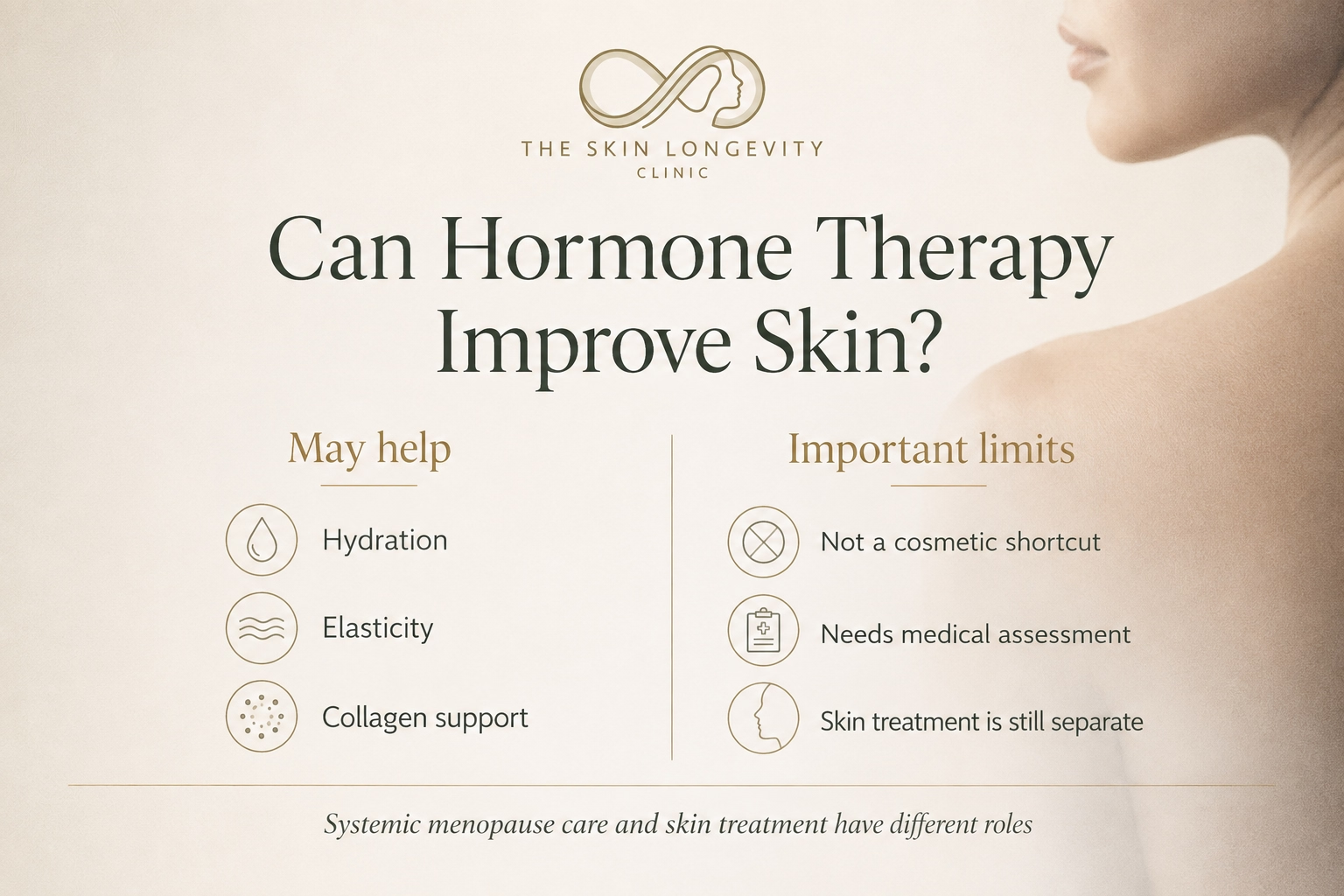
Menopause hormone therapy, commonly searched as HRT, may improve selected measurements of skin hydration, thickness, collagen or elasticity in some studies3,20. Results have been inconsistent, and available studies differ in hormone formulation, dose, treatment route and skin outcome measures3,20.

Singapore’s 2026 menopause guidelines support MHT for appropriate medical indications, including troublesome hot flushes and night sweats, selected menopause related mood symptoms, and prevention or treatment of postmenopausal bone loss2. For most suitable symptomatic women younger than 60 or within 10 years of their last period, the benefits of starting MHT generally outweigh the potential risks2.

Systemic MHT should not be started solely as a cosmetic treatment for normal skin ageing. Skin improvement may be a secondary benefit for some women who already have an appropriate medical indication, but decisions about MHT belong within a complete assessment of symptoms, medical history and individual risk3,23.

What about oestrogen face creams?

Small studies of topical oestrogen have reported possible improvements in selected signs of skin ageing, but a 2026 systematic review found considerable variation in formulations, study design and safety reporting20. Current evidence does not support treating hormone containing facial products as cosmetic moisturisers20.

Vaginal oestrogen products are formulated and prescribed for genitourinary symptoms. They should not be repurposed for the face without advice from your doctor.

Women with a history of hormone sensitive cancer, unexplained bleeding or other relevant medical conditions require individual medical guidance before using any systemic or topical hormone treatment. An aesthetic consultation cannot replace that assessment.

What is the best menopause and perimenopause skin treatment in Singapore?

The best skin treatment for perimenopause and menopause is the one matched to the pathology causing the symptom. Dryness may improve with barrier care or injectable hydration, while dynamic wrinkles, pigmentation, laxity and facial hollowing require different treatment categories.

A useful plan also respects priority. Active dermatitis, acne or unstable melasma should usually be controlled before elective injectables or energy treatment.

A practical treatment sequence

Stage Priority Why it matters
1. Diagnose Separate barrier disturbance, acne, pigmentation, wrinkles, laxity and volume loss Similar visible changes can arise from different layers
2. Stabilise Control irritation, dermatitis, active acne and reactive pigmentation Inflamed skin has a greater risk of poor tolerance and PIH
3. Restore daily function Optimise cleansing, moisturising and sunscreen A stable routine supports every later treatment
4. Improve skin quality Consider injectable moisturiser, ECM skin booster, collagen biostimulator, PRX Plus or a peel where appropriate Treatment should match hydration, texture or dermal support
5. Address movement or laxity Consider botulinum toxin, XERF or focused ultrasound Each treatment should have one clearly defined purpose
6. Correct structural loss Consider hybrid cooperative complex for structure, filler or a suitable biostimulator Tightening and volume replacement are different jobs
7. Maintain Continue skincare, sunscreen and periodic review Menopause and chronological ageing continue after treatment

Spacing procedures also makes results easier to interpret. Performing several treatments at the same time can increase swelling and irritation while making it difficult to identify which treatment produced the benefit or complication.

What happens during a menopause and perimenopause skin consultation?

A consultation begins with the concerns that have changed and the effect they have on the patient. Skin sensitivity, menstrual stage, current MHT, medication, weight changes, skincare, previous procedures and medical history provide useful context.

Next, the examination then identifies whether the visible issue lies mainly in the epidermis, dermis, muscle, fat compartments or deeper facial support. Photography and skin assessment may help document the starting point, but they do not replace clinical examination.

A treatment plan may consist of skincare alone, one focused procedure or a staged combination. The consultation should also explain realistic improvement, recovery, cost, risks, alternatives and situations in which a surgical or non aesthetic medical opinion would be more appropriate.

The Skin Longevity Clinic is located at Scotts Medical Center in Pacific Plaza near Orchard Road, Singapore. The clinic’s approach is doctor led and based on skin biology, facial anatomy and treatment sequencing rather than a standard menopause package.


Dr Rachel Ho’s clinical perspective on menopause and perimenopause skin changes and treatments

Menopausal and perimenopausal and skin and facial changes are high variable among my patients. One patient may mainly experience dryness and sensitivity, while another is more concerned by adult acne, melasma, facial flattening or jawline laxity.

I also keep systemic menopause care separate from aesthetic treatment. Hormone therapy decisions should be made for recognised medical indications after an individual assessment, while aesthetic treatment should have a clear skin or anatomical target.

My priority is usually to make the skin stable before trying to make it look firmer or brighter. A calm barrier and controlled pigmentation provide a safer foundation for injectables, lasers, peels and energy treatments.

The most natural outcomes often come from treating fewer concerns in the correct order. Menopause skin treatment should support how the skin functions and ages rather than create pressure to erase a normal life stage.

Frequently asked questions about menopause skin treatment in Singapore

What happens to skin during perimenopause?

Fluctuating and declining oestrogen can affect collagen, hydration, barrier lipids, elasticity and sebum3,4,5. Age, ultraviolet exposure, genetics, weight change and skincare continue to influence how visible these changes become.

Why has my skin suddenly become dry in my forties?

Perimenopause may reduce moisture retention and sebum, while harsh cleansing, air conditioning, retinoids, exfoliating acids and inflammatory skin conditions can worsen dryness3,4. A barrier assessment helps separate simple dehydration from eczema, rosacea or contact dermatitis.

Which injectable is for dry skin in perimenopause and menopause?

A hyaluronic acid skin booster or hybrid cooperative complex injectable moisturiser may improve hydration in selected patients7,8. ECM skin boosters may be considered for broader dermal quality, although direct menopause specific evidence remains limited9.

Can botulinum toxin treat menopause wrinkles?

Botulinum toxin can soften wrinkles caused mainly by muscle movement, including selected forehead lines, frown lines and crow’s feet10. It does not restore lost facial volume, improve pigmentation or replace skin hydration.

Can XERF tighten sagging skin during menopause?

XERF may support gradual improvement in selected mild to moderate facial or neck laxity. Evidence for radiofrequency tightening is encouraging, but direct clinical trials designed specifically for menopausal women are absent11.

Are collagen biostimulators suitable during menopause?

Collagen biostimulators may help selected concerns involving dermal thinning, wrinkles, early laxity or gradual facial volume change13. Suitability depends on the product, treatment plane, facial anatomy and medical history rather than menopausal status alone.

What is the difference between an injectable moisturiser and a collagen biostimulator?

An injectable moisturiser primarily supports hydration and skin quality through hyaluronic acid. Particulate collagen biostimulators create a controlled tissue response that develops more gradually and may provide broader dermal or structural support.

Can hybrid cooperative complex for structure treat sagging?

Hybrid cooperative complex for structure may support selected superficial fat compartment changes and lateral cheek flattening14. Its evidence comes from small product specific studies, and it cannot remove advanced loose skin or replace surgery.

Can Pico laser treat menopause pigmentation?

Pico laser may improve selected sun spots, dermal pigment or melasma, depending on wavelength and protocol15. Melasma and PIH require caution because excessive inflammation can make pigmentation darker.

Are chemical peels suitable for menopausal skin?

Selected superficial chemical peels may improve dullness, texture, acne or epidermal pigmentation. A study in postmenopausal women found improved hydration after a TCA peel but no significant improvement in elasticity16.

What does PRX Plus treat?

PRX Plus may be considered for selected concerns involving dullness, uneven tone, rough texture and early fine lines. Evidence from related formulations should be interpreted cautiously, and PRX Plus should not be presented as a treatment for every effect of menopause.

Does menopause cause jawline acne?

Perimenopause may coincide with adult female acne because declining oestrogen changes the relative influence of androgens18. Acne still requires diagnosis and evidence based treatment according to lesion type and severity19.

Can HRT reverse skin ageing?

MHT may improve selected skin measurements in some women, but results are inconsistent and it should not be prescribed solely for cosmetic skin ageing3,20,23. Singapore guidelines position MHT around recognised menopause symptoms and bone health rather than aesthetic rejuvenation2.

Can vaginal oestrogen cream be applied to the face?

Vaginal oestrogen products are formulated for genitourinary symptoms rather than facial skincare. Evidence for facial topical oestrogen remains limited and heterogeneous, so these medicines should not be repurposed without appropriate medical advice20.

Can aesthetic treatment replace menopause treatment?

Aesthetic treatment can improve dryness, wrinkles, pigmentation, acne, laxity or facial hollowing. It cannot treat hot flushes, abnormal bleeding, vaginal symptoms, osteoporosis risk or the wider medical effects of menopause.

Conclusion on menopause and perimenopause skin and facial changes

Menopause and perimenopause can affect skin hydration, collagen support, elasticity, sebum and pigment behaviour, but it does not create one standard facial ageing pattern. Dryness, acne, wrinkles, pigmentation, sagging and hollowing require different diagnoses and different treatments.

Skincare remains the foundation for barrier health and protection. Hybrid cooperative complexes, ECM skin boosters, collagen biostimulators, botulinum toxin, XERF, Pico laser, chemical peels and PRX Plus may each have a role when they address a clearly identified concern.

Menopause hormone therapy belongs within whole person medical care and should not be used as a cosmetic shortcut. The safest menopause skin treatment plan in Singapore is measured, evidence aware and built around the woman’s skin, anatomy and priorities.

Scientific references

  1. Harlow SD, Gass M, Hall JE, et al. Executive Summary of STRAW+10: Addressing the Unfinished Agenda of Staging Reproductive Aging. Climacteric. 2012;15:105 to 114.
  2. KK Women’s and Children’s Hospital Maternal and Child Health Research Institute. Singapore Guidelines on Management of the Menopause Transition. 2026.
  3. Viscomi B, Muniz M, Sattler S. Managing Menopausal Skin Changes: A Narrative Review of Skin Quality Changes, Their Aesthetic Impact, and the Actual Role of Hormone Replacement Therapy in Improvement. Journal of Cosmetic Dermatology. 2025;24 Suppl 4:e70393.
  4. Mellody KT, Kendall AC, Wray JR, et al. Influence of Menopause and Hormone Replacement Therapy on Epidermal Ageing and Skin Biomechanical Function. Journal of the European Academy of Dermatology and Venereology. 2022;36:e576 to e580.
  5. Wilkinson HN, Hardman MJ. A Role for Estrogen in Skin Ageing and Dermal Biomechanics. Mechanisms of Ageing and Development. 2021;197:111513.
  6. Sitohang IBS, Makes WI, Sandora N, Suryanegara J. Topical Tretinoin for Treating Photoaging: A Systematic Review of Randomised Controlled Trials. International Journal of Women’s Dermatology. 2022;8:e003.
  7. Zhou R, Yu M. The Effect of Local Hyaluronic Acid Injection on Skin Aging: A Systematic Review and Meta Analysis. Journal of Cosmetic Dermatology. 2025;24:e16760.
  8. Cheng SWN, et al. Efficacy and Tolerability of Hybrid Complexes of High and Low Molecular Weight Hyaluronic Acid in Asian Patients. Published 2026. PMID 40921777.
  9. Lee YI, Chau NH, Nguyen NH, et al. Injectable Particulated Human Acellular Dermal Matrix Booster for Skin Restoration: An Integrated Randomised, Split Face, Double Blinded Clinical Trial and Preclinical Study. International Journal of Molecular Sciences. 2026;27:2193.
  10. Camargo CP, Xia J, Costa CS, et al. Botulinum Toxin Type A for Facial Wrinkles. Cochrane Database of Systematic Reviews. 2021;7:CD011301.
  11. Austin GK, Struble SL, Quatela VC. Evaluating the Effectiveness and Safety of Radiofrequency for Face and Neck Rejuvenation. Lasers in Surgery and Medicine. 2022;54:27 to 45.
  12. Contini M, et al. A Systematic Review of the Efficacy of Microfocused Ultrasound for Facial Skin Tightening. International Journal of Environmental Research and Public Health. 2023;20.
  13. Ferreira ACM, Silva LR, Espasandin I, et al. Efficacy, Durability and Safety of Collagen Biostimulators Based on Poly L Lactic Acid and Calcium Hydroxyapatite in the Face: A Systematic Review. Aesthetic Plastic Surgery. 2026;50:1291 to 1300.
  14. Sparavigna A, et al. Efficacy and Tolerability of a Hybrid Cooperative Complex Intended to Restore the Lateral Cheek Fat Compartment. Journal of Cosmetic Dermatology. 2024.
  15. Feng J, Shen S, Song X, et al. Efficacy and Safety of Picosecond Laser for the Treatment of Melasma: A Systematic Review and Meta Analysis. Lasers in Medical Science. 2023;38:84.
  16. Piejko L, et al. TCA Chemical Peel as Facial Anti Ageing Therapy for Postmenopausal Women: A Randomised Clinical Study. Published 2025. PMID 40114772.
  17. Gold MH, et al. Treatment of Mild to Moderate Facial Chronological Ageing With a Trichloroacetic Acid and Hydrogen Peroxide Formulation. Journal of Clinical and Aesthetic Dermatology. 2022.
  18. Rocha MAD, Bagatin E, Tufik S, et al. Unveiling the Nuances of Adult Female Acne: Epidemiology, Treatment, Dermocosmetics and the Menopausal Influence. International Journal of Women’s Health. 2024;16:663 to 678.
  19. Reynolds RV, Yeung H, Cheng CE, et al. Guidelines of Care for the Management of Acne Vulgaris. Journal of the American Academy of Dermatology. 2024;90:1006.e1 to 1006.e30.
  20. Farkas E, Goldblatt A, Nehorayan I, et al. Topical Estrogen for Skin Aging: A Systematic Review of Safety and Efficacy. Journal of the American Academy of Dermatology. 2026;94:212 to 215.
  21. Passeron T, Genedy R, Salah L, et al. Laser Treatment of Hyperpigmented Lesions: Position Statement of the European Society of Laser in Dermatology. Journal of the European Academy of Dermatology and Venereology. 2019;33:987 to 1005.
  22. Mar K, Khalid B, Maazi M, et al. Prevention of Post Inflammatory Hyperpigmentation in Skin of Colour: A Systematic Review. Australasian Journal of Dermatology. 2025;66:119 to 126.
  23. The North American Menopause Society Advisory Panel. The 2022 Hormone Therapy Position Statement of The North American Menopause Society. Menopause. 2022;29:767 to 794.