

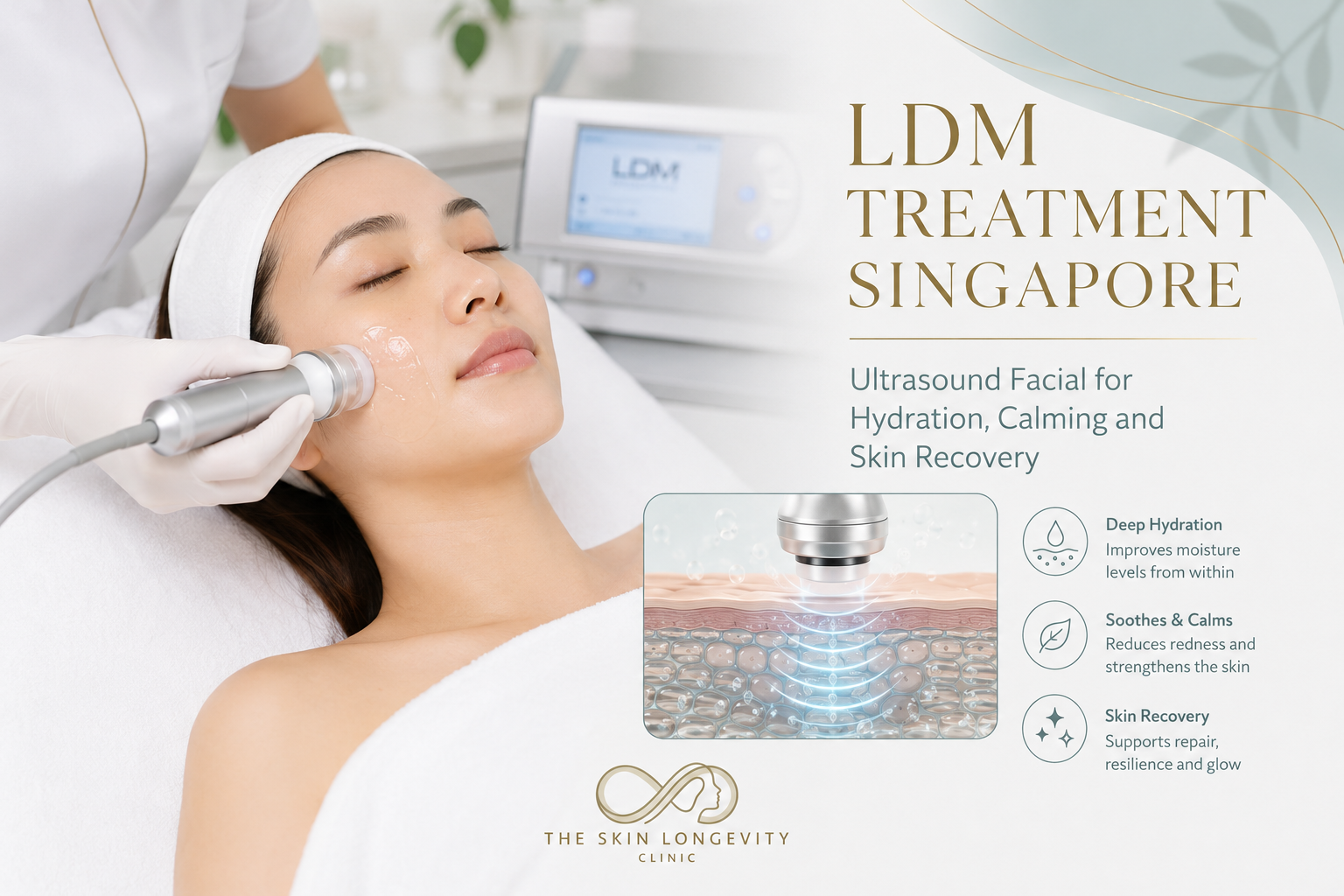
25 Jun LDM Treatment Singapore: Ultrasound Facial for Hydration, Calming and Skin Recovery
By Dr Rachel Ho | Aesthetic Doctor, Founder, The Skin Longevity Clinic, Singapore
LDM facial treatment in Singapore is increasingly offered in aesthetic clinics, medi spas and facial centres for patients who want a gentle treatment for hydration, calming and skin recovery. It is often described as an ultrasound facial because it uses ultrasound energy to create a dynamic micro massage effect within the skin.
At The Skin Longevity Clinic, LDM is used as supportive skin treatment that improves skin barrier support, hydration, inflammation control and recovery after stress. LDM facials can also complement aesthetic treatments such as lasers, chemical peels, XERF and collagen biostimulators.
LDM facials are comfortable, non-invasive and have low downtime, which makes it appealing for working professionals who want facials with a scientific and technology based mechanism.
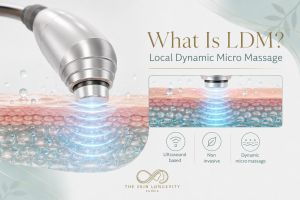
LDM stands for Local Dynamic Micro Massage, an ultrasound based facial treatment used to support hydration, skin comfort and recovery.
What Is LDM Facial Treatment?
LDM stands for Local Dynamic Micro Massage. It is a non-invasive ultrasound based treatment that delivers rapidly alternating ultrasound frequencies into the skin. These ultrasound waves create a micro massage effect in the tissue, which is why LDM is often described as both a facial and a skin recovery technology in clinics.
In Singapore, LDM facial treatment is commonly used for hydration, calming, post treatment recovery, skin comfort, mild redness, sensitive skin support and overall skin quality. Some clinics also position it for acne prone skin, eczema prone skin, dullness, early ageing and mild texture concerns.
The main appeal of LDM facial treatments is that it is gentle and does not involve needles, injections, heat based resurfacing or visible peeling. Most patients experience it as a comfortable treatment with warmth or a light massage sensation, depending on the device, settings and treatment protocol.
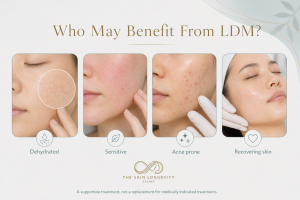
LDM facial treatments suit patients with dehydrated, sensitive or acne prone
How Does LDM Work?
LDM uses ultrasound waves delivered through a handpiece that is moved across the skin. The energy is delivered in a controlled way, and the rapidly changing frequencies are intended to create a dynamic pressure effect within the tissue.
From a biological perspective, ultrasound can influence cells through mechanical stimulation. Studies on therapeutic ultrasound have explored its effects on inflammation, tissue repair, fibroblast activity and wound healing pathways. These findings are one reason ultrasound based treatments have attracted interest in dermatology and regenerative aesthetics.
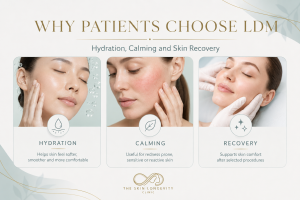
choose-ldm-hydration-calming-recovery.webp
Why patients choose LDM for hydration calming and skin recovery
Why LDM Is Used for Hydration
Hydration is one of the most common reasons patients undergo for LDM facial in Singapore. Dehydrated skin can look dull, rough, tired and less reflective. It may also feel tight, reactive or uncomfortable even when the skin is oily.
LDM is often used as part of a hydration focused treatment because ultrasound based micro massage may help support fluid movement, tissue comfort and the skin’s recovery environment. In clinic protocols, LDM is paired with calming serums, hydrating topicals or barrier support products to improve the patient’s skin feel after treatment.
The result after one session of LDM is usually noticeable for most patients. Usually, the skin feels more comfortable, smoother, softer and more supple. The improvement is often most visible in patients whose skin was dehydrated, stressed or tired before treatment.
Why LDM Is Used for Calming and Soothing
Many patients in Singapore have sensitive or easily irritated skin. Heat, humidity, ultraviolet exposure, air conditioning, travel, stress and active skincare overuse can all make the skin feel more reactive. Patients may present with redness, stinging, tightness, roughness or a skin barrier that feels unstable.
LDM is often considered when the goal is calming rather than exfoliation or resurfacing. Its gentle, non-invasive nature makes it attractive for patients who cannot tolerate stronger facials, peels or energy based procedures during periods of sensitivity.
From a skin longevity perspective, calming the skin is important. Chronic irritation can worsen redness, pigmentation tendency, acne flares and poor treatment recovery. A treatment that supports skin comfort can be useful when the skin needs stabilisation before moving on to more active procedures.
Nonetheless, LDM facials should still be planned carefully in patients with active eczema, rosacea or sensitivitys. The gentleness of the treatment does not remove the need for diagnosis. Sensitive skin should be assessed before any facial or device treatment is started.
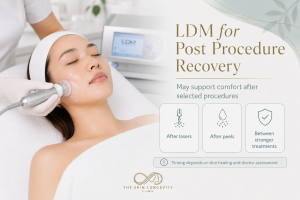
LDM facials after procedures to support comfort and recovery, once the skin is ready and assessed by the clinic team.
LDM for Skin Recovery After Procedures
LDM facials are also used as recovery support treatment after selected aesthetic procedures. Patients may consider it after lasers, chemical peels, acne treatments, energy based treatments or other clinic procedures, depending on their skin condition and timing.
After an aesthetic treatment, the skin may feel warm, dry, red or tight. LDM facials can improve patient comfort, hydration and a calmer recovery environment when employed after the aesthetic treatment.
At The Skin Longevity Clinic, recovery support is part of treatment planning. Besides LDM treatment, Dr Rachel also incorporates other recovery treatment protocols like LED light therapy.
LDM for Acne Prone Skin
Acne prone skin is often inflamed, oily, dehydrated and barrier impaired at the same time. Patients may have active breakouts, post acne marks, redness, sensitivity or irritation from acne medications and skincare.
LDM is used as a supportive treatment for acne prone skin when calming and hydration are needed. It may help patients whose skin feels dry, tight or irritated from acne treatment, or those who want a gentler facial option while active acne is being managed.
LDM for Redness Prone and Sensitive Skin
Skin redness can be due to several causes. The causes of red and sensitive skin include rosacea, barrier disruption, eczema tendency, acne inflammation, recent procedures, heat sensitivity or overuse of active skincare. LDM can be considered for some patients to improve skin comfort and calming.
The first step is treating the cause of redness and sensitive. For example, rosacea typically requires medical treatment and trigger control. Eczema benefits from barrier repair and control of inflammation.
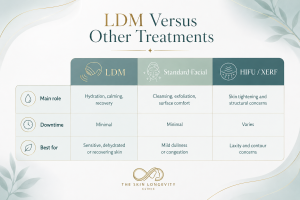
LDM is usually used for hydration, calming and recovery, while HIFU and XERF are better suited for selected skin tightening concerns.
LDM Facial Versus a Standard Facial
A standard facial usually focuses on cleansing, exfoliation, extraction, massage, masking and hydration. The experience can be relaxing and helpful for surface congestion, dullness and skin comfort.
LDM is different because it uses ultrasound energy rather than relying mainly on manual massage or topical products. It can still feel like a facial, but its main role is technology supporting skin calming, hydration and recovery.
The best choice depends on the skin concern. A patient with mild dullness and congestion may enjoy a standard facial. A patient with sensitive, dry or post treatment skin may benefit from an LDM based recovery facial. A patient with pigmentation, acne scars or laxity may require lasers, radiofrequency, injectables or other medical aesthetic treatments instead.
LDM Versus HIFU, XERF and Other Skin Tightening Treatments
LDM facials are sometimes grouped with other device based treatments, but it should be understood separately. HIFU, XERF and other skin tightening treatments are used when the goal is tissue heating, collagen remodelling, lifting or tightening.
LDM facials are gentler and usually used for hydration, calming and recovery support. It is not usually chosen as the main treatment for significant sagging, facial contour loss or deeper collagen decline.
This difference matters for expectations. If a patient wants lower face lifting or stronger tightening, treatments such as XERF, HIFU, radiofrequency microneedling, collagen biostimulators or injectables may be more appropriate. If the skin is reactive, dehydrated or recovering, LDM may be a better support step.
Who May Benefit From LDM Treatment?
LDM treatment may suit patients who want a gentle ultrasound facial with minimal downtime. It may be considered for those with dehydrated skin, dull skin, mild redness, sensitive skin, barrier stress, post treatment dryness or tired looking skin.
It may also suit patients who are undergoing a skin recovery programme after selected procedures, or those who need a calming step between stronger treatments. Working professionals may appreciate LDM because the treatment is usually comfortable and does not usually involve visible peeling or significant downtime.
Patients who want dramatic lifting, deep wrinkle correction, acne scar remodelling or pigmentation clearance should understand that LDM is mainly a supportive treatment. It may help the skin feel and look better, but stronger medical aesthetic treatments may be needed for more structural concerns.
Who Should Have a Doctor Consultation First?
A doctor consultation is advisable for patients with active acne, cystic acne, eczema, rosacea, melasma, infection, recent laser treatment, recent chemical peel, recent injectable treatment, very sensitive skin, pregnancy, breastfeeding or a history of pigmentation after procedures.
These conditions do not always exclude LDM. They do change how treatment should be planned. Some patients need medical treatment first, while others may need a gentler protocol or delayed timing.
A consultation is also helpful when the patient is unsure whether the concern is dehydration, redness, acne, pigmentation, ageing, barrier damage or skin laxity. These concerns can overlap, and treatment choice becomes clearer once the diagnosis is understood.
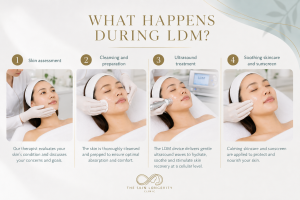
A typical LDM facial includes skin assessment, cleansing, ultrasound treatment and soothing skincare with aftercare guidance.
What Happens During an LDM Treatment?
An LDM treatment usually begins with cleansing. The skin is assessed to confirm that it is suitable for treatment on the day. Any active irritation, broken skin or infection should be identified before proceeding.
A conductive gel or suitable medium may be applied before the ultrasound handpiece is moved across the treatment area. Patients usually feel a comfortable massage sensation, mild warmth or gentle movement across the skin.
The treatment time depends on the protocol and areas treated. Many LDM facial sessions are designed to be efficient, which makes them practical for patients who want skin support without a long recovery period.
After treatment, soothing skincare and sunscreen may be applied. Patients are usually advised to keep skincare simple for the next few days, especially if the skin was sensitive before treatment.
What Results Can You Expect?
After one LDM treatment, patients may notice skin that feels more hydrated, calmer, smoother and more comfortable. The skin may look fresher or less tired, especially if dehydration or irritation was present before the session.
Results are usually subtle. LDM is best understood as a skin support treatment, not a dramatic corrective procedure. A single session can be useful as a skin reset, while repeated sessions may be considered for patients who need ongoing hydration, calming or recovery support.
Patients with deeper concerns such as acne scarring, significant pigmentation, pronounced laxity or volume loss will usually need other treatments. LDM may complement these treatments, but it should not be expected to replace them.
Is There Downtime After LDM?
Downtime is usually minimal. Some patients may have mild temporary redness or warmth, especially if the skin is sensitive. Most people can return to normal activities soon after treatment.
Aftercare should still be sensible. Sunscreen is important in Singapore’s climate. Patients should avoid harsh scrubs, strong exfoliating acids and unnecessary active ingredient layering immediately after treatment, especially if the skin was already irritated.
A simple routine with gentle cleansing, moisturiser and sunscreen is usually enough for the first few days unless the clinic advises otherwise.
How Often Should LDM Be Done?
The frequency depends on the skin concern. For hydration and calming, some patients may consider a series of sessions followed by maintenance. For post procedure recovery, LDM may be timed around the patient’s treatment plan and healing stage.
For general skin maintenance, intervals may vary from weekly during an intensive recovery phase to every few weeks as part of a facial programme. The ideal schedule should be individualised according to skin tolerance, response and other treatments being performed.
The goal is consistency without over treatment. Even gentle treatments should have a purpose and should be reviewed if the skin is not responding as expected.
How LDM Fits Into Skin Longevity
Skin longevity is about supporting skin health over time. This includes barrier strength, hydration, pigment stability, inflammation control, collagen quality and recovery capacity.
LDM fits into skin longevity as a supportive treatment for skin that needs calming, hydration or recovery. It can help maintain a more stable skin environment between stronger aesthetic treatments. It may also be useful when the skin is not ready for lasers, peels or more active procedures.
Dr Rachel Ho’s Takeaway on LDM Facial Treatments
LDM treatment in Singapore is best understood as a gentle ultrasound facial for hydration, calming and skin recovery. It can be a useful supportive treatment for dehydrated, sensitive, redness prone or post procedure skin.
The most important step is choosing it for the right reason. LDM may support skin comfort and recovery, but it does not replace medical acne treatment, pigmentation lasers, collagen stimulation, injectables or lifting treatments when those are needed.
A good skin plan should explain what the skin needs, why the treatment is being chosen and how results will be maintained. This is how LDM can fit into a broader skin longevity approach.
Frequently Asked Questions
What is LDM treatment?
LDM stands for Local Dynamic Micro Massage. It is an ultrasound based treatment that uses rapidly alternating ultrasound frequencies to create a micro massage effect in the skin. It is commonly used for hydration, calming and skin recovery support.
Is LDM the same as an ultrasound facial?
LDM is often described as an ultrasound facial because it uses ultrasound energy in a facial style treatment. It is usually non invasive, comfortable and low downtime.
What is LDM treatment used for?
LDM may be used for dehydrated skin, tired looking skin, sensitive skin, mild redness, skin barrier stress, acne prone skin support and post procedure recovery. Its role is mainly supportive rather than corrective.
Is LDM suitable for acne prone skin?
LDM may suit some acne prone patients when the goal is calming and hydration. Patients with active inflamed acne, cystic acne or acne that is scarring should have a doctor consultation because medical acne treatment may be needed first.
Can LDM help with redness?
LDM may help support comfort in some redness prone patients. The cause of redness should be assessed first because rosacea, eczema, acne inflammation and post procedure redness require different plans.
Can LDM be done after a laser?
LDM may be considered after selected laser treatments when the skin is ready. Timing depends on the type of laser, intensity of treatment and the patient’s recovery. The clinic team should advise when it is safe to proceed.
Does LDM lift the face?
LDM may make the skin feel fresher or firmer in some patients, but it should not be considered a primary lifting treatment for significant laxity. Treatments such as XERF, HIFU, radiofrequency microneedling, injectables or collagen biostimulators may be more suitable for lifting or structural concerns.
Is there downtime after LDM?
Downtime is usually minimal. Some patients may have mild temporary redness or warmth, but most can return to normal activities soon after treatment.
How many LDM sessions do I need?
The number of sessions depends on the skin condition and treatment goal. Some patients use LDM as a one time skin reset, while others may benefit from a short course followed by maintenance.
Is LDM suitable for sensitive skin?
LDM may suit selected patients with sensitive skin because it is gentle and non invasive. Patients with active eczema, rosacea, infection, very reactive skin or recent procedures should have a doctor consultation first.
Can LDM replace lasers or injectables?
LDM supports hydration, calming and recovery. Lasers or injectables may still be needed for pigmentation, acne scars, skin laxity, contour changes, volume loss or dynamic wrinkles.
What should I avoid after LDM?
Patients should avoid harsh scrubs, excessive exfoliation, strong acids and unnecessary active ingredient layering immediately after treatment. Sunscreen, moisturiser and gentle skincare are usually recommended.
References
- Xu M, Wang L, Wu S, et al. Review on experimental study and clinical application of low intensity pulsed ultrasound in inflammation. Quantitative Imaging in Medicine and Surgery. 2021.
- Lee JY, et al. Non pharmacological high intensity ultrasound treatment of human dermal fibroblasts to accelerate wound healing. Scientific Reports. 2021.
- Ahn TH, et al. Application of dual frequency ultrasound for reduction of perilesional edema and ecchymosis after rhinoseptoplasty. 2024.
- Wong A, et al. Ultrasound Therapy for the Skin. Dermatologic Clinics. 2024.
- Conner Kerr T, et al. Current perspectives on therapeutic ultrasound in the management of chronic wounds. Chronic Wound Care Management and Research. 2017.