

Chin Fillers in Singapore: Suitability, Procedure and Recovery
Chin filler is a nonsurgical treatment that adds volume to change the projection and contour of the chin1. This treatment page focuses on temporary hyaluronic acid fillers, which have been studied for improving the appearance of an underprojected or recessed chin1.
For someone considering chin filler in Singapore, the starting point is the change they hope to achieve. It helps to explain both what you would like to adjust and what you would like to preserve, rather than begin with a predetermined amount of filler.
What can chin filler change?
Chin filler can increase forward projection, adjust visible chin height and alter width, depending on where the material is placed2. These are different changes, which is why assessment considers the chin from the front and side, alongside the lips and surrounding facial proportions2,3.
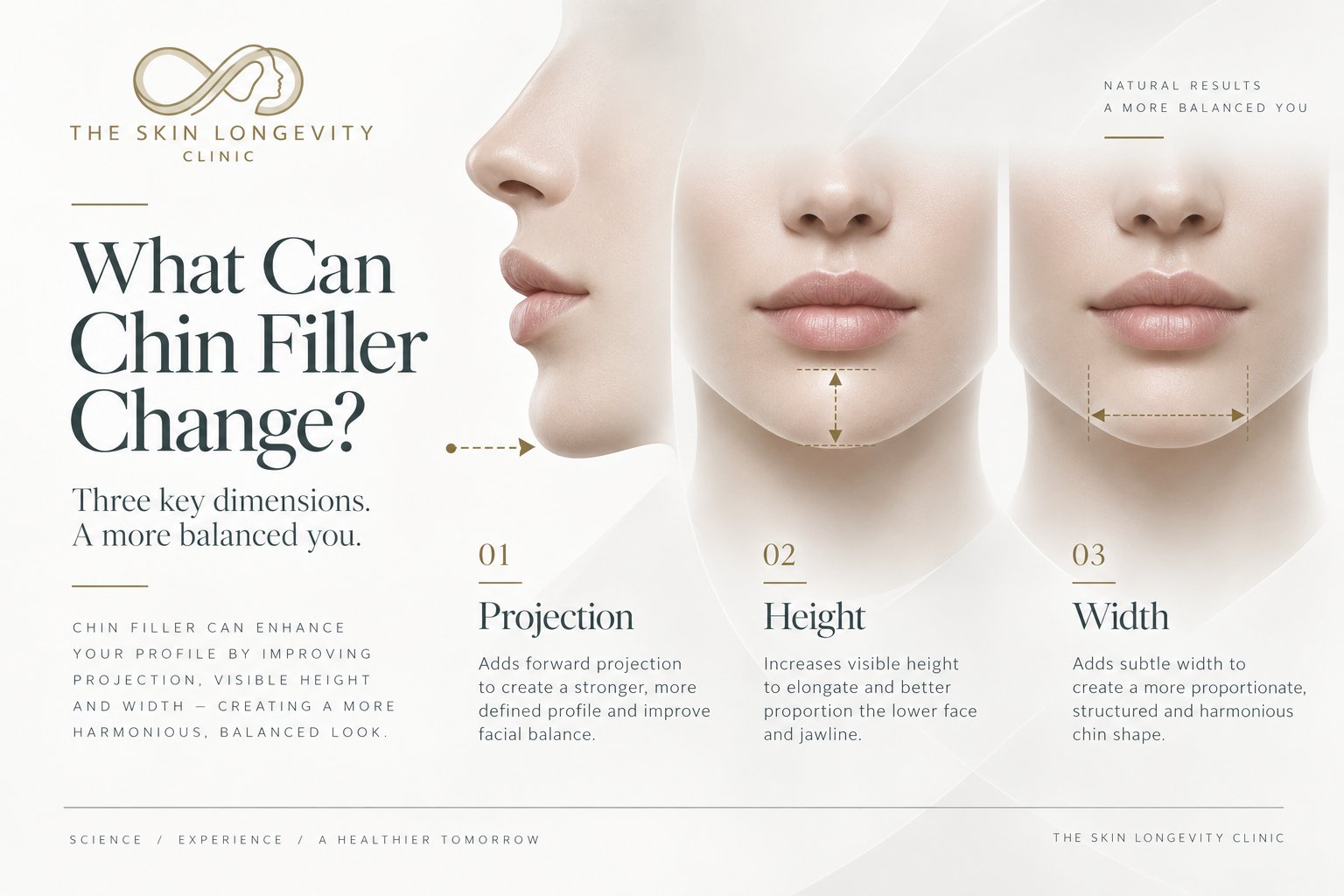
Adding forward projection is different from making the chin longer or wider. A treatment plan should identify which dimension needs adjustment and how that would affect the rest of the lower face2.
For a fuller explanation of facial proportions, read Dr Rachel Ho’s guide to chin fillers and nonsurgical chin augmentation. Our overview of dermal fillers in Singapore explains the broader differences between injectable materials.
Can filler help a recessed or receding chin?
A chin can appear set back even when the teeth meet normally, while other presentations involve the position of the lower jaw and the bite3. Filler changes the soft tissue contour; correcting a jaw or bite discrepancy requires a different assessment3.
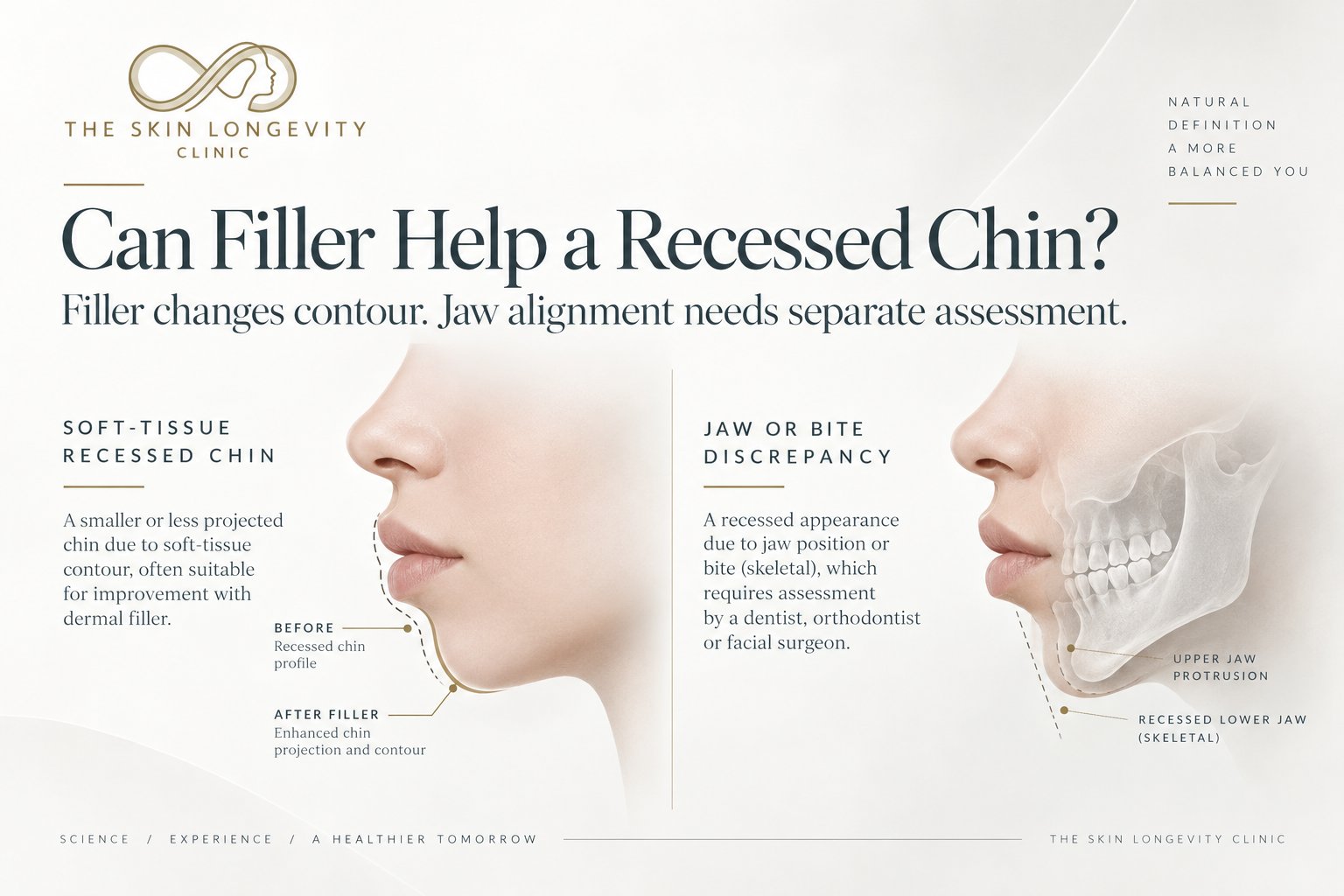
During the consultation, mention difficulty chewing, an overbite, previous orthodontic treatment or concerns about jaw alignment. These details help determine whether cosmetic contouring is appropriate or whether dental or surgical assessment should come first3.
A preference for a different chin shape can also be considered without an obligation to proceed. The consultation should help you understand the likely change and decide whether it is worthwhile to you.
What should be discussed before embarking on chin filler injections?
Share your medical history, allergies, medicines and previous injectable treatments, including any filler whose name or treatment date you cannot recall4. Existing filler, active inflammation or infection, and previous reactions can affect the assessment and timing of treatment4.
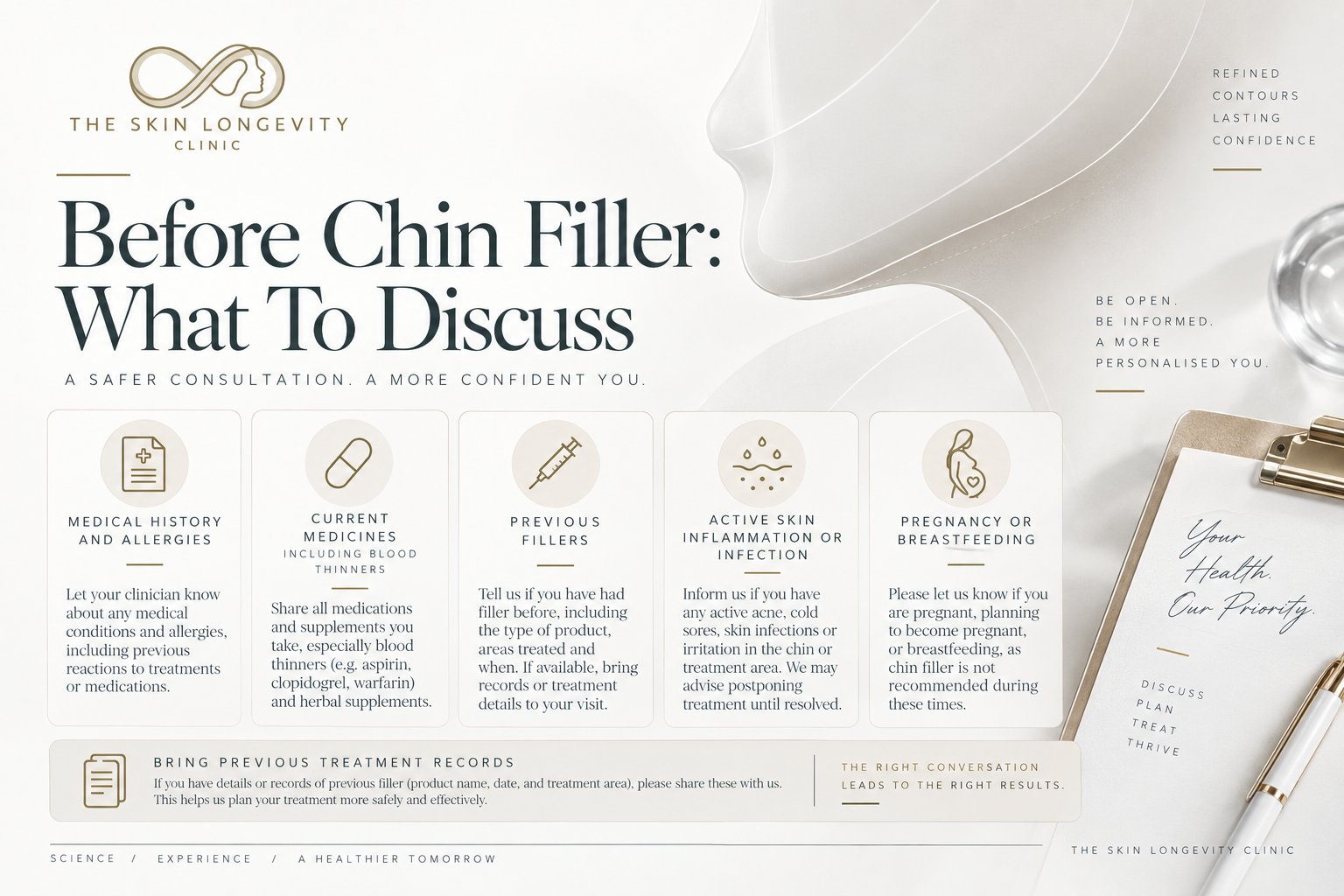
Pregnancy and breastfeeding should be disclosed before considering an elective procedure4. Changes to prescribed medicines, including blood thinning treatment, should be discussed with the prescribing doctor rather than made independently for a cosmetic appointment4.
Our article on what to expect at your first aesthetic clinic consultation explains how to prepare your history and questions. Bring any available records of previous filler, as these are more useful than trying to identify the material from appearance alone.
How are chin filler injections performed?
The procedure begins with assessment, discussion of alternatives and risks, and informed consent4. The skin is cleansed, treatment sites are planned, and local anaesthesia may be used to reduce discomfort4.
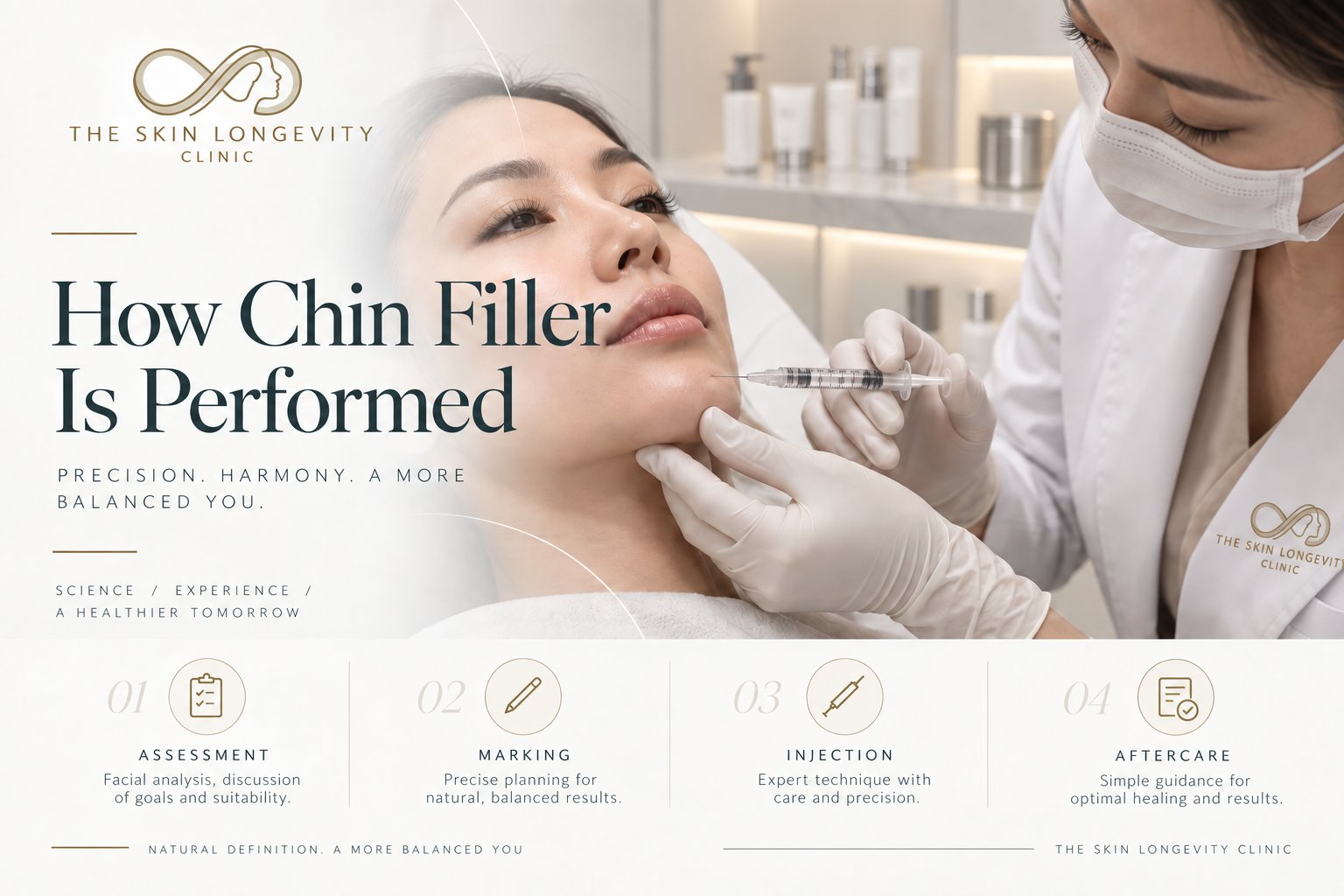
The doctor places filler using a needle, a cannula or a combination selected for the intended change and anatomy2. Placement and distribution influence whether treatment mainly adds projection, length or width2.
Pressure, stinging and tenderness can still occur despite measures to improve comfort1. Before leaving, patients should receive aftercare instructions and information about review arrangements4.
How much chin filler is needed?
Questions about 1 ml or 2 ml of chin filler are understandable, but volume alone does not describe the result. The starting anatomy, intended change and distribution of the material all influence the treatment plan2.
A published anatomical approach to chin augmentation used different placement strategies according to chin shape, rather than one identical pattern for every patient2. Ask the doctor to explain what the proposed amount is intended to change before deciding.
What does the evidence show about chin filler results?
A randomised study published in 2024 included 148 Chinese adults with mild to moderate chin retrusion and compared one HA filler with an initially untreated control group5. At six months, 81% of treated participants achieved at least one grade of improvement on a chin retrusion scale, compared with 5% of controls, as assessed by a blinded evaluator5.
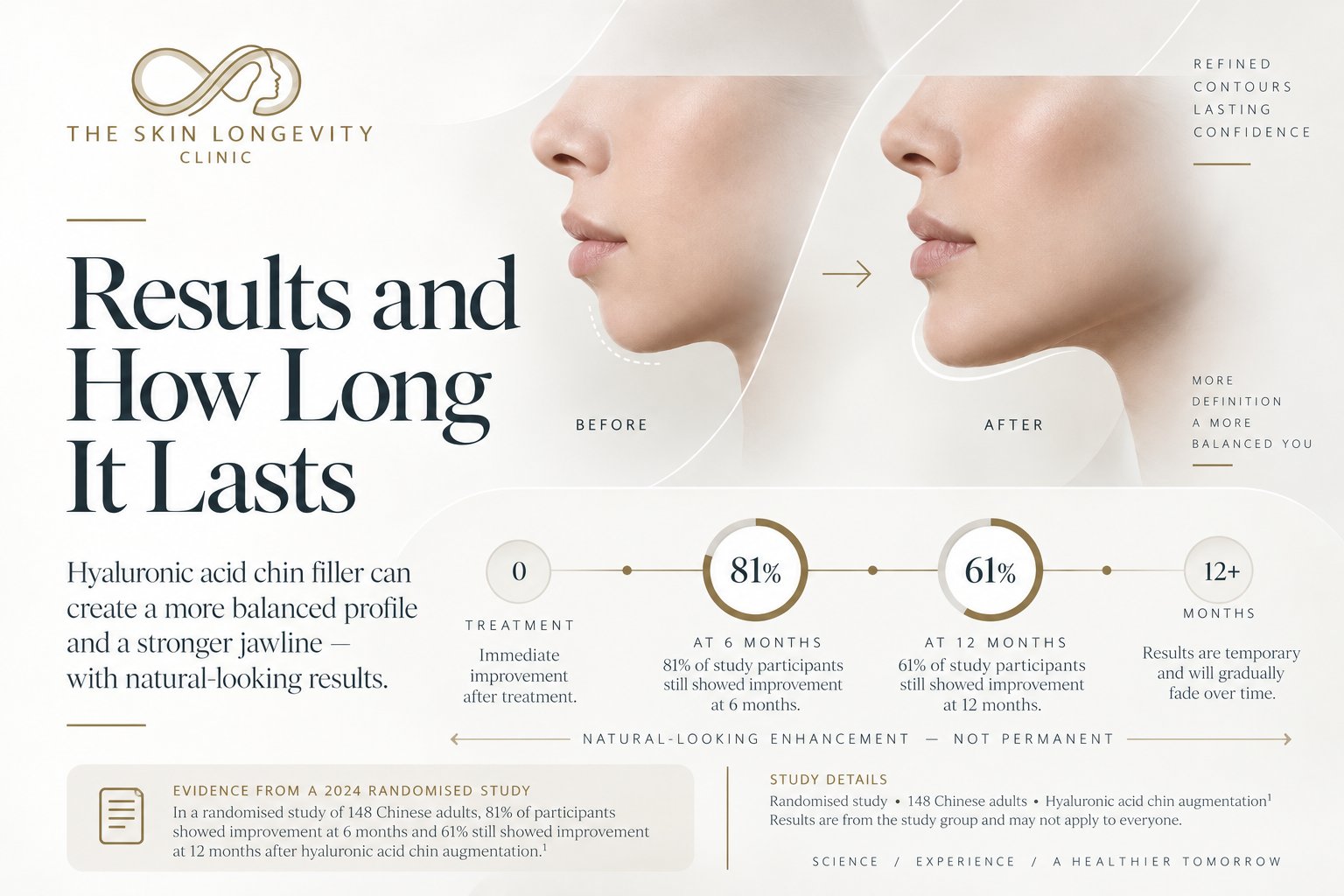
The study allowed an additional treatment at one month and was funded by the manufacturer5. Its findings support the particular preparation and protocol studied, rather than an identical outcome with every filler or for every patient5.
How long does chin filler last?
Hyaluronic acid chin filler provides a temporary change rather than permanent augmentation1. In the study above, 61% of treated participants still met the chin retrusion improvement threshold at twelve months5.
Other randomised trials report a similar pattern: treatment benefit remained evident at twelve months with two further hyaluronic acid fillers9,10, and in an eighteen-month follow-up of one product about half of participants were still rated as improved before repeat treatment11. How long a result lasts depends on the product, the amount placed and the individual, which is why our comparison graphic gives a range of roughly nine to eighteen months rather than a single figure.
That finding describes a study group, rather than a fixed expiry date for everyone’s result5. A review should consider the remaining contour and whether further treatment is appropriate, rather than assume that another injection is automatically needed when a calendar interval has passed.
What should you expect during recovery after chin filler injections?
Swelling, bruising, pain and tenderness are recognised reactions after chin filler treatment1. Early swelling can affect the appearance, so the immediate result should be distinguished from the appearance assessed after recovery4.
In a trial that tracked reactions daily, swelling, tenderness and pain were reported by most participants from the day of treatment, about two thirds of reactions had resolved within fourteen days, and a minority had ongoing firmness or tenderness at four weeks12. Consensus guidance treats a sensation of firmness for up to four weeks as expected, advises avoiding strenuous exercise for the first twenty-four hours, and schedules review at two to four weeks, when the settled contour can be assessed4.
Expert consensus recommends review at approximately two to four weeks for patients new to a treatment or treatment area, with earlier assessment when concerns arise4. Ask for written instructions covering exercise, pressure on the treated area and when to contact the clinic4.
Firmness or a visible lump can have different explanations, including product placement and inflammation7. Persistent, enlarging, painful or red lumps deserve clinical assessment rather than being assumed to be part of normal settling7.
Our guide to chin filler recovery, swelling and aftercare covers how long swelling usually lasts, what firmness means and which symptoms need urgent attention.
What are the risks of chin filler?
Alongside early injection reactions, filler complications can include an uneven contour, unwanted fullness, infection and delayed inflammatory nodules7. The appropriate response depends on the cause, which is why changes after treatment should be assessed rather than managed with a standard correction for every patient7.
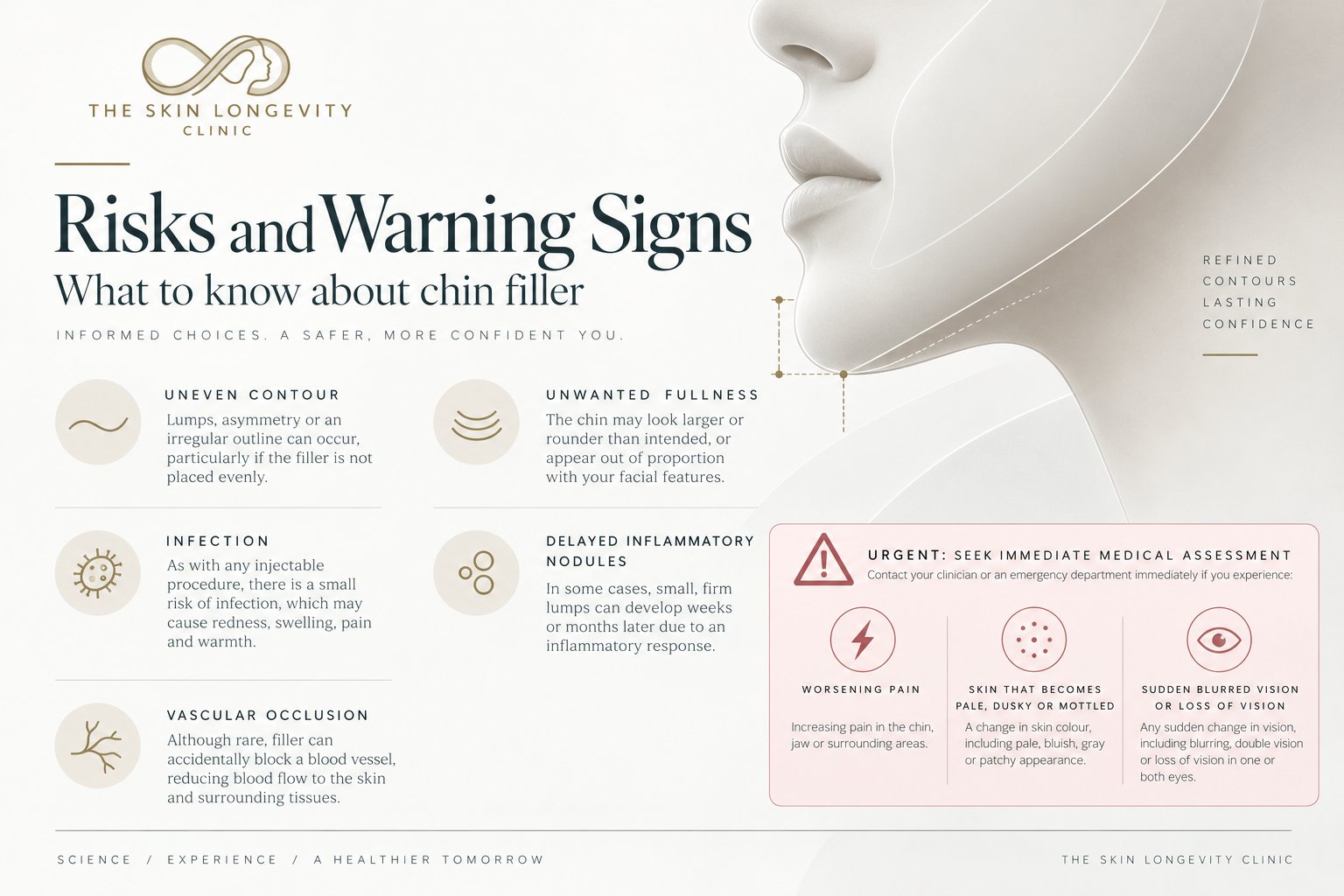
The most serious concern is interruption of blood supply after filler enters or obstructs a vessel, which can lead to tissue injury6. Vascular occlusion has been reported with both needles and cannulas, so the choice of instrument does not eliminate this risk8.
Worsening pain or skin that becomes unusually pale, dusky or mottled requires immediate medical assessment6. Sudden blurred vision or loss of vision after a facial filler injection requires emergency care, rather than waiting for a routine review6.
Can chin filler be dissolved?
Hyaluronic acid filler can be broken down using hyaluronidase, an enzyme administered by a clinician7. It may be considered for suitable cases of overfilling or contour irregularity, but the reason for an unwanted appearance should be established first7.
Some preparations require repeated treatment, and hyaluronidase itself can cause adverse reactions, including allergy7. The ability to dissolve HA does not guarantee reversal of tissue injury or visual loss from a vascular complication7.
How does filler compare with a chin implant or genioplasty?
Filler adds material to change the soft tissue contour, while a chin implant and genioplasty are surgical approaches to augmentation3. Genioplasty can reposition the chin bone, allowing changes that differ from adding injectable volume3. Filler is also temporary, with trial results lasting around twelve to eighteen months5,9,11, whereas an implant or genioplasty is intended to be permanent3.
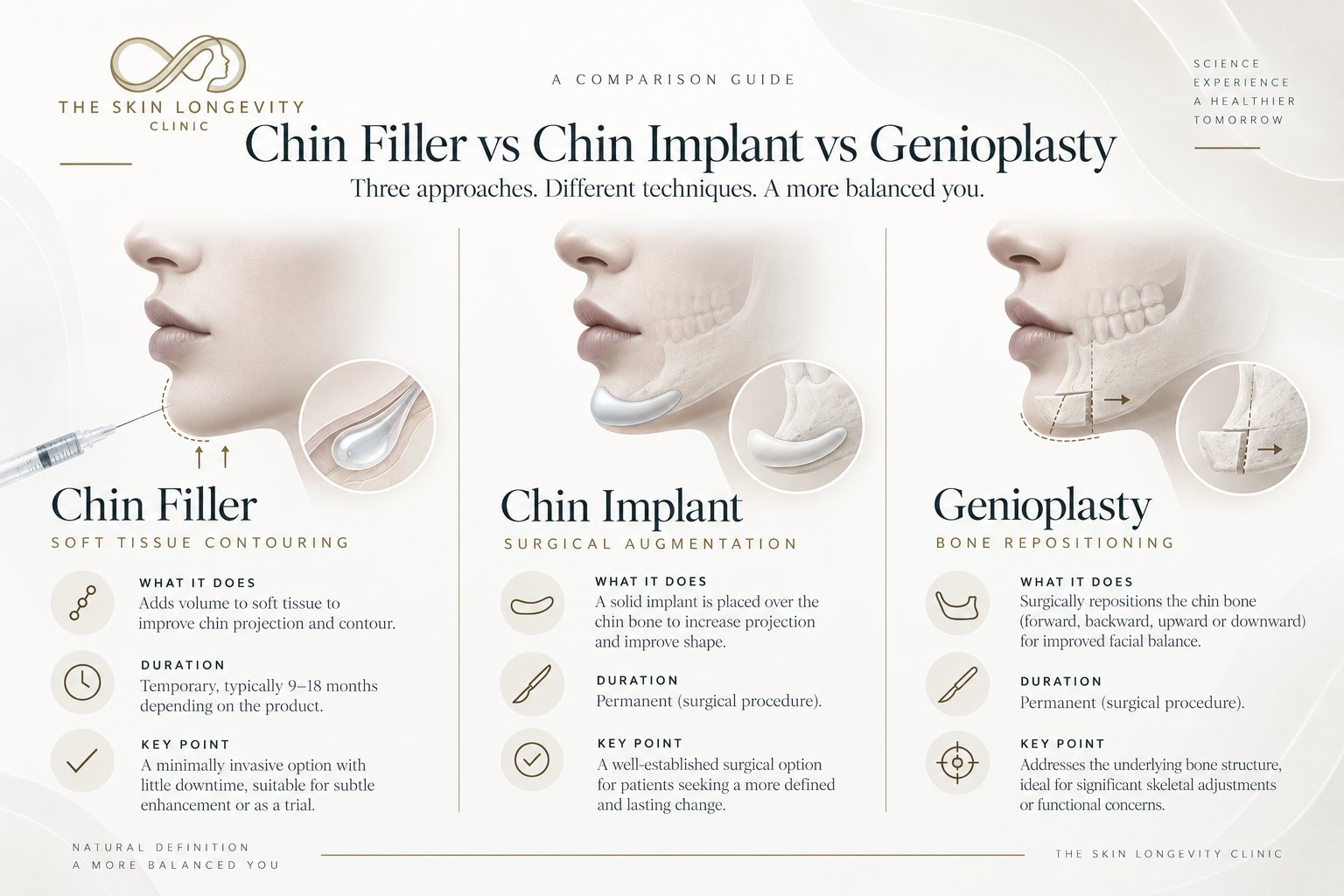
The choice depends on the underlying anatomy, the extent of change sought and whether the bite or jaw position also needs attention3. A surgical opinion may therefore be appropriate for some patients, while others may prefer a temporary approach or decide against intervention3.
How much does chin filler cost in Singapore?
Request a quotation after assessment that identifies the proposed material and amount, along with consultation fees, GST, aftercare and planned reviews. Ask how additional assessment or correction would be handled if the response differs from what was expected.
Our guide to your first aesthetic consultation includes questions about fees and ongoing care. Understanding what the quotation covers is more useful than comparing syringe prices without knowing the treatment plan.
Chin assessment at The Skin Longevity Clinic
The Skin Longevity Clinic’s approach to dermal fillers considers facial structure, proportion and conservative treatment planning. An assessment should connect the change you are seeking with what the proposed treatment can reasonably achieve, including its limitations.
Dr Rachel Ho is an aesthetic doctor and the clinic’s founder, with an MBBS from the National University of Singapore and a Master of Medicine. Read Dr Rachel Ho’s professional profile for her background and qualifications.
To arrange an assessment, use the clinic’s contact page for its location at Scotts Medical Center, 9 Scotts Road, Singapore. You can use the consultation to understand your options and take time before deciding whether to proceed.
References
-
Ou Y, Wu M, Liu D, et al. Nonsurgical Chin Augmentation Using Hyaluronic Acid: A Systematic Review of Technique, Satisfaction, and Complications. Aesthetic Plastic Surgery. 2023;47:1560 to 1567.
-
Chen B, Ma L, Wang J. Chin Augmentation With Hyaluronic Acid: An Injection Technique Based on Anatomical Morphology. Dermatologic Surgery. 2022;48:747 to 751.
-
Arroyo HH, Olivetti IP, Lima LFR, Jurado JRP. Clinical evaluation for chin augmentation: literature review and algorithm proposal. Brazilian Journal of Otorhinolaryngology. 2016;82:596 to 601.
-
Goodman GJ, Liew S, Callan P, Hart S. Facial aesthetic injections in clinical practice: Pretreatment and posttreatment consensus recommendations to minimise adverse outcomes. Australasian Journal of Dermatology. 2020;61:217 to 225.
-
Xie Y, Zhao H, Wu W, et al. Chin Augmentation and Treatment of Chin Retrusion with a Flexible Hyaluronic Acid Filler in Asian Subjects. Randomised controlled study. Aesthetic Plastic Surgery. 2024;48:1030 to 1036.
-
Murray G, Convery C, Walker L, Davies E. Guideline for the Management of Hyaluronic Acid Filler Induced Vascular Occlusion. Journal of Clinical and Aesthetic Dermatology. 2021;14:E61 to E69.
-
Kroumpouzos G, Treacy P. Hyaluronidase for Dermal Filler Complications: Review of Applications and Dosage Recommendations. JMIR Dermatology. 2024;7:e50403.
-
Alam M, et al. Rates of Vascular Occlusion Associated With Using Needles vs Cannulas for Filler Injection. JAMA Dermatology. 2021;157:174 to 180.
-
Beer K, Kaufman-Janette J, Bank D, et al. Safe and Effective Chin Augmentation With the Hyaluronic Acid Injectable Filler, VYC-20L. Dermatologic Surgery. 2021;47:80 to 85.
-
Ogilvie P, Sattler G, Gaymans F, et al. Safe, Effective Chin and Jaw Restoration With VYC-25L Hyaluronic Acid Injectable Gel. Dermatologic Surgery. 2019;45:1294 to 1303.
-
Ogilvie P, Benouaiche L, Philipp-Dormston WG, et al. VYC-25L Hyaluronic Acid Injectable Gel Is Safe and Effective for Long-Term Restoration and Creation of Volume of the Lower Face. Aesthetic Surgery Journal. 2020;40:NP499 to NP510.
-
Xie Y, Li Q, Zhao H, et al. VYC-25L Is Safe and Effective for Enhancing the Chin and Jawline by Correcting Chin Retrusion in Chinese Adults. Aesthetic Surgery Journal. 2025;45:699 to 708.