


Lip Fillers in Singapore: Volume, Shape and Recovery
Lip filler is an injectable treatment that adds volume and can alter the contour of the lips1. This page focuses on hyaluronic acid, or HA, gels used for lip augmentation2.
For someone considering lip filler in Singapore, the starting point is the change they would like to see. Explain whether you want more fullness, clearer definition or a small adjustment, including which features you would prefer to preserve.

What can lip filler change?
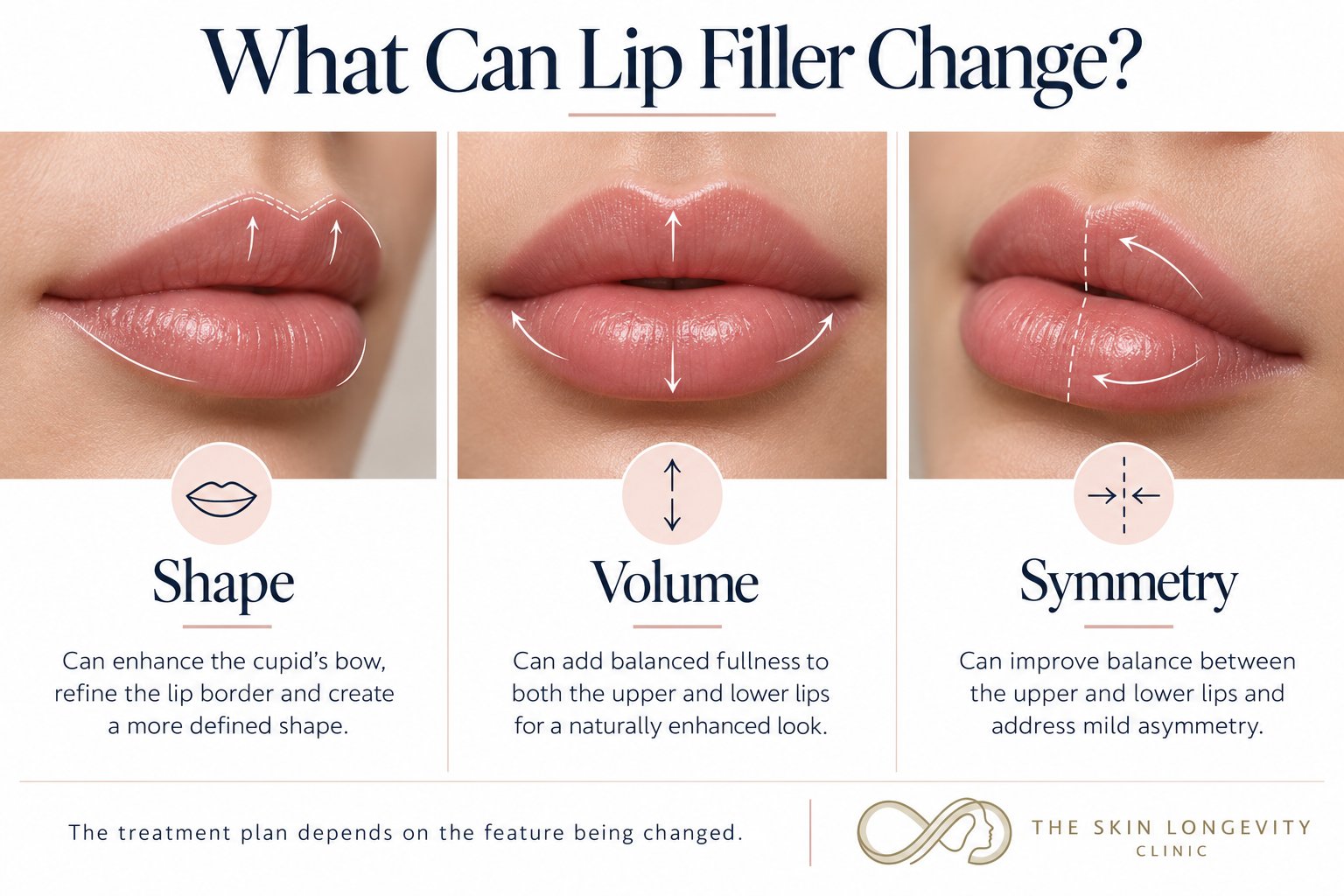
HA filler can increase fullness, define the lip border, adjust projection and address selected asymmetries1. The placement and distribution of the material influence which features change1.
Lip shape and lip size are different treatment goals. Discuss the upper and lower lips separately, and ask how the proposed plan would affect their appearance at rest and during expression.
Dr Rachel Ho’s explanation of lip fillers and lip shape provides further background. Our overview of dermal fillers in Singapore explains the broader differences between injectable materials.
Who might be suitable for lip filler?
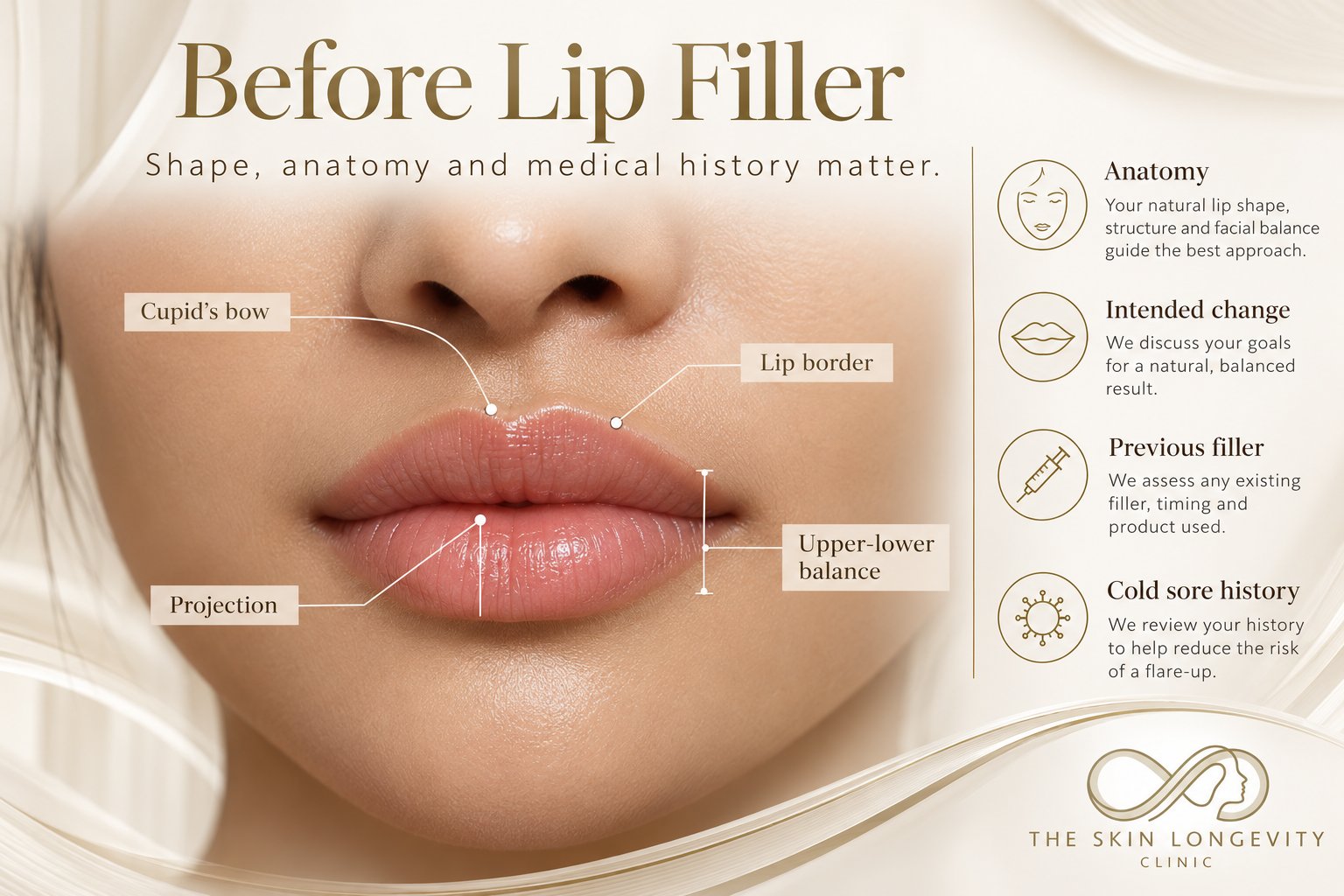
Suitability depends on the anatomy, intended change, medical history and previous treatment1,3. Existing filler should be considered before another injection, particularly when its type or location is uncertain3.
Share your medicines, allergies, previous reactions and any current irritation or infection around the mouth3. Published guidance recommends postponing elective filler treatment during pregnancy or breastfeeding and when active inflammation or infection affects the treatment area3.
What should you disclose about cold sores?
Injections around the lips can reactivate herpes simplex, the virus responsible for cold sores4. Tell the doctor about previous episodes, especially those triggered by a cosmetic or dental procedure, so preventive treatment can be considered where appropriate4.
An active cold sore or warning symptoms such as familiar tingling are reasons to postpone treatment until the episode has resolved4. Antiviral prevention should be decided by the clinician rather than started independently4.
How are lip filler injections performed?
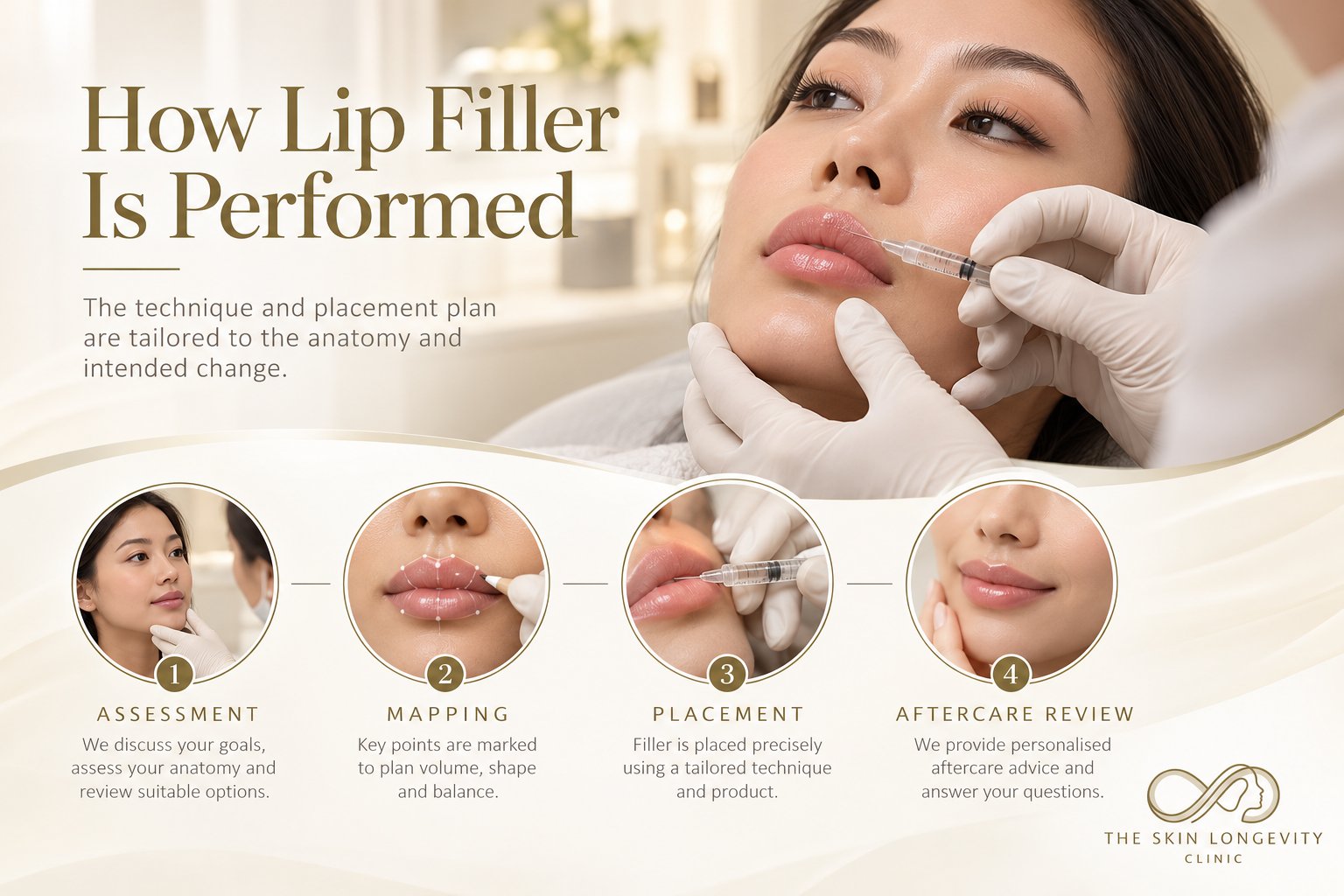
Treatment begins with assessment, discussion of benefits, alternatives and risks, and informed consent3. The area is cleansed, and topical numbing or local anaesthesia may be used to improve comfort3.
A needle, cannula or combination may be selected according to the anatomy and planned placement1. The material is distributed to address the agreed features rather than follow one identical pattern for every lip1.
Pressure, stinging and tenderness can still occur despite numbing2. Tell the treating doctor about unexpected pain during the procedure, and obtain written aftercare instructions before leaving3.
Is 0.5 ml or 1 ml of lip filler enough?
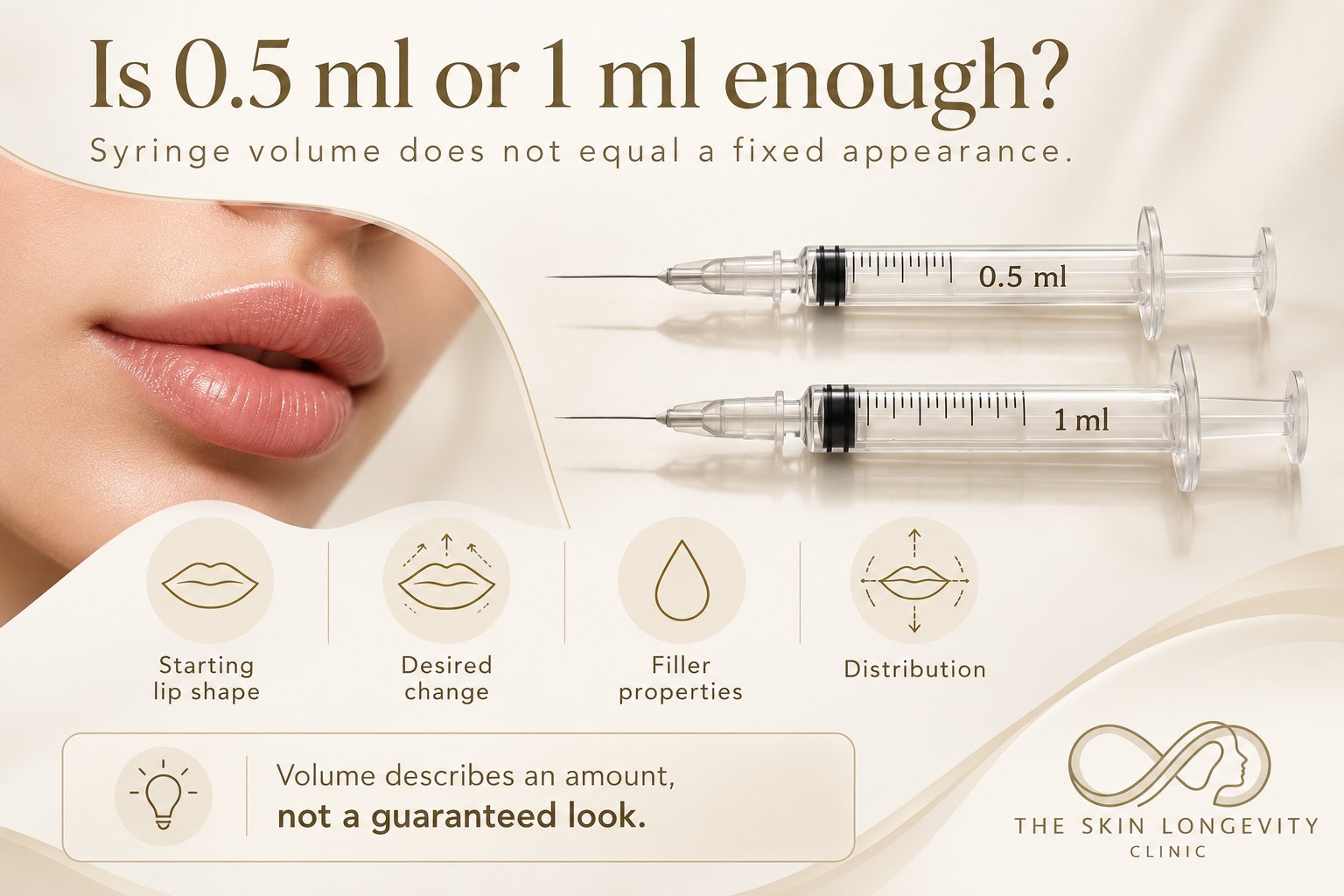
A syringe volume describes an amount, rather than a standard appearance. The starting lip shape, desired change, filler properties and distribution all influence the treatment plan1.
Ask whether the proposed amount covers one lip or both and what it is intended to achieve. A preference for subtle enhancement should be discussed in terms of the features you want changed, rather than assuming that a particular volume guarantees a natural looking result.
What does the evidence show about lip filler results?
A 2021 meta analysis found that HA injections increased lip fullness, but rated the certainty of the evidence as very low2. Differences between studies, risk of bias and imprecise estimates limited confidence in the pooled findings2.
A subsequent randomised study published in 2025 enrolled 176 adults in China and found greater improvement in lip fullness with one HA preparation than with an initially untreated comparison group5. The protocol allowed additional treatment at one month, so the results should be interpreted in that context rather than as a guaranteed outcome from one injection session5.
How long do lip fillers last?
Clinical studies have documented improved lip fullness at six months, with some participants retaining improvement at twelve months2. Preparations and treatment protocols differed between studies, which limits the usefulness of a single duration figure2.
Ask about the evidence for the preparation being proposed. Further treatment should follow reassessment of the remaining contour rather than an automatic refill at a fixed interval.
What should you expect during recovery?
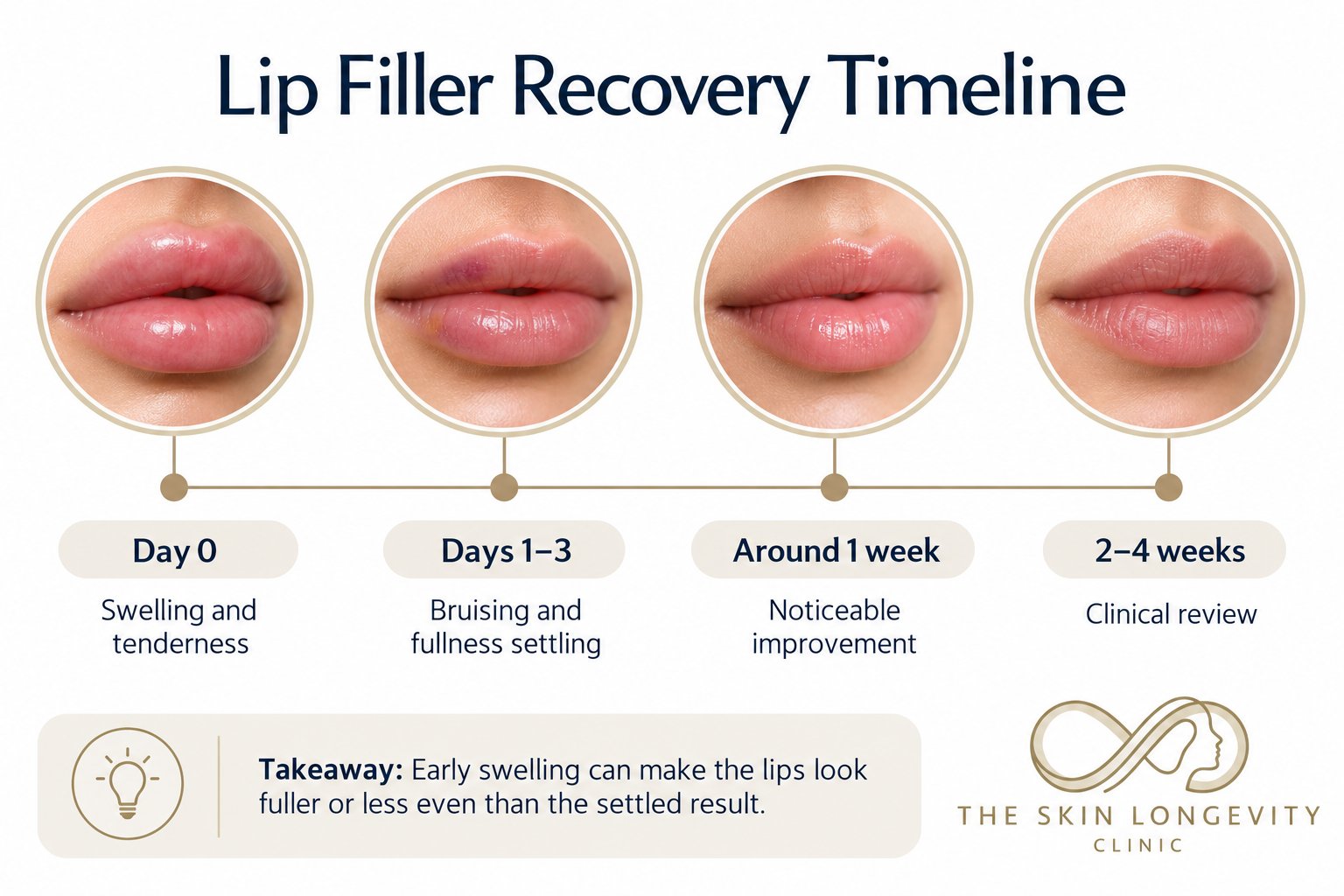
Swelling, bruising, tenderness and temporary firmness can occur after lip filler injections2,7. Early swelling can contribute to an appearance that is fuller or less even than expected, so it should be distinguished from the contour assessed after recovery7.
In the 2025 trial, most recorded local reactions resolved within one week5. That finding describes one preparation and study protocol, rather than a deadline by which every patient must feel completely settled5.
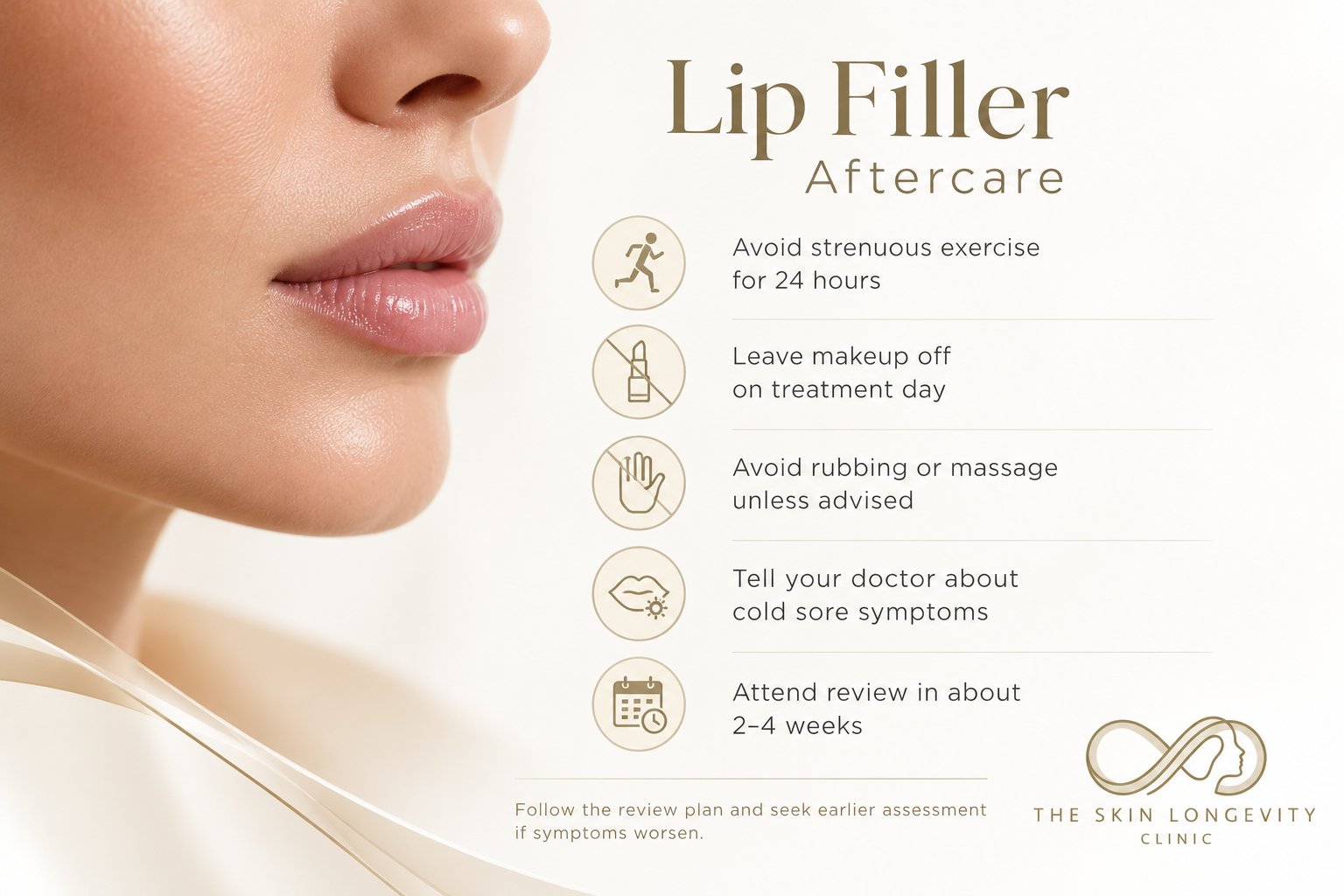
Expert consensus recommends avoiding strenuous exercise for the first twenty four hours after HA filler treatment6. Published aftercare guidance also advises leaving makeup off for the remainder of the treatment day and avoiding rubbing or massage unless directed by the clinician3.
Ask how the instructions apply to lipstick, eating, kissing and your usual activities. Confirm the review arrangements and how to obtain advice when recovery differs from what you were told.
What are the risks of lip filler?
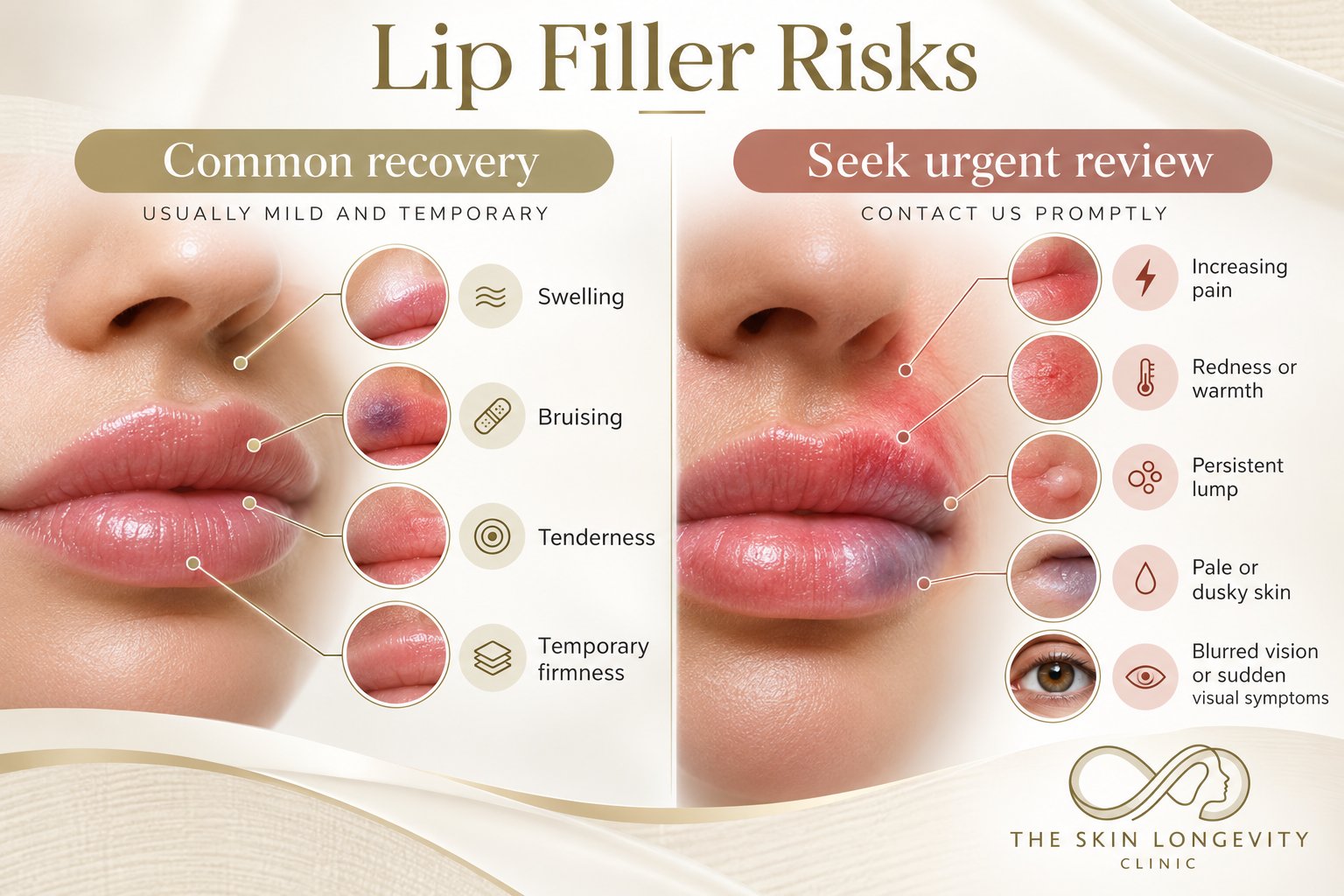
Possible complications include unwanted fullness, uneven contours, infection, delayed inflammatory nodules and migration of material7. A persistent lump or ridge needs examination because its appearance alone may not establish the cause7.
A lump that becomes red, warm, painful or increasingly swollen warrants prompt assessment7. Leave massage or attempted correction to clinical advice rather than trying to flatten it yourself3.
A serious complication occurs when filler obstructs blood supply, potentially causing tissue injury8. Increasing pain or skin that becomes unusually pale, dusky or mottled requires immediate medical assessment, even when treatment was recent8.
Sudden blurred vision, loss of vision or new neurological symptoms after a facial filler injection require emergency care9.
When should the lips be reviewed?
Published expert consensus recommends review at approximately two to four weeks for patients receiving filler in a new treatment area3. The treating clinician should confirm your appointment, with earlier examination for unexpected or worsening symptoms3.
Use the review to discuss remaining swelling, firmness, symmetry and whether the change matches the original plan. A review is an opportunity to assess the response rather than an automatic appointment for more filler.
Can lip filler be dissolved?
Hyaluronic acid filler can be broken down using hyaluronidase, an enzyme used by clinicians for selected unwanted results or complications10. The response varies, and more than one treatment may be required10.
Hyaluronidase can itself cause adverse reactions, including allergy10. The ability to dissolve HA does not guarantee reversal of tissue injury or visual loss caused by a vascular complication9,10.
Read Dr Rachel Ho’s guide to dissolving fillers with hyaluronidase for further detail. Assessment should establish the material involved and the reason for the concern before a correction is proposed.
How does a lip flip differ from lip filler?
A lip flip uses botulinum toxin to change muscle activity and turn part of the upper lip outwards, rather than add filler volume11. Temporary changes in lip function, including difficulty whistling or drinking through a straw, have been reported11.
Ask which aspect of your concern each approach would address before comparing them. Leaving your lips unchanged is also a reasonable choice when the expected benefit does not justify a procedure for you.
How much does lip filler cost in Singapore?
Request a quotation after assessment that identifies the proposed material and amount, including whether it covers the upper lip, lower lip or both. Clarify consultation fees, GST, aftercare, planned reviews and how additional assessment would be charged.
Our guide to your first aesthetic consultation includes questions about treatment planning and ongoing care, and our list of questions to ask an aesthetic clinic in Singapore covers safety and follow-up. Compare the complete proposal rather than a syringe price without knowing what that amount is intended to achieve.
Lip assessment at The Skin Longevity Clinic
Dr Rachel Ho is an aesthetic doctor and the founder of The Skin Longevity Clinic. Her professional profile outlines her qualifications and clinical background.
The clinic is located at Scotts Medical Center, 9 Scotts Road, Singapore 228210. Use the contact page to arrange an assessment and confirm current appointment arrangements.
References
-
Hong GW, Choi W, Yoon SE, Wan J, Yi KH. Anatomical Based Diagnosis and Filler Injection Techniques: Lips and Philtrum. Life. 2025;15(2):315.
-
Czumbel LM, et al. Hyaluronic Acid Is an Effective Dermal Filler for Lip Augmentation: A Meta Analysis. Frontiers in Surgery. 2021;8:681028.
-
Goodman GJ, Liew S, Callan P, Hart S. Facial aesthetic injections in clinical practice: Pretreatment and posttreatment consensus recommendations to minimise adverse outcomes. Australasian Journal of Dermatology. 2020;61(3):217 to 225.
-
Vaghela D, Davies E, Murray G, Convery C, Walker L. Guideline for the Management Herpes Simplex 1 and Cosmetic Interventions. Journal of Clinical and Aesthetic Dermatology. 2021;14(6 Suppl 1):S11 to S14.
-
Wang T, Huang C, Jin P, et al. Safety and Efficacy of a New Hyaluronic Acid Filler for Lip Augmentation: A Prospective, Multicenter, Randomized, Controlled Study. Aesthetic Surgery Journal Open Forum. 2025;7:ojaf113.
-
Signorini M, Liew S, Sundaram H, et al. Global Aesthetics Consensus: Avoidance and Management of Complications from Hyaluronic Acid Fillers. Plastic and Reconstructive Surgery. 2016;137(6):961e to 971e.
-
Kroumpouzos G, Harris S, Bhargava S, Wortsman X. Complications of fillers in the lips and perioral area: Prevention, assessment, and management focusing on ultrasound guidance. Journal of Plastic, Reconstructive & Aesthetic Surgery. 2023;84:656 to 669.
-
Murray G, Convery C, Walker L, Davies E. Guideline for the Management of Hyaluronic Acid Filler Induced Vascular Occlusion. Journal of Clinical and Aesthetic Dermatology. 2021;14(5):E61 to E69.
-
Sansome S, Clague M, Convery C, et al. Consensus Guidelines for the Management of Tissue Filler Induced Vision Loss in the United Kingdom. Aesthetic Surgery Journal. 2026;46(5):563 to 568.
-
Kroumpouzos G, Treacy P. Hyaluronidase for Dermal Filler Complications: Review of Applications and Dosage Recommendations. JMIR Dermatology. 2024;7:e50403.
-
Pitchford CA, Desrosiers AS, Tolkachjov SN. The lip flip: a systematic review of botulinum toxin lip augmentation. Archives of Dermatological Research. 2025;317(1):765.