


26 Jul Botulinum Toxin in Singapore: Areas, Results, Safety & Medical Assessment | Skin Longevity Clinic
By Dr Rachel Ho | Aesthetic Doctor, Founder, The Skin Longevity Clinic, Singapore
Botulinum toxin is a prescription-only medicine that temporarily relaxes selected muscles, softening the wrinkles, lines and contours that muscle movement creates. In Singapore it is used for concerns such as forehead lines, frown lines, crow’s feet, a wide or square jaw, teeth grinding, neck bands and excessive sweating. What it can achieve, and whether it suits a particular person, depends on the individual concern, the anatomy behind it and a proper medical assessment.
This guide explains what botulinum toxin does, the areas it is commonly used for, when results appear and how long they last, the factors that influence the outcome, the possible side effects, who may not be suitable and what happens at a consultation. It is general education and does not determine whether any treatment is right for you. Only a personal medical assessment can do that.
Medically reviewed by Dr Rachel Ho, MBBS, MMed (Otolaryngology). Last reviewed 27 July 2026.
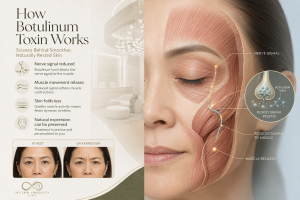
Botulinum toxin works by reducing the signal between nerves and selected muscles, so movement related lines may soften while natural expression is preserved.
What botulinum toxin is
Botulinum toxin is a purified, prescription-only medicine that reduces the activity of the specific muscles it is placed near. It has been used in medicine for more than three decades, both for a range of medical conditions and, more recently, for facial concerns. Because it is prescription-only, it may only be supplied in Singapore after assessment by a qualified medical practitioner, and prescription medicines cannot be advertised to the public. For that reason this guide uses the generic term botulinum toxin rather than any brand name, and it does not discuss doses, injection technique or price, which are matters for a personal consultation.
Two things are worth knowing from the outset. The effect is temporary, so it fades over a period of months and can be repeated. And different botulinum toxin products are not interchangeable, so which product suits a particular use is a decision for the prescriber.
How it works
Muscles contract when a nerve sends them a chemical signal. Botulinum toxin works by reducing that signal at the muscles it is placed near, so those muscles relax and move less for a time3. When a muscle that creates a line moves less, the overlying skin folds less, and the line softens. The effect is partial rather than total, which is what allows movement to be eased while natural expression is kept 3. Because it acts on muscle movement, botulinum toxin does not treat skin quality, volume or bone structure, which is why it is only ever part of the picture.

Common areas for botulinum toxin include forehead lines, frown lines, crow’s feet, masseter or jaw concerns, chin dimpling, neck bands and excessive sweating.
Areas botulinum toxin is commonly used for
The sections below summarise the concerns people most often ask about. Each links to a dedicated article with fuller detail.
Forehead lines
Horizontal forehead lines relate to the muscle that lifts the eyebrows. Because that same muscle holds the brow position, treatment of the forehead is always considered alongside the brows, which is why assessment matters here.
Frown lines
The vertical lines between the eyebrows, often called frown lines or glabellar lines, come from the muscles that draw the brows together.Crow’s feet
The lines that fan out from the outer corner of the eye relate to the muscle around the eye and are also shaped by skin quality and sun exposure.
Masseter or jaw concerns
A wide or square-looking lower face can relate to the masseter, the muscle at the angle of the jaw, though it can also reflect bone structure or soft-tissue fullness. Distinguishing these is the point of an assessment. See masseter hypertrophy and jaw slimming.
Bruxism and jaw clenching
Teeth grinding and jaw clenching are conditions in their own right, which can overlap with jaw muscle size, dental wear and jaw-joint symptoms. See bruxism and jaw clenching.
Chin and lower-face concerns
Some lower-face concerns, such as a dimpled or tight chin, relate to small muscles in the area. As with the jaw, the cause should be identified before any option is considered, because not every lower-face change is muscular.
Neck bands
Vertical bands in the neck relate to the platysma, a broad sheet of muscle. These need to be distinguished from loose skin, which behaves differently and is not addressed by relaxing a muscle. See neck rejuvenation post for a full guide to neck aging and relevant treatments.
Excessive sweating
Botulinum toxin is also used for excessive sweating, known as hyperhidrosis, which can affect areas such as the underarms, palms or soles. Excessive sweating can sometimes signal an underlying medical cause, so assessment matters here too. See treatment of hyperhidrosis and sweating.

Botulinum toxin effects usually begin over several days, become clearer around two weeks and gradually wear off over several months. Timing varies by person and treatment area.
When effects may begin for BTX injections
A visible change usually starts within a few days of treatment1. The effect is not immediate, so the days immediately afterwards may show little change, which is normal.
When results become clearer for BTX injections
The effect typically develops more fully over about two weeks, which is the point at which the outcome is best judged and any review is usually arranged1,2. It is worth allowing this time before drawing conclusions about the result.
How long effects can last for Botulinum toxin injections?
For treatment of facial lines, the effect commonly lasts in the region of three to four months before muscle activity gradually returns and the concern reappears 1,2. Duration varies from person to person and between areas, and larger or more active muscles can behave differently from small ones. Because the effect is temporary, maintaining a result means returning periodically, with the interval guided by how an individual responds rather than by a fixed online schedule.

Botulinum toxin results are shaped by muscle strength, whether lines are dynamic or fixed, skin quality, treatment area and individual response.
Factors that influence results of BTX injections
Several things shape how noticeable and how lasting a result is. These include the size and strength of the muscle being treated, how much of a line is caused by movement rather than by fixed skin changes, the individual’s own response to the medicine, and whether skin quality or other contributors are also at play. This is why two people can have different experiences, and why realistic expectations are set during assessment rather than promised in advance.

Common temporary effects may include mild redness, swelling, bruising or headache. A medical assessment is needed to determine suitability and safety.
Possible side effects of BTX injections
Most side effects are temporary and settle on their own. Common ones include minor bruising, redness or swelling at the treated area and headache. Less commonly, the medicine can affect a muscle next to the intended one, which may cause temporary asymmetry or a drooping of an eyelid or brow, and these resolve as the effect wears off 4. Symptoms that affect swallowing, breathing or wider muscle strength are uncommon but should prompt prompt medical attention.
Full eyelid ptosis after injection has been described in case reports and is managed while the effect wears off7,8.
Who may not be suitable for BTX injections
Some circumstances make treatment inappropriate or call for caution, which is why a full medical history matters. Important things to disclose include pregnancy or breastfeeding, any neuromuscular condition, previous reactions to botulinum toxin, current medicines and supplements, and any swallowing, breathing or neurological symptoms1. This is not a self-screening test. Only a personal medical assessment can determine suitability.
Dr Rachel Ho’s clinical perspective: I start by asking what is actually driving a concern rather than reaching for a single treatment. Botulinum toxin softens muscle movement, but skin quality and long-term skin health often shape how a face ages. My preference is for refinement rather than exaggeration, and for a natural result rather than an absence of movement.

A botulinum toxin consultation assesses facial movement, muscle strength, skin quality, symmetry, previous treatments, medical history and realistic expectations.
What happens during a consultation for BTX treatments
A consultation is where suitability is worked out. A clinician typically assesses how the face moves and rests, the size and strength of the relevant muscles, skin quality and symmetry, any previous treatments, and the relevant medical history. The aim is to establish whether a concern is muscular, structural or skin-related, because that determines which options make sense, and to set realistic expectations.
Questions to ask a doctor before getting BTX treatments
A few questions help a consultation stay focused: what is actually causing my concern, whether it is muscular or something else, what the alternatives are, what the relevant risks are for the specific area, what a realistic result and duration would be, and how follow-up is handled.
A note on prescription medicines in Singapore
Botulinum toxin is a prescription-only medicine regulated by the Health Sciences Authority, which registers therapeutic products after evaluating their quality, safety and efficacy. Because prescription medicines cannot be advertised to the public, reliable information is written around the medical concern rather than around promoting a product, and decisions are made through assessment rather than marketing. Patients can check a product’s registration through the Health Sciences Authority’s public resources 5,6.
Frequently asked questions about BTX injections in Singapore
What areas can botulinum toxin treat?
Common uses include forehead lines, frown lines, crow’s feet, a wide or square jaw, teeth grinding, neck bands and excessive sweating. Which area suits treatment depends on whether the concern is caused by muscle movement.
How soon will I see results of BTX injections, and how long do they last?
A change usually begins within a few days and develops more fully over about two weeks, with the effect commonly lasting around three to four months before it wears off. Timelines vary between individuals and areas.
Does it hurt or is there downtime for BTX injections?
Any discomfort is generally brief, and the most common after-effects are minor, such as small bruises or slight swelling that settle quickly after botulinum toxin injections. Most people return to their usual activities.
Will I look frozen after botulinum toxin injections?
The effect is graded rather than a complete block, so a carefully judged approach softens a chosen movement while keeping natural expression. An overdone look usually reflects too much effect in the wrong place.
Do I need a doctor’s assessment in Singapore before BTX injections?
Yes. Botulinum toxin is a prescription-only medicine, so it may only be supplied following assessment and prescription by a qualified medical practitioner.
For more from the author, visit Dr Rachel Ho at drrachelho.com.
About the author
Dr Rachel Ho holds an MBBS from the National University of Singapore and a Master of Medicine in Otolaryngology. She is the founder of The Skin Longevity Clinic, a doctor-led practice at Scotts Medical Center, Pacific Plaza, and has more than 16 years of clinical experience in Singapore. Her clinical focus includes skin longevity and quality, facial harmony and proportion, and evidence-based aesthetic medicine. She maintains active continuing professional development, including attendance at the Aesthetic and Anti-Aging Medicine World Congress (AMWC) in Monaco in 2026, and is recognised for her work in education, media commentary and advisory roles across aesthetic medicine. She has contributed commentary and features for publications including Her World, ELLE (ELLE Beauty Awards 2026) and L’Officiel Singapore. Dr Rachel Ho is a registered medical practitioner in Singapore.
Read more about Dr Rachel Ho at drrachelho.com and on her profile at The Skin Longevity Clinic.
References
- Small R. Botulinum Toxin Procedures: A Practical Approach to Cosmetic Injections. American Family Physician. 2026. Available at aafp.org
- Camargo CP, Xia J, Costa CS, et al. Botulinum Toxin Type A for Facial Wrinkles. The Cochrane Database of Systematic Reviews. 2021. Available at cochranelibrary.com
- Hallett M. One Man’s Poison: Clinical Applications of Botulinum Toxin. The New England Journal of Medicine. 1999. Available at nejm.org
- Carruthers A, Carruthers J, De Boulle K, et al. Treatment of Crow’s Feet Lines and Forehead Lines with OnabotulinumtoxinA. Medicine. 2023. Available at pubmed.ncbi.nlm.nih.gov
- Health Sciences Authority, Singapore. Therapeutic product registration overview. Available at hsa.gov.sg
- Health Sciences Authority, Singapore. Advertisements and promotions of therapeutic products. Available at hsa.gov.sg
- Musharbash IJ, Chakra RJ. Treatment of Full Eyelid Ptosis Following Botox Injection: A Case Report. Cureus. 2024;16(3):e55970. PMID 38476507.
- Rouientan A, et al. Rare Complication of Botox Injection: A Case Report. World Journal of Plastic Surgery. 2019. PMID 30873373.
Editorial and corrections policy: This article is reviewed for medical accuracy and updated when clinical or regulatory information changes.
This article provides general education and does not determine individual suitability. A qualified medical practitioner can assess symptoms, medical history, possible causes, alternatives and relevant risks.