

09 Aug Dry Skin vs Dehydrated Skin Singapore, Key Differences
By Dr Rachel Ho | Aesthetic Doctor, Founder, The Skin Longevity Clinic, Singapore
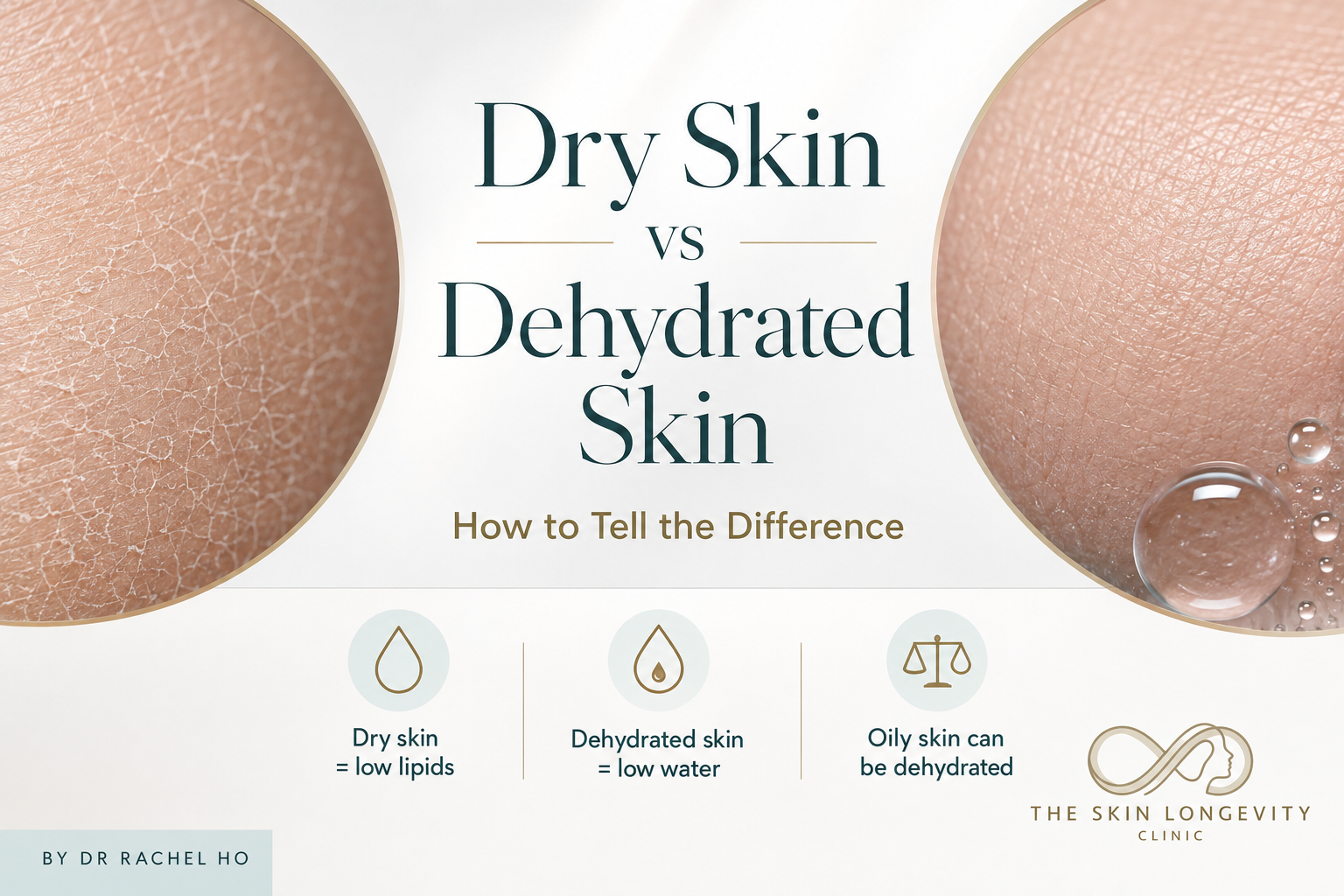
Dry skin and dehydrated skin often look alike but they are not the same problem. Dry skin lacks lipids, the oils that hold the barrier together, and tends to be a longer-term skin type. Dehydrated skin lacks water and is usually a temporary state that any skin type can slip into, including oily skin. The distinction matters because the first step differs. Dry skin needs richer barrier repair, while dehydrated skin needs better water retention and fewer things stripping it.
At a glance: Dry skin versus dehydrated skin
Dry skin does not make enough oil, so it feels rough, flaky and tight and tends to stay that way. Dehydrated skin does not hold enough water, so it looks dull and tight and shows fine surface lines, but it can recover quickly once water loss is reduced. Oily skin can be dehydrated at the same time. The correct first step depends on which one dominates.
What dermatologists mean by dry skin
Dry skin, or xerosis, describes skin that is low in the lipids that seal the surface, mainly ceramides, cholesterol and fatty acids arranged in orderly sheets between the skin cells. Of these, ceramides are the most important determinant of how well the skin holds water, so a shortage or a disordered arrangement of them leaves the barrier leaking water and the surface rough, scaly and prone to tightness. Dry skin usually shows up consistently across the cheeks and around the mouth, feels tight much of the time and often runs alongside a naturally low oil output, and it becomes more common with age as barrier lipid production declines. It responds best to lipid-rich moisturisers, particularly those containing ceramides, and to protecting the barrier from things that strip it.
Dry and dehydrated skin can both involve a weakened barrier. The guide to damaged skin barrier repair covers signs and treatment.
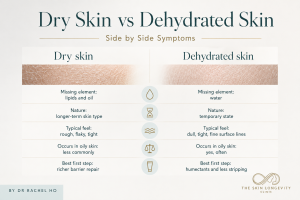
Dry skin tends to feel persistently rough, flaky and tight, while dehydrated skin may look dull, feel tight and show fine surface lines. The correct first step depends on whether the skin mainly needs lipid repair or improved water retention.
What dehydrated skin means
Dehydrated skin is short of water rather than oil. The surface can still produce sebum yet feel tight, look dull and show fine crepey lines that appear when the skin flexes. Because dehydration is a state rather than a fixed type, it comes and goes with the weather, the aircon, the amount of cleansing and the actives in a routine. It often improves within days once water loss is reduced with humectants, gentler cleansing and a pause on harsh products. This is the version of tight, dull skin that most people in Singapore actually have.
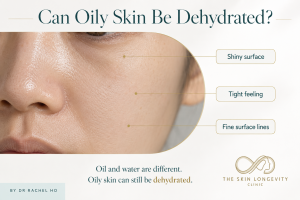
Can oily skin be dehydrated? Yes. Surface oil and skin water content are different, so oily or acne-prone skin may look shiny while still feeling tight, dull or uncomfortable.
Can oily or acne-prone skin be dehydrated?
Yes, and this is one of the most common points of confusion. Oiliness reflects sebum on the surface, while dehydration reflects water content in the deeper layers, so the two are independent. Acne-prone skin is also frequently dehydrated because many acne actives, such as retinoids and benzoyl peroxide, increase water loss. The result is a shiny, breakout-prone surface that still feels tight and looks tired. Treating this by stripping the skin further usually backfires, because it drives more water loss and more irritation.
A frequent example in clinic is a patient who describes oily, congested skin and has been using strong cleansers to control shine, yet complains that the skin feels tight and looks dull. On assessment the surface is oily but the skin is dehydrated, and simplifying the routine and adding a light humectant settles both. This is a typical pattern rather than a rule, and each person is assessed individually. For the full range of options once the type is clear, see the dry skin treatment in Singapore overview.
Dry skin VS dehydrated skin: the differences
Dry skin VS dehydrated skin: the differences
| Feature | Dry skin | Dehydrated skin |
|---|---|---|
| Missing element | Lipids and oil | Water |
| Nature | A longer-term skin type | A temporary, changeable state |
| Occurs in oily skin | Less commonly | Yes, often |
| Typical feel | Rough, flaky, tight | Dull, tight, fine surface lines |
| Responds best to | Lipid-rich barrier care | Humectants and less water loss |
| Speed of change | Slow, persistent | Can improve within days |
Singapore-specific triggers for dry and dehydrated skin
Local life pushes many people toward dehydration in particular. Long hours in air-conditioned offices and bedrooms dry the surface, and moving repeatedly between outdoor heat and cool interiors unsettles the barrier. Sweaty commutes lead to repeated washing that strips oils, and popular active ingredients for pigmentation and acne add to water loss. None of this is a reason to fear the climate, but it does explain why skin can feel tight and dull in a city that is humid outdoors.

Common triggers for dehydrated skin in Singapore include long hours in air-conditioned rooms, repeated movement between heat and cool interiors, frequent cleansing after sweating and intensive acne or pigmentation skincare.
Why the online pinch test is unreliable
A popular online tip suggests pinching the cheek to judge dehydration. In practice this is not a dependable diagnosis. Skin elasticity varies with age, sun exposure and individual anatomy, so the test produces very different results in different people regardless of hydration. A more useful approach is to look at the overall pattern, whether the skin is flaky and rough, which points to dryness, or dull and tight with fine lines that ease after hydration, which points to dehydration. When the picture is unclear or includes itch and redness, an in-person assessment is far more reliable than any home test.
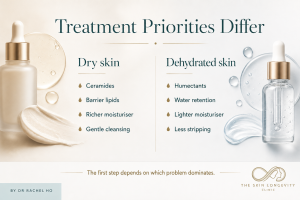
Treatment priorities differ. Dry skin usually benefits from ceramides, barrier lipids and a richer moisturiser, while dehydrated skin often needs humectants, gentler cleansing and fewer habits that increase water loss.
How treatment priorities differ for dehydrated and dry skin
For dry skin the priority is rebuilding lipids, so richer moisturisers containing ceramides and fatty acids do most of the work, supported by gentler cleansing. For dehydrated skin the priority is holding water, so humectants such as glycerin and hyaluronic acid, a lighter but consistent moisturiser and a reduction in stripping habits matter most. Where dehydration is stubborn and the skin is otherwise stable, a hyaluronic acid skin booster or hybrid cooperative complex injectable moisturisers can add dermal hydration. In both cases, sunscreen and a simplified routine protect the progress.
When the problem for dehydrated skin may actually be dermatitis
If skin is not just tight and dull but also itchy, red, stinging or prone to recurrent rashes, the issue may be an inflammatory condition rather than simple dryness or dehydration. Eczema, contact dermatitis and rosacea can all masquerade as dry skin, and they need diagnosis and treatment rather than a heavier cream. Sudden sensitivity and burning with familiar products also suggest a stressed barrier. When in doubt, it is safer to have the skin examined.
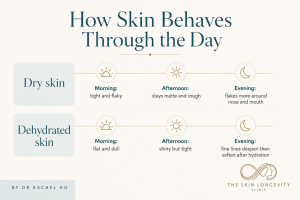
Timeline comparing how dry skin and dehydrated skin may look and feel from morning to evening.
How each type behaves through the day
Watching how skin changes across a day is often more useful than any single test. Truly dry skin tends to feel tight and look flaky from the moment you wake, stays matte and can flake more as the day goes on, particularly around the nose and mouth. Dehydrated skin more often looks flat and dull in the morning, may become shiny in the T-zone by afternoon while still feeling tight, and shows fine lines that deepen when you smile and soften after applying a humectant. Combination skin can show both, oily in the centre and dry along the edges, which is why a single blanket routine rarely suits the whole face.
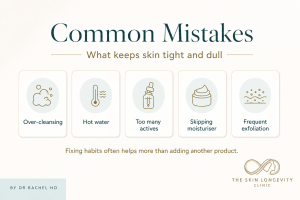
Over-cleansing, hot water, excessive exfoliation, multiple active ingredients and skipping moisturiser can keep skin feeling tight and dull. Correcting these habits may help more than adding another serum.
Common mistakes that keep skin dry or dehydrated
A handful of habits keep skin stuck in a tight, dull state. Over-cleansing and hot water strip the very oils that hold water in. Skipping moisturiser because the skin feels oily leaves dehydrated skin without support. Using strong actives every night gives the barrier no time to recover. Relying on a heavy cream alone, without a humectant underneath, feeds a dry surface but does little for water content. Chasing an immediate glow with frequent exfoliation is perhaps the most common trap, because it trades a short-term smoothness for longer-term sensitivity. Fixing these often does more than any new product.
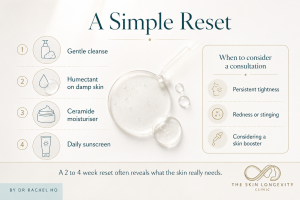
A two-to-four-week skin reset can clarify what the skin needs: cleanse gently, apply a humectant to damp skin, support the barrier with a ceramide moisturiser and use sunscreen daily. Persistent tightness, redness or stinging deserves medical assessment.
A simple reset to try first
Before spending on treatments, a two to four week reset is worth doing. Cleanse once or twice a day with a gentle, non-foaming cleanser and lukewarm water. Apply a humectant serum to slightly damp skin, then a moisturiser that contains ceramides or other barrier lipids, and seal with a light occlusive at night if the skin is very dry. Reduce actives to one, used a few times a week, and wear sunscreen every morning. This calms most tight, dull skin and makes it far clearer whether a hydration treatment such as a skin booster would add anything worthwhile.
Evidence at a glance for dehydrated and dry skin
Evidence for treatment of dry and dehydrated skin
| Evidence | What it found | Main limitation |
|---|---|---|
| Reviews of barrier lipids | Ceramide-containing formulations improve water retention and barrier function | Formulations and study designs vary |
| Controlled xerosis study | A ceramide cream improved dryness and barrier measures over days to weeks | Single product and setting |
| Reviews of injectable hyaluronic acid | Improvements in measured hydration and skin quality | Products and protocols differ across studies |
Dr Rachel Ho’s clinical takeaway on dry and dehydrated skin
When someone tells me their skin is dry, I usually find it is mostly dehydrated, often with one or two products doing the stripping. Dry skin and dehydrated skin need different first moves, richer lipids for one and better water retention for the other, so naming the dominant problem saves months of trial and error. And if the skin is itchy, red or stinging, that is not a hydration question at all, it is a signal to have it properly assessed.
When dehydration leaves the face looking flat or grey, our guide to dull skin treatment in Singapore sets out the other causes of dullness and how each is treated.
Frequently Asked Questions
Can skin be dry and dehydrated at the same time?
Yes. Many people lack both lipids and water, which is why a combined approach of richer barrier care plus humectants often works better than choosing only one.
Why is my face oily but tight?
Oiliness is surface sebum while tightness usually reflects dehydration in the deeper layers. The two can occur together, so an oily face can still be short of water.
Does drinking more water fix dehydrated skin?
Staying hydrated is healthy but drinking water alone does not reliably correct skin dehydration. Reducing water loss at the surface with humectants, gentler cleansing and fewer harsh actives matters more.
Which type benefits more directly from a skin booster?
Dehydration that persists despite good home care is the situation where a hyaluronic acid skin booster is most directly relevant, provided the skin is not inflamed.
How long does dehydrated skin take to improve?
Because it is a changeable state, dehydrated skin often looks and feels better within days to a couple of weeks once water loss is reduced. True dry skin usually improves more slowly.
Considering a consultation?
If you are not sure whether your skin is dry, dehydrated or reacting, a consultation can identify the dominant problem before you spend on treatment. Start with the dry skin and hydration overview or book an assessment.
References
- Draelos ZD, and colleagues. The effect of a ceramide-containing product on stratum corneum lipid levels in dry legs. Journal of Drugs in Dermatology, 2020. https://doi.org/10.36849/JDD.2020.4796
- Yong TL, and colleagues. Ceramides and skin health, new insights. Experimental Dermatology, 2025. https://doi.org/10.1111/exd.70042
- Williams SF, and colleagues. The impact of age on the lipidomic profile of the stratum corneum and associated effects on structure, function and overall skin health in adults predisposed to atopic dermatitis. Experimental Dermatology, 2025. https://doi.org/10.1111/exd.70192
- Kono T, and colleagues. Clinical significance of the water retention and barrier function improving capabilities of ceramide containing formulations, a qualitative review. The Journal of Dermatology, 2021. https://onlinelibrary.wiley.com/doi/10.1111/1346-8138.16175
- Effectiveness of injectable hyaluronic acid in the improvement of facial skin quality, a systematic review. Clinical, Cosmetic and Investigational Dermatology, 2023. https://www.dovepress.com/the-effectiveness-of-injectable-hyaluronic-acid-in-the-improvement-of–peer-reviewed-fulltext-article-CCID
- American Academy of Dermatology. Dry skin, diagnosis, treatment and everyday care guidance. https://www.aad.org/public/everyday-care/skin-care-basics/dry/dermatologists-tips-relieve-dry-skin
- Mayo Clinic. Dry skin, diagnosis and treatment. https://www.mayoclinic.org/diseases-conditions/dry-skin/diagnosis-treatment/drc-20353891
- Cleveland Clinic. Dry skin, or xeroderma, symptoms, causes and treatment. https://my.clevelandclinic.org/health/diseases/16940-dry-skin