

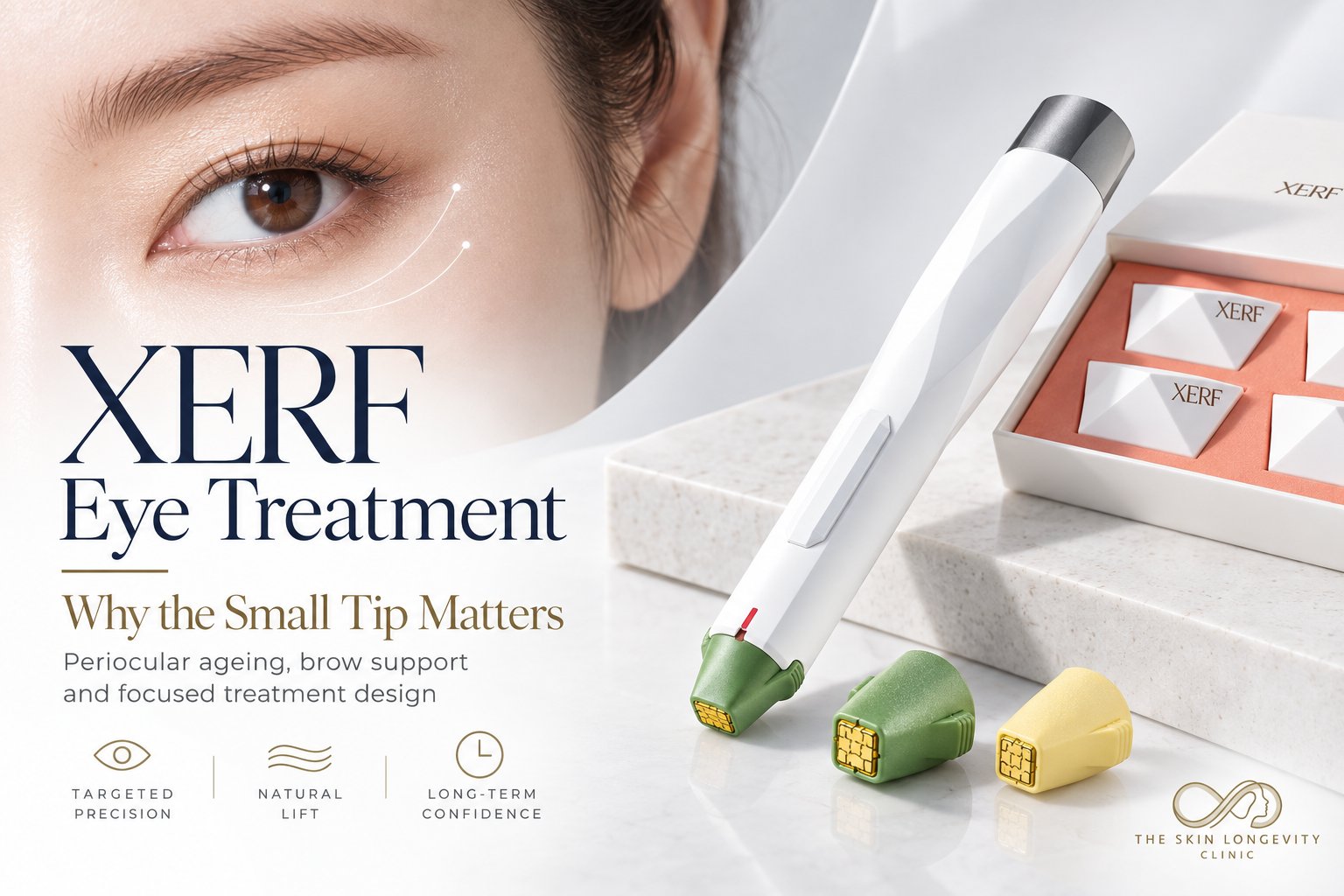
27 Sep XERF Eye Treatment: Why the Small Tip Matters for Droopy Eyelids and Periorbital Ageing
When patients tell me their eyes look tired or heavy, the underlying cause is rarely just one thing. Changes around the eye area usually involve a combination of loose eyelid skin, a subtle drop in brow position, and fine static wrinkles1,6. Before deciding on any procedure, my first step is always to diagnose which of these factors is actually driving the change you see in the mirror.
XERF eye treatment uses smaller, specialised radiofrequency applicators designed specifically to navigate the delicate contours around the eyes and brows3. To evaluate whether this treatment is right for you, we need to look at how these smaller tips physically fit the anatomy of the upper face and what the clinical evidence says about their performance.
What is XERF eye treatment?
XERF is a non-invasive monopolar radiofrequency system that works by combining two distinct frequencies—6.78 MHz and 2 MHz—to deliver controlled, gentle thermal energy into the deeper layers of the skin5. Rather than using micro-needles, the system applies energy smoothly through a surface-contact applicator5.
Advanced computer modelling and laboratory studies show that blending these two frequencies creates distinct heating patterns in the tissue, triggering structural changes in collagen and elastic fibers5. While this research gives us a clear scientific foundation for how the technology works at a cellular level, we rely on human clinical trials to measure the visible improvements patients experience around the eyes3,5. For an in-depth explanation to XERF technology, please refer to XERF: A Complete Guide to Dual-Frequency Skin Tightening.
How does the XERF small tip differ from the facial tip?
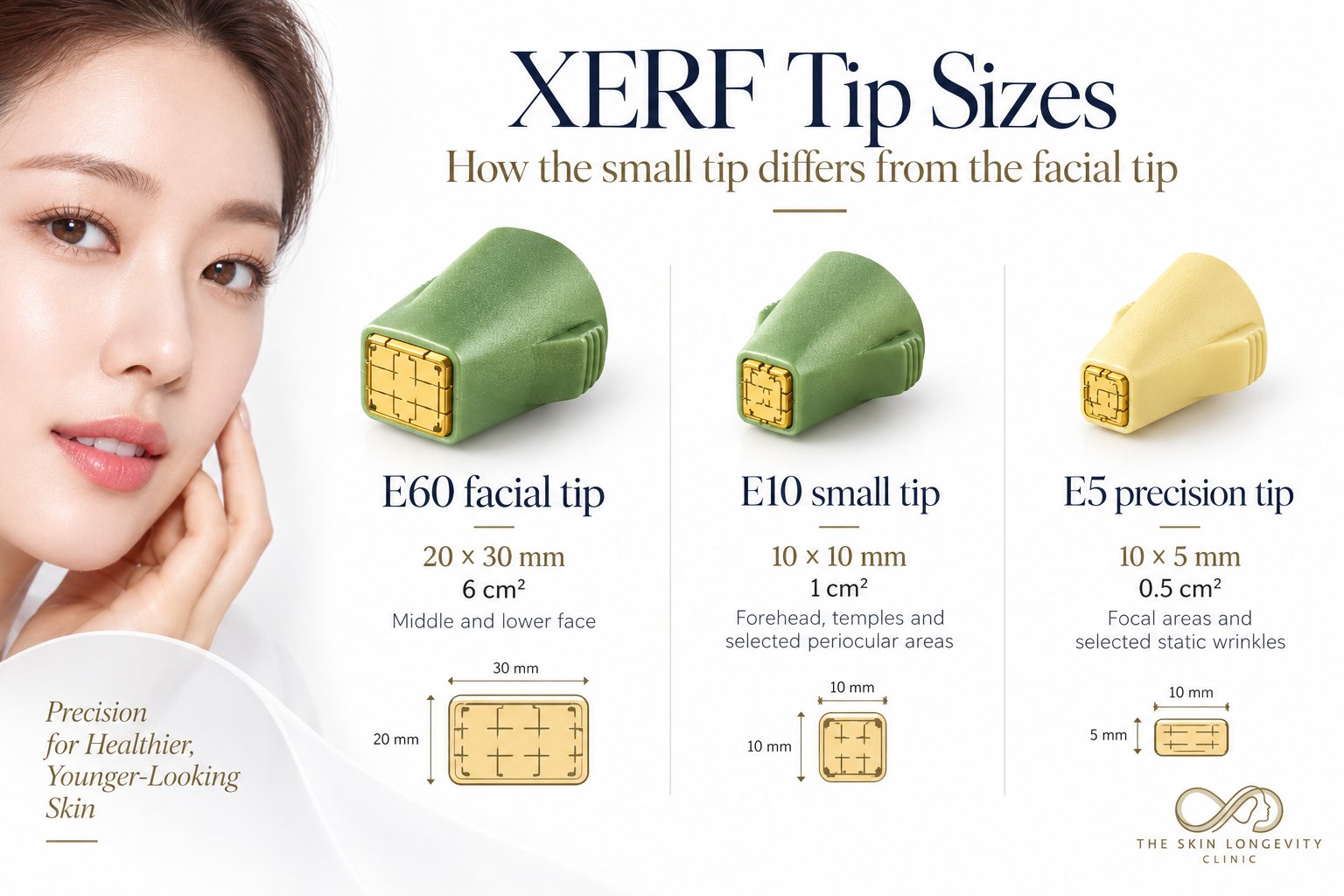
The most obvious difference between the applicators comes down to surface geometry: the contact area’s physical size and shape2,4. In published clinical protocols, the XERF system uses three distinct tip sizes2,4:
| Applicator | Contact dimensions | Surface area | Use described in published protocols |
|---|---|---|---|
| Larger facial tip, E60 | 20 × 30 mm | 6 cm² | Middle and lower face4 |
| Small tip, E10 | 10 × 10 mm | 1 cm² | Forehead, temples and selected periocular areas2 |
| Smaller precision tip, E5 | 10 × 5 mm | 0.5 cm² | Focal areas and selected static wrinkles2 |
A smaller footprint for curved areas
The contours of the forehead, temples, and upper eyelid region are uniquely curved2. Standard, broad facial tips can struggle to maintain full, uniform contact across these tight anatomical angles2. The smaller XERF tips were engineered specifically to trace these delicate curves, allowing for far more precise and consistent energy delivery where skin is thin and underlying bone is prominent2.
In my clinical approach, it all comes down to anatomical fit. I select the applicator based on the specific contours of the treatment area rather than assuming a single tip can comfortably treat both a broad cheek and the narrow ridge under an eyebrow.
Tip size and treatment depth are different considerations
A common misconception is that a smaller tip automatically targets a different depth in the skin. In reality, radiofrequency heating is determined by a combination of frequency, energy settings, tissue resistance, and electrode shape5. Tip size alone does not dictate how deeply or intensely thermal energy reaches5.
Because the XERF platform uses dual frequencies across its entire line of applicators, choosing a smaller tip isn’t about altering depth—it’s about matching the tool to the surface area4,5. Every treatment plan must be carefully customised to suit the specific anatomy and aesthetic goals of the patient.
Why the forehead and brow matter when eyelids look heavy
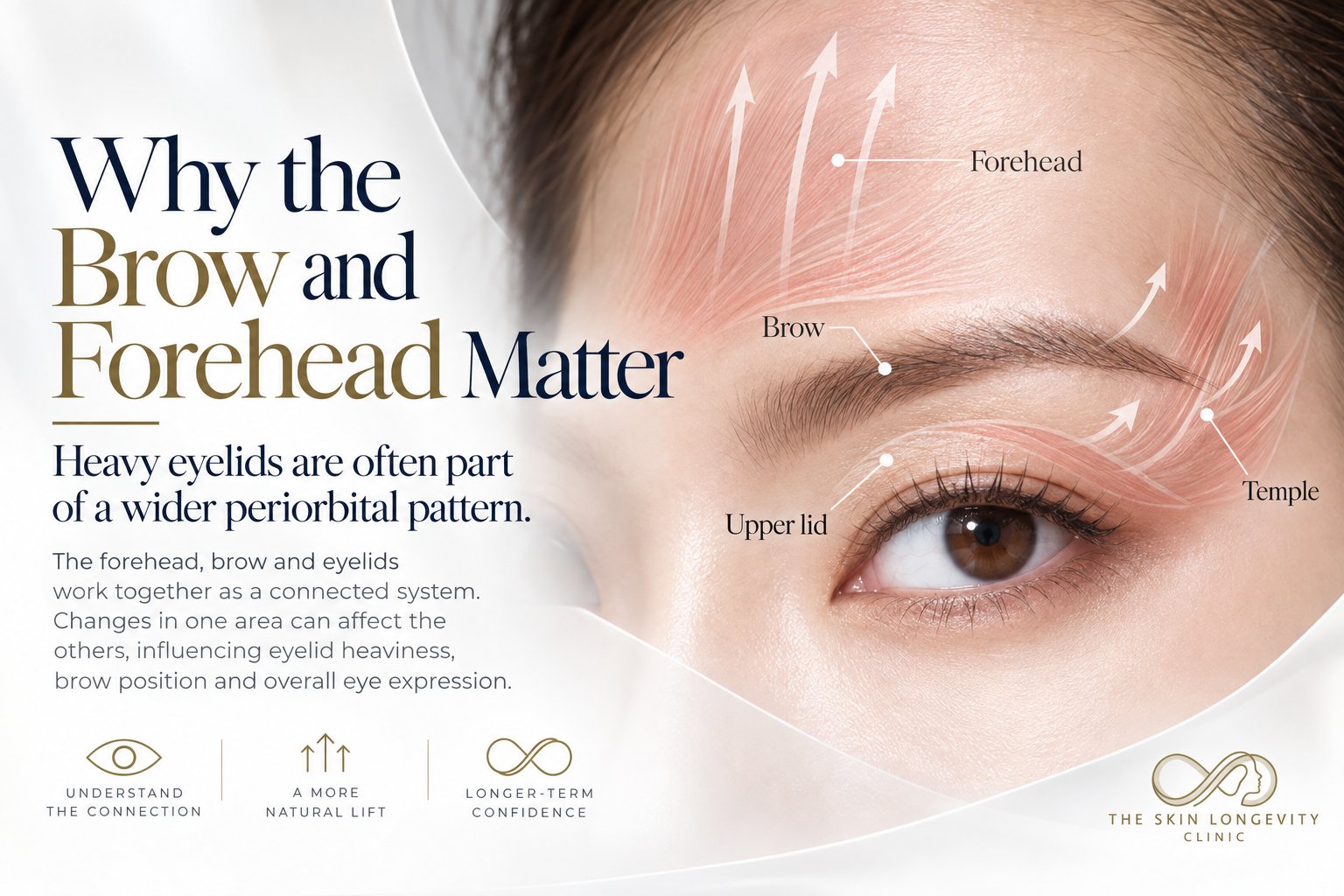
Here is an anatomical detail many people miss: when your upper eyelids begin to feel heavy, your forehead often steps in to help. The frontalis muscle—the broad muscle running across your forehead—is responsible for lifting your brows, and many people unconsciously contract it all day to pull up heavy eyelid skin1. During a clinical assessment, I always differentiate between where your brows sit naturally at rest and how much compensatory lifting your forehead is doing1.
Interestingly, a clinical study tracking facial photographs across different age groups (ages 20, 40, and 60) revealed that facial aging doesn’t cause a simple, uniform downward slide of the eyebrows6. Instead, changes in the upper eyelid skin and surrounding structures interact with complex, individual patterns of brow movement over time6.
This is why I evaluate the forehead, brow, temple, and eyelids as an interconnected unit. For a broader look at non-surgical options for this region, you can explore The Skin Longevity Clinic’s guide to brow lifting without surgery.
Can XERF help droopy eyelids?
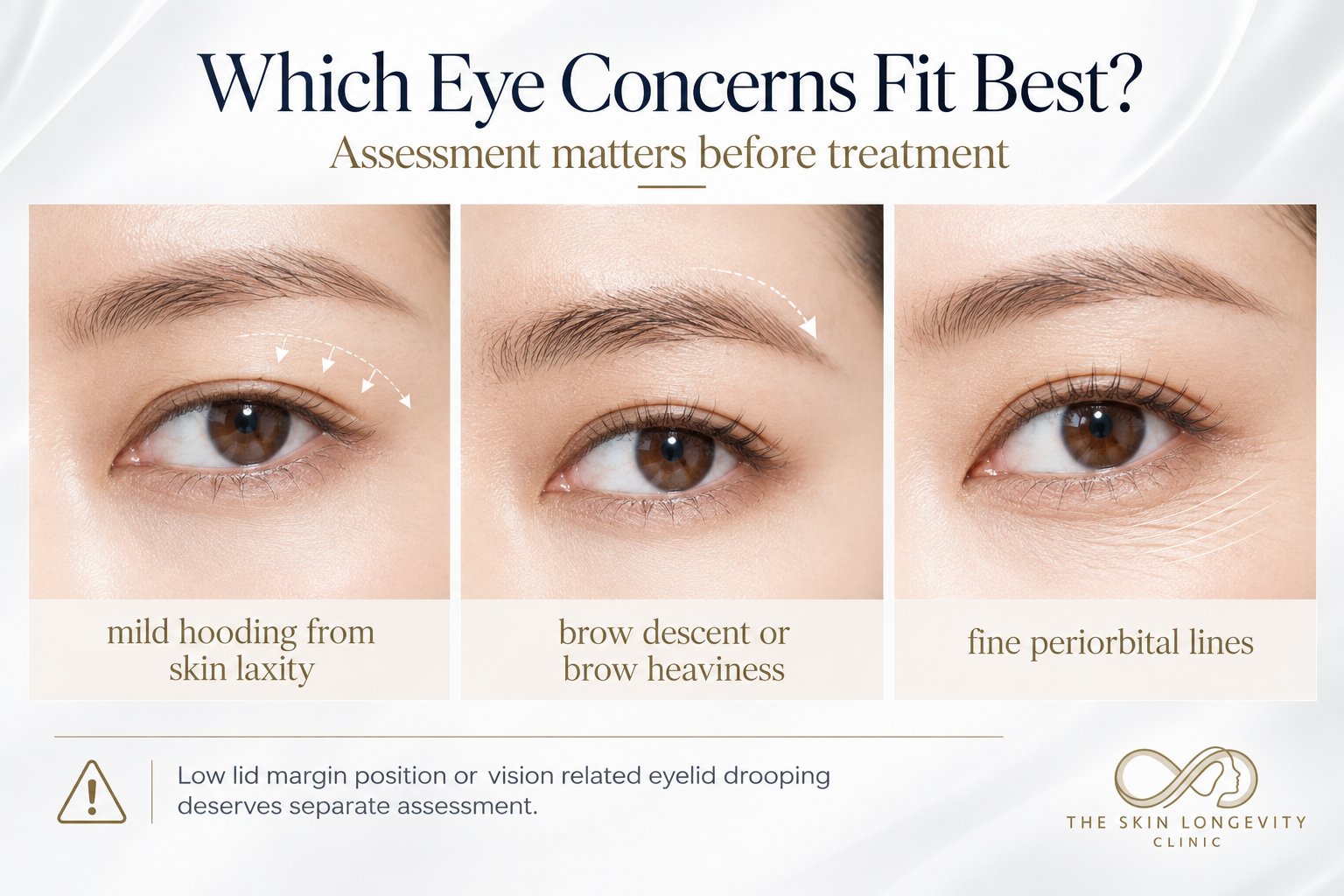
Whether skin tightening is the right approach depends entirely on what is causing the eyelid to droop1. In dermatology, we separate these into distinct medical categories:
- Dermatochalasis: Excess, loose upper eyelid skin caused by natural laxity1.
- Brow Ptosis: A descent of the structural eyebrow itself1.
- True Blepharoptosis: A weakness or failure in the levator muscle responsible for lifting the eyelid, which causes the eyelid margin to sit abnormally low over the pupil1.
The research surrounding XERF’s small tip focuses on mild-to-moderate skin laxity and subtle changes in the brow and periorbital contour2,3,4. It is not designed to correct true mechanical or muscle-related eyelid ptosis1. If a low eyelid margin is impairing your field of vision, a specialised medical evaluation is required1.
If your goal is a subtle, refreshed look—such as softening the appearance of mild skin hooding or improving texture around the eye—XERF can be a great conversation. During your consultation, I will always be transparent about what energy devices can achieve and where their natural limits lie.
What does the research show about XERF around the eyes?
Korean study of periocular laxity
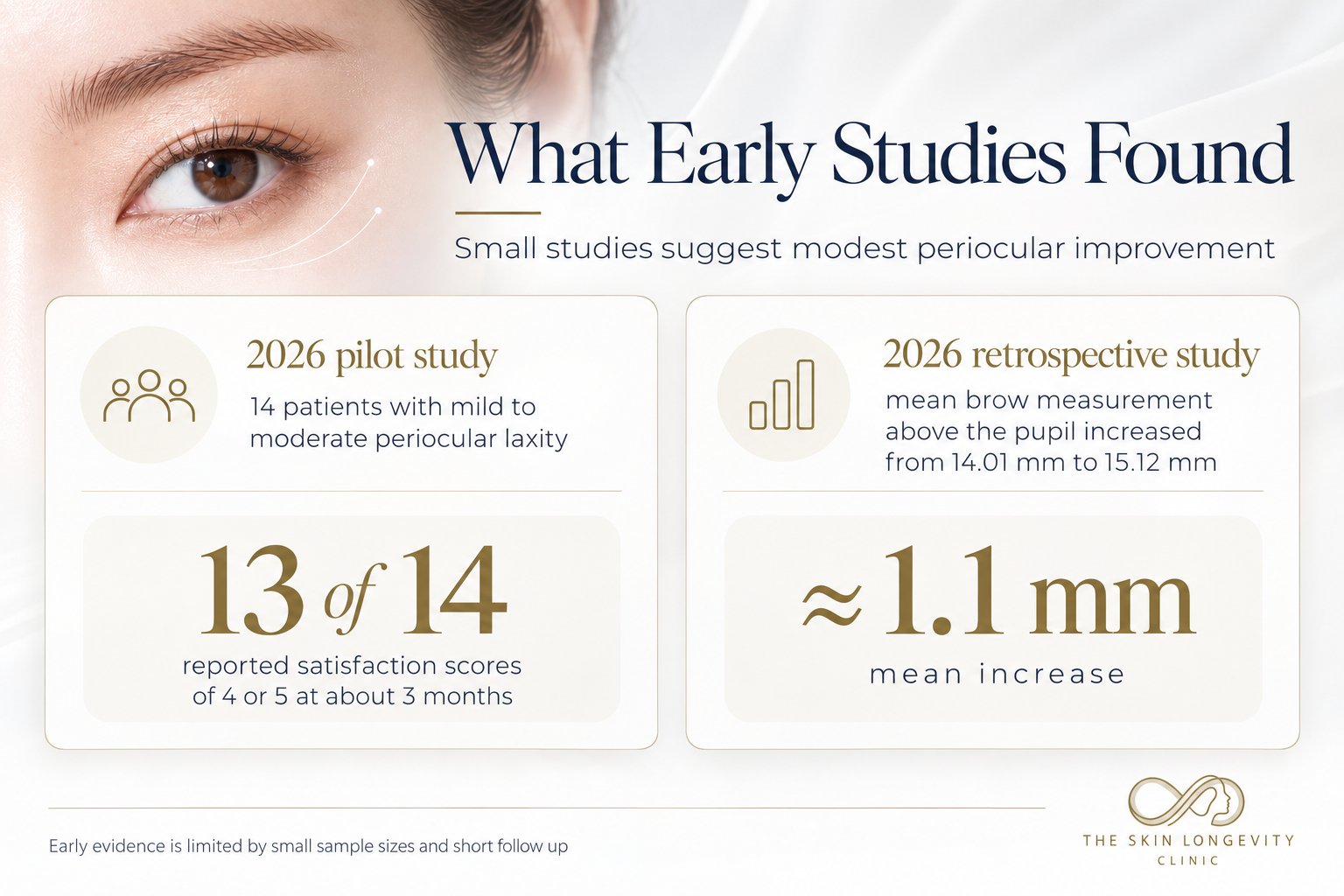
A 2026 retrospective pilot study followed 14 patients treated for mild to moderate skin laxity around the eyes3. Independent physician assessors reviewed clinical photographs at three months post-treatment, with 13 out of 14 patients reporting high satisfaction scores (at least four out of five)3.
While these numbers show promising patient satisfaction within a small group, they reflect personal perceptions rather than a guaranteed clinical outcome or a fixed percentage of lift3. As with many preliminary pilot studies, the lack of an untreated control group means we evaluate these findings as an encouraging signal rather than definitive proof3.
Measurements of brow position
A separate 2026 study evaluated 16 women following a single XERF treatment session, with precise eye-region measurements recorded for 15 participants4. At the three-month mark, researchers measured an average brow elevation above the pupil from 14.01 mm to 15.12 mm—reflecting a modest mean lift of approximately 1.1 mm4.
Because this treatment protocol utilized a combination of the larger facial tip and the smaller periocular tips, we cannot attribute the result to the small tip alone4. Additionally, the follow-up period was relatively short, and one of the study authors noted an educational affiliation with the manufacturer4.
What broader radiofrequency research adds
Looking at the broader medical literature, a clinical study involving 70 Korean women demonstrated visible improvements in periorbital wrinkles after three sessions using monopolar radiofrequency technology7. This reinforces our understanding that monopolar radiofrequency as a modality is effective for eye rejuvenation, though we must always distinguish general class data from studies specific to the XERF device7.
In my practice, I use these studies to frame realistic expectations: energy devices offer subtle, natural-looking structural support, not the dramatic transformation of a surgical blepharoplasty. To delve deeper into the platform as a whole, read The Skin Longevity Clinic’s comprehensive XERF review.
What benefits matter most around the eyes?
The most clinically supported benefits of XERF around the eyes are the softening of mild-to-moderate skin laxity and modest improvements in the overall appearance of the brow and upper eyelid contour3,4. Fine, crepey lines around the eye are also an excellent target for treatment, supported by a rich history of monopolar radiofrequency research7.
My clinical philosophy centers on agreeing upon clear, measurable goals before starting any treatment. By reviewing standardised, high-resolution photographs together, we aim for a subtle, refreshed result that enhances your natural facial expressions without looking overdone.
Safety and recovery around the eyes
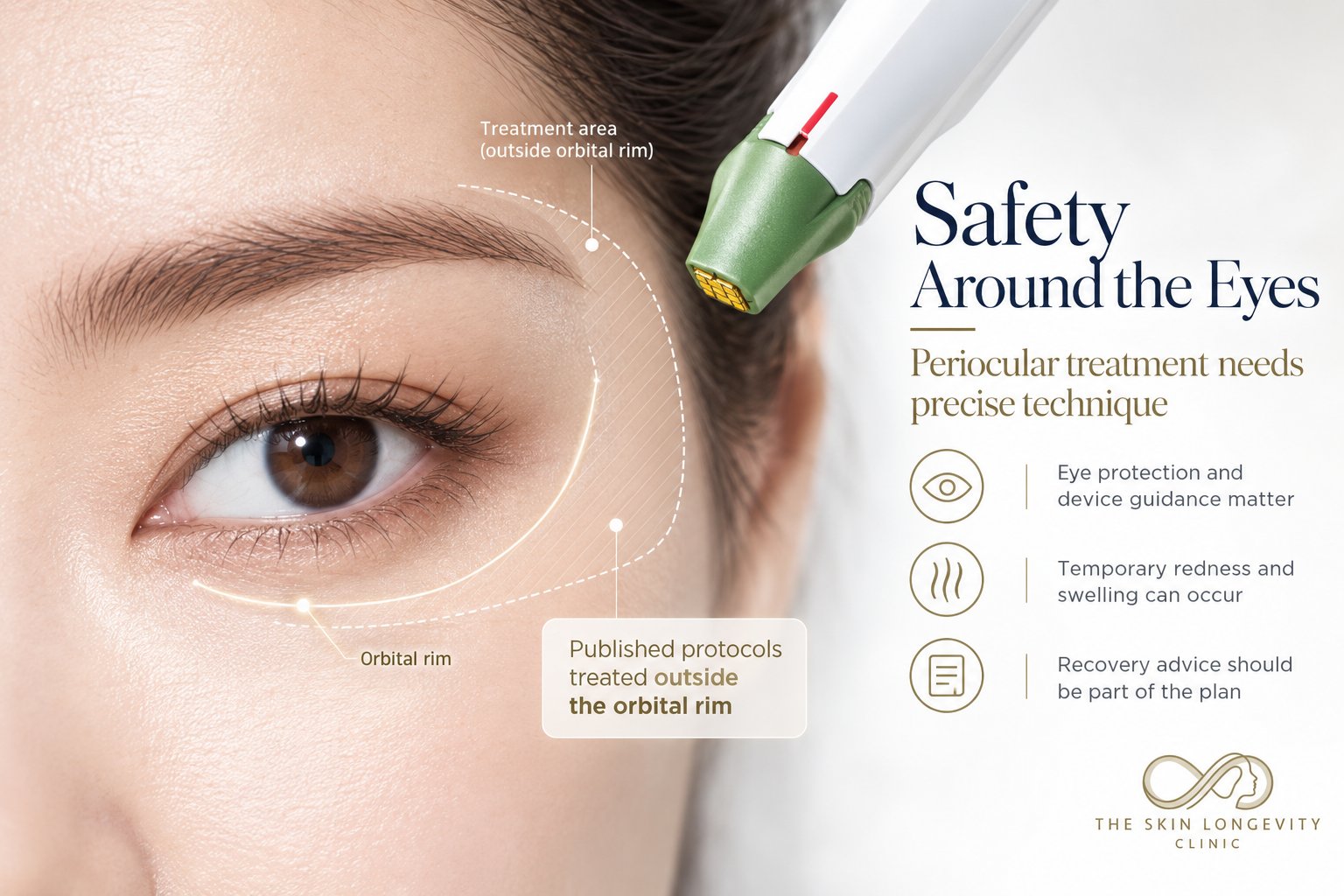
Treating the structural skin around the orbital rim requires a very different approach than treating directly over the mobile eyelid itself2,4. In published XERF clinical protocols, energy delivery was carefully maintained outside the bony orbital rim and angled safely away from the eye4.
When treating areas closer to the globe, specialised protective eye shields (internal ocular lenses) are required to safeguard the eye2. Your treating physician should always adhere strictly to local safety protocols, device guidelines, and appropriate eye protection measures.
In published clinical trials, temporary mild redness and localized swelling were the primary side effects reported, with patients describing varying levels of heat discomfort during treatment3,4. Because heat-related tissue injury is a known risk with any monopolar radiofrequency device, proper doctor technique and continuous cooling are essential2. I always discuss comfort management, expected downtime, and our direct clinic follow-up process with you prior to starting.
What should a consultation for XERF eye treatment cover?
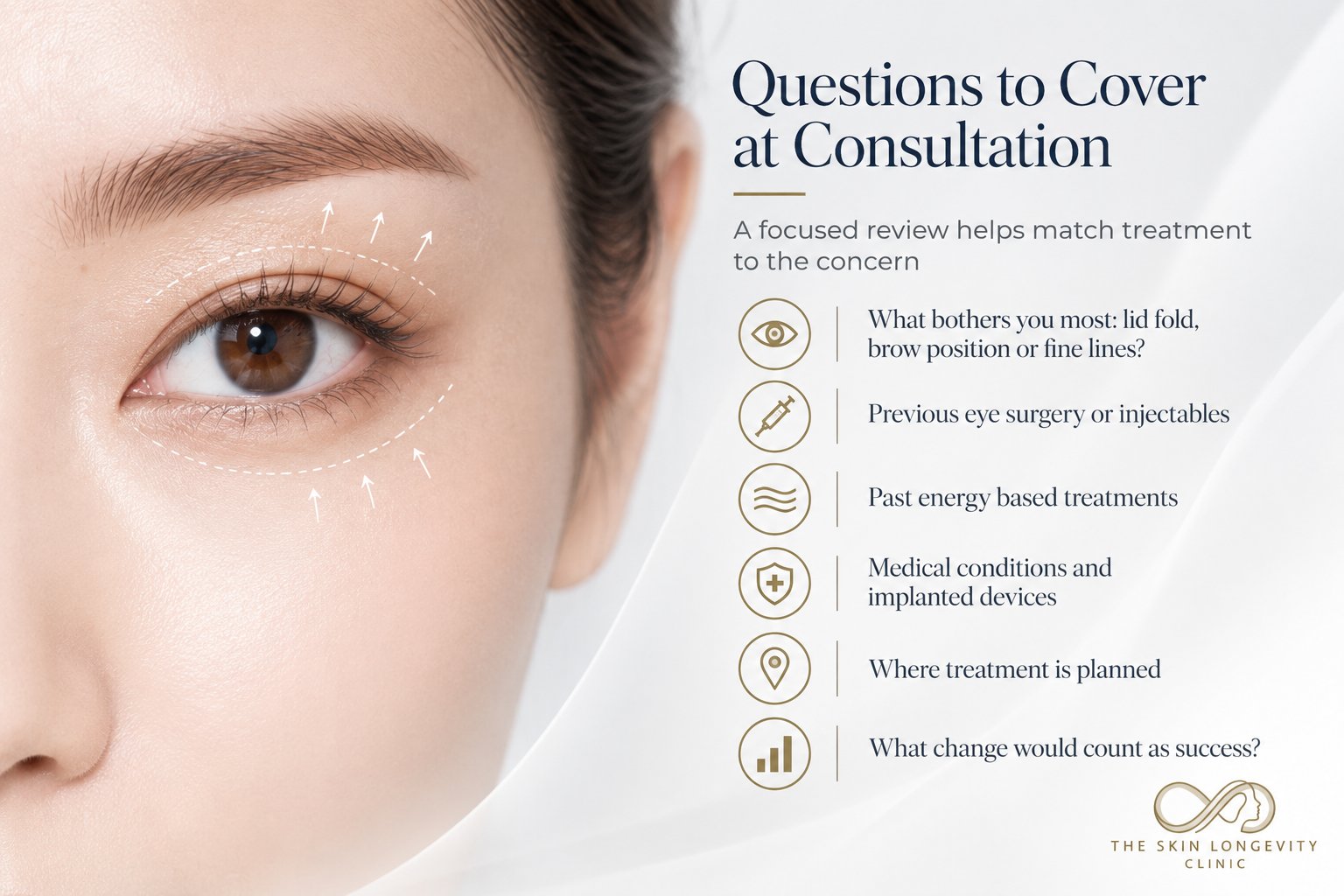
During a consultation at The Skin Longevity Clinic, we start by discussing your main concerns—whether you are noticing heavy eyelid folds, a dropping brow line, fine static lines, or a mix of these. I will also review your medical history, including past eye surgeries, injectable treatments, laser procedures, and any underlying conditions or implanted devices.
I encourage patients to explore The Skin Longevity Clinic’s XERF treatment guide ahead of their visit. We will use our time together to map out the exact treatment zones, establish clear expectations, and structure your review schedule.
Frequently asked questions about XERF eye treatment
Is the small tip better than the facial tip?
It isn’t a matter of one being “better”—they simply serve different anatomical roles2. The smaller footprint allows us to safely treat tight, curved areas where a broad tip cannot lie flat2. Current clinical studies have not shown that the small tip produces superior results to the facial tip when used on the exact same area3,4.
Can XERF remove eye bags or dark circles?
Dark circles are complex and can stem from vascular prominence, hyperpigmentation, or structural shadowing caused by tear trough hollows—a fact highlighted in a Singapore epidemiologic study of 200 patients8.
Because radiofrequency targets skin laxity, it will not dissolve true structural fat pads (eye bags) or remove deep melanin pigmentation8. I evaluate dark circles, under-eye hollowing, and skin looseness independently rather than relying on one device to fix everything. For a deeper breakdown of these conditions, refer to my guides on dark eye circles and eye bags.
How long do XERF eye results last?
The Korean pilot study measured clinical outcomes at the three-month mark3. Because long-term published data is currently limited, we evaluate maintenance schedules based on your individual age, skin quality, and natural aging rate rather than a rigid timeline3.
My perspective on the XERF small tip
For me, the true value of the XERF small tip lies in its ability to treat delicate, contoured anatomy with precision. The key to a successful outcome is matching the technology to the right diagnosis, ensuring that your expectations align with what non-invasive radiofrequency can realistically deliver, and prioritising patient comfort and safety above all else.
References
- Bacharach J, Lee WW, Harrison AR, Freddo TF. A review of acquired blepharoptosis: prevalence, diagnosis, and current treatment options. Eye. 2021;35:2468-2481. doi:10.1038/s41433-021-01547-5
- Erlich G, Dahan E, Skorochod R, Wolf Y. Dual Frequency Non-invasive Monopolar Radiofrequency for Periorbital Tightening: Introduction of Novel Small Treatment Tips. Cureus. 2026;18(1):e101187. doi:10.7759/cureus.101187
- Park JW, Chun S. Expanded field periocular tightening using dual frequency monopolar radiofrequency in Republic of Korea: a pilot study. Medical Lasers. 2026;15(2):106-111. doi:10.25289/ML.26.012
- Erlich G, Dahan E, Wolf Y. Objective and subjective retrospective evaluation of XERF, a novel single shot dual frequency non invasive monopolar radiofrequency. Lasers in Medical Science. 2026;41:194. doi:10.1007/s10103-026-04996-0
- Ko K, Ryu HG, Park J, et al. Computational modelling and histologic analysis of 6.78 and 2 MHz monopolar radiofrequency induced thermal reactions. Lasers in Medical Science. 2025;40:501. doi:10.1007/s10103-025-04746-8
- De Biasio F, Miotti G, Zingaretti N, Castriotta L, Parodi PC. Study on the Aging Dynamics of the Periorbital Region: From Observation to Knowledge of Physiopathology. Ophthalmic Plastic and Reconstructive Surgery. 2019;35(4):333-341. doi:10.1097/IOP.0000000000001247
- Han SH, Yoon YM, Lee YW, Choe YB, Ahn KJ. Usefulness of Monopolar Thermal Radiofrequency Treatment for Periorbital Wrinkles. Annals of Dermatology. 2018;30(3):296-303. doi:10.5021/ad.2018.30.3.296
- Ranu H, Thng S, Goh BK, Burger A, Goh CL. Periorbital hyperpigmentation in Asians: an epidemiologic study and a proposed classification. Dermatologic Surgery. 2011;37(9):1297-1303. doi:10.1111/j.1524-4725.2011.02065.x