

06 Oct RF Microneedling for Melasma and Pigmentation, What the Evidence Shows
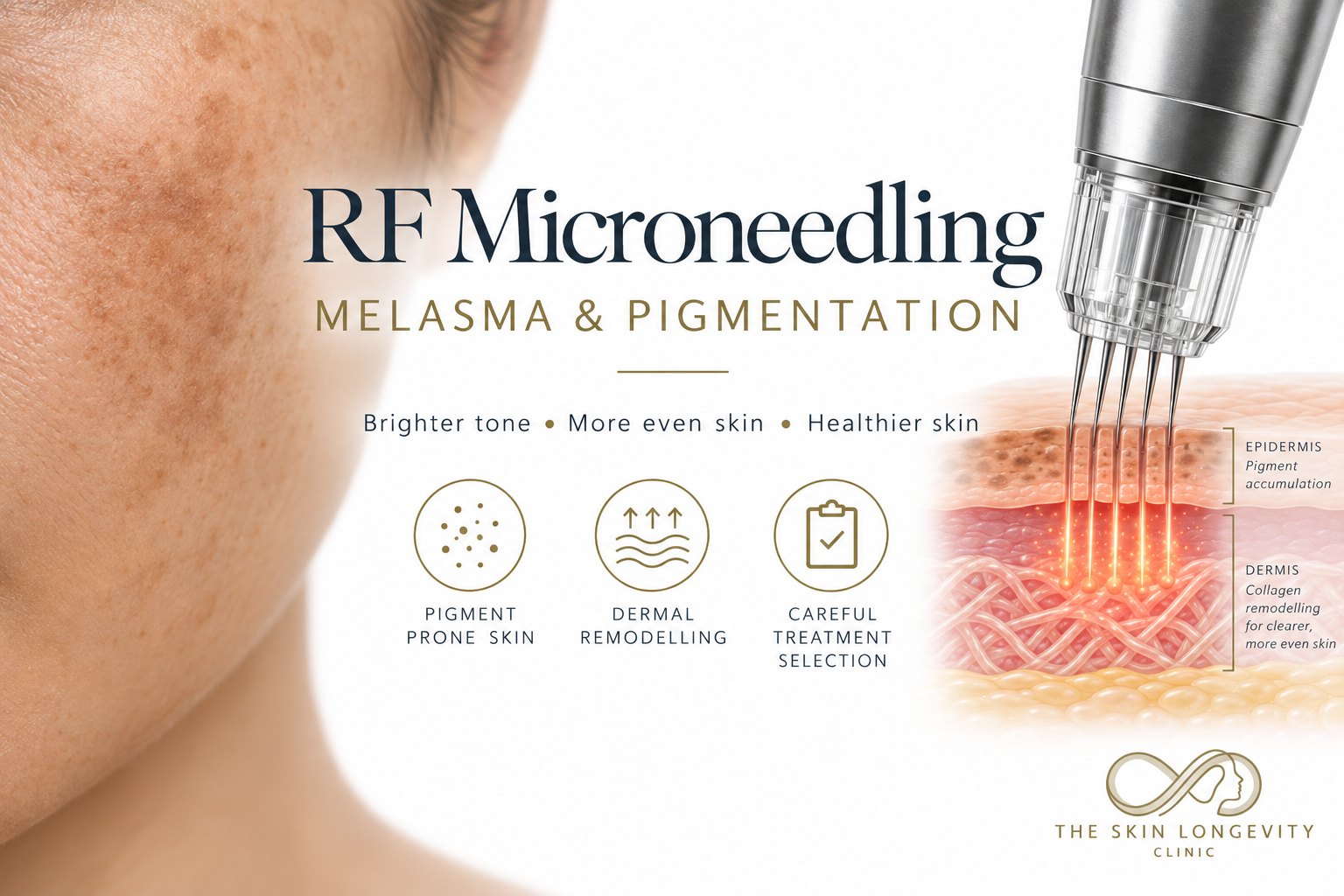
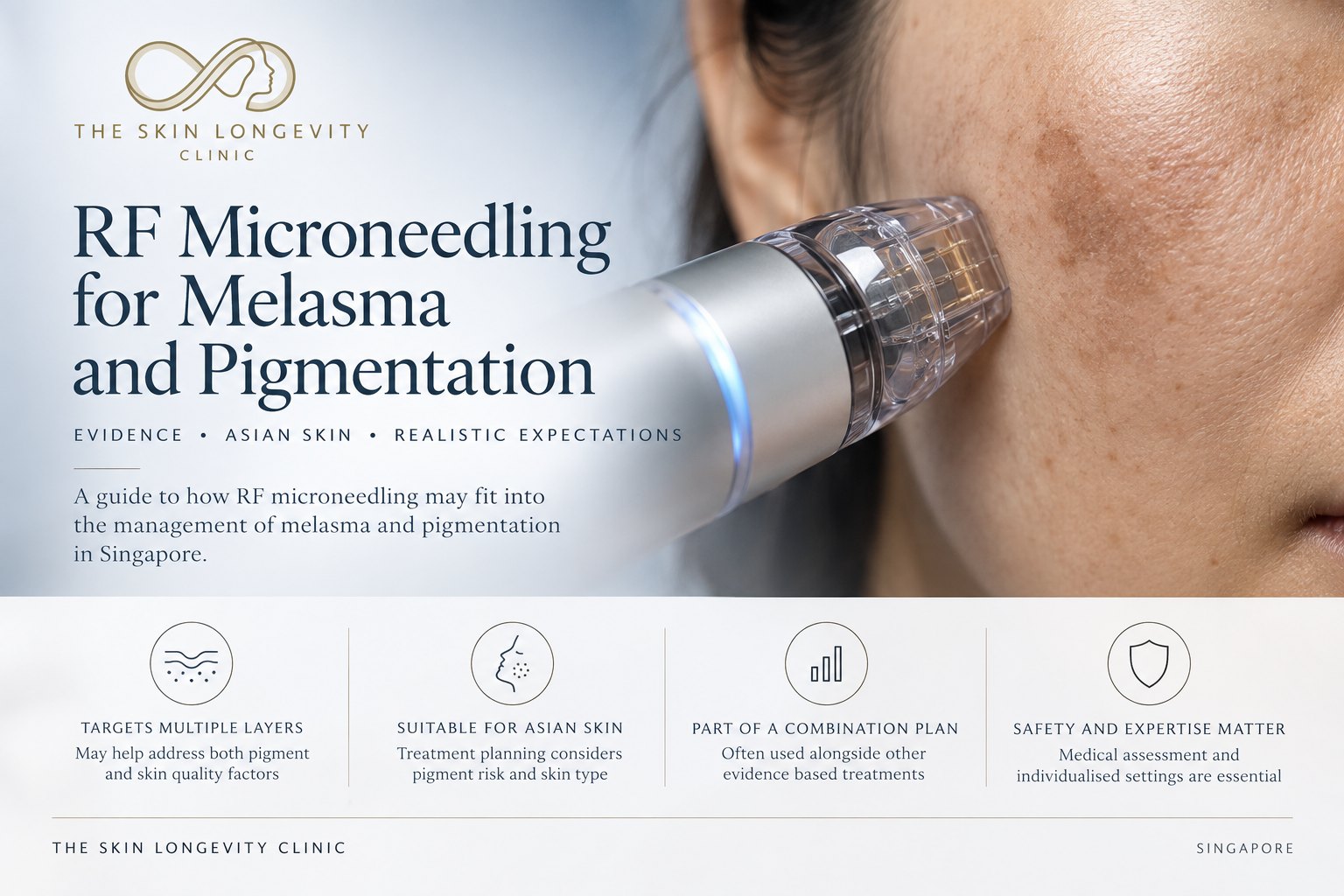
Melasma is the pigmentation most likely to return after treatment, and energy devices have a mixed record with it because the heat they deliver can itself provoke pigment. Radiofrequency (RF) microneedling has been studied for melasma mainly in East Asian cohorts over the last five years, and the results are encouraging enough for it to be used as an adjunct rather than as a first-line treatment. This guide from The Skin Longevity Clinic explains what the studies show, how RF microneedling compares with the clinic’s other melasma options and whom it suits.
Medically reviewed by Dr Rachel Ho, MBBS, MMed (ENT). Last reviewed 6 October 2026.
Why might RF microneedling help melasma?
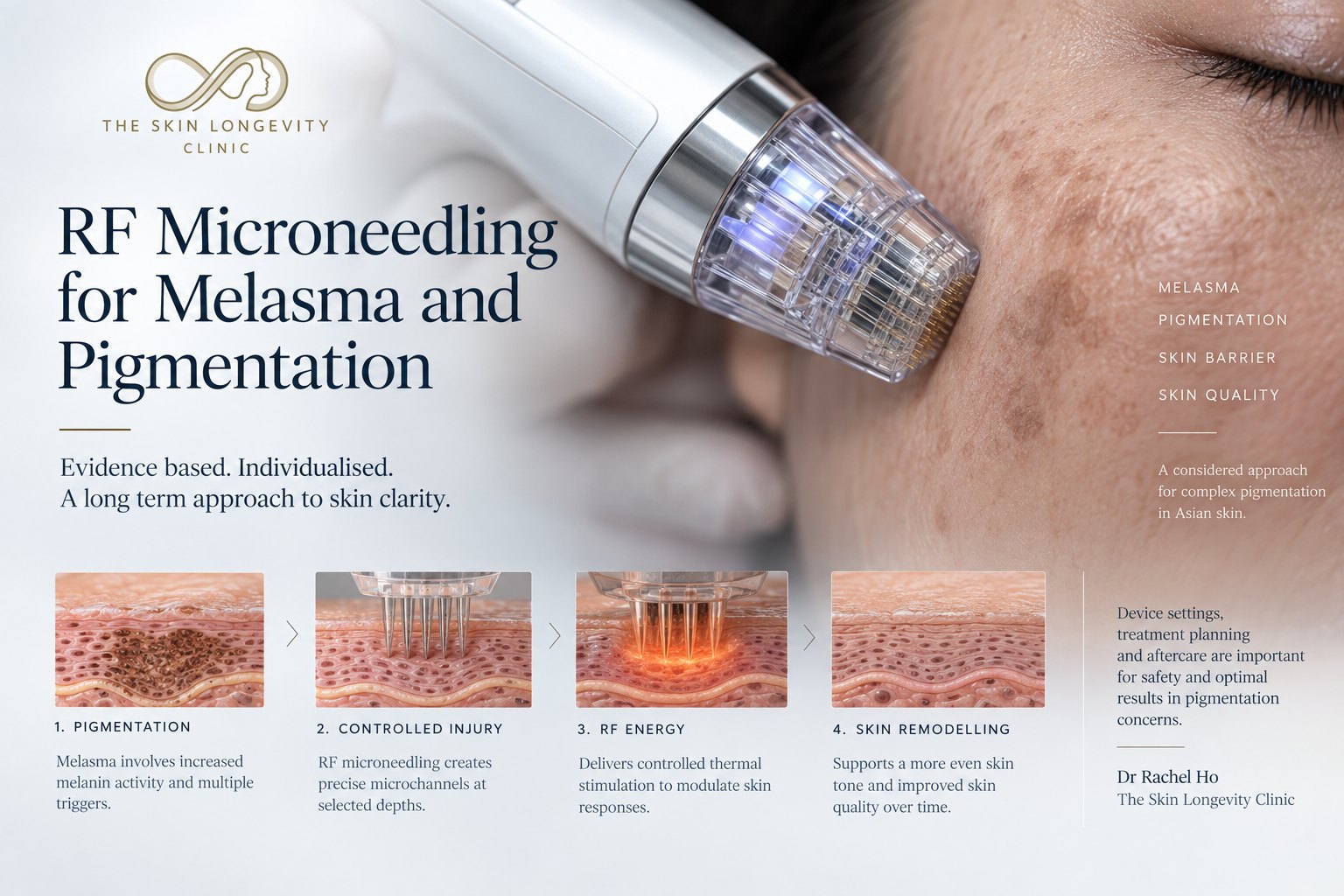
Melasma is not only excess melanin. Biopsies show increased dermal blood vessels, a damaged basement membrane, sun-damaged elastic fibres and mast-cell activity, each of which signals the melanocytes to keep producing pigment1. Pulsed-type RF microneedling targets the dermis rather than the pigment. In 44 Korean patients with refractory melasma or Riehl melanosis, five sessions two weeks apart reduced melanin index, erythema index and transepidermal water loss, and histology showed fewer pigment-laden cells, less vascular proliferation and a thickened basement membrane2. The proposed mechanism is dermal repair that removes the signals over-stimulating the melanocyte.
What do the melasma studies show?
A 2026 systematic review of RF microneedling for melasma found consistent improvement in Melasma Area and Severity Index (MASI) scores across the included studies, with low rates of post-inflammatory hyperpigmentation (PIH), but noted small samples, short follow-up and heterogeneous devices and settings3. Retrospective series from Korea and Japan reported clinical improvement in most patients with mild, transient adverse effects4,5. Two split-face studies combined RF microneedling with low-fluence Q-switched 1064 nm laser and found that the combination outperformed laser alone6,7. The evidence supports RF microneedling as an addition in melasma that has stalled on topical treatment, not as a replacement for it.
RF microneedling vs pico laser vs tranexamic acid for melasma
| RF microneedling | Pico laser toning | Tranexamic acid (oral/topical) | |
|---|---|---|---|
| Target | Dermal vessels, basement membrane | Melanin | Plasmin signalling to melanocytes, dermal vessels |
| Evidence grade | Small randomised trials, case series, 1 systematic review3 | Meta-analysis, 1064 nm effective, rebound risk8 | Multiple randomised trials9 |
| Rebound/PIH risk | Low | Moderate with repeated toning | Low |
| Role at the clinic | Adjunct after topical plan | Selected cases, limited sessions | Core medical therapy |
The full melasma framework is set out under melasma treatment in Singapore, and the pico detail under pico laser for melasma.
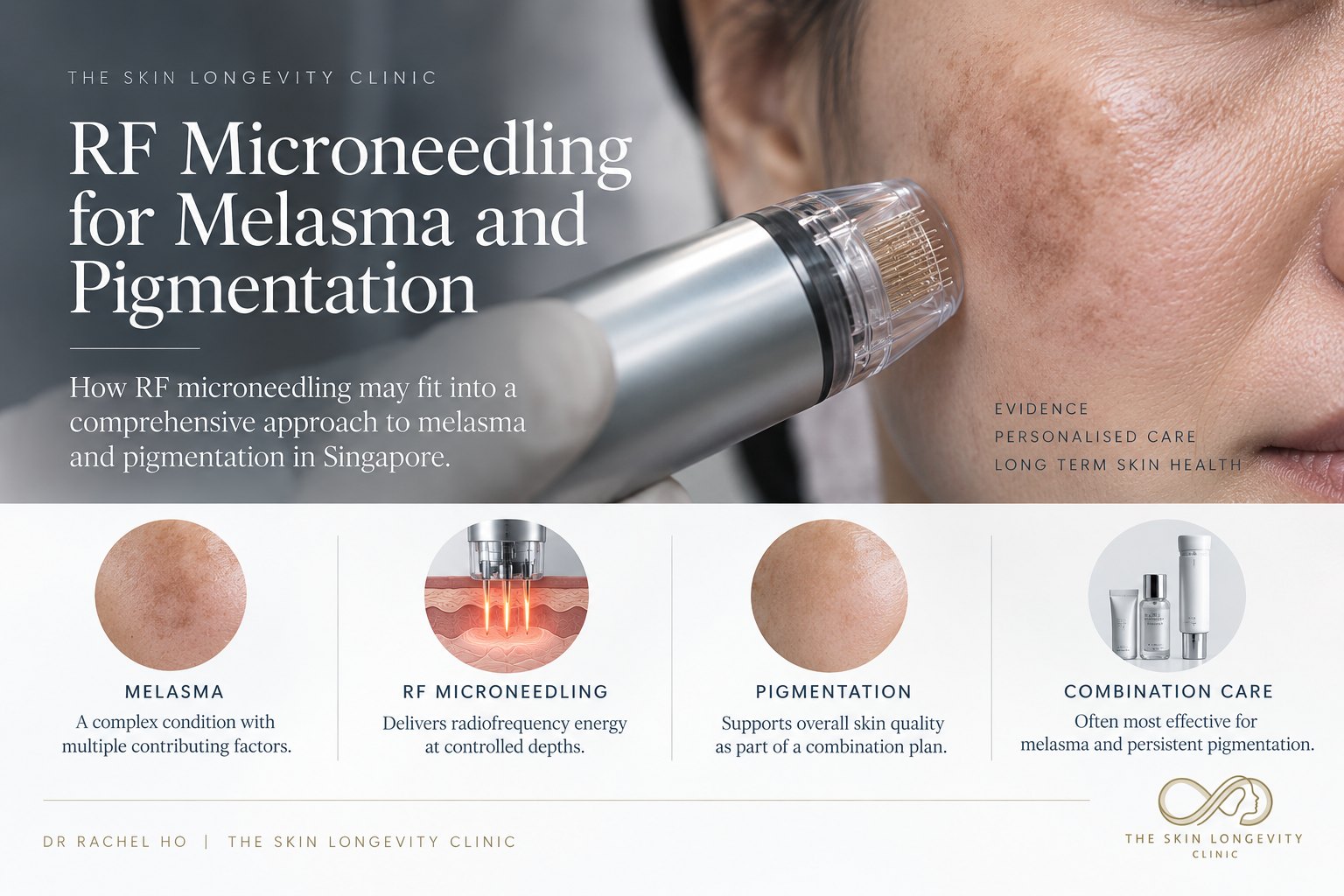
How is RF microneedling done for melasma?
Melasma is treated at lower energy and shallower depth than acne scars, with pulsed or short-duration settings where the device allows, over 3 to 5 sessions at 2 to 4 week intervals, and always with daily broad-spectrum sunscreen and a topical regimen in place. The lower energy keeps dermal heating below the level that provokes pigment. Downtime is usually one day of redness2. The procedure is described on the service page under Secret RF for melasma.
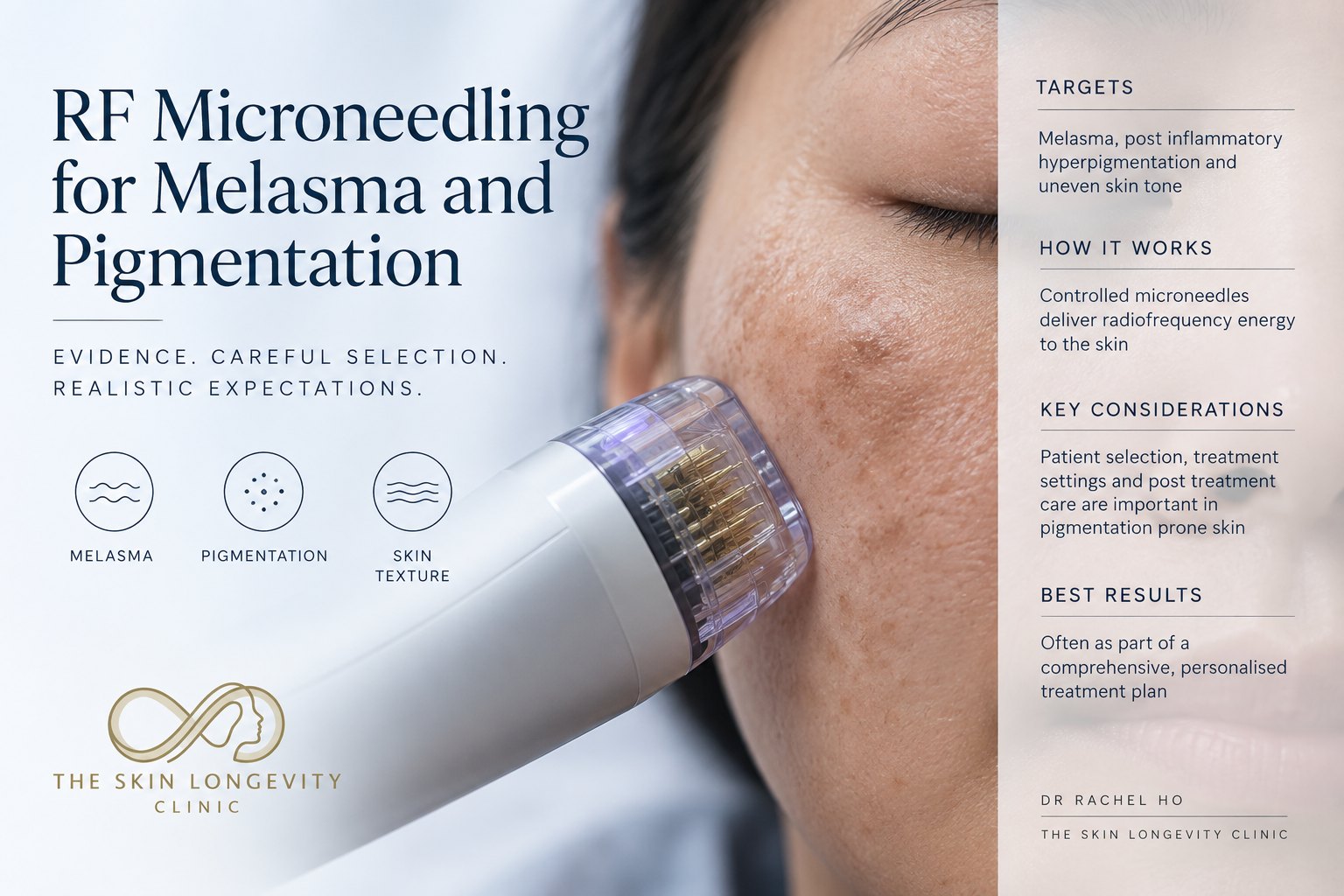
Can RF microneedling make pigmentation worse?
Any heat or injury can trigger PIH in melasma-prone skin. The epidermis-sparing design keeps the risk low, and the melasma studies report few PIH events, but treating active melasma with high energy, omitting sun protection or treating during a hormonal flare raises the risk3. The clinic reviews at 4 weeks before the next session and stops the course if the pigment darkens. Related reading is why pigmentation returns or darkens after laser.

Does RF microneedling help other pigmentation?
For PIH from acne, RF microneedling treats the scar component, and the pigment is addressed with topicals and pico, as described under postinflammatory hyperpigmentation. Riehl melanosis and pigmented contact dermatitis responded in the pulsed-type RF study2. Sun spots and freckles are discrete deposits of pigment rather than a dermal disorder, so they are better treated with pico or Q-switched lasers, as explained under pigmentation treatment in Singapore.
Dr Rachel Ho discusses microneedling and RF microneedling for acne scars, pores and skin texture in her doctor’s guide to RF microneedling.
RF microneedling for melasma FAQs
Does RF microneedling treat melasma?
It can improve melasma as an adjunct to sun protection and topical treatment, and the studies are small but consistent3.
How many RF microneedling sessions for melasma?
The published protocols used 3 to 5 sessions, 2 to 4 weeks apart2.
Is RF microneedling safer than laser for melasma?
It spares the epidermis and carries a lower rebound risk than repeated laser toning, but it is not free of risk3,8.
Can RF microneedling be combined with tranexamic acid?
Tranexamic acid is continued through the course, because medical therapy remains the core of the plan.
Will melasma come back after RF microneedling?
Melasma is chronic, and maintenance with sunscreen and topicals is needed whatever the procedure.
Selected references
- Kwon SH, Hwang YJ, Lee SK, Park KC. Heterogeneous Pathology of Melasma and Its Clinical Implications. Int J Mol Sci. 2016;17(6):. doi:10.3390/ijms17060824. PMID 27240341.
- Park BJ, Jung YJ, Ro YS, Chang SE, Kim JE. Therapeutic Effects of New Pulsed-Type Microneedling Radiofrequency for Refractory Facial Pigmentary Disorders. Dermatol Surg. 2022;48(3):327-333. doi:10.1097/DSS.0000000000003367. PMID 34999602.
- Kumar N, et al. The efficacy and safety of radiofrequency microneedling for melasma: a systematic review and qualitative evidence synthesis. Aesthet Surg J Open Forum. 2026;8:ojag075. doi:10.1093/asjof/ojag075.
- Kim HB, et al. Clinical effects and safety of radiofrequency microneedling for the management of melasma: a retrospective study. Aesthet Surg J Open Forum. 2026;8:ojag143. doi:10.1093/asjof/ojag143.
- Imaizumi A, et al. A retrospective analysis of radiofrequency microneedling for melasma management in the Japanese population. Clin Cosmet Investig Dermatol. 2026;19:601440. doi:10.2147/CCID.S601440.
- Kwon HH, et al. Combined treatment of melasma involving low-fluence Q-switched Nd:YAG laser and fractional microneedling radiofrequency. J Dermatolog Treat. 2019;30(4):352–356. doi:10.1080/09546634.2018.1516858.
- Jung JW, et al. A face-split study to evaluate the effects of microneedle radiofrequency with Q-switched Nd:YAG laser for the treatment of melasma. Ann Dermatol. 2019;31(2):133–138. doi:10.5021/ad.2019.31.2.133.
- Feng J, Shen S, Song X, Xiang W. Efficacy and safety of picosecond laser for the treatment of melasma: a systematic review and meta-analysis. Lasers Med Sci. 2023;38(1):84. doi:10.1007/s10103-023-03744-y. PMID 36897459.
- Del Rosario E, Florez-Pollack S, Zapata L Jr, Hernandez K, Tovar-Garza A, Rodrigues M, et al. Randomized, placebo-controlled, double-blind study of oral tranexamic acid in the treatment of moderate-to-severe melasma. J Am Acad Dermatol. 2018;78(2):363-369. doi:10.1016/j.jaad.2017.09.053. PMID 28987494.