


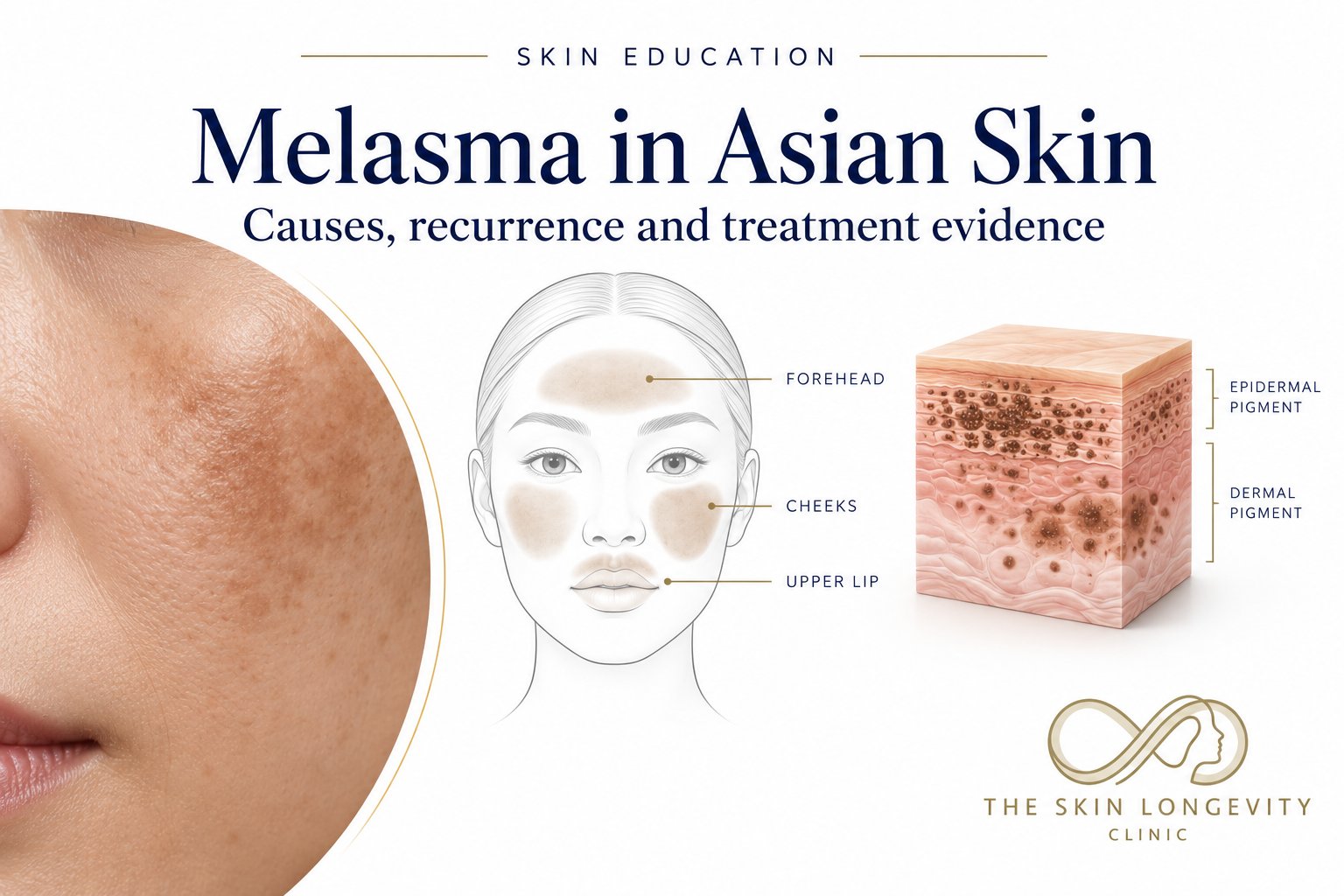
08 Aug Melasma in Asian Skin: Causes, Recurrence and Treatment Evidence
Melasma causes brown or grey brown patches, often on both cheeks, the forehead or upper lip1. It can improve substantially with treatment, although its tendency to return makes ongoing care part of the plan2,3.
Seeing pigmentation return after it has lightened can be discouraging. At The Skin Longevity Clinic, we discuss both the improvement you hope to see and how to maintain it, taking your skin sensitivity, treatment history and daily routine into account.
Medically reviewed by Dr Rachel Ho, MBBS, MRCS, MMed (ENT), 7 October 2026.
What causes melasma in Asian skin?
Melasma develops through a combination of inherited susceptibility, light exposure and hormonal influences, including pregnancy and some hormonal medicines1. Ultraviolet and visible light can stimulate pigment production in susceptible skin1,4.
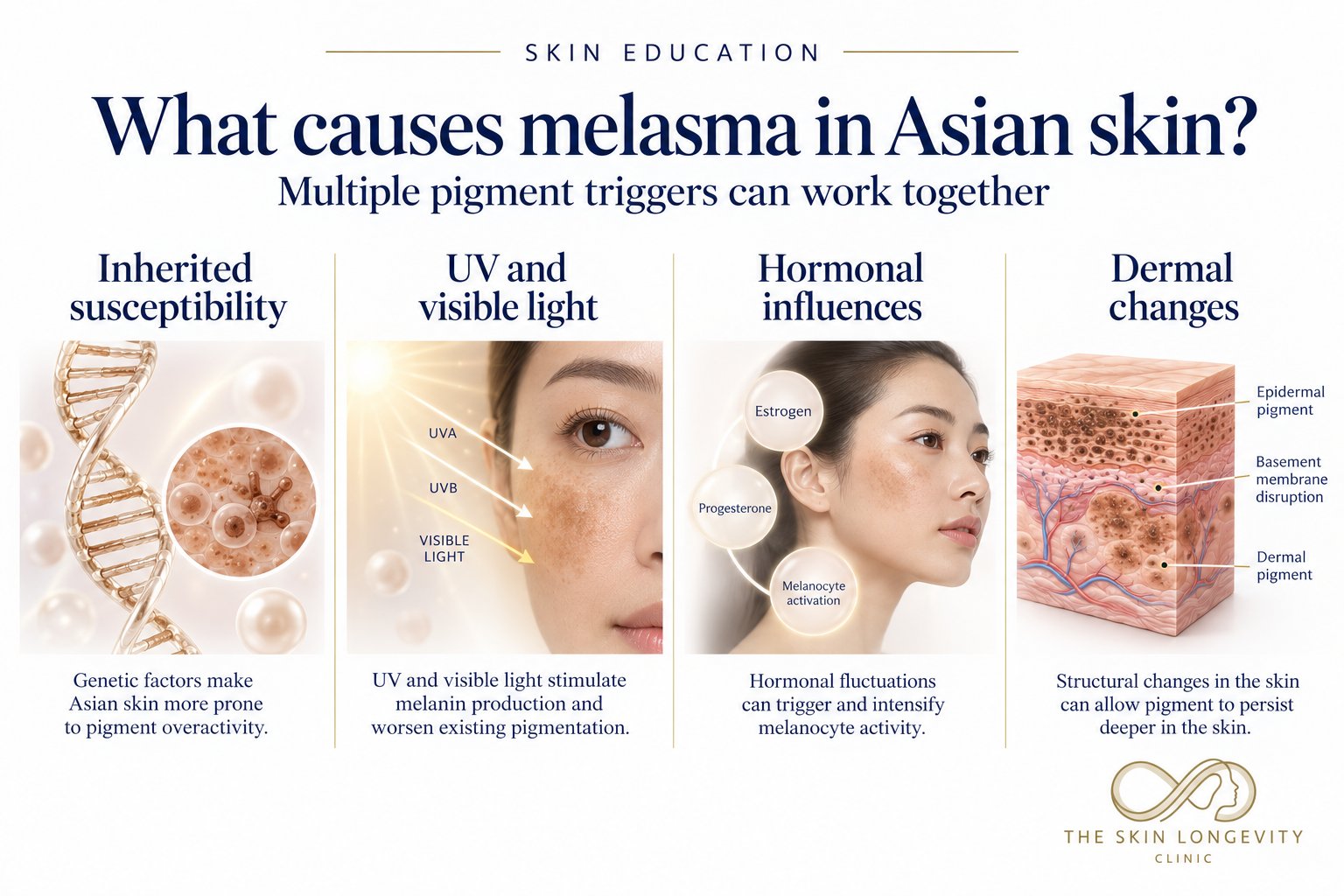
Within the skin, signals from keratinocytes and other cells influence melanocytes, the cells that produce melanin1. These signals can increase the activity of pigment pathways involving MITF and tyrosinase, an enzyme needed for melanin formation1.
Research has also identified changes in the dermis, including sun damaged connective tissue, increased blood vessels and disruption around the basement membrane beneath the epidermis1. This broader biology helps explain why a useful melasma plan may address pigment production, the visible colour and the condition of the surrounding skin1,2.
How is melasma different from other hyperpigmentation?
Melasma typically forms relatively symmetrical patches, whereas postinflammatory hyperpigmentation often follows the location of previous acne, eczema or another injury1,2. Sun spots are usually more discrete, and several pigmentation conditions may need to be considered during an assessment2.
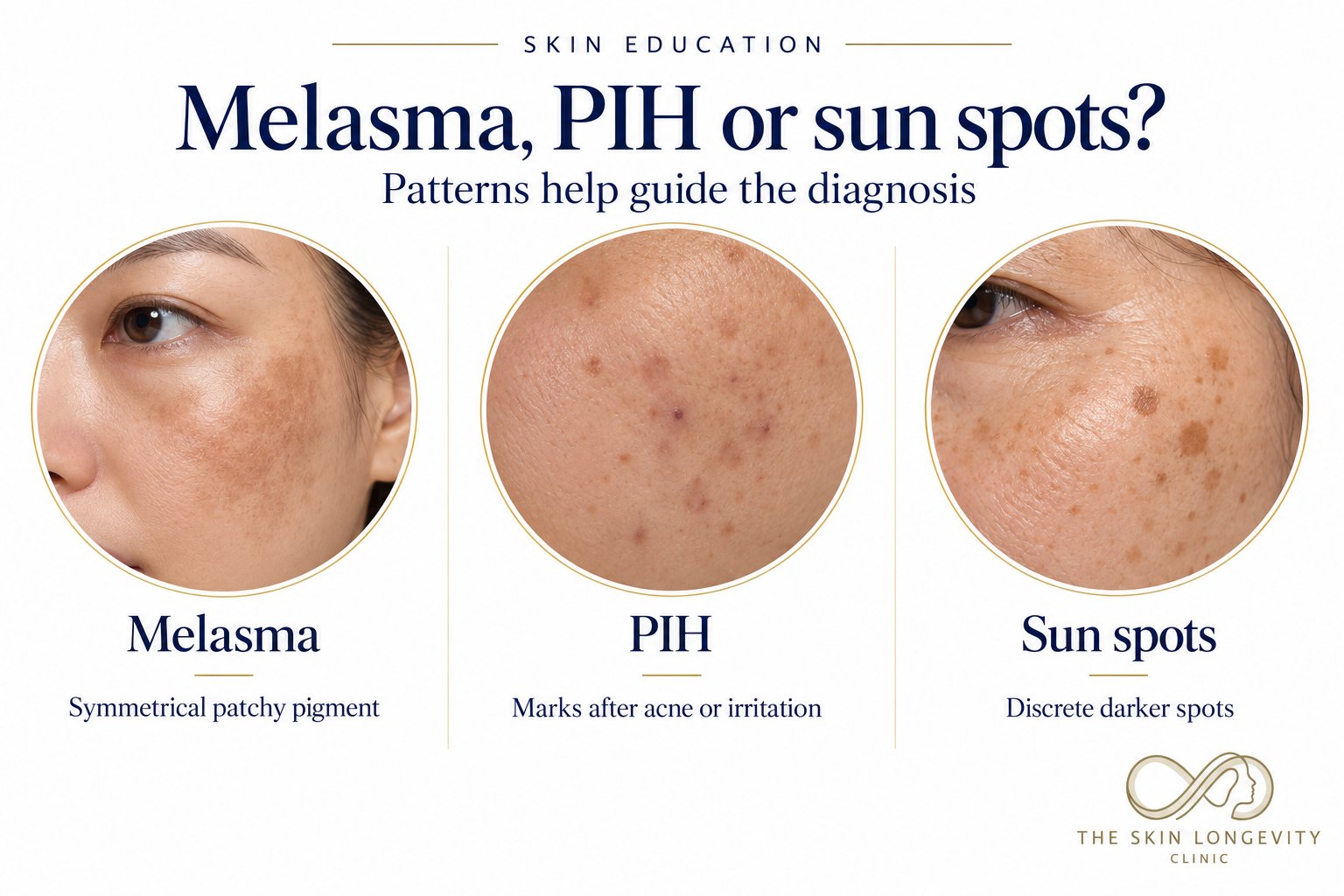
The history and examination guide that distinction before a procedure is selected. Our guide to hyperpigmentation treatment in Singapore and Dr Rachel Ho’s pigmentation assessment article explain the wider diagnostic discussion.
Why does melasma return after treatment?
Treatment can lighten the patches while the skin remains susceptible to the signals that caused them1,4. Light exposure and ongoing hormonal influences can therefore contribute to renewed pigmentation after improvement1,4.
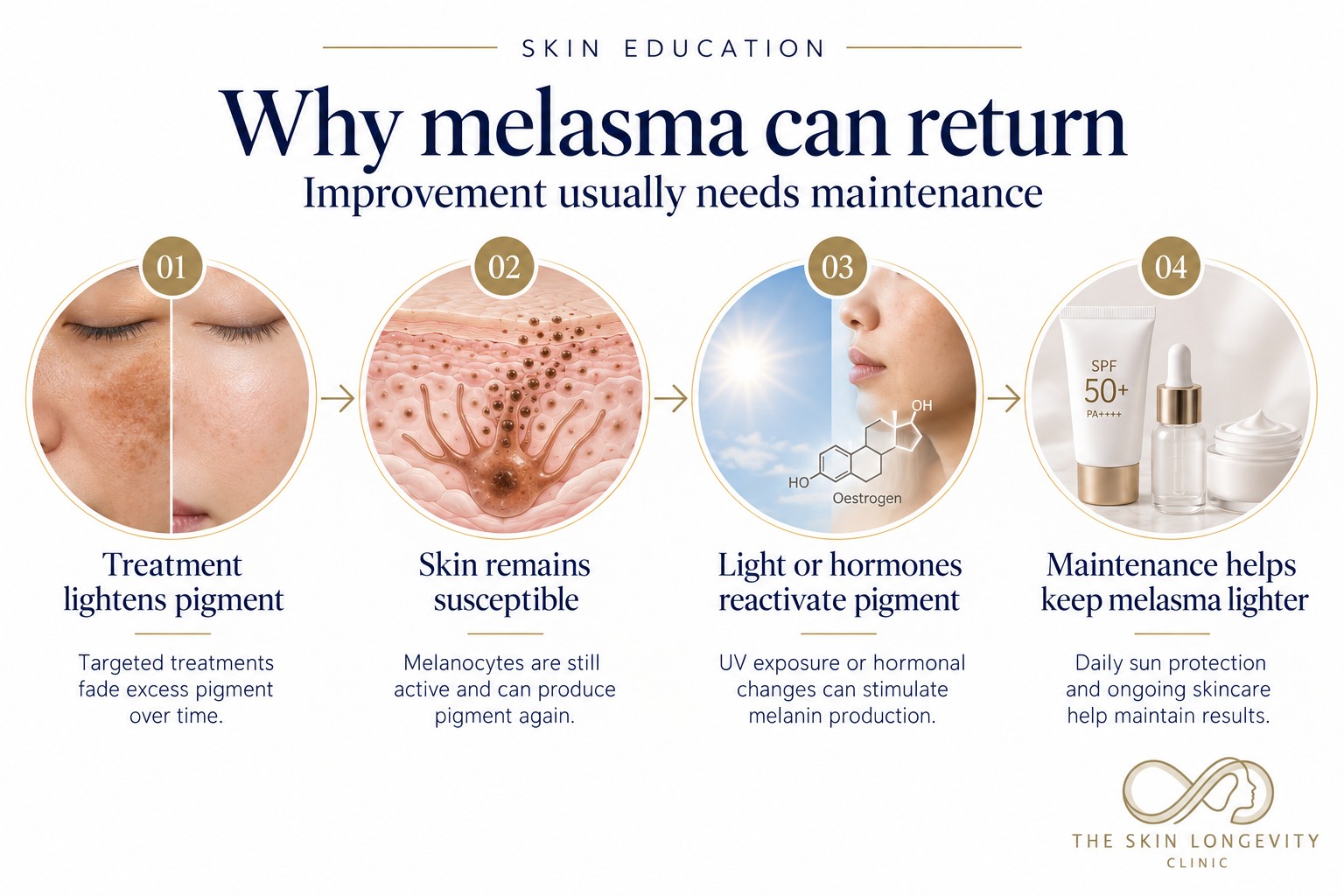
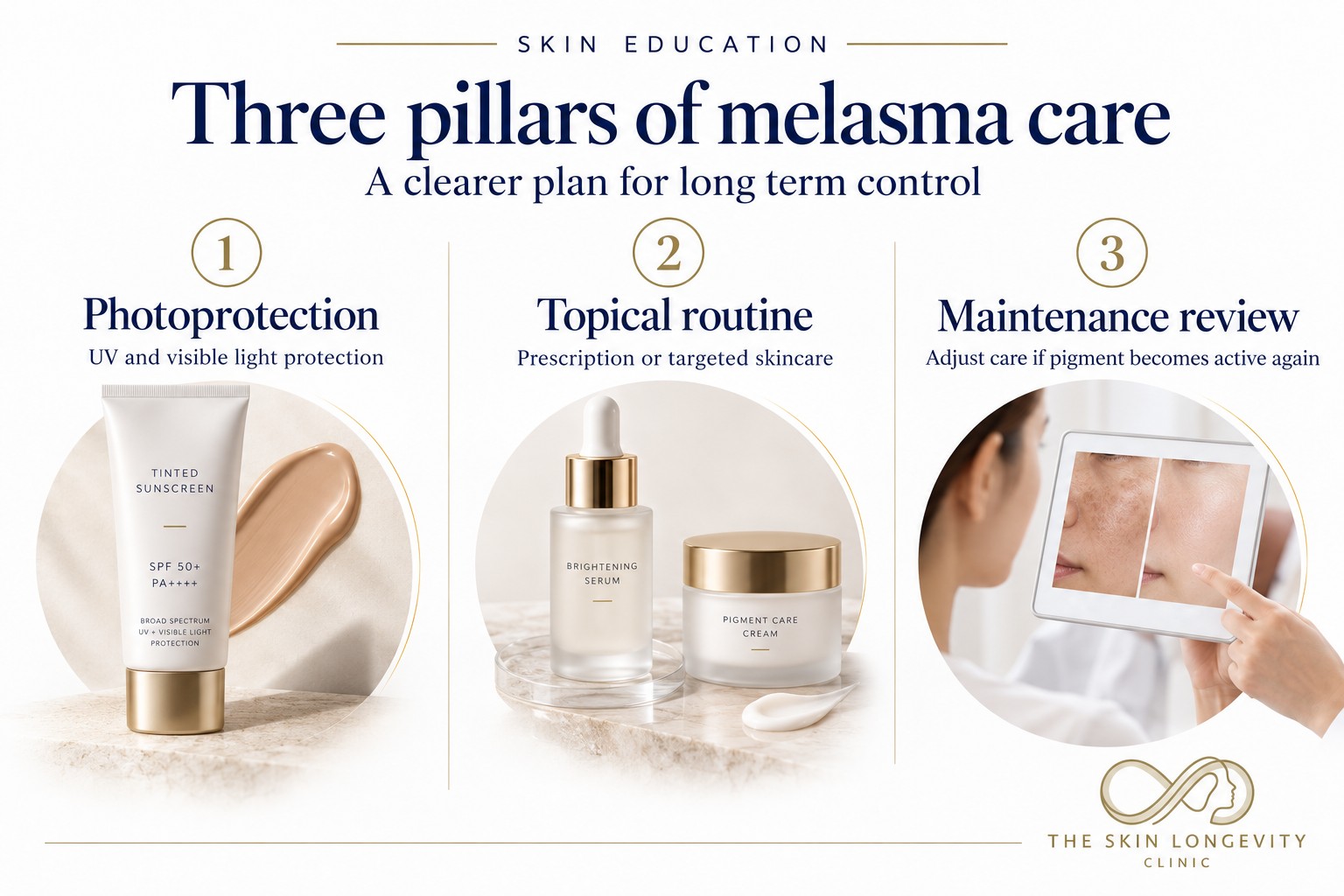
Melasma care has an improvement phase and a maintenance phase3,4. Maintenance may involve photoprotection, an agreed topical routine and review of whether further treatment is worthwhile3.
A change in colour after a procedure also deserves assessment because melasma recurrence and inflammation related darkening have different implications2. Our article on pigmentation that returns or darkens after laser explains this more fully.
What helps melasma?
Photoprotection and a tolerable skincare routine
Daily broad spectrum sunscreen is a foundation of treatment, and a suitable tinted formulation containing iron oxides adds visible light protection4,5. In a randomised trial, ultraviolet plus visible light protection produced greater improvement than ultraviolet protection alone when both groups also used hydroquinone5.
Choose a sunscreen that is comfortable enough to use consistently, with reapplication suited to your activities. Our sunscreen guide for melasma explains the features to look for.
Prescription creams and skincare ingredients
The 2026 international consensus supports medically supervised hydroquinone based triple combination cream as an established melasma treatment3. Azelaic acid and other topical formulations provide alternatives according to suitability and tolerance2.
A 2025 trial found improvement with two tranexamic acid and niacinamide creams and with 4% hydroquinone, without a significant difference in the principal pigmentation outcomes6. These results relate to the particular creams studied, which is why Dr Rachel Ho’s skincare ingredient guide separates ingredient mechanisms from finished product evidence.
Tranexamic acid for melasma
Tranexamic acid reduces the breakdown of blood clots in its conventional medical use, while its proposed pigment effects include reducing plasmin related signalling that stimulates melanocytes2. Oral treatment, intradermal injections and assisted topical delivery have different protocols and should be considered separately2.
Oral tranexamic acid
Oral tranexamic acid can be a useful additional treatment for selected patients with persistent melasma2,9. In a randomised trial of 44 participants, melasma severity scores fell by 49% with oral tranexamic acid and 18% with placebo after three months, with both groups using sunscreen7.
These figures measure changes in severity, rather than the proportion of patients whose melasma disappeared7. A Singapore retrospective study of 561 patients reported improvement in 89.7%, usually within two months, with relapse recorded in some patients after improvement8.
Oral use for melasma is off label and requires medical assessment, particularly of clotting history and current medicines9. Combined hormonal contraception and relevant thromboembolic risk can make it unsuitable; stomach discomfort, headache and lighter menstrual periods are among reported side effects8,9.
The prescription should include a review schedule and a maintenance discussion9. Dr Rachel Ho’s guide to tranexamic acid for melasma compares the different routes and their research.
Intradermal tranexamic acid injections
Intradermal treatment places small amounts of tranexamic acid into the skin through injections10. In an eight week randomised study of 45 women, oral treatment and two injection regimens all improved melasma without a statistically significant difference between groups10.
This provides a clinical basis for discussing local treatment, while the small study does not establish that the routes are interchangeable10. Injections can cause discomfort, redness and swelling, and the patient’s medical history still needs review2,10.
Injectable skin boosters are also promoted for melasma; our review of ECM skin boosters for melasma sets out what the studies do and do not show.
RF microneedling with topical tranexamic acid
RF microneedling can be combined with topical tranexamic acid as an assisted delivery approach11. The needles create channels in the skin while radiofrequency energy provides a separate tissue effect, so the procedure and medication need to be considered together11,16.
Our guide to RF microneedling for melasma reviews the Korean and Japanese studies in more detail.
A 2025 study treated 14 women with four sessions of a particular RF microneedling device followed by 4% topical tranexamic acid11. The mean melasma severity score improved by 31% at three months after the final session11.
The findings are encouraging for the combined protocol, while the study’s design cannot separate the contribution of the device from the medication11. Your proposed formulation, device and treatment schedule should therefore be discussed specifically rather than assumed to match every published protocol.
LDM ultrasound and topical treatment support
Local Dynamic Micromassage, or LDM, is an ultrasound treatment described in our LDM facial guide18. Ultrasound assisted movement of topical substances through the skin is called sonophoresis, and its effects depend on the formulation and ultrasound parameters12.
When LDM is proposed alongside topical tranexamic acid, it should be described as an assisted topical approach rather than an intradermal injection. The injection studies do not establish the amount delivered, effectiveness or systemic exposure of an LDM protocol, so those results should remain separate from the treatment discussion10,12.
Which procedures can complement melasma treatment?
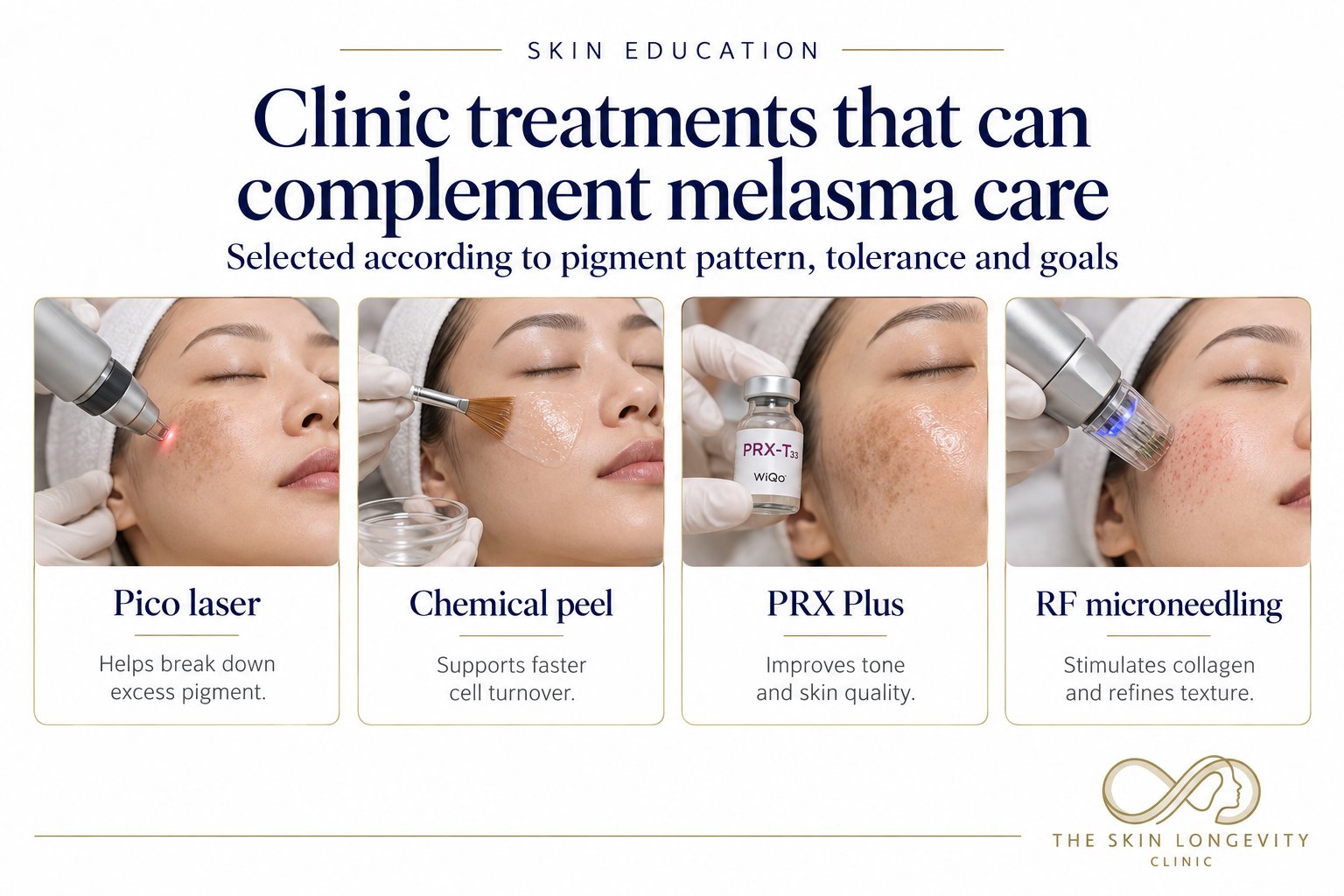
Procedures can add to a plan that already addresses ongoing pigment stimulation and daily skin care3. We discuss the intended contribution of each treatment, together with comfort, recovery and the timing of review.
Pico laser for visible pigmentation
Pico laser in Singapore can help lighten melasma in selected patients, with a review of six randomised trials finding improvement with studied 1064 nm picosecond protocols13. Wavelengths and treatment settings differ, so suitability depends on the skin and the particular approach proposed13.
The clinical value is in addressing visible pigment alongside treatment that limits further stimulation3. Temporary redness or pigment changes can occur, making preparation, appropriate settings and aftercare important parts of the course13.
Chemical peels for superficial pigment
Chemical peels offer controlled exfoliation and can complement medical treatment for melasma2,3. A 2025 study found improvement with TCA 20% peeling and with conventional microneedling plus topical tranexamic acid, with no significant difference between those treatments in the relevant comparison group14.
The peeling agent and depth are chosen around the skin’s tolerance and treatment history2. The aim is gradual improvement with a manageable recovery period, rather than stronger exfoliation for its own sake.
PRX Plus for associated tone and texture concerns
PRX Plus has been studied for tone and texture in photoaged skin15. A 2026 study of 25 women reported improved colour uniformity in the subgroup with hyperpigmentation, alongside accompanying home skincare15.
The research provides an early basis for discussing broader skin quality goals, while the study was uncontrolled and involved skin type II rather than a dedicated Asian melasma population15. Its place in a melasma plan should therefore be considered alongside the treatments directed at melasma itself.
RF microneedling for selected melasma and maintenance plans
Radiofrequency microneedling delivers controlled energy within the skin and is being studied for the dermal changes associated with melasma16. A 2026 systematic review reported improvements across studies using different devices and combinations16.
In a separate small study, RF treatment helped maintain improvement on the treated side of the face after oral tranexamic acid and triple combination cream were stopped17. This supports discussing RF microneedling as an additional option for selected patients, with the maintenance schedule based on response rather than a fixed course for everyone16,17.
How do we plan treatment and review progress?
At your consultation, bring details of previous creams, peels and lasers, along with photographs showing changes over time. We will discuss your main concern, whether another pigmentation condition may be present and the treatment commitment you feel comfortable making.
The initial plan should identify what each treatment is intended to improve and when its response will be reviewed. This also gives you a clear opportunity to discuss irritation, recovery or a result that differs from what you expected.
Frequently asked questions about melasma
How long does melasma treatment take?
Several clinical trials assess improvement over eight to twelve weeks, although treatment schedules and the degree of improvement vary6,7,10. Maintenance is then considered according to the response and ongoing triggers3.
Can treatment keep melasma lighter for longer?
Melasma can improve substantially, and continuing photoprotection with an appropriate maintenance plan helps support that improvement3,4. Follow up allows the plan to be adjusted if pigmentation becomes more active again3.
Is a laser treatment necessary for every patient?
Many patients begin with photoprotection and topical treatment, with oral medicines or procedures considered according to suitability and response3. Laser is one option within that discussion, rather than a requirement for every melasma treatment plan3.
What is the main cause of melasma?
Melasma has no single cause. Ultraviolet and visible light, hormonal influences such as pregnancy and oral contraceptives, a family tendency and heat all contribute, together with changes in the skin’s blood vessels and the dermis beneath the pigment1. This is why sun protection that also blocks visible light is part of every plan4,5.
Does melasma ever go away?
Melasma linked to pregnancy or hormonal medicines can fade once that trigger settles, but for many people it is long-lasting and tends to darken again with sun exposure1,3. Treatment can lighten it substantially; maintenance and daily photoprotection help keep it lighter3,4.
Is pico laser good for melasma?
Pico laser can help selected patients. A meta-analysis of six randomised trials found that 1064 nm picosecond laser reduced melasma severity scores without significant side effects13. It is used alongside sun protection and topical or oral treatment rather than on its own3.
Can pico laser make melasma worse?
It can. In the same meta-analysis, 755 nm picosecond laser was no better than topical lightening creams and caused post-inflammatory hyperpigmentation13. For this reason the wavelength and settings are chosen for melasma specifically, and the skin is reviewed between sessions before treatment continues3,13.
Can vitamin C remove melasma?
Vitamin C can lighten melasma but does not remove it. In a 16-week trial, 62.5% of patients rated the vitamin C side as good or excellent versus 93% with hydroquinone, with side effects in 6% versus 69%19. It is useful as a gentle option or in combination19.
Discuss your melasma treatment in Singapore
A consultation at The Skin Longevity Clinic can help you understand what is driving the pigmentation and which treatments are worth considering. Bring your priorities and previous treatment experiences so we can plan both the next step and the care that follows it.
References
- Espósito ACC, et al. Update on Melasma, Part I: Pathogenesis. Dermatology and Therapy. 2022;12(9):1967–1988. DOI: 10.1007/s13555-022-00779-x. Springer
- Gan C, Rodrigues M. An Update on New and Existing Treatments for the Management of Melasma. American Journal of Clinical Dermatology. 2024;25(5):717–733. DOI: 10.1007/s40257-024-00863-2. Springer
- Sarkar R, Desai SR, Sinha S, et al. Delphi consensus on melasma management by international experts and pigmentary disorders society. Journal of the European Academy of Dermatology and Venereology. 2026;40(4):680–692. DOI: 10.1111/jdv.70066. PubMed
- Morgado Carrasco D, Piquero Casals J, Granger C, Trullàs C, Passeron T. Melasma: The need for tailored photoprotection to improve clinical outcomes. Photodermatology, Photoimmunology & Photomedicine. 2022;38(6):515–521. DOI: 10.1111/phpp.12783. PubMed Central (PMC)
- Castanedo Cazares JP, Hernandez Blanco D, Carlos Ortega B, Fuentes Ahumada C, Torres Álvarez B. Near visible light and UV photoprotection in the treatment of melasma: a double blind randomized trial. Photodermatology, Photoimmunology & Photomedicine. 2014;30(1):35–42. DOI: 10.1111/phpp.12086. PubMed Central (PMC)
- Ghasemiyeh P, Haghighi NF, Dastgheib L, Ranjbar S, Mohammadi Samani S. Safety and efficacy of niosomal and conventional tranexamic acid/niacinamide vs. hydroquinone creams in melasma: A randomized, double blind, case controlled clinical trial. Scientific Reports. 2025;15:42739. DOI: 10.1038/s41598-025-26693-8. Nature
- Del Rosario E, Florez Pollack S, Zapata L Jr, et al. Randomized, placebo controlled, double blind study of oral tranexamic acid in the treatment of moderate to severe melasma. Journal of the American Academy of Dermatology. 2018;78(2):363–369. DOI: 10.1016/j.jaad.2017.09.053. PubMed
- Lee HC, Thng TGS, Goh CL. Oral tranexamic acid in the treatment of melasma: A retrospective analysis. Journal of the American Academy of Dermatology. 2016;75(2):385–392. DOI: 10.1016/j.jaad.2016.03.001. PubMed
- Godse K, Sarkar R, Mysore V, et al. Oral Tranexamic Acid for the Treatment of Melasma: Evidence and Experience Based Consensus Statement from Indian Experts. Indian Journal of Dermatology. 2023;68(2):178–185. DOI: 10.4103/ijd.ijd_266_22. PubMed Central (PMC)
- El Hadidi H, Mosaad R, Ragab N. The efficacy of oral vs different dilutions of intradermal tranexamic acid microinjections in melasma: A randomized clinical trial. Dermatologic Therapy. 2021;34(3):e14924. DOI: 10.1111/dth.14924. PubMed
- Akerman L, Kaplan B, Mimouni D, Nosrati A, Solomon Cohen E. Topical Tranexamic Acid mediated with Non insulated Microneedling Radiofrequency for the Treatment of Melasma. Israel Medical Association Journal. 2025;27(6):358–362. PMID: 40586253. Israel Medical Association
- Vranić E. Sonophoresis: mechanisms and application. Bosnian Journal of Basic Medical Sciences. 2004;4(2):25–32. DOI: 10.17305/bjbms.2004.3410. General ultrasound delivery research, rather than evidence for a specific LDM and tranexamic acid protocol. PubMed Central (PMC)
- Feng J, Shen S, Song X, Xiang W. Efficacy and safety of picosecond laser for the treatment of melasma: a systematic review and meta analysis. Lasers in Medical Science. 2023;38:84. DOI: 10.1007/s10103-023-03744-y. Springer
- Sayed DS, Fathy E, Mahmoud SM, Hassan H, Tawfik YM. TCA 20% peeling versus either cryopeeling or topical tranexamic acid combined with microneedling in treatment of melasma: a split face randomized clinical trial. Archives of Dermatological Research. 2025;317:848. DOI: 10.1007/s00403-025-04352-2. Springer
- Deda A, Duda P, Wcisło Dziadecka D, Maszczyk A, Wilczyński S. Instrumental Assessment of a Chemical Skin Biostimulator Combining Ammonium Trichloroacetate and Homocysteic Acid in Photoaged Mature Skin: A Single Arm Prospective Study. Molecules. 2026;31(17):3038. DOI: 10.3390/molecules31173038. PubMed Central (PMC)
- Kumar N, Lin S, Luthra A, Patel T, Bhatia AC. The Efficacy and Safety of Radiofrequency Microneedling for Melasma: A Systematic Review and Qualitative Evidence Synthesis. Aesthetic Surgery Journal Open Forum. 2026;8:ojag075. DOI: 10.1093/asjof/ojag075. OUP Academic
- Han HJ, Kim JC, Park YJ, Kang HY. Targeting the dermis for melasma maintenance treatment. Scientific Reports. 2024;14:949. DOI: 10.1038/s41598-023-51133-w. PubMed Central (PMC)
- The Skin Longevity Clinic. Bellasonic LDM facial in Singapore.
- Espinal-Perez LE, Moncada B, Castanedo-Cazares JP. A double-blind randomized trial of 5% ascorbic acid vs. 4% hydroquinone in melasma. International Journal of Dermatology. 2004;43(8):604–607. DOI: 10.1111/j.1365-4632.2004.02134.x. PubMed