

06 Sep Cheek Filler Recovery: Swelling, Firmness and When to Seek Review
Swelling, tenderness, bruising and firmness are recognised early reactions after hyaluronic acid cheek filler1. An unfamiliar fullness or lump can feel worrying, particularly when you are deciding whether to wait or contact your doctor.
This guide focuses on recovery after hyaluronic acid, or HA, cheek filler. It supports our treatment page on cheek fillers in Singapore, which covers suitability, the procedure and results. Increasing pain or unusual skin colour changes need immediate assessment, while sudden visual symptoms require emergency care rather than a routine review2,3.
How long does swelling last after cheek filler?
In a randomised cheek augmentation study involving 60 participants, most recorded injection reactions were mild or moderate and resolved within two weeks1. The study examined one HA preparation, so its findings should not be treated as a universal recovery timetable1.
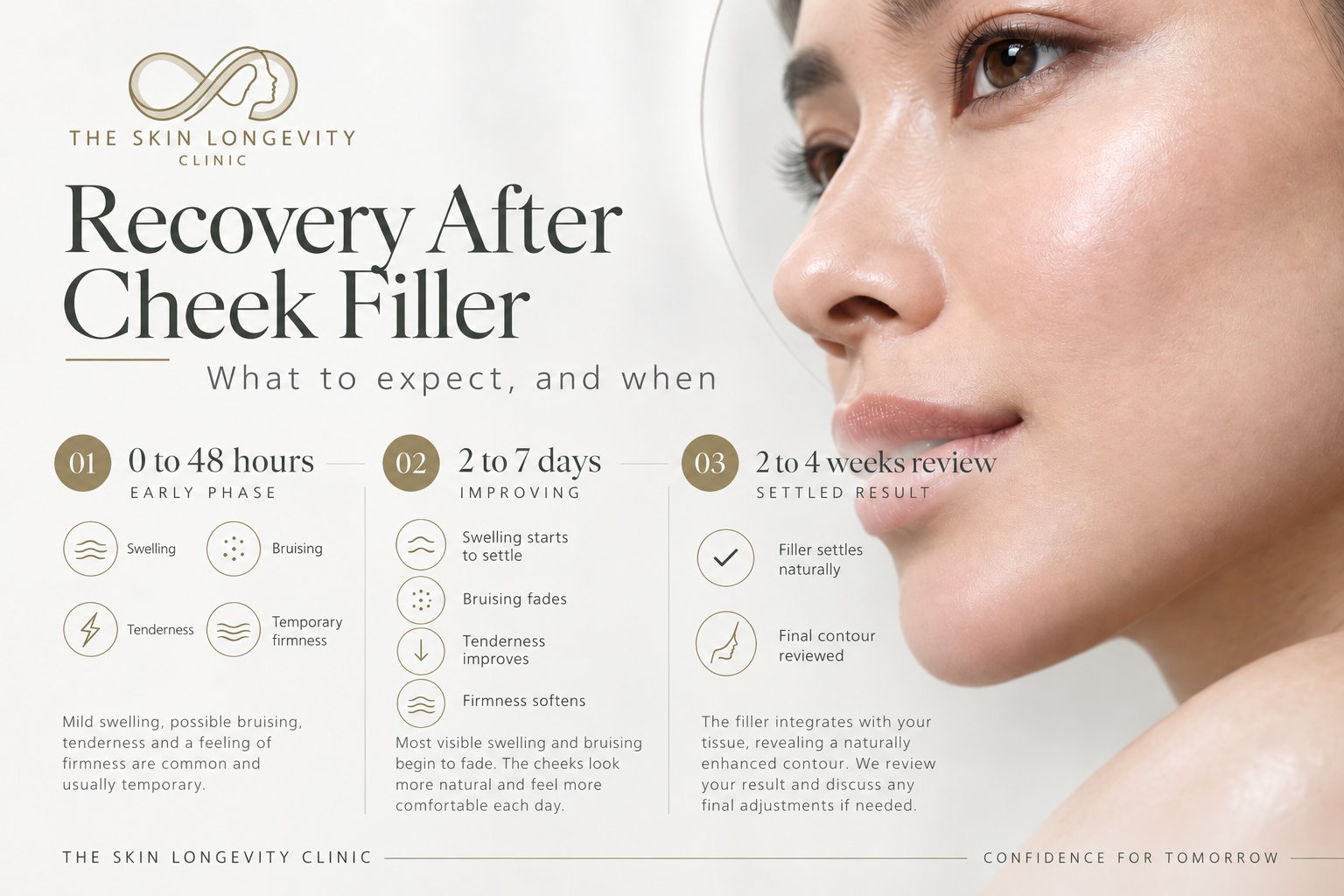
The amount of swelling can vary with the material, injection volume, technique and individual response5. Early fullness therefore needs to be assessed in the context of both the intended treatment and the reaction to the injections5.
A period of improving swelling is different from pain, redness or discolouration that is worsening2,5. A two week recovery estimate is never a reason to postpone assessment of a concerning symptom2.
Why does cheek filler feel firm or lumpy?
Firmness and tenderness were among the common reactions recorded in the cheek augmentation trial1. A persistent, distinct lump can also result from filler placement, excess volume, inflammation or infection, which require different approaches5.
Contact the treating clinician about a lump that persists or concerns you, and explain when it appeared and whether it is changing5. A lump that becomes red, warm, painful or increasingly swollen warrants prompt examination rather than an attempt to massage it flat5.
Can cheek filler cause puffiness under the eyes?
The lower eyelid and upper cheek contain lymphatic pathways that help drain fluid4. Filler placement in this region can interfere with drainage and contribute to swelling around the lower eyelid or above the cheekbone4.
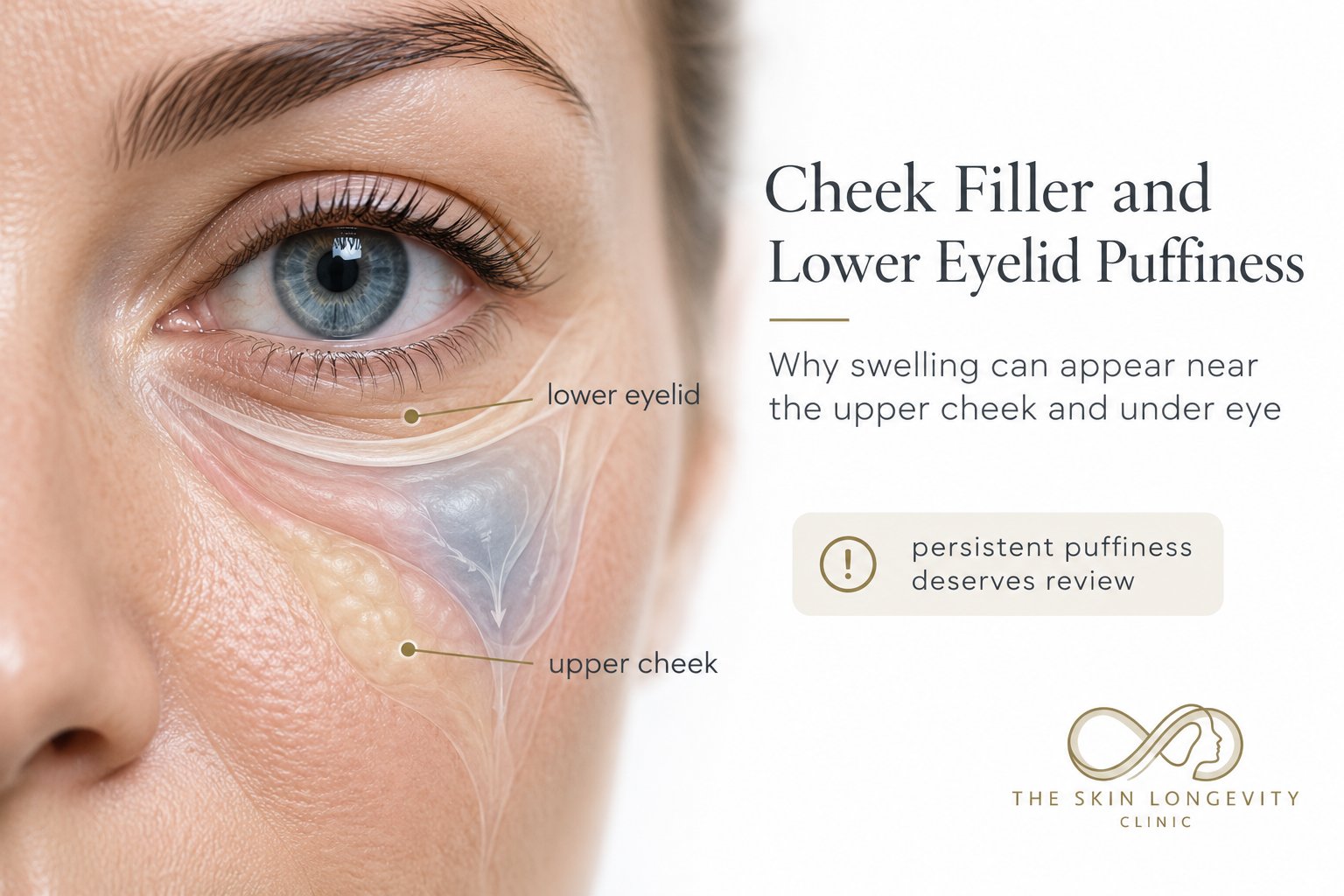
Persistent fluid accumulation over the upper cheek is sometimes described as malar oedema4. Existing puffiness, the amount and properties of the filler, and its position within the tissues can influence this problem4.
A review should consider cheek injections together with any previous tear trough treatment4. New puffiness alone does not establish that filler has migrated, because fluid retention and inflammatory reactions are other possible explanations4,5.
Some lower eyelid swelling develops weeks or months after injections rather than during the initial recovery period4. Tell the assessing doctor about older filler treatments even when the area had previously felt settled4.
Which symptoms need urgent medical attention?
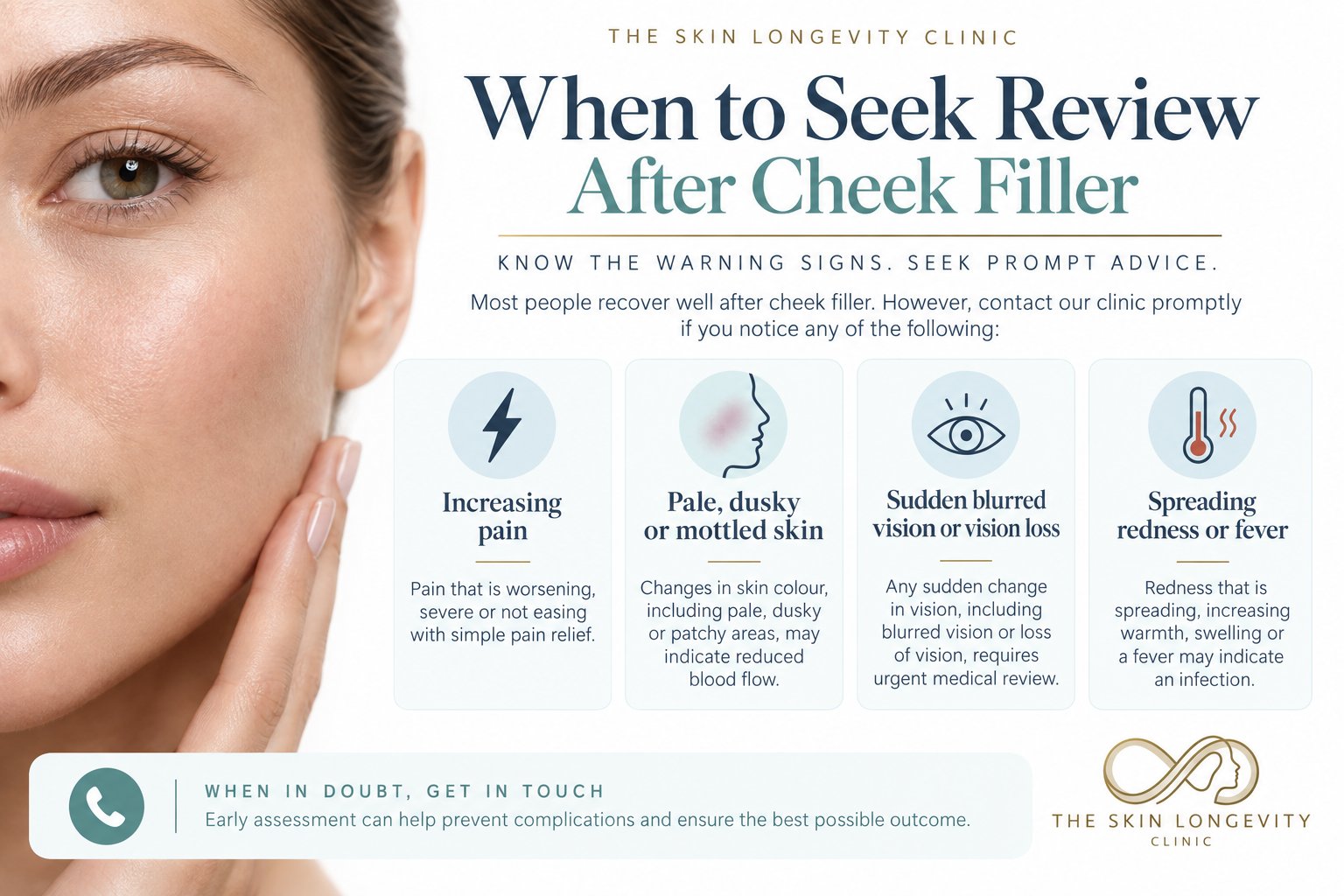
A vascular complication occurs when filler obstructs blood supply, potentially causing tissue injury2. Rapid recognition and treatment are important, and concerning skin changes deserve assessment even when pain is mild2,5.
| What you notice | What to do |
|---|---|
| Sudden blurred vision, double vision, loss of vision, new weakness or difficulty speaking | Seek emergency care immediately and call 995 in Singapore. Explain that you recently received a facial filler injection3,9. |
| Breathing difficulty or rapidly developing tongue or throat swelling | Call 995 for emergency assistance5,9. |
| Increasing or severe pain, unusually pale skin, or a spreading dusky or mottled purple pattern | Contact the treating doctor for immediate assessment. Attend an emergency department if immediate clinical help is unavailable2. |
| Spreading redness, increasing warmth, discharge, fever or a painful swollen lump | Obtain medical assessment the same day because infection or an inflammatory complication may require treatment5. |
| Persistent puffiness, firmness or unevenness without worsening symptoms | Contact the treating clinician to arrange an examination rather than attempting to correct the area yourself4,6. |
Visual or neurological symptoms should prompt emergency assessment without waiting for the clinic to reopen3. Current consensus guidance emphasises transfer to an emergency department without delay when these complications are suspected3.
What aftercare is appropriate after cheek filler?
Many routine aftercare recommendations come from expert consensus rather than trials comparing different recovery routines6,7. Follow the written advice for your particular procedure, including any additional treatment performed at the same appointment6.
Cleansing, makeup and pressure
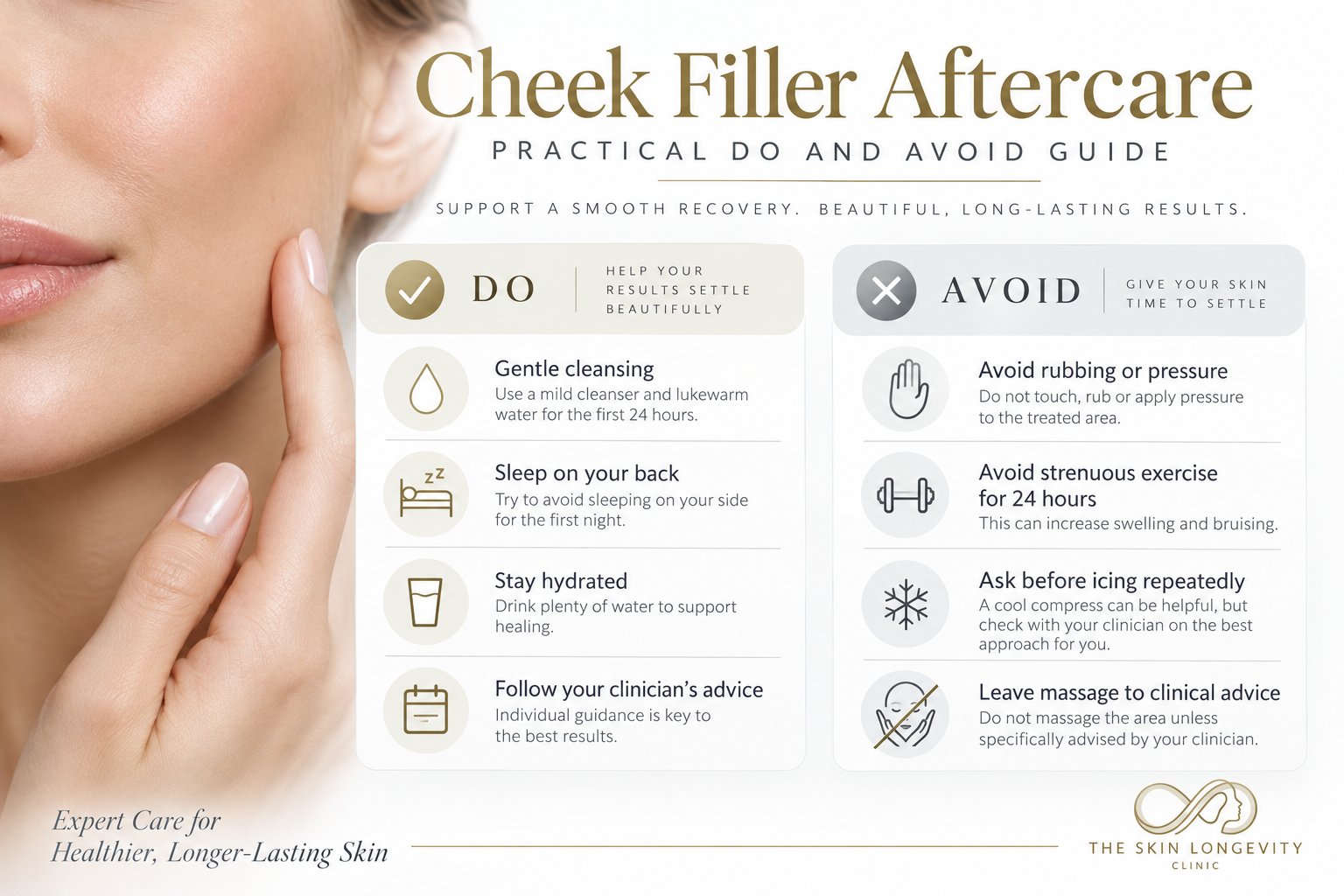
Use gentle cleansing and avoid rubbing or repeatedly pressing the treated areas6. Published consensus advises keeping makeup off for the remainder of the treatment day and avoiding sleeping face down or rubbing the face during the first week6.
Leave persistent lumps or contour irregularities for the clinician to assess rather than using firm massage or facial tools to reshape them6. Advice for HA filler should also be distinguished from instructions given for other injectable materials.
Exercise
Expert consensus recommends avoiding strenuous exercise for the first twenty four hours after HA filler to reduce bruising and swelling7. Return to activity should also take account of symptoms, with unexpected pain or skin changes assessed before resuming demanding exercise2,7.
Cold compresses
Published recommendations differ on cooling: some support brief cold compresses for mild swelling, while another consensus cautions that icing may obscure signs of reduced circulation5,6. Ask the treating clinician whether cooling is appropriate, and seek assessment rather than repeatedly icing worsening symptoms2,6.
Medicines
Ask the treating doctor or pharmacist which pain relief is suitable alongside your usual medicines7. Continue prescribed blood thinning treatment unless the prescribing clinician advises otherwise, rather than stopping it independently because of bruising5.
When should the cheeks be reviewed?
Published consensus recommends review at approximately two to four weeks for patients receiving filler in a new area6. Symptoms that are worsening or unexpected should be assessed earlier rather than saved for that appointment6.
A review can consider the remaining swelling, any palpable irregularities and the contour before further treatment is discussed6. Adding more filler should follow assessment rather than be used automatically to correct an early difference between the cheeks8.
For background on treatment goals, read our guide to cheek fillers in Singapore. Dr Rachel Ho’s cheek filler review explores the wider questions about volume, contour and treatment limitations.
Does persistent swelling mean the filler needs dissolving?
Hyaluronidase can break down HA filler and may be considered for selected cases of unwanted fullness, nodules or persistent swelling8. The decision depends on the cause of the problem and the material involved, rather than the presence of puffiness alone8.
Some cases require repeated treatment, and dissolving can reduce the intended cosmetic effect as well as the unwanted fullness8. Hyaluronidase can also cause adverse reactions, including allergy, so it requires a clinical assessment and discussion of risks8.
Read Dr Rachel Ho’s explanation of dissolving fillers with hyaluronidase for further detail. The ability to dissolve HA should not be interpreted as a guarantee that tissue injury or visual loss from a vascular complication can be reversed3,8.
Can swelling return after the initial recovery?
Delayed inflammatory nodules and swelling can develop after an area initially appears to have recovered5,8. These reactions may involve inflammation, infection or an immune response, and their appearance alone may not establish the cause5,8.
Report when the swelling began, whether it comes and goes, and whether it is accompanied by redness, warmth or discomfort. Bring records of previous filler treatments so the clinician can consider the material, location and timing during assessment5.
Contacting The Skin Longevity Clinic about recovery
For concerns following treatment at The Skin Longevity Clinic, telephone +65 6514 2688 during the published consultation hours10. These are Monday to Friday, 9.30 am to 5.30 pm, and Saturday, 9 am to 1 pm, with the clinic closed on Sundays and public holidays10.
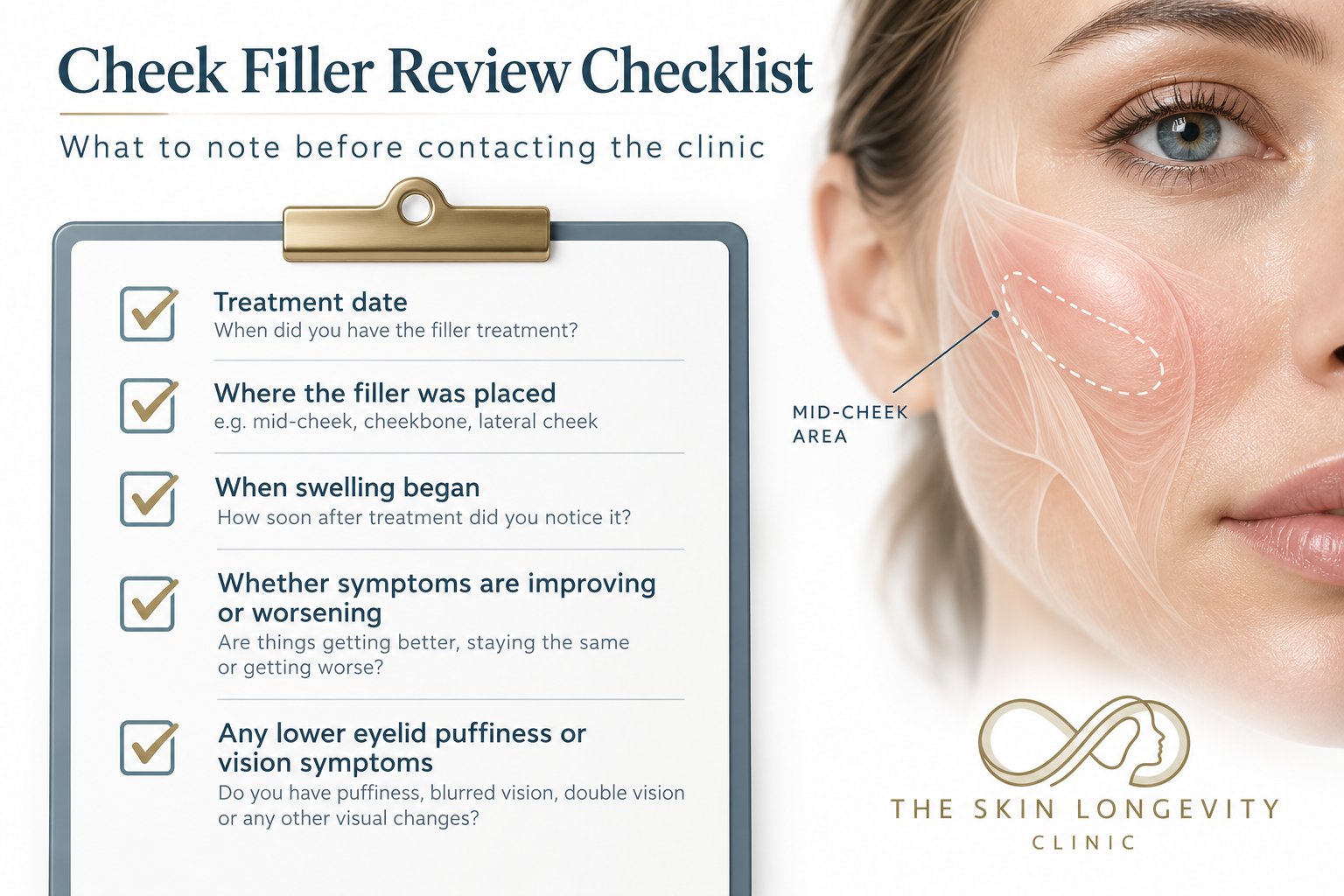
When contacting the clinic, explain the treatment date, when the symptoms started and whether they are improving or worsening. Keep any treatment records available, particularly when previous injections were performed elsewhere.
The clinic’s contact page lists its location and current appointment arrangements. Our guide to your first aesthetic consultation includes questions to clarify about reviews and ongoing care.
Emergency symptoms require emergency care rather than an email or a wait for the next appointment3,9. Before leaving a filler appointment, confirm the arrangements for obtaining help outside normal clinic hours6.
References
- Jones D, Palm M, Cox SE, et al. Safety and Effectiveness of Hyaluronic Acid Filler via Cannula for Cheek Augmentation. Randomised controlled study. Dermatologic Surgery. 2021;47:1590 to 1594.
- Murray G, Convery C, Walker L, Davies E. Guideline for the Management of Hyaluronic Acid Filler Induced Vascular Occlusion. Journal of Clinical and Aesthetic Dermatology. 2021;14:E61 to E69.
- Sansome S, Clague M, Convery C, et al. Consensus Guidelines for the Management of Tissue Filler Induced Vision Loss in the United Kingdom. Aesthetic Surgery Journal. 2026;46:563 to 568.
- Woodward J, Cox SE, Kato K, et al. Infraorbital Hollow Rejuvenation: Considerations, Complications, and the Contributions of Midface Volumization. Aesthetic Surgery Journal Open Forum. 2023;5:ojad016.
- Urdiales Gálvez F, Escoda Delgado N, Figueiredo V, et al. Treatment of Soft Tissue Filler Complications: Expert Consensus Recommendations. Aesthetic Plastic Surgery. 2018;42:498 to 510.
- Goodman GJ, Liew S, Callan P, Hart S. Facial aesthetic injections in clinical practice: Pretreatment and posttreatment consensus recommendations to minimise adverse outcomes. Australasian Journal of Dermatology. 2020;61:217 to 225.
- Signorini M, Liew S, Sundaram H, et al. Global Aesthetics Consensus: Avoidance and Management of Complications from Hyaluronic Acid Fillers. Plastic and Reconstructive Surgery. 2016;137:961e to 971e.
- Kroumpouzos G, Treacy P. Hyaluronidase for Dermal Filler Complications: Review of Applications and Dosage Recommendations. JMIR Dermatology. 2024;7:e50403.
- Singapore Civil Defence Force. Emergency Medical Services.
- The Skin Longevity Clinic. Contact details and consultation hours.