



20 Sep Subcision for Acne Scars in Singapore: Suitability, Recovery and Results
By Dr Rachel Ho | Aesthetic Doctor, Founder, The Skin Longevity Clinic, Singapore
Some acne scars cast a shadow even when the skin around them feels smooth. Before choosing another resurfacing treatment, it can be useful to ask whether attachments beneath the skin are contributing to the depression.
Subcision is a procedure that releases fibrous attachments beneath selected depressed scars1. Our acne scar treatment guide explains the broader plan, including where procedures such as fractional RF microneedling may address a different part of the texture concern.
Which acne scars may suit subcision?
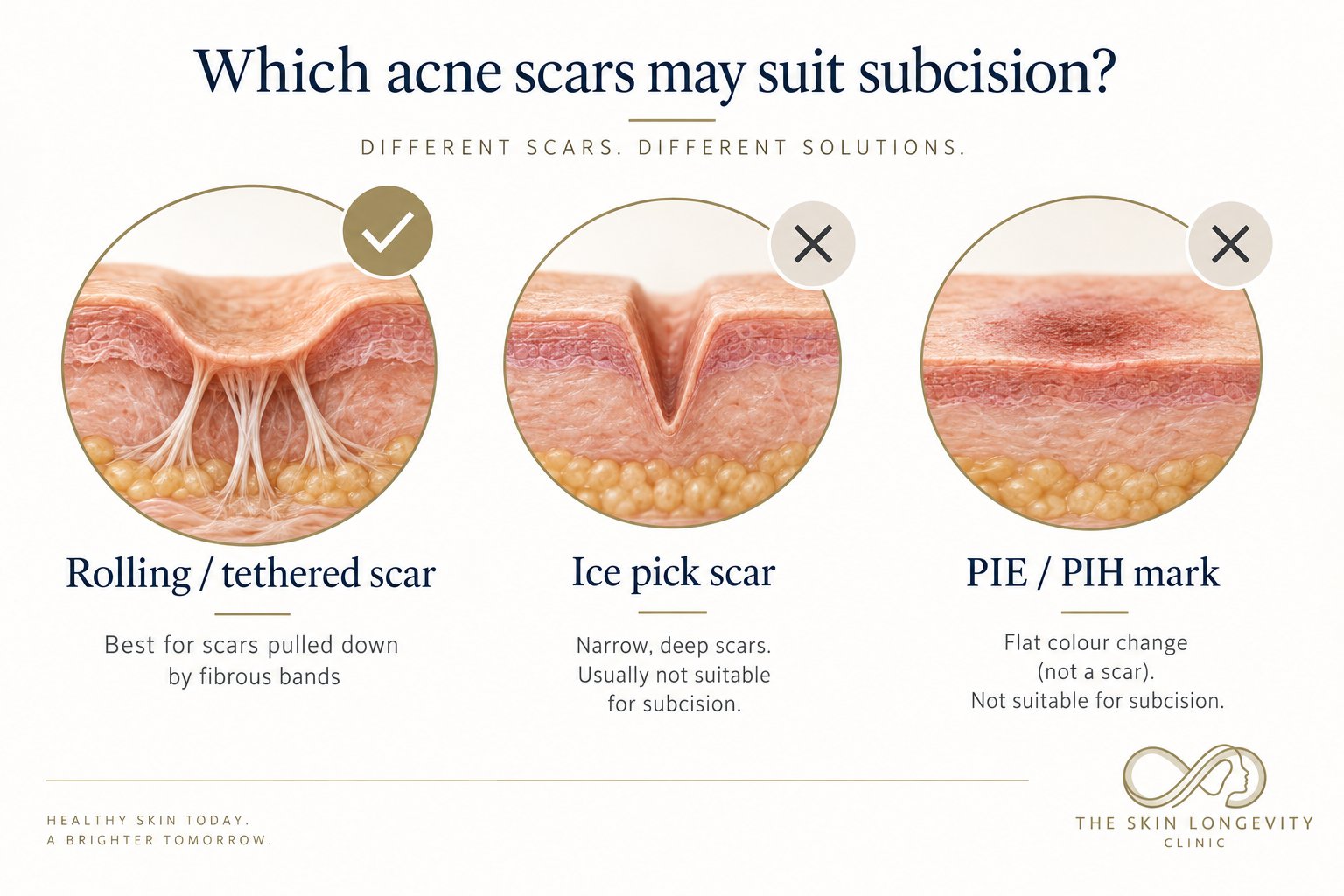
Subcision is most commonly discussed for tethered, rolling acne scars, rather than being a universal treatment for every pit or mark1. Suitability depends on examining the contour, attachments and surrounding tissue2.
Point out the areas that bother you under ordinary lighting and explain which previous procedures you have had. Our scar identification guide helps describe the patterns without deciding treatment from appearance alone.
What happens during subcision?
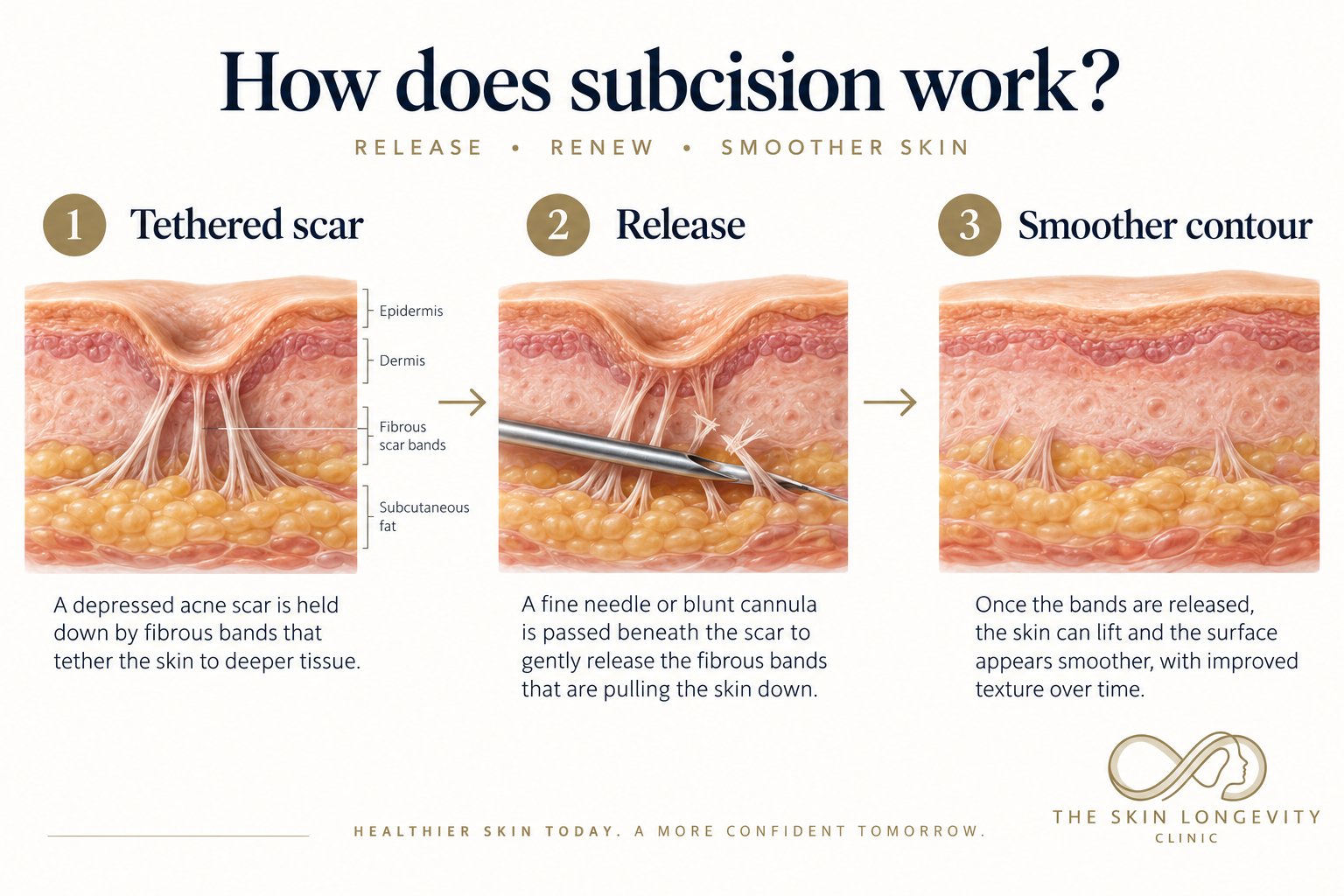
After appropriate preparation and anaesthesia, a clinician uses a selected instrument beneath the skin to release the attachments contributing to the depression1. The process also produces a healing response, so the initial appearance and the later result need to be assessed separately1.
The consultation should cover the proposed area, the type of anaesthesia and the expected recovery. Ask which scars are being targeted and how the doctor will assess whether another treatment is needed later.
Needle or cannula subcision?
Published techniques use different instruments, including needles and cannulas, with studies varying in the scars and methods assessed1. This makes the instrument name alone an incomplete basis for predicting the result1.
Ask why a particular approach is being proposed for your scars. A clear explanation of the intended release and risks is more useful than a claim that one instrument is always the best.
How does subcision differ from laser or RF microneedling?
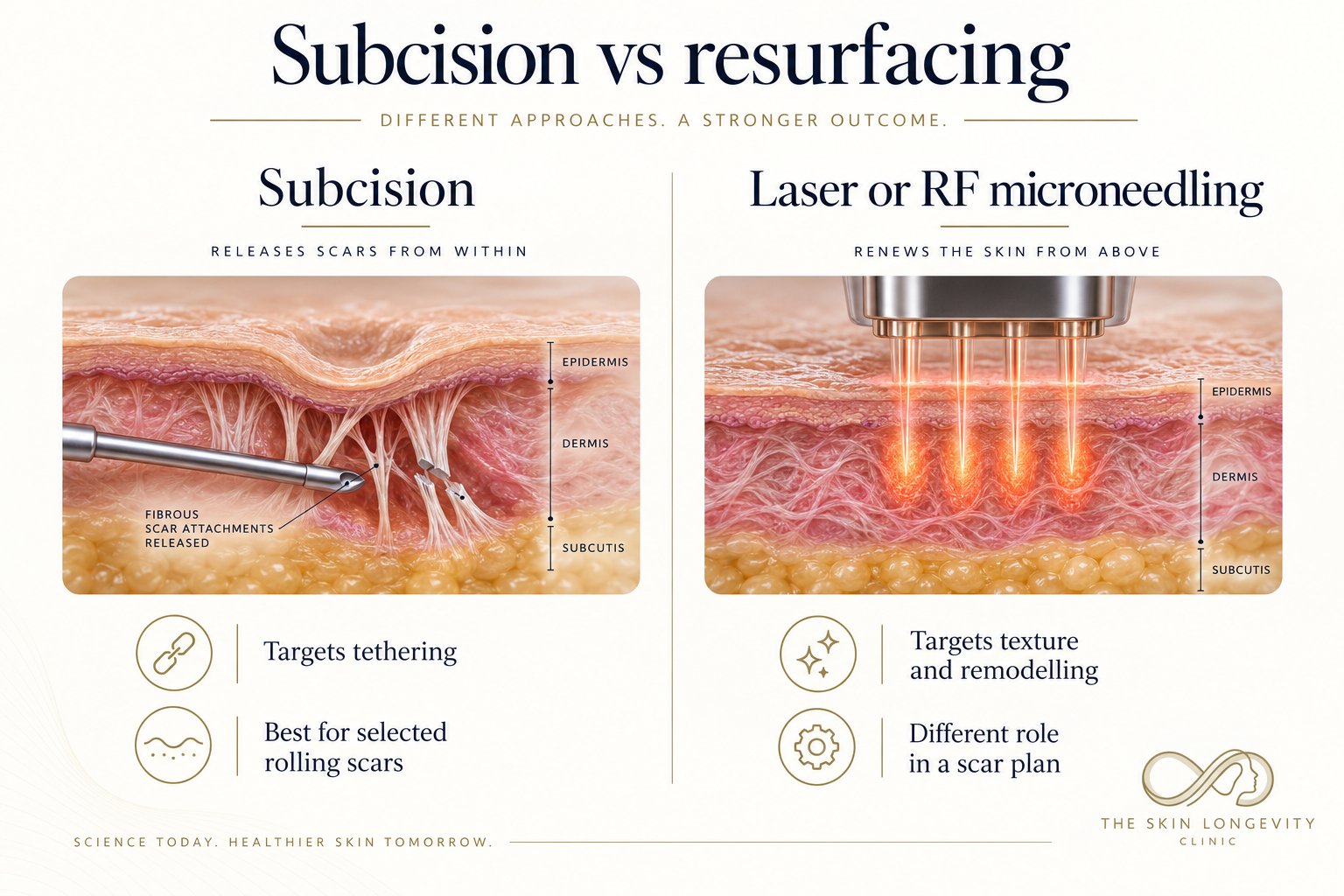
Subcision addresses attachments beneath selected scars, whereas resurfacing and fractional treatments act through different forms of tissue remodelling3. A treatment plan may therefore distinguish the tethering from residual edges, texture or volume concerns3.
Discuss each component separately when more than one procedure is proposed. The acne scar treatment guide contains the broader comparison, so this page remains focused on the subcision decision.
Does subcision always need filler or another procedure?
A comparative clinical study reported greater improvement with subcision combined with fractional CO2 laser or hyaluronic acid than with subcision alone4. Its findings support considering combinations for suitable scars, rather than establishing that every patient needs filler or the same sequence4.
Ask what a proposed additional treatment would contribute and whether it can be considered after the initial result is reviewed. Consent, cost and recovery should be explained for each procedure rather than folded into an unexplained package.
What is recovery like after subcision?
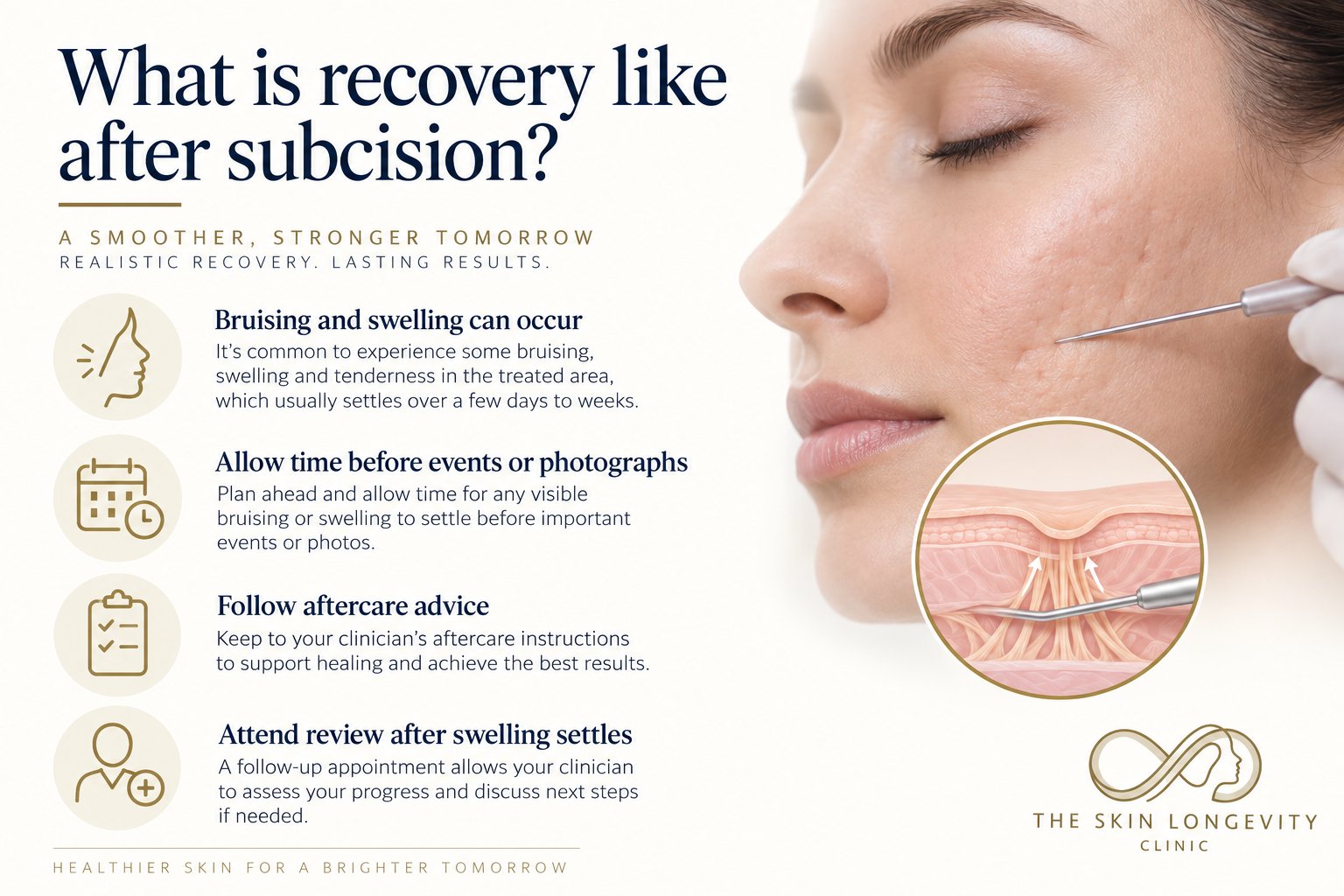
Bruising, swelling and tenderness can occur after subcision, and recovery varies with the extent and technique used2. Early swelling can temporarily change the contour, so an immediate photograph should not be treated as the final result1.
| Planning question | What to clarify before treatment |
|---|---|
| Work and photographs | How much visible bruising or swelling is expected for the area proposed? |
| Exercise and travel | When can usual activities resume, and can follow up be attended? |
| Skincare and makeup | What can be applied to the entry sites and when? |
| Review | When will the contour be reassessed after early swelling settles? |
| New symptoms | Who should be contacted during and outside clinic hours? |
Follow the treating doctor’s written aftercare instructions. Ask before massaging the area or using home devices, because the appropriate care depends on the procedure performed.
What risks should be discussed?
Bruising and haematoma are recognised concerns, and technique must account for nearby blood vessels and nerves1. Ask about risks relevant to the proposed area, including persistent lumps, infection, pigment change and further scarring.
Mention bleeding disorders, medicines that affect bleeding, previous fillers or threads, unusual scars and any recent procedures. Ask the prescribing clinician before stopping a medicine, and seek prompt review for worsening pain, rapidly increasing swelling or other unexpected changes after treatment.
How much improvement can you expect?
Studies assess outcomes using different scar scales, photographs and follow up periods, which limits comparison of headline improvement percentages3. The practical objective is improvement in selected depressions, with any remaining texture considered at review3.
Ask to agree on the areas being assessed and use comparable lighting for photographs. This makes it easier to discuss a specific change than relying on a general impression of smoother skin immediately after treatment.
Is one session enough?
Subcision studies use different treatment courses, and repeat treatment may be considered when residual tethering remains1. A fixed session count cannot be inferred from the procedure name alone.
Request an initial plan with a review point rather than treating the largest available package as the default. Discuss how the next step would change if bruising, response or preferences differ from expectations.
Subcision cost in Singapore
A useful quotation should identify the treatment area, proposed technique, anaesthesia and review arrangements. Any filler, laser or RF treatment should be explained and costed separately so you can understand what each component is meant to achieve.
Ask whether follow up and aftercare are included, whether tax applies and what a further session would cost. These questions help compare like with like without assuming that every quotation describes the same procedure.
Discussing suitability
Bring a list of previous scar treatments and explain what improved, what remained and how you recovered. Older photographs can help clarify the history when the scars have already been treated several times.
Contact The Skin Longevity Clinic to ask about scar assessment with Dr Rachel Ho and whether subcision is appropriate for your concerns. The decision should explain the target scars, realistic improvement and the reason for any additional treatment.
In this series: acne scars
References
-
Vempati A, Zhou C, Tam C, et al. Subcision for Atrophic Acne Scarring: A Comprehensive Review of Surgical Instruments and Combinatorial Treatments. Clin Cosmet Investig Dermatol. 2023;16:125–134. doi:10.2147/CCID.S397888. Read the source
-
Dadkhahfar S, Robati RM, Gheisari M, Moravvej H. Subcision: Indications, adverse reactions, and pearls. J Cosmet Dermatol. 2020;19(5):1029–1038. doi:10.1111/jocd.13308. Read the source
-
Bhargava S, Cunha PR, Lee J, Kroumpouzos G. Acne Scarring Management: Systematic Review and Evaluation of the Evidence. Am J Clin Dermatol. 2018;19:459–477. doi:10.1007/s40257-018-0358-5. Read the source
-
Abdelwahab AA, Omar GAB, Hamdino M. A combined subcision approach with either fractional CO2 laser (10,600 nm) or cross-linked hyaluronic acid versus subcision alone in atrophic post-acne scar treatment. Lasers Med Sci. 2022;38(1):20. Published online 24 December 2022. doi:10.1007/s10103-022-03677-y. Read the source