

28 Jul PRX Plus for Dark Spots: Hyperpigmentation and Skin Brightening in Singapore
By Dr Rachel Ho | Aesthetic Doctor, Founder, The Skin Longevity Clinic, Singapore
Dark spots are one of the most common reasons patients ask for skin brightening treatments in Singapore. Some patients describe brown acne marks, others point to sun spots, melasma, freckles or uneven skin tone that makes the skin look tired even when it feels smooth.
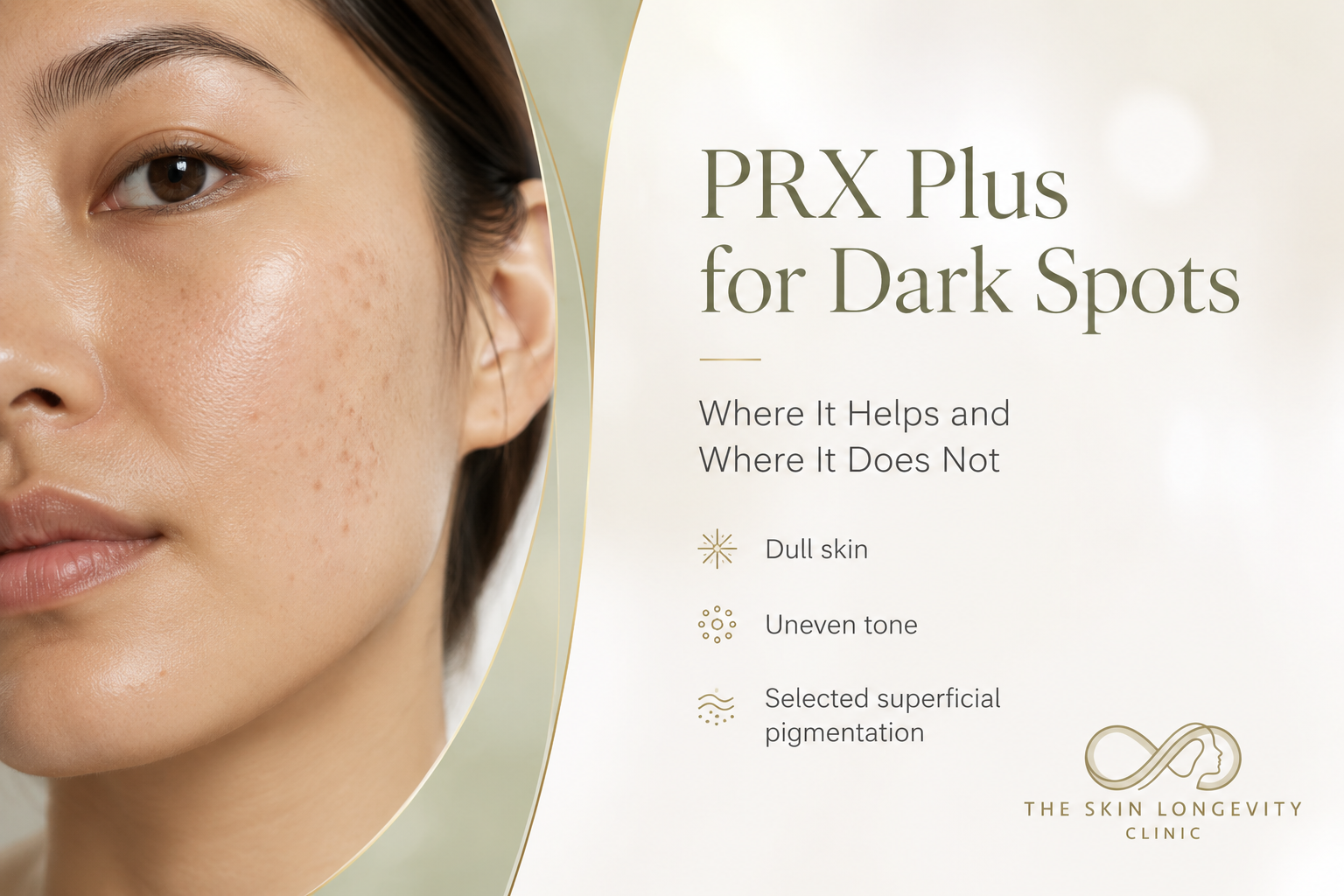
PRX Plus can be useful in this space, but it should be understood correctly. It is best positioned as a low downtime skin renewal and brightening treatment for dull skin, uneven tone and selected superficial pigmentation concerns. It should not replace diagnosis, sunscreen, pigment regulating skincare or laser treatment when the pigmentation type needs something more targeted.
Key Takeaways
- PRX Plus may help dull skin, uneven tone, rough texture and selected superficial pigmentation concerns.
- Dark spots need diagnosis because melasma, sun spots, post acne marks and dermal pigmentation respond differently.
- PRX Plus is different from Pico Laser because it supports skin renewal and brightness, while lasers target selected pigment more directly.
- For melasma prone Asian skin, the safest plan reduces pigmentation while avoiding unnecessary inflammation.
- PRX Plus may be part of a long term pigment control plan, but it is not a permanent cure for melasma or deeper pigmentation.
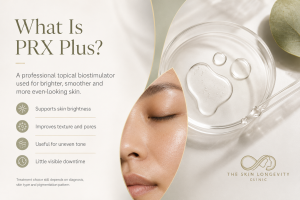
PRX Plus is a professional topical biostimulator used to support brighter, smoother and more even looking skin with little visible downtime in suitable patients.
What is PRX Plus?
PRX Plus is an in clinic topical biostimulator used to improve the appearance of skin brightness, texture, pores, uneven tone and pigmentation prone skin. At The Skin Longevity Clinic, it is performed as part of a doctor led skin health plan, where treatment selection depends on skin type, pigmentation pattern, barrier function and post inflammatory hyperpigmentation risk1.
PRX Plus contains homocysteic acid, ammonium trichloroacetate, citric acid and phytic acid. PRX Plus can be described as a professional topical biostimulator rather than a traditional peeling treatment2.
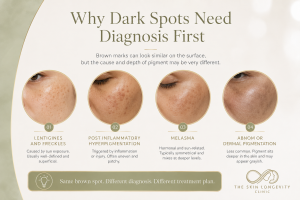
Dark spots can look similar on the surface, but PIH, lentigines, melasma and deeper dermal pigmentation respond to different treatment plans.
Why Dark Spots Need Diagnosis First
Dark spots can look similar on the surface, but the cause and depth of pigment can be very different. Lentigines and freckles are often linked to sun exposure. Post inflammatory hyperpigmentation, or PIH, follows acne, eczema, irritation or procedures. Melasma is usually chronic and trigger sensitive. Dermal pigmentation such as ABNOM sits deeper in the skin.
This distinction changes the treatment plan. A superficial brown mark may improve with topical skincare, peels, PRX Plus or low downtime brightening treatments. A deeper pigment pattern may need selected laser treatment. Melasma needs long term control because ultraviolet light, visible light, heat, hormones and inflammation can trigger recurrence.
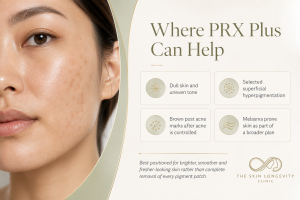
PRX Plus may be considered for dull skin, uneven tone, selected superficial hyperpigmentation and mild brown post acne marks after active acne is controlled.
Where PRX Plus Can Help
1. Dull Skin and Uneven Tone
PRX Plus is often useful when the main concern is dullness, roughness and uneven tone rather than one sharply defined dark spot. Patients may describe skin that looks flat, tired or less clear, even with regular skincare.
In this setting, PRX Plus may improve light reflection, surface smoothness and overall radiance. The result is usually a fresher looking complexion rather than complete removal of every pigment patch.
2. Selected Hyperpigmentation
PRX Plus can improve selected types of pigmentation, especially when pigment is accompanied by dullness or rough texture. This makes it relevant for patients who want brighter looking skin with little visible downtime.
The key is selection. Pigmentation that is very discrete, deep or long standing may respond better to pigment lasers or a combined plan. PRX Plus can still be useful for surrounding skin quality, but it should not be presented as the only answer.
3. Post Acne Marks After Acne is Controlled
Brown post acne marks are a common concern in Asian skin. These marks are usually PIH, where inflammation stimulates pigment production after a pimple has settled.
A systematic review of topical PIH treatments found support for retinoids, hydroxy acids and broad spectrum sunscreen, while also noting that ongoing inflammation can be subtle in darker skin phenotypes3. Another systematic review focused on skin of colour found that PIH treatment remains challenging, and that different modalities have variable results4.
PRX Plus may help selected brown acne marks by supporting tone and surface renewal. Active acne should be controlled first, because new inflammation will keep creating new marks. Pitted acne scars are a separate structural issue and usually need collagen remodelling treatments such as radiofrequency microneedling, fractional resurfacing or subcision.
4. Melasma Prone Skin as Part of a Plan
PRX Plus may be considered in melasma prone skin when the goal is controlled brightening rather than aggressive peeling.
Melasma is a chronic pigmentary condition and treatment results are often difficult to maintain. An evidence based review of melasma treatments found that topical triple combination therapy and hydroquinone remain among the more established options, while chemical peels and laser based devices have mixed results5.
For melasma patients, daily sunscreen is not optional. The American Academy of Dermatology advises visible light protection with tinted sunscreen containing iron oxides, especially for people with darker skin tones, and also recommends gentle skincare because irritation can darken spots6. A review in the Journal of the American Academy of Dermatology also supports tinted sunscreens for visible light induced pigmentation disorders such as melasma and PIH7.
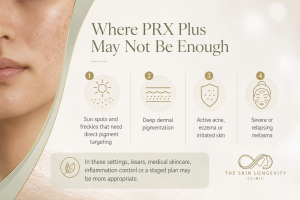
PRX Plus may not be enough for deeper pigmentation, well defined sun spots, active inflammation or severe relapsing melasma, where other treatments may be needed.
Where PRX Plus May Not Be Enough
1. Sun Spots and Freckles That Need Direct Pigment Targeting
Sun spots and freckles often behave differently from diffuse dullness. When the pigment is well defined, a pigment laser such as Pico Laser or Q switched laser cantarget the pigment more directly.
PRX Plus can improve brightness and skin quality, but the most efficient plan may involve chemical peels and laser for the specific spot and PRX Plus for overall tone and texture.
2. Deep Dermal Pigmentation
Dermal pigmentation such as ABNOM or deeper mixed pigmentation is less likely to clear with surface renewal alone. These pigment patterns usually need careful assessment and staged laser planning.
A low downtime brightening treatment can improve the surrounding skin, but deeper pigment should not be treated as though it sits only on the skin surface.
3. Active Acne, Eczema or Irritated Skin
Pigmentation treatment works best when inflammation is controlled. Active acne, eczema, dermatitis, open wounds or a disrupted skin barrier can increase the risk of more pigmentation after procedures.
For these patients, the first step is often calming the skin and treating the trigger. Once the skin is stable, PRX Plus or another brightening treatment can be considered more safely.
4. Severe or Relapsing Melasma
Melasma often requires maintenance rather than a single treatment course. Chemical peels for melasma in darker skin types require caution because of the higher risk of post inflammatory hyperpigmentation8.
PRX Plus may be one part of the plan, but melasma usually needs daily photoprotection, pigment regulating skincare, trigger control and review over time. The aim is stability, not aggressive clearing at the expense of rebound pigmentation.
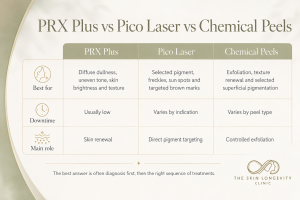
PRX Plus supports skin renewal and brightness, Pico Laser targets selected pigment more directly, and chemical peels provide controlled exfoliation.
PRX Plus vs Pico Laser for Dark Spots
PRX Plus and Pico Laser are often discussed together because both may be used in pigmentation plans. They work differently.
PRX Plus supports skin renewal, brightness and texture. Pico Laser targets selected pigment more directly using short laser pulses. PRX Plus may be better suited for diffuse dullness, uneven tone and low downtime brightening. Pico Laser may is more appropriate for selected brown marks, freckles, sun spots and some pigment patterns after diagnosis.
For some patients, the best answer is not one treatment forever. It may be a sequence, such as skincare and sunscreen first, PRX Plus for tone and texture, then laser for selected pigment if the skin is suitable.
PRX Plus vs Chemical Peels
PRX Plus is often compared with chemical peels because it contains acid based ingredients. Traditional chemical peels rely more on controlled exfoliation and visible peeling, depending on the peel depth and formulation.
PRX Plus is selected when the goal is skin brightening and renewal with little visible peeling for most suitable patients. Some patients may still experience mild redness, tightness, dryness or light flaking. That is why aftercare is still important, especially in pigmentation prone Asian skin.
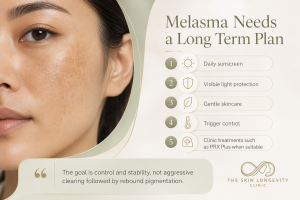
Melasma prone skin needs long term pigment control, daily sunscreen, visible light protection, gentle skincare and carefully selected clinic treatments.
What Happens During PRX Plus Treatment at The Skin Longevity Clinic
Treatment begins with skin assessment. The doctor examines the pigmentation pattern, skin tone, barrier condition, acne activity, melasma tendency, sensitivity, current skincare and treatment history.
The skin is cleansed and prepared. PRX Plus is then applied using a controlled in clinic technique. Patients may feel mild warmth, tingling or tightness. After treatment, the skin is supported with barrier care and sunscreen.
For pigmentation prone skin, aftercare is part of the result. Avoid harsh scrubs, exfoliating acids, retinoids, excessive heat, tanning and unnecessary sun exposure for a few days. Daily sunscreen remains essential.
PRX Plus may not be enough for deeper pigmentation, well defined sun spots, active inflammation or severe relapsing melasma, where other treatments may be needed.
Who May Be Suitable for PRX Plus for Dark Spots?
PRX Plus may be considered for patients with dull skin, uneven tone, selected superficial pigmentation, mild post acne brown marks, melasma prone skin as part of a broader plan, rough texture, enlarged looking pores or low downtime brightening needs.
Patients may need another treatment first if they have active acne, eczema, dermatitis, recent aggressive resurfacing, open skin, unstable melasma, deeper dermal pigmentation or a history of irritation after procedures.
Frequently Asked Questions about PRX Plus
Can PRX Plus remove dark spots?
PRX Plus may improve selected superficial pigmentation and overall skin brightness. Dark spots caused by deeper pigment, sun spots, freckles or melasma may need laser, medical skincare or a longer pigment control plan.
Is PRX Plus good for hyperpigmentation?
PRX Plus may help hyperpigmentation when the pigment is superficial and accompanied by dullness or uneven tone. Diagnosis is still important because different pigmentation types respond differently.
Can PRX Plus treat melasma?
PRX Plus may be considered for melasma prone skin as part of a pigment control plan. Melasma still requires sunscreen, visible light protection, gentle skincare and maintenance.
Is PRX Plus better than Pico Laser for pigmentation?
PRX Plus and Pico Laser have different roles. PRX Plus supports tone, texture and brightness, while Pico Laser targets selected pigment more directly.
Can PRX Plus worsen pigmentation?
Any treatment that irritates the skin can potentially worsen pigmentation in susceptible skin. Careful patient selection, controlled technique and proper aftercare reduce this risk.
Dr Rachel Ho’s Takeaway
PRX Plus is useful when the goal is brighter, smoother and more even looking skin with little visible downtime. It is especially relevant for patients who want controlled skin renewal rather than aggressive peeling.
For dark spots, the starting point should always be diagnosis. A brown mark may be melasma, PIH, a sun spot, freckle or dermal pigmentation. Once we know what we are treating, PRX Plus can be placed correctly within a skin longevity plan, either as the main brightening treatment or as one part of a broader pigmentation strategy.
References
- The Skin Longevity Clinic. PRX Plus in Singapore.
- The Skin Longevity Clinic. PRX Plus: The Needle free Skinbooster Treatment for Brighter Skin.
- Maymone MBC, et al. Topical treatment for postinflammatory hyperpigmentation: a systematic review. Journal of Dermatological Treatment. 2022.
- Mar K, et al. Treatment of Post Inflammatory Hyperpigmentation in Skin of Colour: A Systematic Review. Journal of Cutaneous Medicine and Surgery. 2024.
- McKesey J, et al. Melasma Treatment: An Evidence Based Review. American Journal of Clinical Dermatology. 2020.
- American Academy of Dermatology. Melasma self care.
- Lyons AB, et al. Photoprotection Beyond Ultraviolet Radiation: A Review of Tinted Sunscreens. Journal of the American Academy of Dermatology. 2020.
- Sarkar R, et al. Chemical peels for melasma in dark skinned patients. Journal of Cutaneous and Aesthetic Surgery. 2012.