Polynucleotide Skin Boosters in Singapore: Treatment and Results
Polynucleotide (PN) and PDRN skin boosters for skin texture, fine lines and overall skin quality.
Polynucleotide skin boosters are injectable preparations containing purified DNA derived polymers1. Clinical studies have examined their effects on skin texture, fine lines and other measures of skin quality2,3. These treatment goals differ from the structural volume correction provided by conventional hyaluronic acid fillers4.
For someone considering PN or PDRN skin boosters in Singapore, the starting point is the change they would like to see. Explain whether your main concern is fine lines, uneven texture or a hollow, and ask how the proposed treatment would address it.
Who might consider polynucleotide skin boosters?
PN treatment may be considered when the concern involves fine lines or skin texture, the features examined in published clinical studies2,3. Assessment should distinguish these concerns from changes in facial volume, for which conventional fillers have a different role4.
During consultation, explain which areas bother you and how much change you would consider worthwhile. The recommendation should identify the expected benefit, its limitations and whether another approach would better address your concern.
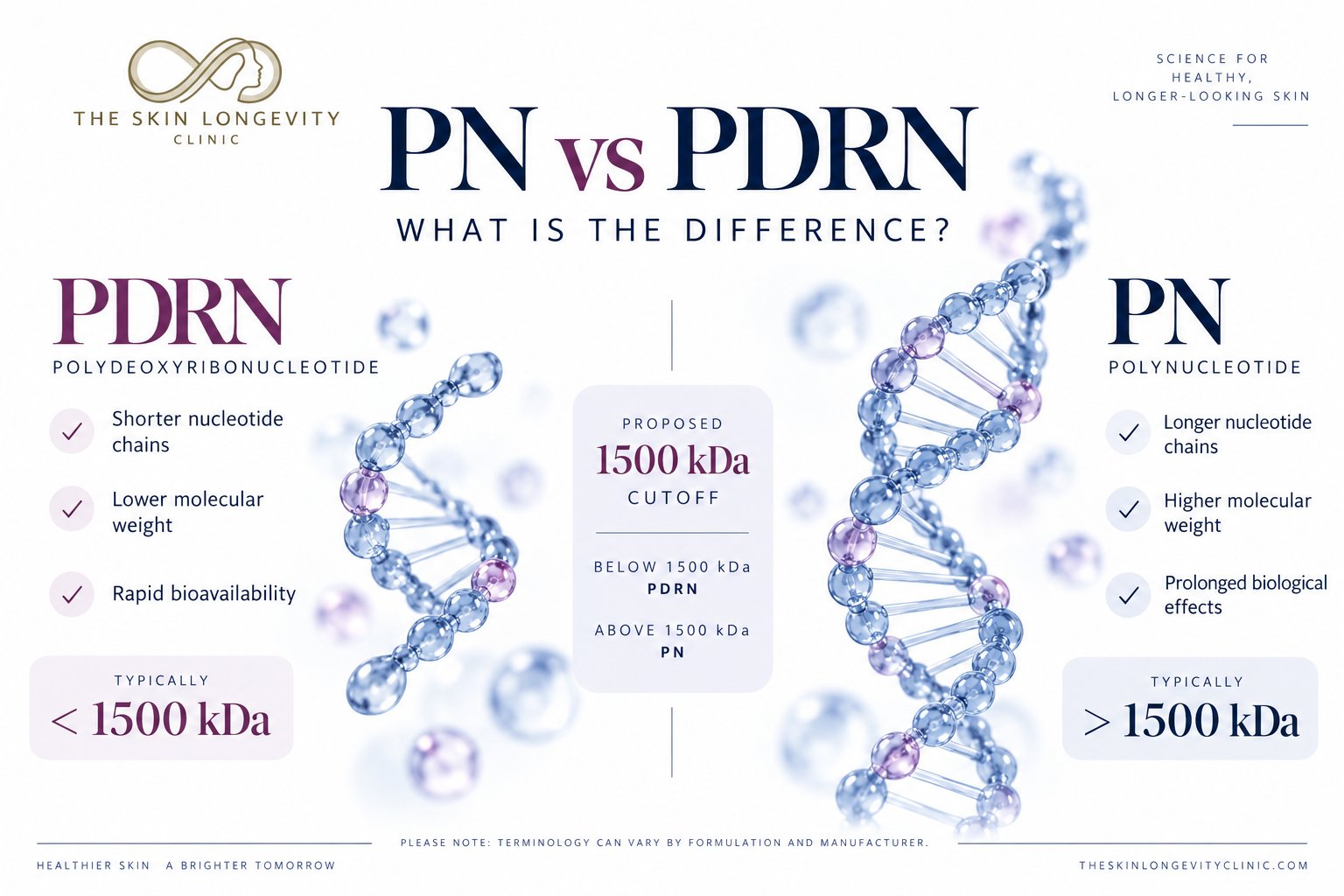
PN and PDRN describe DNA derived polymers of different chain length. The proposed 1500 kDa cutoff is a naming convention, not a clinical grading.
PN stands for polynucleotide, while PDRN means polydeoxyribonucleotide1. Both terms describe DNA derived materials, commonly purified from salmon or trout sources, but inconsistent naming has created confusion in the literature1.
A 2025 review proposed using PDRN for polymers below 1500 kDa and PN for longer polymers at or above that molecular weight1. This is a proposed naming convention, so the formulation being injected remains more informative than the category name alone1.
Ask which preparation is being recommended and what it contains. Dr Rachel Ho’s review of PN and PDRN injections explains the terminology and research in greater detail.
How do polynucleotides work?
Research into these materials has examined nucleotide recycling and signalling involved in tissue repair1. Proposed effects include changes in fibroblast activity and production of the skin’s supporting proteins1. These mechanisms provide a biological rationale for treatment, while clinical studies are needed to establish the visible benefit of a particular preparation1.
What do studies show about PN skin booster results?
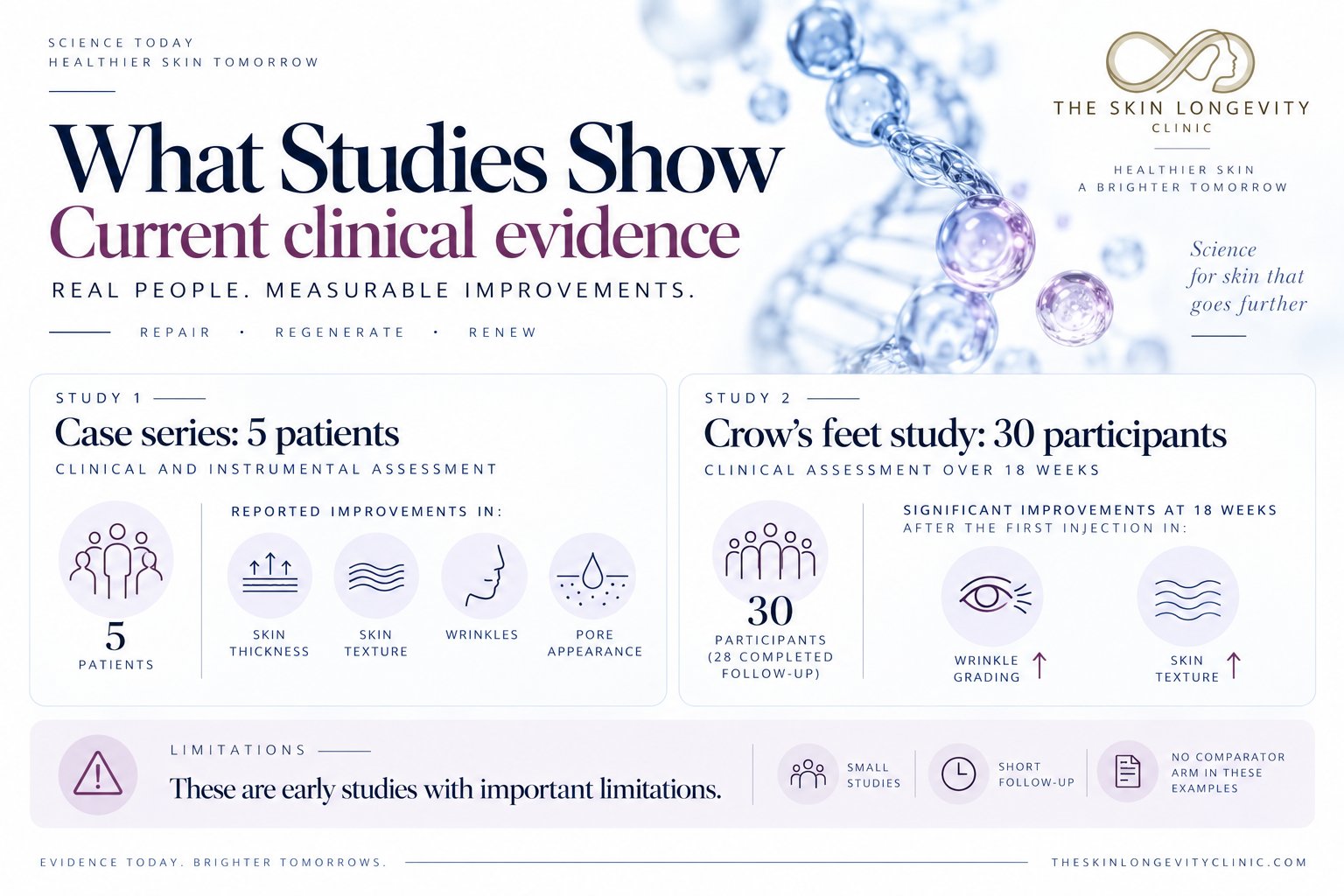
Current polynucleotide evidence comes from small studies with short follow-up.
A small case series treated five Korean women with long chain PN injections3. The authors reported improvements in different skin measurements, including thickness, texture, wrinkles and pore appearance, with the findings varying between participants3. The small sample and absence of a comparison group limit how broadly those results can be applied3.
A separate study enrolled thirty people with crow’s feet, of whom twenty eight completed follow up2. At eighteen weeks after the first injection, investigators recorded improvements in wrinkle grading and camera measurements of skin texture2. This study also lacked a comparator, so it provides preliminary evidence rather than a dependable success rate for every patient2.
Can PN skin boosters help under eye concerns?
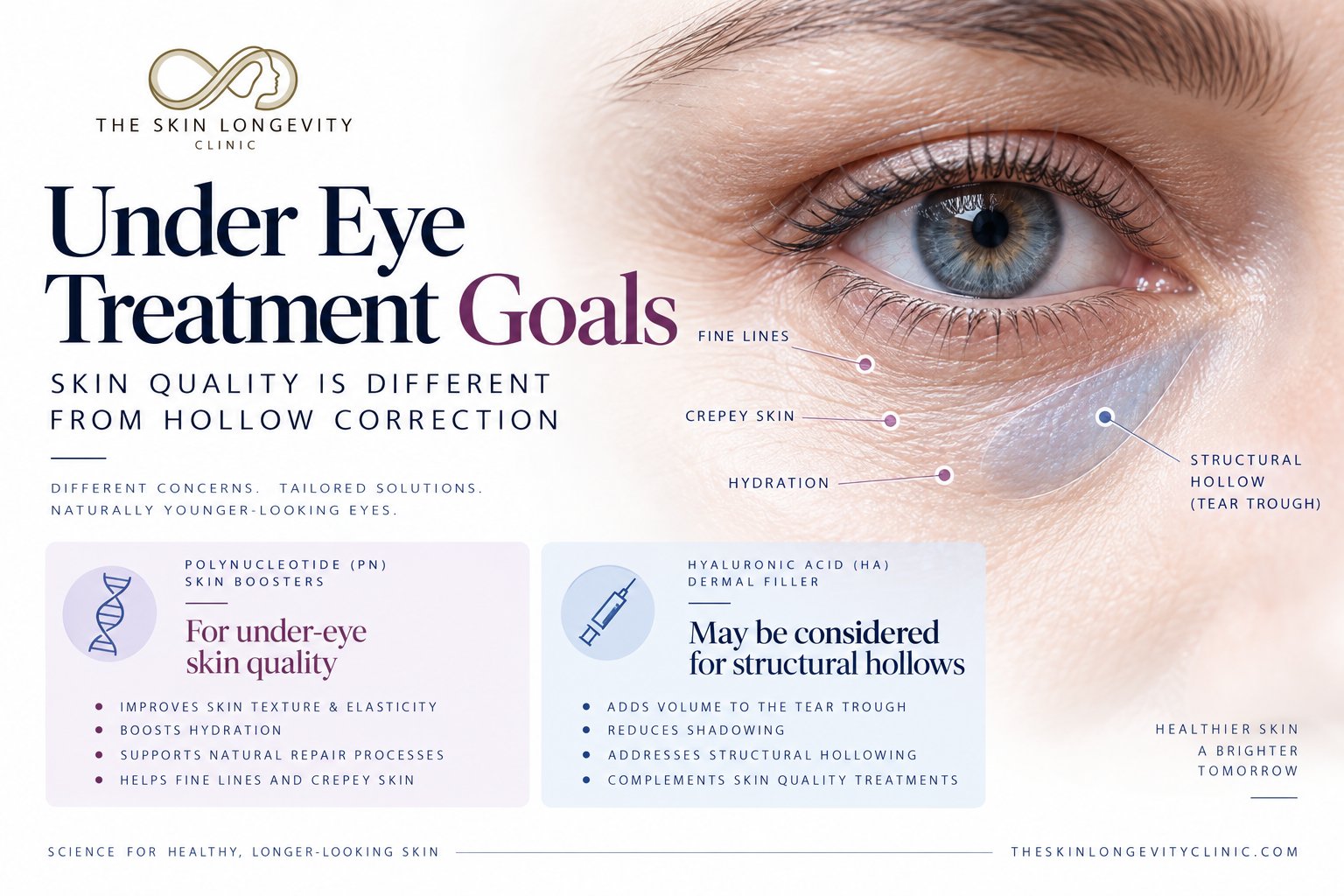
Under-eye skin quality and structural hollowing are separate problems with separate treatments.
Research on PN around the eyes has focused on skin quality, including fine lines, hydration and elasticity4. A review comparing PN with HA fillers distinguishes these goals from correcting a structural hollow and highlights the limited direct comparative evidence4.
The crow’s feet study found no significant change in measured melanin levels2. Improvement in texture should therefore be distinguished from evidence of pigment removal2.
During assessment, identify whether the concern is a hollow, fine lines, colour or puffiness. Ask the doctor to explain which feature the proposed injections would address and what would remain unchanged.
How does PN compare with HA skin boosters and dermal fillers?
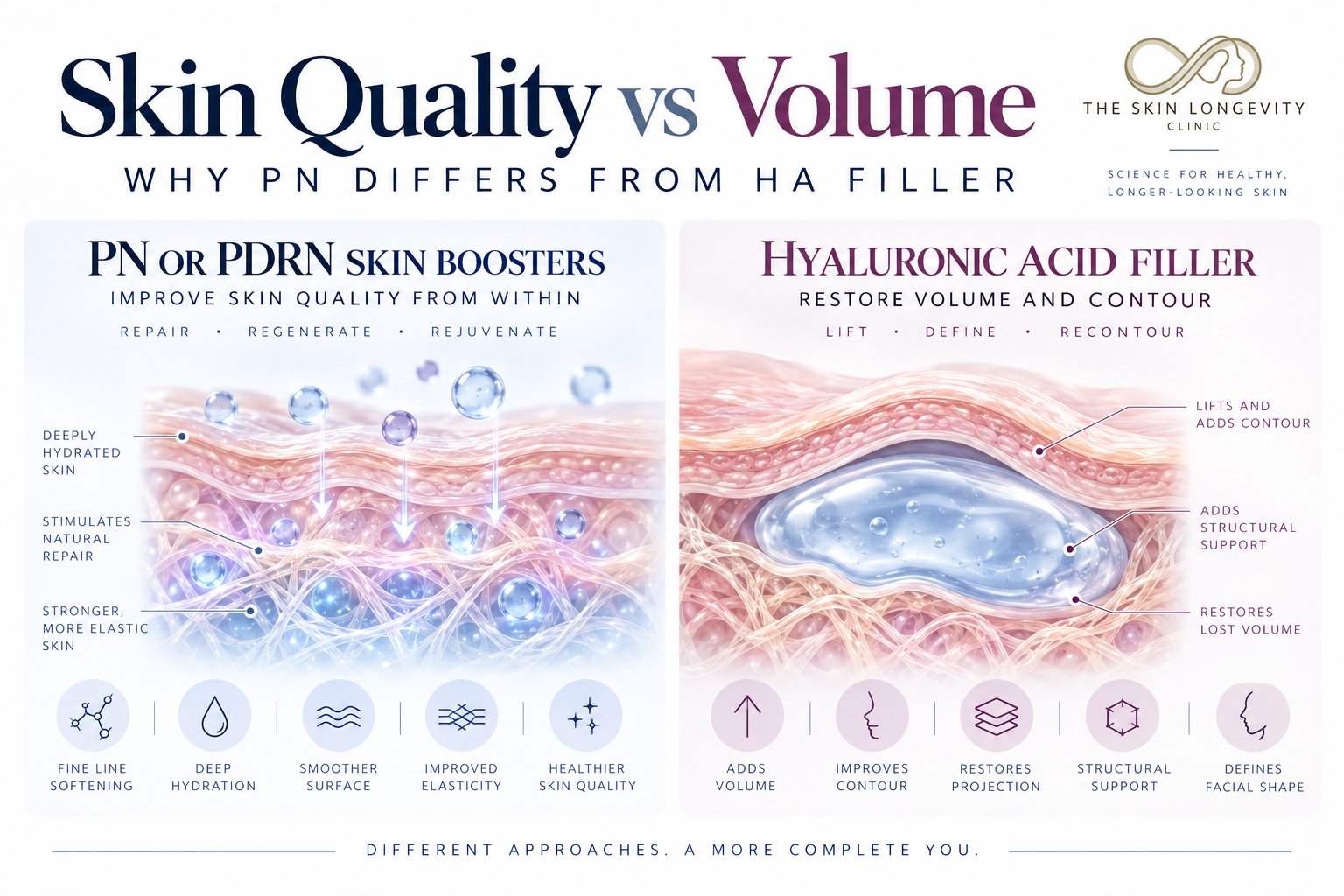
Skin quality treatments and volume correction answer different concerns.
Conventional HA fillers are used for volume and contour correction, while PN treatment is generally discussed in relation to skin quality4. HA skin boosters also target skin quality, so the comparison depends on the formulation and intended treatment rather than the ingredient name alone4,5.
Share your medical history, allergies, regular medicines and previous injectable treatments, including any earlier reactions6. Mention pregnancy or breastfeeding before considering an elective procedure, and bring available records when treatment was performed elsewhere6.
Published guidance for facial aesthetic injections emphasises patient selection, consent and clear aftercare arrangements6. Our guide to your first aesthetic clinic consultation includes questions about treatment planning, fees and review.
How are polynucleotide injections performed?
Assessment, preparation, numbing, intradermal placement and aftercare.
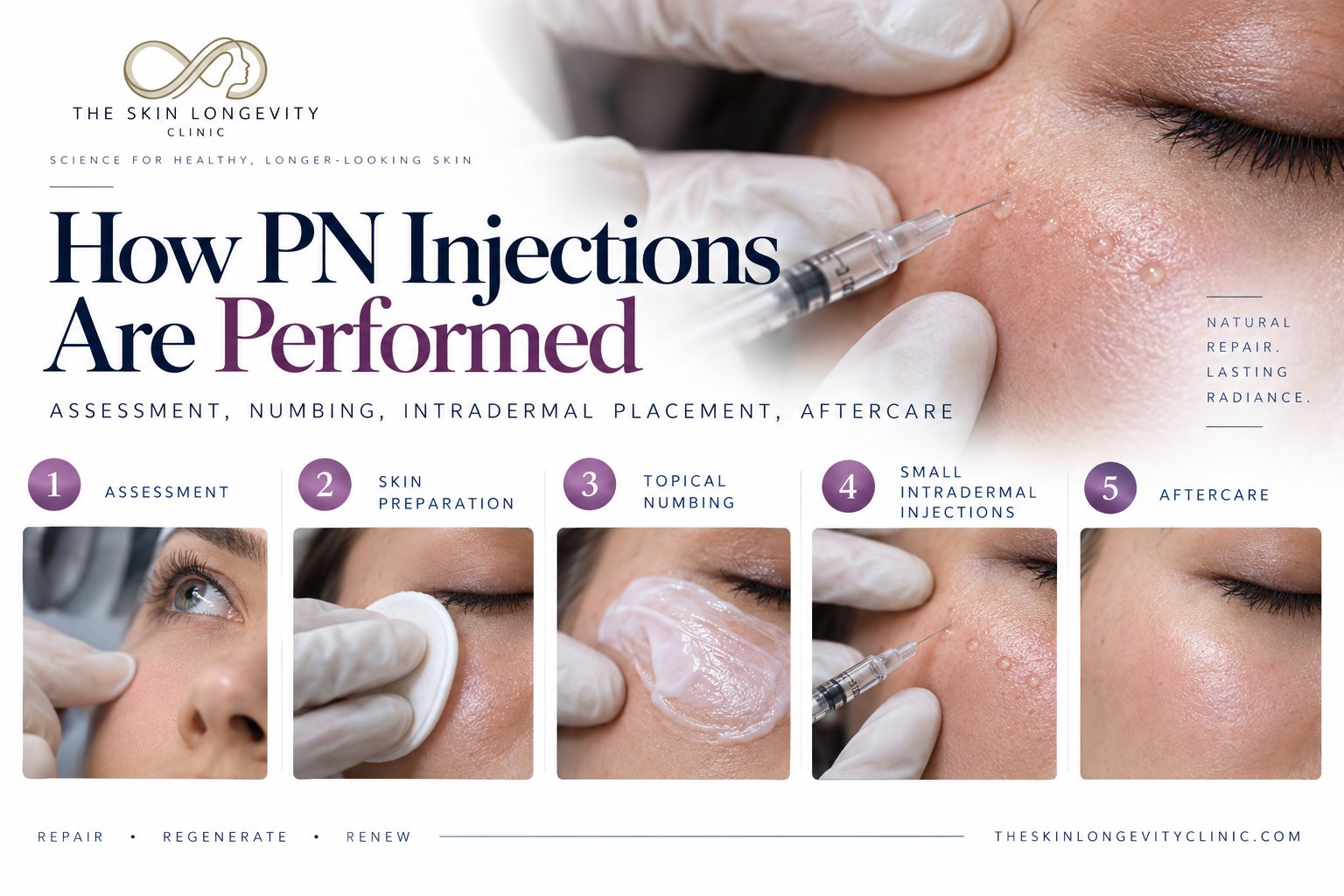
At The Skin Longevity Clinic, the appointment begins with assessment by Dr Rachel Ho, followed by skin preparation and topical numbing where appropriate. The clinic’s treatment process includes small injections into the dermis and aftercare advice.
Published PN protocols describe placing small deposits within the skin, which can produce visible raised points immediately after injection5. The technique and distribution are selected for the treatment area and preparation5.
Discuss comfort measures before starting and tell the doctor if something feels unexpectedly painful. Before leaving, confirm how to obtain advice and when your response will be reviewed.
How many PN skin booster sessions are needed?
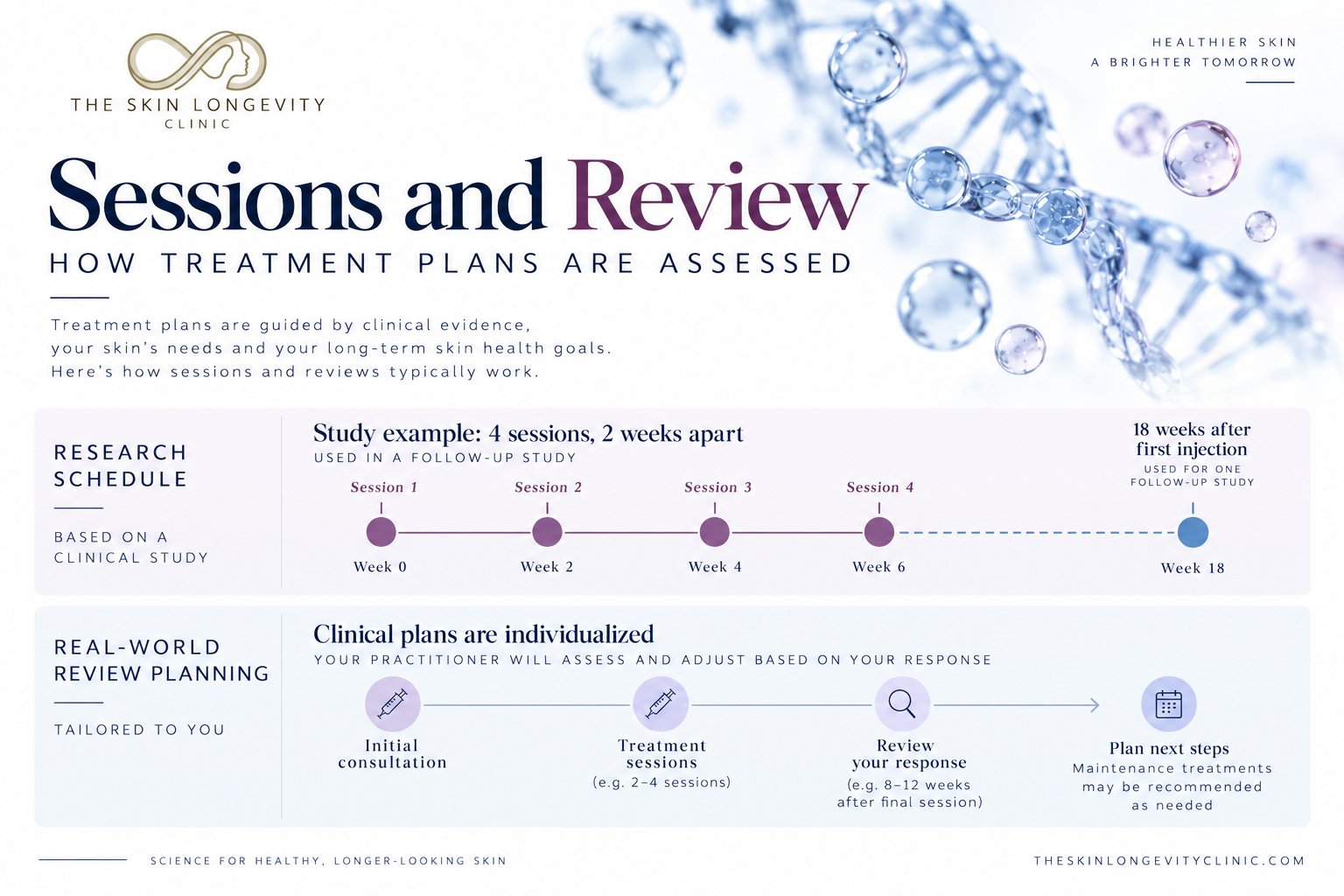
Study schedules are a reference point. The plan is set at consultation.
The five patient study used four treatments spaced two weeks apart3. This describes one research protocol rather than a standard course for everyone3. Published expert recommendations also vary by preparation and treatment area5.
Ask for an initial plan that identifies the proposed number of appointments, spacing and review point. Clarify what improvement would justify continuing and how the plan would change if the response is smaller than expected.
What are the side effects and recovery considerations?
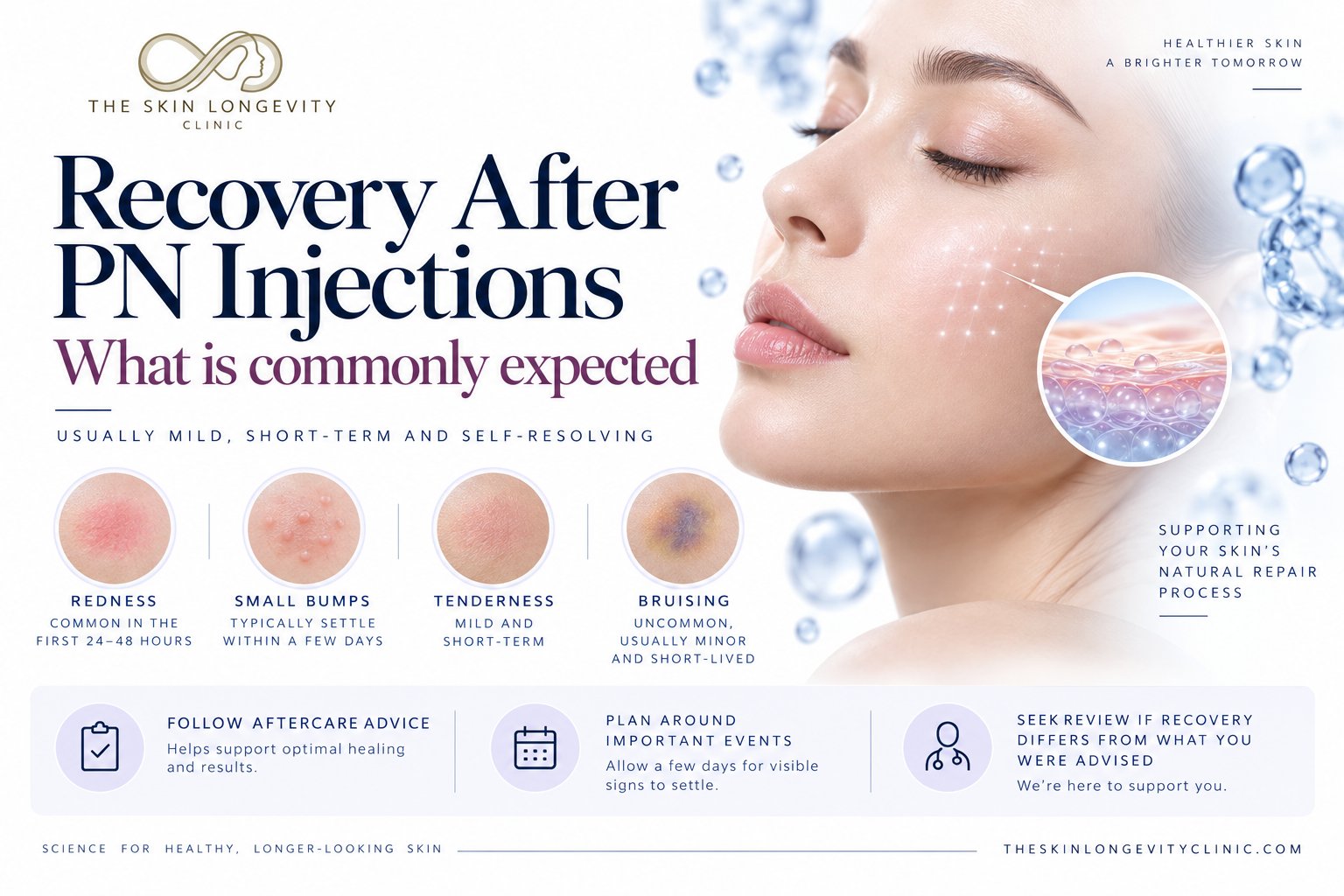
Reported reactions are usually mild and short lived.
Reported reactions following PN injections include redness, burning and bruising5. Small raised deposits can also be visible after an intradermal injection technique5. Ask what recovery is expected for the proposed treatment area, particularly when planning around an event.
The five patient study reported no serious adverse effects3. Its size cannot establish how often uncommon complications occur, and broader reviews continue to identify gaps in longer term safety data3,4.
Facial injection procedures also carry risks such as infection, which should be discussed during consent6. Contact the treating doctor when symptoms persist, become more uncomfortable or differ from the aftercare advice you were given6.
How do injections differ from topical PDRN skincare?
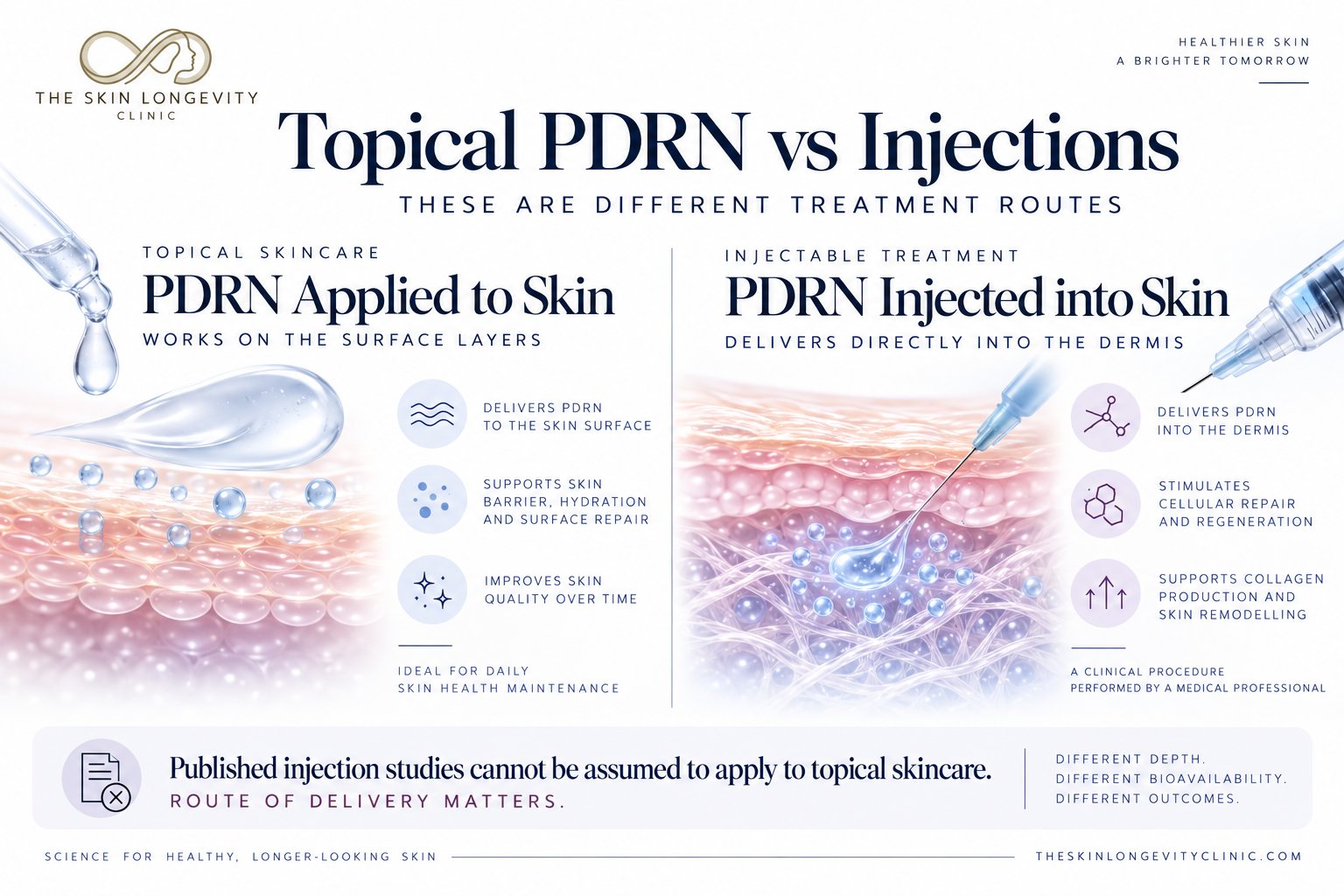
Route of delivery differs, so injection evidence does not transfer to topical products.
The clinical studies described above evaluated injected preparations2,3. Their findings cannot establish that a PDRN serum or cream produces the same outcome.
Dr Rachel Ho’s guide to topical PDRN skincare discusses creams, serums and the evidence for finished products. Read that guide when considering skincare, and ask which formulation was actually tested in any study being discussed.
When will results appear, and how long do they last?
Clinical studies have assessed changes over weeks to months, including the crow’s feet evaluation eighteen weeks after the first injection2. That assessment date shows when improvement was measured rather than the earliest point at which a change could become visible2.
Differences in formulations, study methods and follow up limit the ability to give one reliable duration for all PN treatments4. Maintenance should be discussed after reviewing the remaining benefit and your preferences, rather than assumed to be necessary at a fixed interval.
Can PN skin boosters be combined with other treatments?
Expert recommendations describe combining selected PN preparations with other aesthetic treatments5. These recommendations reflect clinical consensus and should be distinguished from controlled evidence that every combination produces a greater benefit5.
Ask what each proposed treatment adds and whether the appointments should be separated. A plan should make it possible to assess the contribution of each procedure rather than adding treatments without a clear objective.
How much do polynucleotide skin boosters cost in Singapore?
Request a written quotation after assessment that identifies the preparation, amount and treatment area. Clarify whether the fee covers one session or a course, and whether consultation, numbing, GST and planned reviews are included.
When comparing quotations, check that the proposed treatments cover the same areas and use the same formulation. Ask how additional assessment or treatment would be charged before deciding on a course.
PN skin booster assessment at The Skin Longevity Clinic
Dr Rachel Ho is an aesthetic doctor and the founder of The Skin Longevity Clinic. Her professional profile explains her background and approach to assessing skin quality alongside facial structure and patient preferences.
To arrange an assessment at Scotts Medical Center, 9 Scotts Road, Singapore, use the clinic’s contact page or telephone +65 6514 2688. The consultation is an opportunity to understand the proposed treatment and take time to decide whether its expected benefit is worthwhile to you.