

11 Sep PN Skin Booster Recovery: Bumps, Bruising and Aftercare
Small raised bumps, redness, swelling and bruising can occur after polynucleotide, or PN, skin booster injections1,2. Seeing these changes can feel unfamiliar, particularly when you are planning around work or a social event. Understanding what the injection marks represent helps you know what to discuss with your doctor.
This guide focuses on recovery and aftercare. For treatment suitability and expected benefits, read our polynucleotide skin booster guide and Dr Rachel Ho’s review of PN and PDRN injections.
Why are there bumps after PN injections?
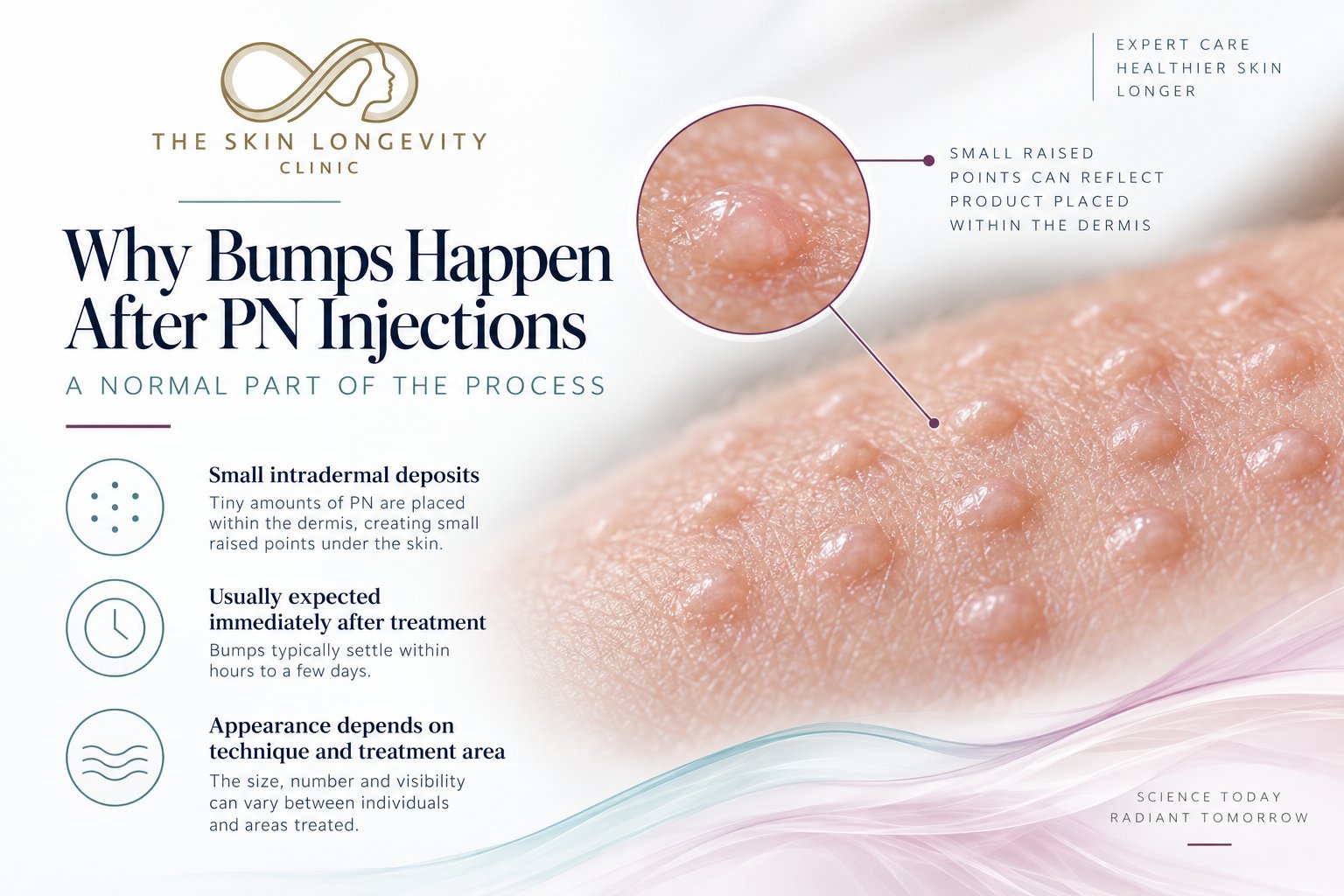
Some PN injection techniques place small deposits within the dermis, producing visible raised points called blebs1. These immediate bumps can therefore reflect the placement of the preparation within the skin1.
Published protocols use different injection techniques according to the treatment area and preparation1. Ask the treating doctor what appearance is expected after your particular procedure, especially when comparing your recovery with photographs of someone else’s treatment.
How long do PN injection bumps and swelling last?
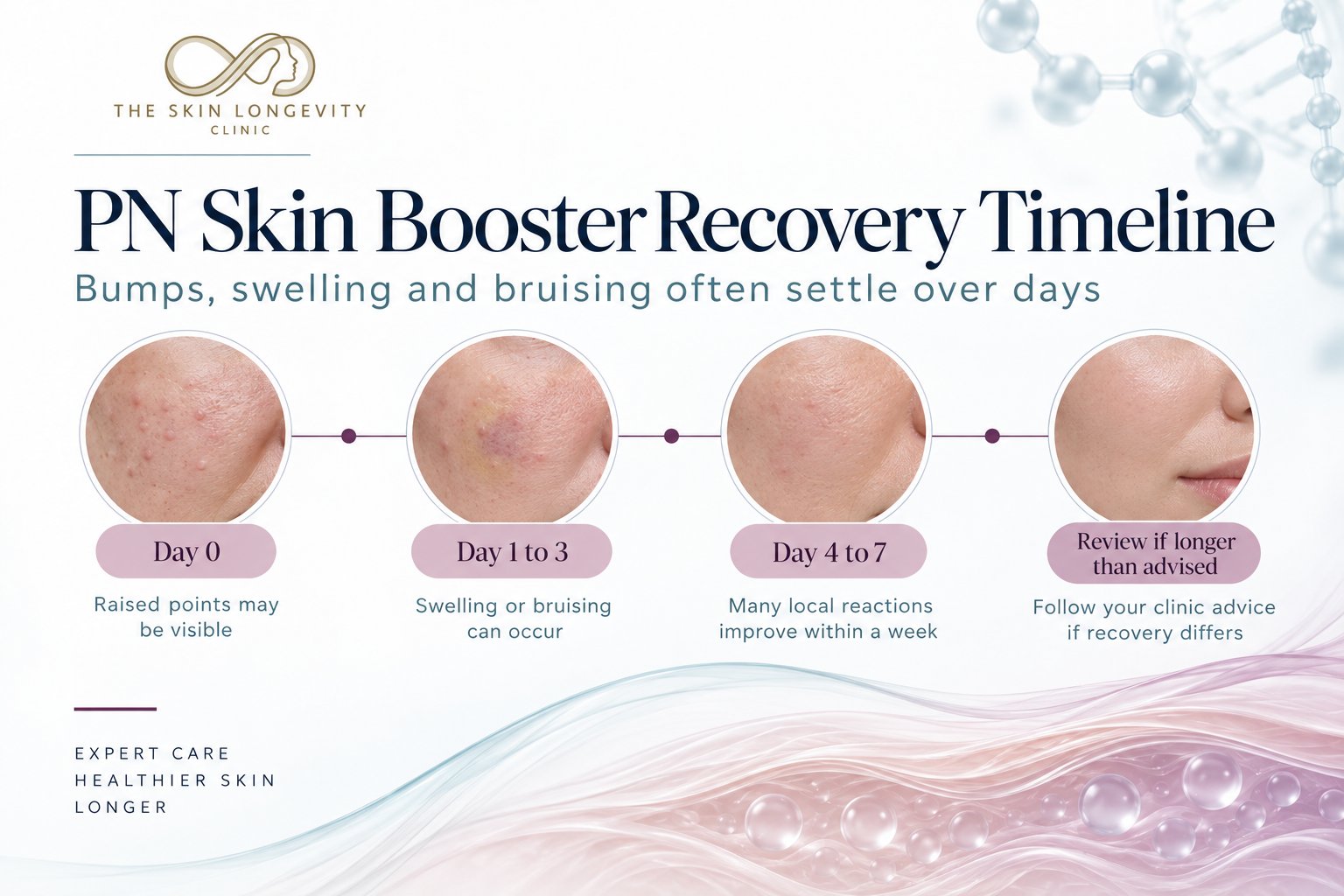
A systematic review published in 2025 examined nine studies involving 219 patients receiving polynucleotide treatments2. The authors described reported local reactions, including swelling, itching, bruising and redness, as generally mild and temporary, typically resolving within a week2.
That finding describes reported reactions across different studies, rather than a deadline for every bump or bruise2. The studies varied in their preparations, treatment areas and injection techniques, and the reviewers identified limitations in the quality of the evidence2.
For appointment planning, ask how long visible marks are expected with the proposed treatment. Contact the clinic when a bump persists beyond the period you were advised, becomes more uncomfortable or develops new redness3,4.
Why does bruising happen after PN skin boosters?
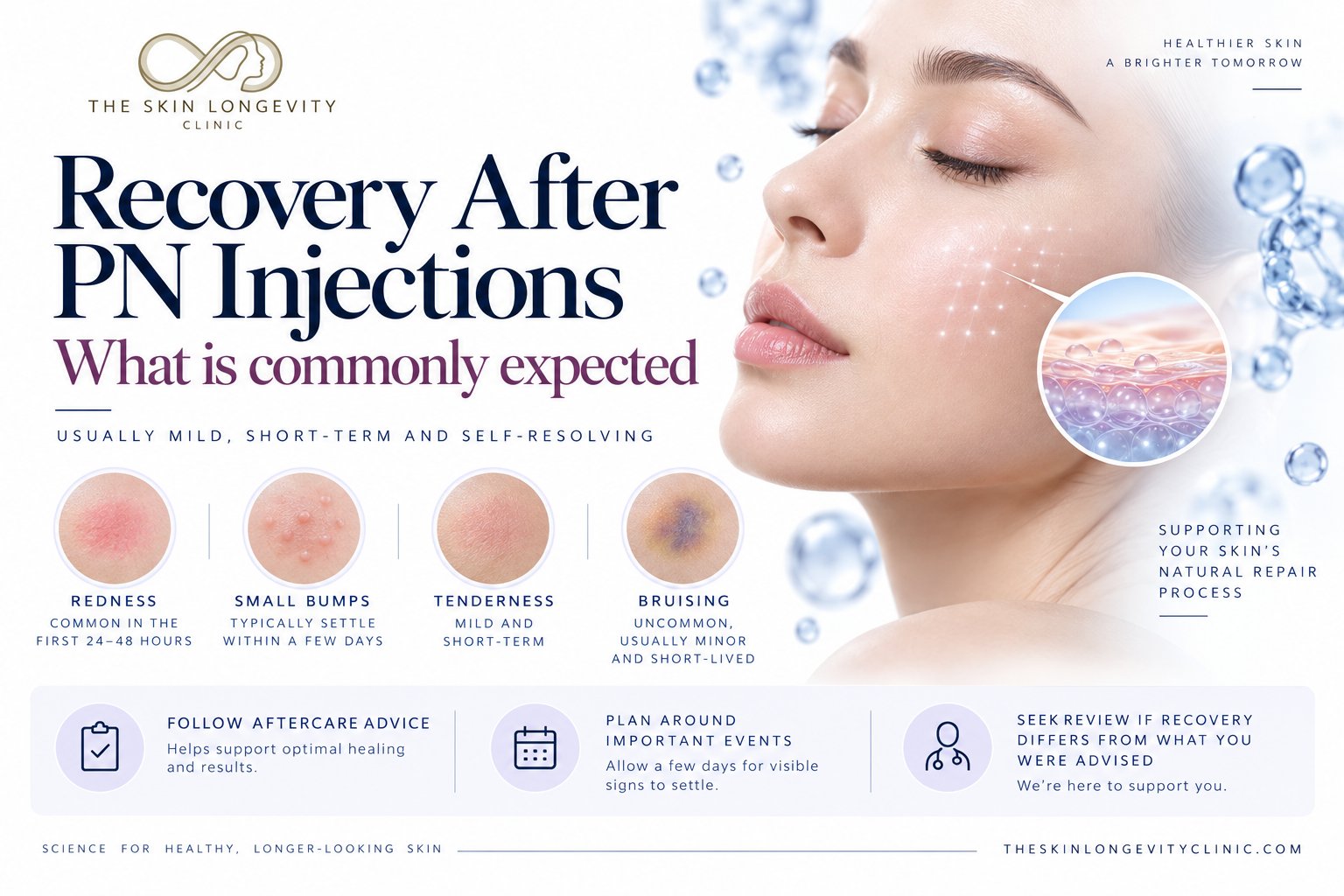
Bruising has been reported after PN injections, and its likelihood is influenced by factors including the injection site, technique and product used1. Medicines affecting blood clotting also deserve consideration when discussing bruising after an injectable procedure4.
Tell the clinic about your regular medicines and supplements. Continue prescribed blood thinning treatment unless the prescribing clinician advises a change, rather than stopping it independently because of a bruise4.
What aftercare is appropriate after PN injections?
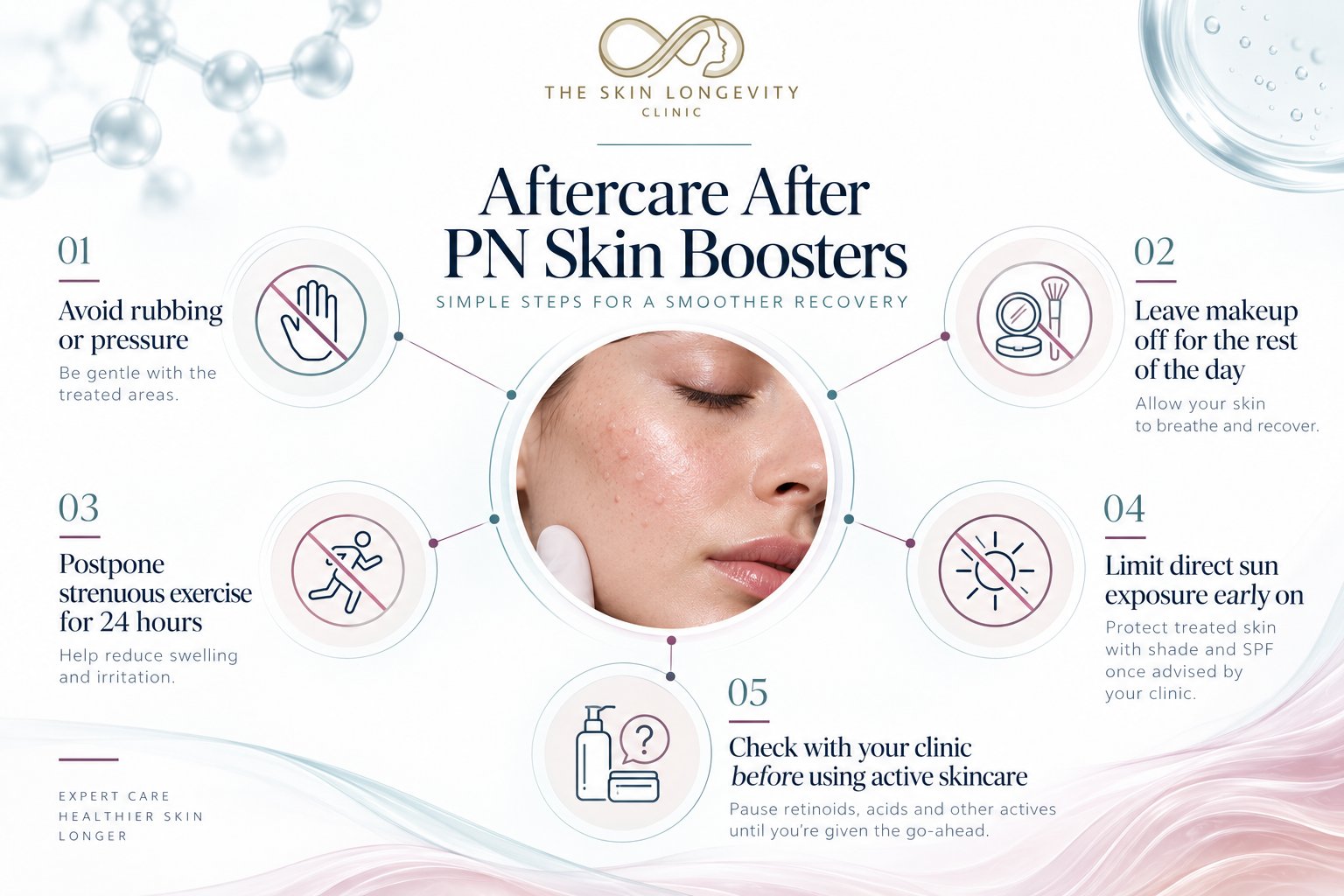
Published advice includes recommendations for particular PN preparations and broader guidance for facial injections1,3. Some practical precautions come from HA filler consensus rather than trials comparing PN aftercare routines, so the written instructions for your preparation and procedure should guide your recovery3.
Should you massage PN injection bumps?
Leave persistent or uncomfortable bumps for the treating clinician to examine rather than trying to flatten them yourself3. Broader facial injection guidance recommends avoiding rubbing or pressure from sleeping face down during early recovery, with corrective massage left to the injector’s assessment3.
When can you wear makeup and resume skincare?
General injection consensus advises preferably leaving makeup off the treated area for the remainder of the treatment day3. Confirm how to cleanse the skin and when to restart your usual products, particularly retinoids or exfoliating products, instead of assuming that another patient’s routine applies to you.
When can you exercise after PN skin boosters?
Expert consensus for soft tissue fillers advises postponing strenuous exercise for the first twenty four hours to reduce bruising and swelling4. This is a general precaution rather than a recovery interval established specifically for PN, so check with the clinic when symptoms or another treatment require different advice.
What about sun exposure and cool compresses?
A PN expert consensus recommends avoiding direct sun exposure and sun lamps for the first forty eight hours1. Ask whether cooling is appropriate for your symptoms, as published expert recommendations differ on icing after injections1,3.
Which pain relief should you use?
Ask your doctor or pharmacist which pain relief is suitable for your medical history and regular medicines. Increasing pain deserves clinical assessment rather than repeated attempts to manage it at home3.
When should you arrange a review?
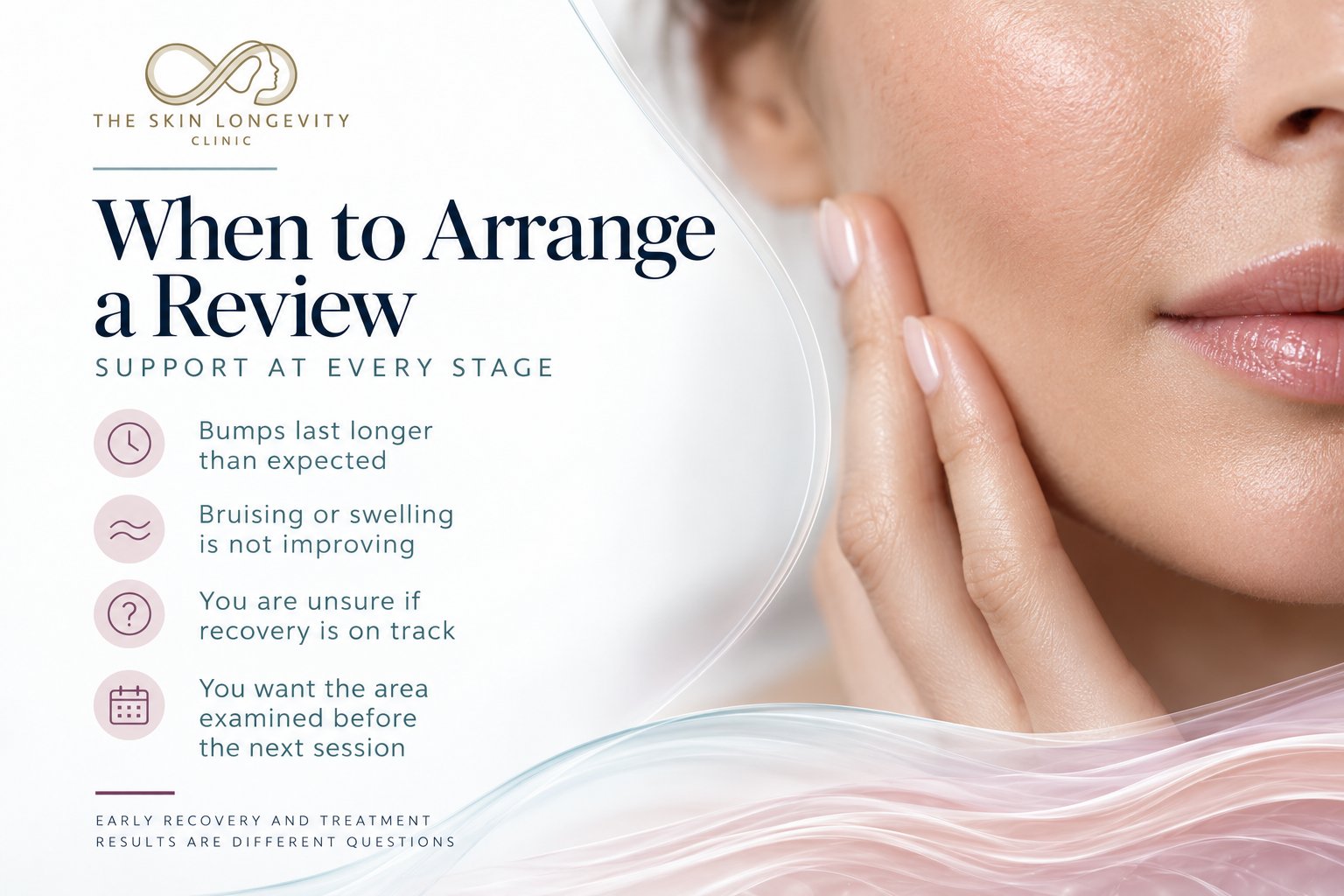
Agree on a review plan before leaving the appointment and confirm how to obtain advice outside clinic hours3. At review, describe whether the bumps are becoming less noticeable, remain unchanged or have developed new symptoms.
The disappearance of injection marks and the assessment of treatment benefit are different questions. PN studies have evaluated skin changes over weeks to months, so an early recovery check should be distinguished from the later assessment of results2.
Our guide to your first aesthetic clinic consultation includes questions about aftercare and ongoing care. Bring your treatment records when discussing whether the next appointment should proceed or the plan needs adjustment.
Which symptoms need earlier medical attention?
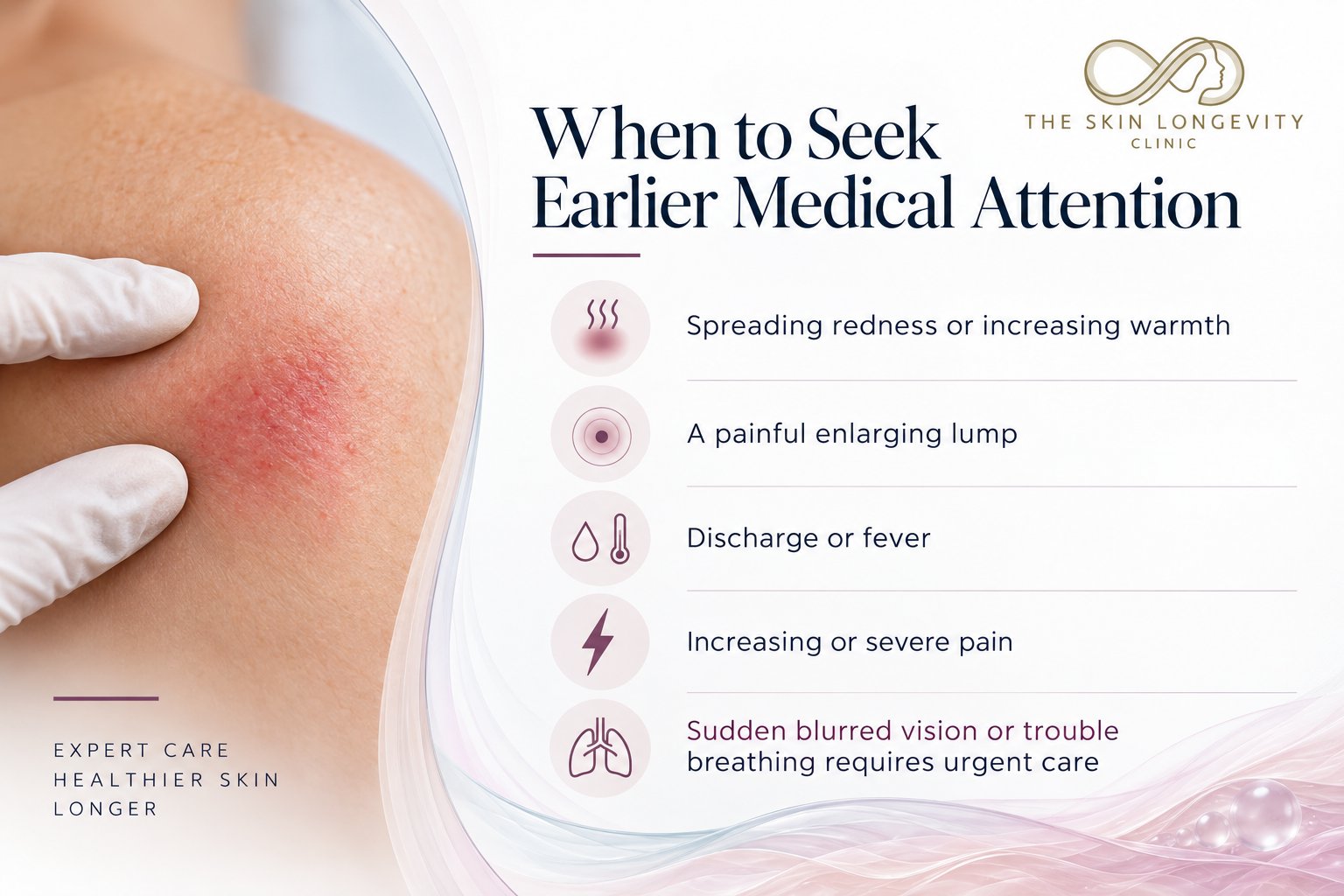
General facial injection guidance recommends assessment when pain, inflammation or skin changes worsen3,4. The following guidance distinguishes an arranged review from symptoms that need more immediate care; it does not describe how frequently these events occur after PN treatment.
| What you notice | Appropriate next step |
|---|---|
| A persistent bump without increasing pain or redness | Contact the treating doctor to arrange examination3. |
| Spreading redness, increasing warmth, a painful enlarging lump, discharge or fever | Obtain medical assessment the same day4. |
| Increasing or severe pain, or an unusual spreading change in skin colour | Seek immediate assessment from the treating doctor. Attend an emergency department promptly if immediate clinical help is unavailable3,4. |
| Sudden blurred vision or loss of vision, difficulty breathing, or swelling affecting the tongue or throat | Seek emergency care immediately. In Singapore, call 9955,6. |
Sudden visual symptoms require emergency assessment rather than waiting for a routine appointment5. When seeking help, explain that you recently received facial injections and provide the preparation name if you know it.
What happens if a lump persists?
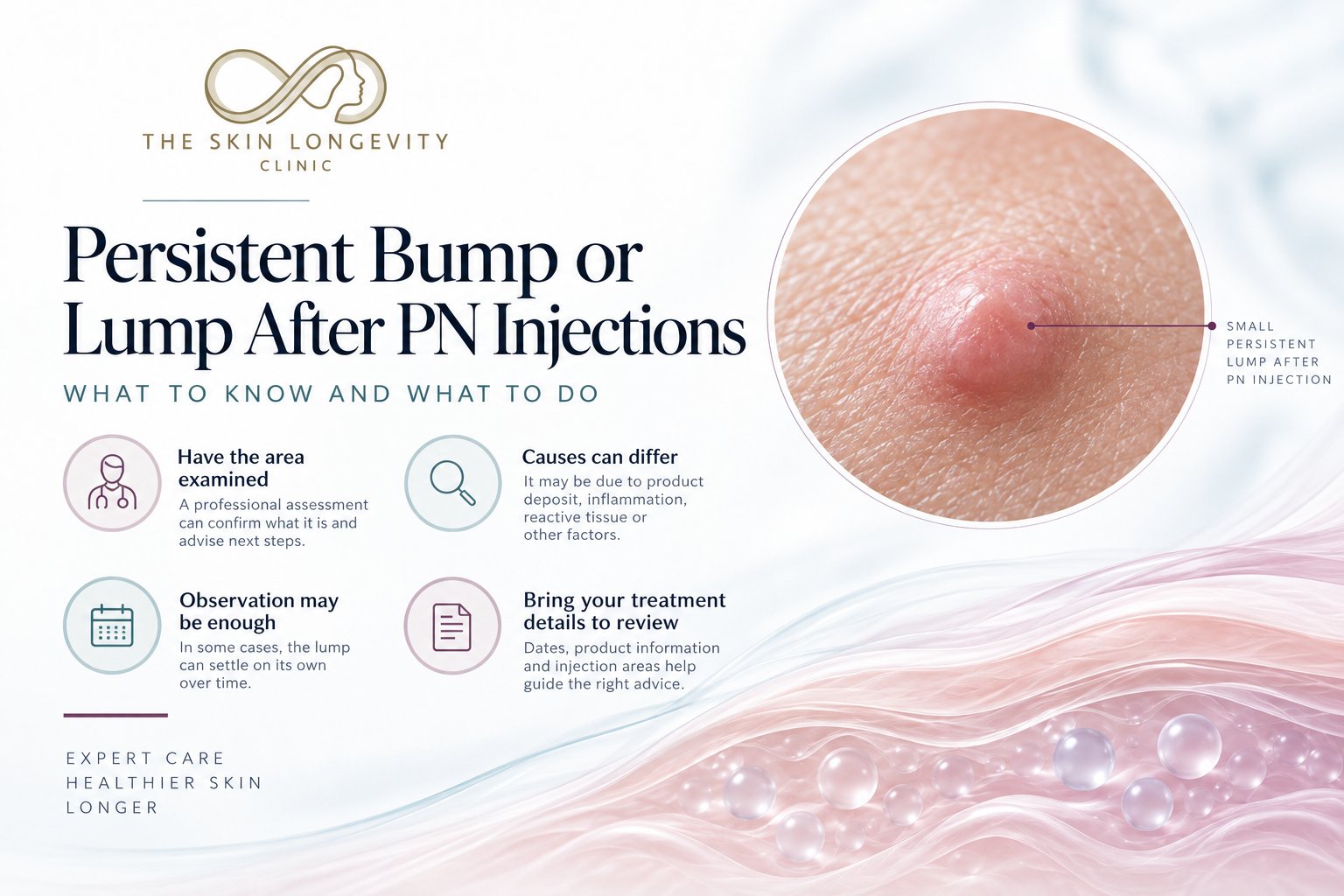
Persistent lumps after injectable procedures can have different causes, including product placement, inflammation or infection4. Examination helps determine whether observation or treatment is appropriate, rather than assuming that every lump needs the same correction4.
Bring the product name and details of any other injections performed in the same area. Explain when the lump first appeared and whether its size, colour or tenderness has changed.
Contacting The Skin Longevity Clinic after treatment
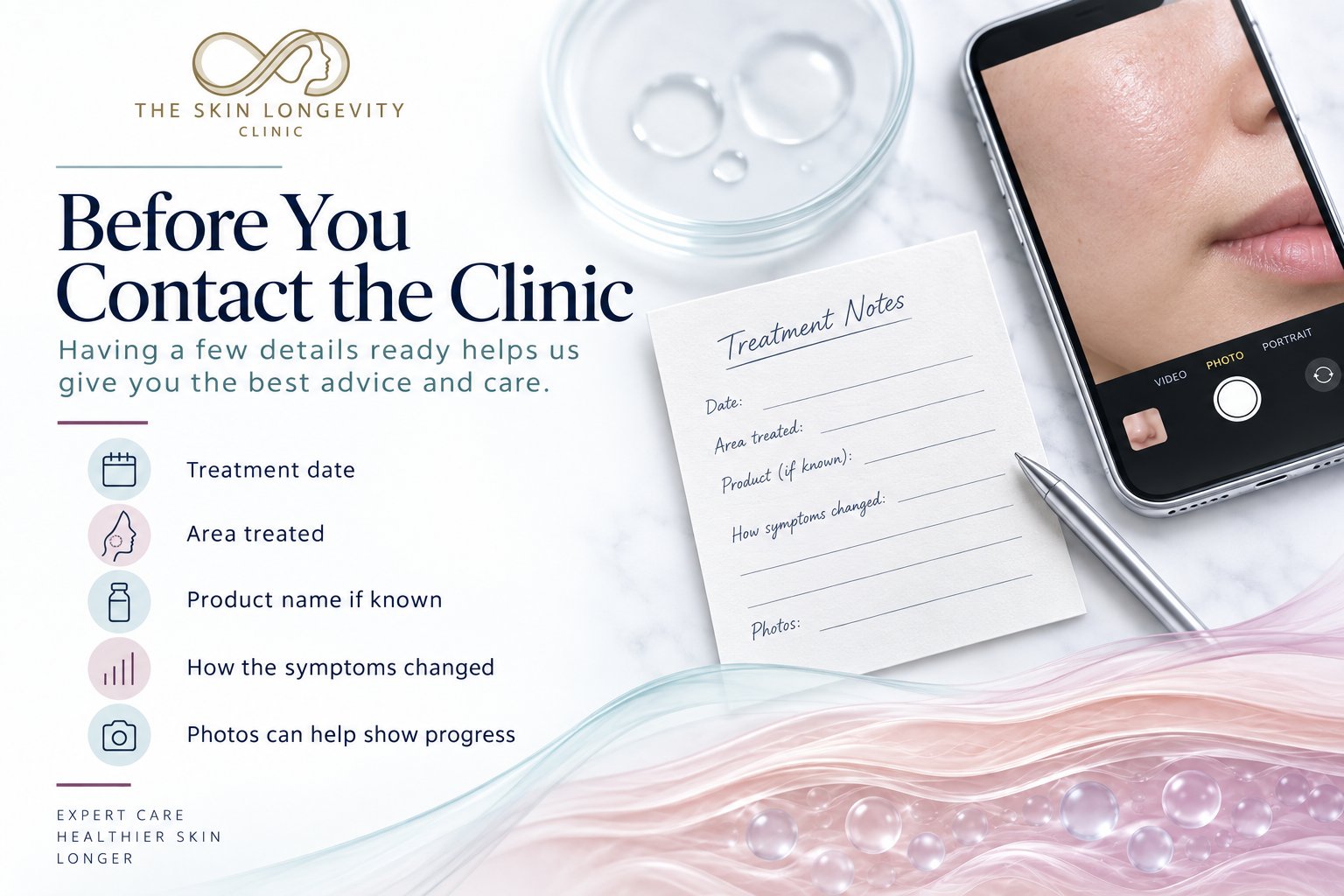
For concerns following treatment at The Skin Longevity Clinic, telephone +65 6514 2688 during the published consultation hours7. Have your treatment date, preparation name and a description of how the symptoms have changed available when making contact. You can ask for a review of an appearance concern without deciding in advance that further injections or corrective treatment are needed.
References
-
Cavallini M, Bartoletti E, Maioli L, et al. Consensus report on the use of PN HPT, polynucleotides highly purified technology, in aesthetic medicine. Journal of Cosmetic Dermatology. 2021;20(3):922 to 928. doi:10.1111/jocd.13679.
-
Lampridou S, Bassett S, Cavallini M, Christopoulos G. The Effectiveness of Polynucleotides in Esthetic Medicine: A Systematic Review. Journal of Cosmetic Dermatology. 2025;24(2):e16721.
-
Goodman GJ, Liew S, Callan P, Hart S. Facial aesthetic injections in clinical practice: Pretreatment and posttreatment consensus recommendations to minimise adverse outcomes. Australasian Journal of Dermatology. 2020;61(3):217 to 225.
-
Urdiales Gálvez F, Escoda Delgado N, Figueiredo V, et al. Treatment of Soft Tissue Filler Complications: Expert Consensus Recommendations. Aesthetic Plastic Surgery. 2018;42:498 to 510.
-
Walker L, Convery C, Davies E, Murray G, Croasdell B. Consensus Opinion for the Management of Soft Tissue Filler Induced Vision Loss. Journal of Clinical and Aesthetic Dermatology. 2021;14(12):E84 to E94.
-
Singapore Civil Defence Force. Emergency Medical Services.
-
The Skin Longevity Clinic. Contact details and consultation hours.