

01 Aug Masseter Hypertrophy & Jaw Slimming in Singapore: Causes and Treatment Options | Skin Longevity Clinic
By Dr Rachel Ho | Aesthetic Doctor, Founder, The Skin Longevity Clinic, Singapore
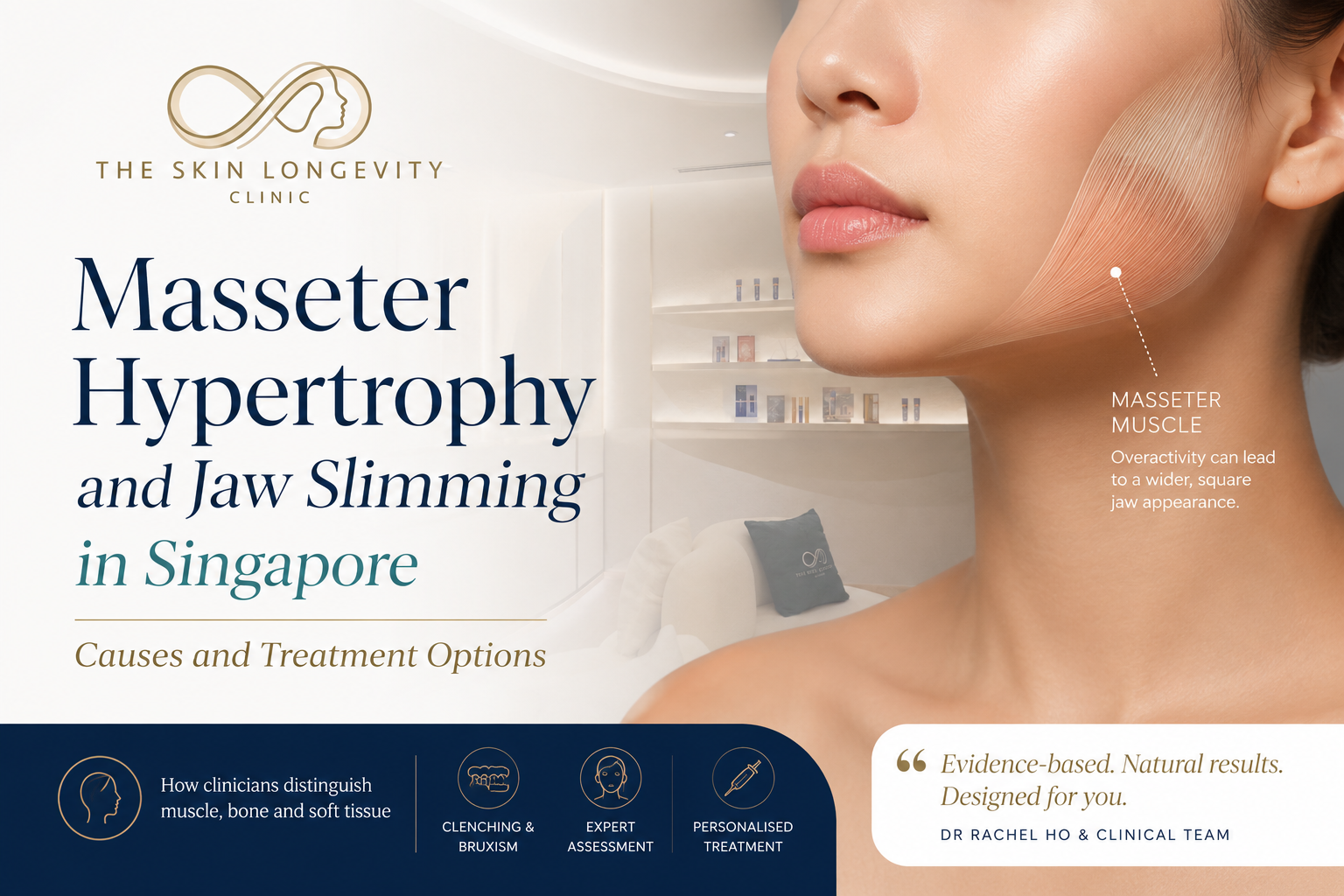
Masseter Hypertrophy and Jaw Slimming in Singapore: Causes and Treatment Options
A wide or square-looking lower face is one of the most common jaw concerns people ask about. It is often assumed to be a single problem with a single solution, but the reality is more varied. The lower face takes its shape from muscle, bone, fat and skin together, and the right approach depends on which of these is driving the appearance. This article explains what masseter hypertrophy is, how a clinician tells muscle bulk apart from bone and soft tissue, how it relates to clenching and grinding, and what options are considered in Singapore.
For the wider picture of how botulinum toxin is used and assessed, see the patient guide to botulinum toxin in Singapore.
Medically reviewed by Dr Rachel Ho, MBBS, MMed (Otolaryngology). Last reviewed 17 July 2026.
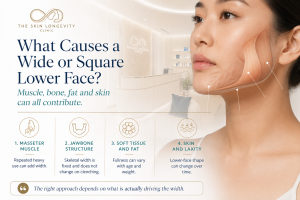
A square-looking jaw is not always caused by an enlarged masseter. Jawbone structure, soft-tissue fullness and skin laxity can also influence lower-face shape.
What causes a wide or square-looking lower face?
The width and shape of the lower face can come from several sources, and often from a combination of them. The masseter, a strong muscle at the angle of the jaw used for chewing, can enlarge with repeated heavy use and add width. The underlying jawbone itself sets the skeletal proportions and can be naturally broad or angular. Soft tissue, including fat and skin, contributes fullness and changes with age. Because these causes look similar from the outside yet respond to very different approaches, identifying the main contributor is the first and most important step.
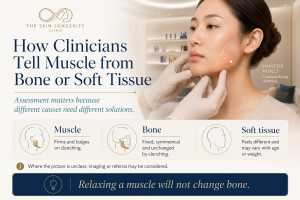
During assessment, the masseter becomes firmer and more prominent when the patient clenches. Bone remains fixed, while soft-tissue fullness has a different feel and distribution.
How can muscle bulk be distinguished from bone structure or soft-tissue fullness?
A clinician distinguishes these largely through examination. Asking a person to clench allows the masseter to be felt as it firms and bulges, which indicates how much of the width is muscular. Bone structure tends to be fixed and symmetrical and does not change on clenching. Soft-tissue fullness feels different again and may shift with weight and age. Where the picture is unclear, imaging or referral may be considered. The purpose of this care is simple. Relaxing a muscle will not change bone, and treating for muscle when the cause is skeletal or fatty will not give the hoped-for result.
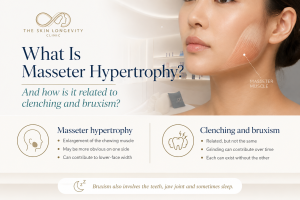
Masseter hypertrophy means enlargement of the main chewing muscle. Clenching and bruxism can contribute to this enlargement, although the conditions are related rather than identical.
What is masseter hypertrophy?
Masseter hypertrophy means enlargement of the masseter muscle. It can develop from habitual heavy use of the jaw, such as frequent clenching, grinding or chewing firm foods, in the same way that any muscle can grow with repeated exercise. It is often more prominent on one side than the other. Masseter hypertrophy is a physical finding rather than a disease in itself, but it can sit alongside symptoms such as jaw tension or aching, and it can contribute to the appearance of lower-face width.
What is the relationship with clenching and bruxism?
Masseter size, clenching and bruxism are related but not the same. Bruxism is the habit of grinding or clenching the teeth, often during sleep. Repeated clenching can, over time, contribute to enlargement of the masseter, so the two frequently occur together. However, a person can have a naturally strong masseter without significant grinding, and a person can grind without an obviously enlarged muscle. Because grinding also involves the teeth, the jaw joint and sometimes sleep, it is assessed as a condition in its own right.
Dr Rachel Ho’s clinical perspective: With the jaw, I am less interested in chasing a particular face shape and more interested in what is actually causing the width. If it is muscular and linked to clenching, addressing the muscle can help both the symptom and the appearance. If it is skeletal or related to soft tissue, a muscle-focused approach is the wrong tool, and saying so honestly serves the patient better.
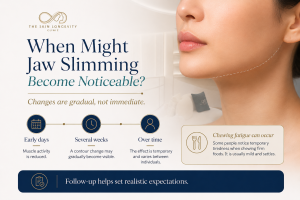
Changes in jaw width develop gradually because the contour follows a reduction in masseter activity over time. Temporary chewing fatigue may occur in some patients.
How long may muscle reduction take to become noticeable?
When a muscle is relaxed, any change in width is gradual rather than immediate, because it follows a reduction in the muscle’s activity over time. A visible difference in contour, where it occurs, tends to develop over several weeks rather than days. This is different from treatment of expression lines, where the softening is seen sooner, and it is one reason patience and a follow-up assessment matter for jaw concerns.
How long may the effects of jaw botulinum toxin injections last?
As with other uses, the effect is temporary. Muscle activity returns over a period of months, and the interval before any repeat is guided by how the individual responds rather than by a fixed schedule. Some people find that, with a reduction in heavy clenching, symptoms settle in a way that is worth reviewing over time. Duration varies between individuals, and no exact figure can be promised in advance.
Can chewing fatigue occur from jaw botulinum toxin injections?
Because the masseter is a chewing muscle, reducing its activity can, in some people, lead to a temporary sense of tiredness or weakness when chewing firm foods. Where this occurs it is usually mild and settles as normal activity returns. It is one of the practical points worth discussing at assessment, so that expectations about eating and jaw function are realistic.
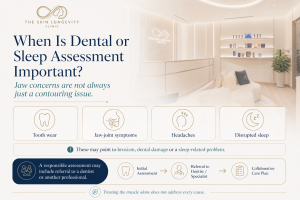
Tooth wear, jaw-joint discomfort, headaches and disrupted sleep may indicate that a jaw concern extends beyond facial contouring and requires dental or sleep evaluation.
When would a dental or sleep assessment be appropriate before masseter BTX injections?
A dental or sleep assessment may be appropriate when grinding, tooth wear, jaw-joint symptoms, headaches or disrupted sleep are part of the picture. These point to causes and consequences that a muscle-focused approach alone does not address, such as dental damage or a sleep-related disorder. Referral to a dentist or another professional is sometimes the more important step, and a responsible assessment considers whether that is the case rather than treating every jaw concern as a contouring question.

Treatment depends on what is causing the lower-face width. Options may include no treatment, management of clenching, dental care, sleep assessment or a muscle-focused prescription injectable.
What alternatives are available for masseter or jaw botulinum toxin injections?
Depending on what is actually driving the concern, options may include no treatment, management of clenching or grinding, a dental assessment or a dental splint, attention to sleep or stress-related factors, and other procedures where soft tissue or skin is the main contributor. A prescription injectable is one option among these, appropriate mainly where the masseter muscle is the main cause. The right combination is a matter for personal assessment.

Dr Rachel Ho advises that jaw treatment should be selected according to the actual cause of the width. A muscle-focused approach cannot alter broad jawbone structure or soft-tissue fullness.
Frequently asked questions about clenching, bruxism and jaw or masseter BTX injections
Is a square jaw always caused by muscle?
No. It can come from the jawbone, from soft tissue and fat, or from muscle, and often from a combination. Identifying the main cause is the purpose of an assessment, because each responds differently.
Will relaxing the masseter with botulinum toxin injetions change my bone structure?
No. A muscle-focused approach affects muscle activity, not bone. If the width is mainly skeletal, this approach will not change it.
How soon would I see a change in jaw width after jaw BTX?
Any change in contour tends to develop gradually over several weeks rather than immediately, because it follows a reduction in muscle activity over time.
Is masseter enlargement the same as teeth grinding?
No, but they are related. Grinding can contribute to muscle enlargement over time, though each can occur without the other, and grinding is assessed as its own condition.
A 2025 meta-analysis compared occlusal splints with botulinum toxin injections for mouth opening and chronic pain in temporomandibular disorders4.
Could I get chewing fatigue from botulinum toxin injections to the jaw muscles?
Some people notice temporary tiredness when chewing firm foods after masseter treatment. Where it occurs it is usually mild and settles as activity returns.
For more from the author, visit Dr Rachel Ho at drrachelho.com.
About the author
Dr Rachel Ho holds an MBBS from the National University of Singapore and a Master of Medicine in Otolaryngology. She is the founder of The Skin Longevity Clinic, a doctor-led practice at Scotts Medical Center, Pacific Plaza, and has more than 16 years of clinical experience in Singapore. Her clinical focus includes skin longevity and quality, facial harmony and proportion, and evidence-based aesthetic medicine. She maintains active continuing professional development, including attendance at the Aesthetic and Anti-Aging Medicine World Congress (AMWC) in Monaco in 2026, and is recognised for her work in education, media commentary and advisory roles across aesthetic medicine. She has contributed commentary and features for publications including Her World, ELLE (ELLE Beauty Awards 2026) and L’Officiel Singapore. Dr Rachel Ho is a registered medical practitioner in Singapore.
Read more about Dr Rachel Ho at drrachelho.com and on her profile at The Skin Longevity Clinic.
Medical review and references
Author: The Skin Longevity Clinic editorial team
Medical reviewer: Dr Rachel Ho, MBBS, MMed (Otolaryngology)
First published: 17 July 2026
Last medical review: 17 July 2026
References
- Small R. Botulinum Toxin Procedures: A Practical Approach to Cosmetic Injections. American Family Physician. 2026. Available at aafp.org
- Hallett M. One Man’s Poison: Clinical Applications of Botulinum Toxin. The New England Journal of Medicine. 1999. Available at nejm.org
- Health Sciences Authority, Singapore. Therapeutic product registration overview. Available at hsa.gov.sg
- İşisağ Ö, Atasoy H, Yıldız S. Comparison of the effects of occlusal splint and Botox injections on the amount of mouth opening and chronic pain in individuals with temporomandibular disorders: a systematic review and meta-analysis. Australian Dental Journal. 2025;70(2):132–140. PMID 39953753.
Editorial and corrections policy: Reviewed for medical accuracy and updated when clinical information changes.
This article provides general education and does not determine individual suitability. A qualified medical practitioner can assess symptoms, medical history, possible causes, alternatives and relevant risks.