

10 Aug Skin Tightening in Singapore: A Complete Guide to Your Options
By Dr Rachel Ho | Aesthetic Doctor, Founder, The Skin Longevity Clinic, Singapore
Medically reviewed by Dr Rachel Ho, MBBS, MRCS, MMed (ENT), 2 November 2026.
Skin tightening is one of the most common reasons people visit an aesthetic clinic in Singapore. The softening jawline, the loss of definition in the lower face and the early laxity of the neck are familiar concerns, and there is now a wide range of treatments that claim to address them. The difficulty is not finding a treatment. It is choosing the right one. This guide sets out the realistic options for skin tightening in Singapore and, more importantly, explains how to decide between them. Where the chin is recessed or the jawline lacks definition from bone rather than loose skin, chin filler in Singapore or jawline filler in Singapore adds structure that tightening alone cannot.
Skin tightening in Singapore at a glance
- What it treats: mild to moderate laxity of the lower face, jawline and neck, where the skin has softened but is not heavily sagging.
- Main options: radiofrequency such as XERF, focused ultrasound (HIFU), collagen biostimulators and, for texture, RF microneedling.
- What it cannot do: replace a facelift for advanced sagging, or restore lost facial volume.
- First step: an assessment to decide whether the problem is laxity, volume loss or both, which decides the treatment.
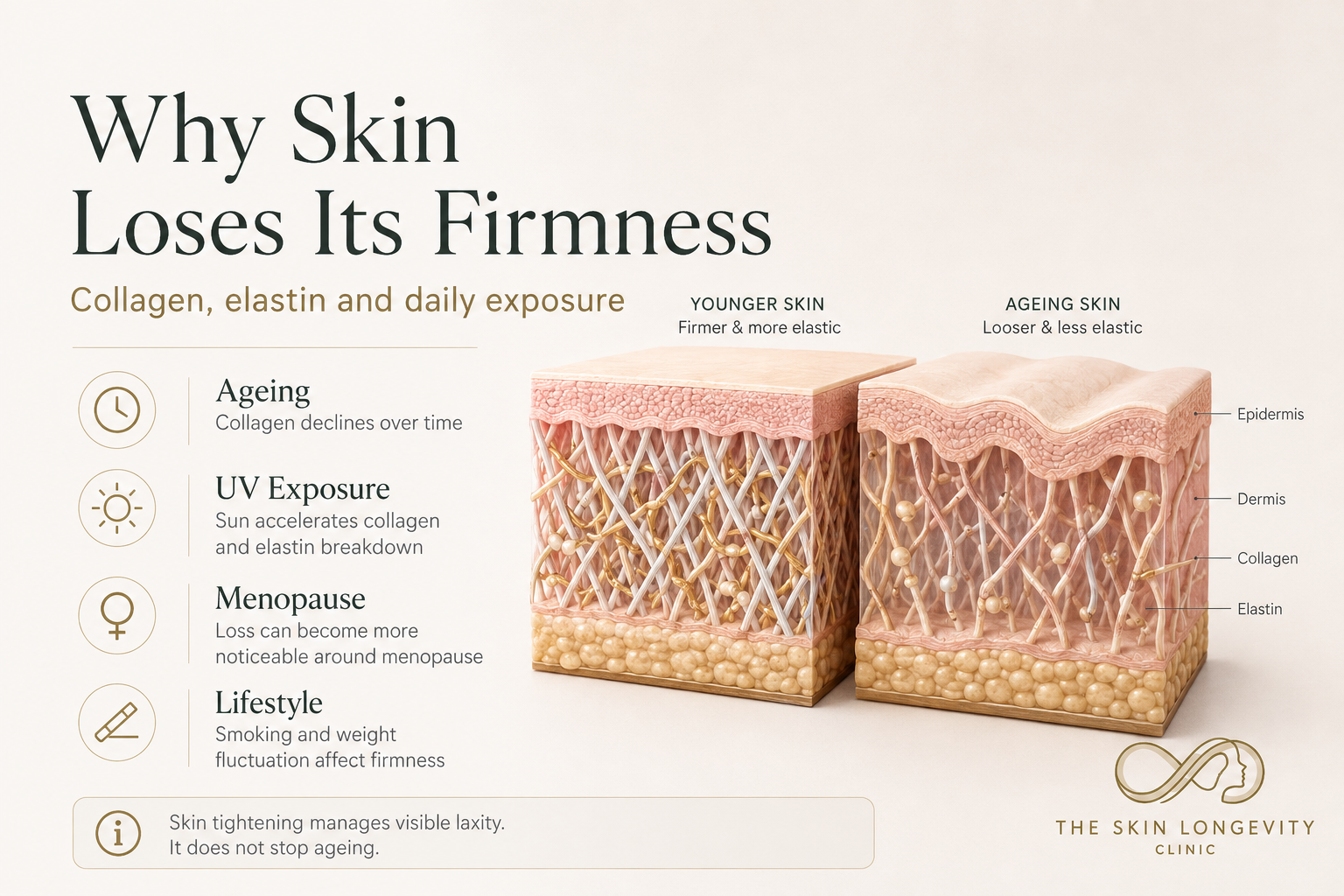
Why does skin lose firmness? Ageing, ultraviolet exposure, menopause, smoking and weight fluctuation can reduce collagen and elastin support. Skin tightening treatments manage visible laxity but do not stop the biological ageing process.
Tightening is one part of facial ageing. See anti-ageing treatment in Singapore for skin quality, volume and pigment.
Why Skin Loses Its Firmness As We Age
Skin firmness depends largely on collagen and elastin, the proteins that give the dermis its strength and spring. From the mid-twenties, the skin loses roughly one percent of its collagen each year. The decline is slow at first, then more noticeable through the forties and beyond, and for women it accelerates around menopause.
Singapore’s climate adds to this. Year-round ultraviolet exposure is one of the strongest external drivers of collagen and elastin breakdown. The result is the gradual laxity that skin tightening treatments are designed to address. It is worth being clear that no treatment stops this process. Skin tightening manages and slows visible laxity rather than reversing ageing.
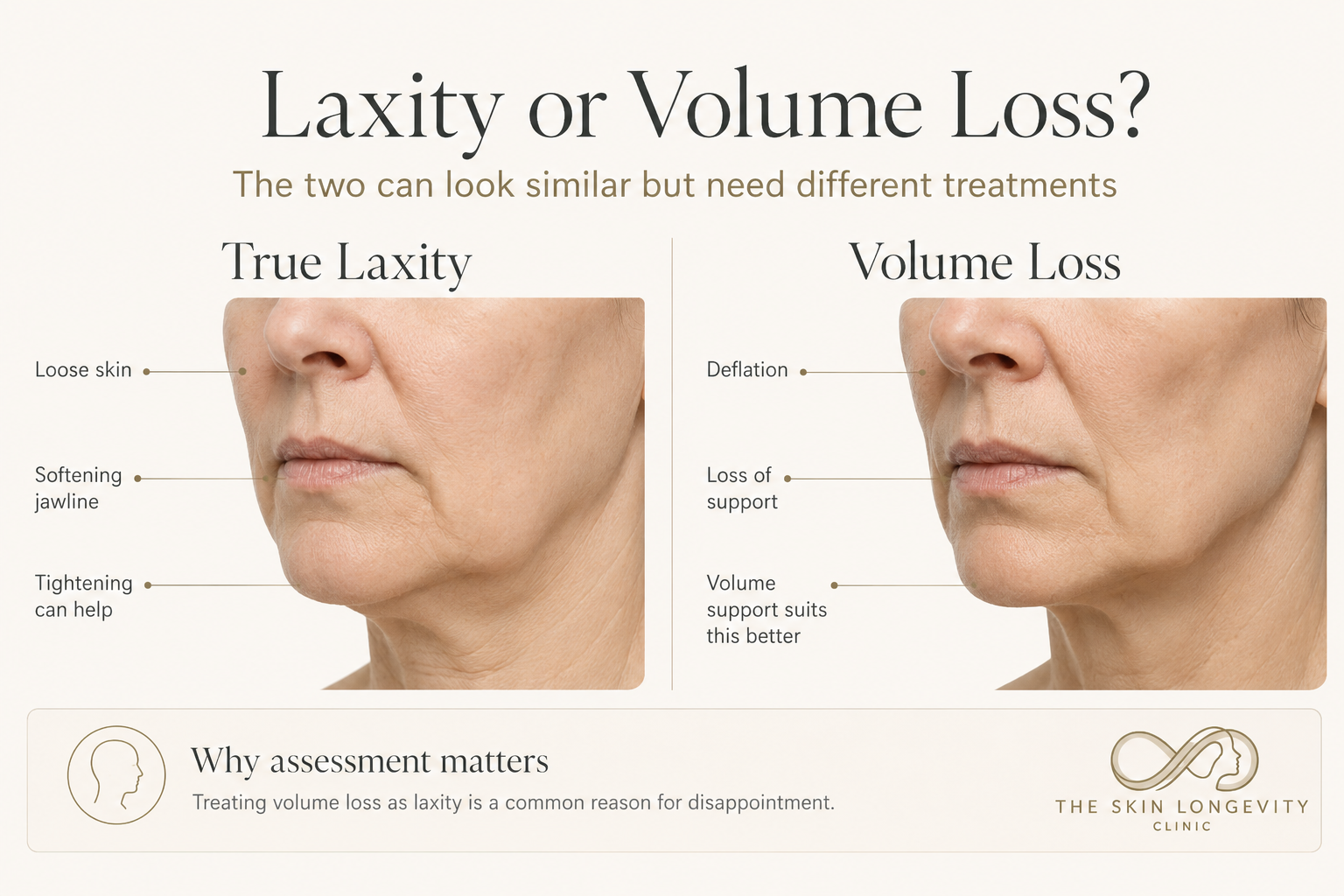
Is it skin laxity or volume loss? Loose skin and facial deflation can look similar but need different treatments. XERF and other tightening procedures address suitable laxity, while volume loss requires structural support rather than additional contraction.
The Two Questions That Decide Your Treatment for Lifting and Tightening Your Skin in Singapore
Dr Rachel Ho, MBBS, MMed(ENT), Founder and Medical Director of The Skin Longevity Clinic, decides between tightening, volume restoration or both by looking at what is actually causing the visible change. A soft jawline can come from loose skin, collagen loss, fat redistribution, volume loss or deeper support changes. Tightening only works when laxity is genuinely a major contributor, and if it is not, the wrong treatment will simply not produce the result the patient is hoping for. The clinic’s page on sagging skin and facial laxity explains the underlying causes in more detail.
Before looking at any device, two questions do most of the work in choosing a treatment.
The first is whether the problem is genuinely laxity, or whether it is volume loss. As the face ages it does not only loosen, it also deflates, losing fat and bone support. Loose skin and a deflated face can look similar but need opposite treatments. Tightening helps laxity. Volume support helps deflation. Treating one as if it were the other is the most common reason for disappointment.
The second question is how severe the laxity is. Mild to moderate laxity often responds well to non-surgical treatment. Advanced sagging, with heavy jowls and significant loose skin, usually does not, and is better assessed for surgery. Being honest about severity saves both time and money.
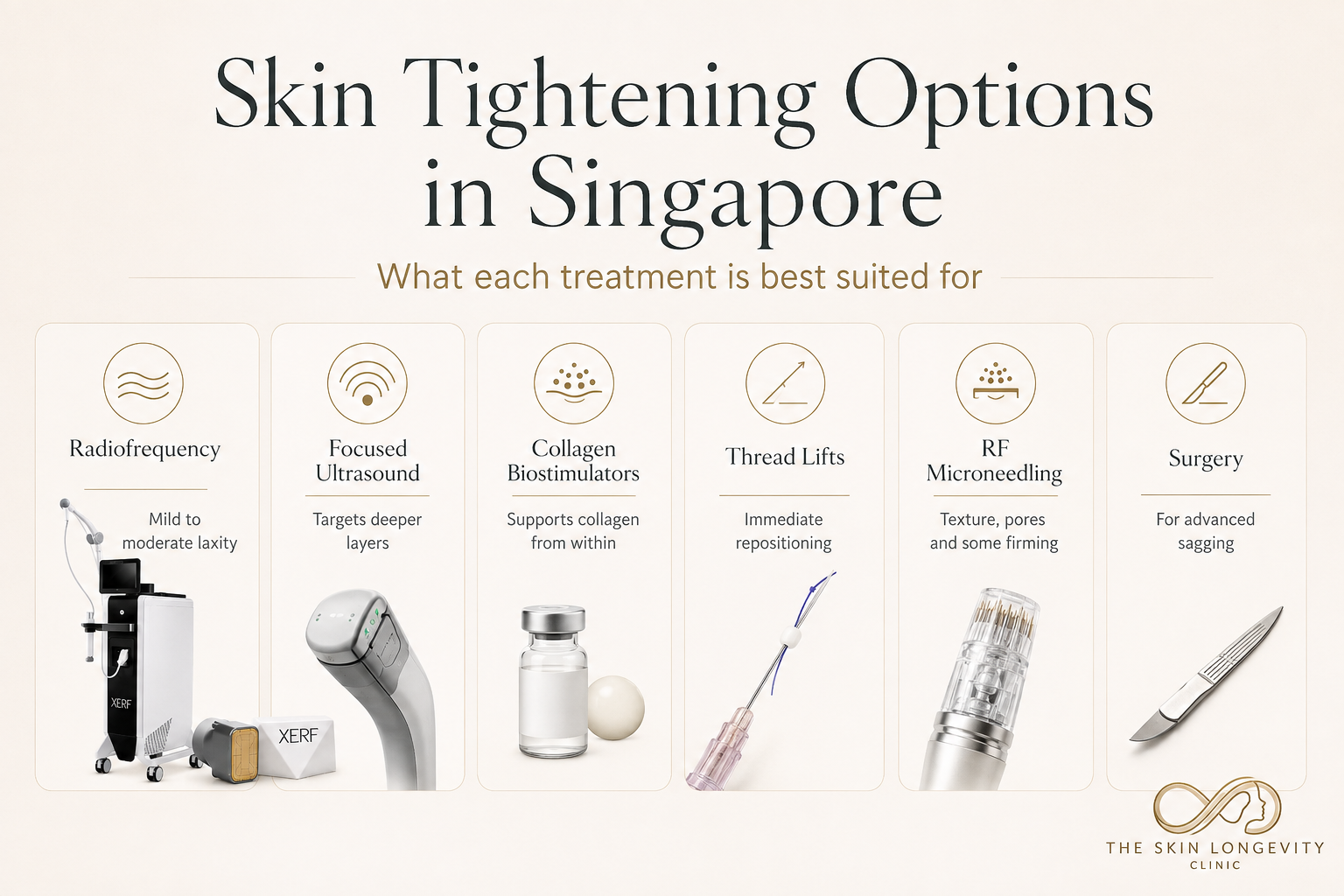
Skin tightening options in Singapore: Radiofrequency suits selected mild to moderate laxity, focused ultrasound reaches deeper layers, biostimulators support collagen, RF microneedling targets texture, and surgery remains the most effective option for advanced sagging.
Non-Surgical Skin Tightening Options in Singapore Clinics
For mild to moderate laxity, several non-surgical options are available in Singapore.
Radiofrequency, including XERF
Radiofrequency treatments use heat, generated by electrical resistance in the skin, to tighten collagen and stimulate new collagen over time. XERF is a dual-frequency monopolar radiofrequency treatment in this category. Radiofrequency suits mild to moderate laxity and has the practical advantage of not targeting melanin, which makes it reasonable for many Asian patients. Our guide to RF skin tightening in Singapore covers this group in detail.
Focused ultrasound
High-intensity focused ultrasound, or HIFU, uses focused sound energy to create heat at set depths, including deeper layers. It also stimulates collagen, and it can reach tissue that surface radiofrequency does not. The clinic’s HIFU treatment page explains the approach.
Collagen biostimulators
Collagen biostimulators are injectable treatments that prompt the skin to produce its own collagen gradually over months. They work from within rather than through heat, and they can support skin structure and quality. The clinic’s collagen biostimulator page describes how they are used.
Thread lifts
Thread lifts use dissolvable sutures placed under the skin to reposition tissue and stimulate some collagen along the thread. They offer a degree of immediate repositioning, but they are a more invasive option than energy-based treatments and are not suited to every face.
RF microneedling
RF microneedling combines fine needles with radiofrequency energy delivered below the surface. It is used mainly for skin texture, pores and scarring, with some firming effect, rather than as a primary lifting treatment.
Surgical Skin Tightening
It is important to include surgery honestly in any guide to skin tightening. A surgical facelift or neck lift physically removes excess skin and repositions deeper tissue. For advanced sagging, no non-surgical device matches it. The trade-offs are the anaesthetic, the cost, the recovery and the surgical risk. The point is not that everyone needs surgery, but that when laxity is advanced, a surgical opinion is the honest answer rather than a course of non-surgical treatments that cannot reach the goal.
Skin tightening treatments in Singapore compared
| Treatment | How it works | Depth reached | Best suited to | Typical course | Downtime | Not suited to |
|---|---|---|---|---|---|---|
| XERF (dual-frequency monopolar RF) | Heats the dermis and the fibrous support layer at two frequencies; integrated cooling protects the surface | Dermis to subdermal support layer, depth selected per area | Mild to moderate laxity of the lower face, jawline and neck; patients who want no needles or numbing | 1 to 2 sessions, results build over 2 to 6 months | None to minimal | Advanced sagging; volume loss as the main concern |
| Other monopolar RF | Bulk heating of the dermis from the surface | Dermis | Mild laxity, maintenance | 1 to 3 sessions | None to minimal | Advanced sagging |
| HIFU / microfocused ultrasound | Focused sound energy creates small heat points at set depths, including the support layer | Up to 4.5 mm | Brow, lower face and neck lifting in mild to moderate laxity | Usually 1 session, repeated after 12 months or more | Minimal; tenderness for days to weeks | Thin or very lean faces where fat loss is a concern; low pain tolerance without analgesia |
| RF microneedling | Insulated needles deliver RF inside the dermis | Dermis, 0.5 to 3.5 mm | Texture, pores, scars and mild firming of the lower face and neck; the Secret DUO platform adds a 1540 nm erbium glass laser for texture | 2 to 3 sessions, 4 to 12 weeks apart | 1 to 3 days of redness and swelling | Primary lifting of heavy jowls |
| Collagen biostimulators (CaHA, PLLA) | Injected particles prompt the skin to build its own collagen over months | Dermis or subdermal plane, by injection | Thin, crepey skin; laxity with mild volume loss; neck, jawline and body | 2 to 3 sessions, 4 to 6 weeks apart, results over 3 to 6 months | Swelling and bruising for days | Active skin infection; patients who want an immediate change |
| Thread lift | Dissolvable sutures reposition tissue | Subdermal | Mild sagging where a small immediate lift is wanted | 1 session, effect 12 to 18 months | Several days of swelling | Heavy sagging; very thin skin |
| Surgical facelift or neck lift | Removes excess skin and repositions deeper tissue | All layers | Advanced sagging and excess skin | 1 operation | 2 to 4 weeks | Those who want a non-surgical route; medical contraindications to surgery |
Courses and downtime are typical ranges from the published studies and manufacturer protocols cited below. The plan for your face is decided at assessment.
Matching the Treatment to the Cause
Non-surgical lifting and tightening treatments in Singapore
| Pathology | Reasonable direction |
|---|---|
| Mild to moderate skin laxity | Radiofrequency or focused ultrasound |
| Laxity with loss of skin quality | RF or ultrasound, often with biostimulators |
| Volume loss rather than true laxity | Volume support, not tightening |
| Advanced sagging and heavy jowls | Surgical opinion |
| Texture, pores or scarring | RF microneedling or resurfacing |
What the Evidence Shows for non-surgical skin tightening and lifting
The short version: non-surgical skin tightening works, the change is real but modest, it takes a few months to show, and it will not do what a facelift does.
Radiofrequency and HIFU give similar results. When doctors reviewed 23 studies of radiofrequency tightening, they found measurable improvement in loose skin on the face and body, with side effects that were mostly mild and short-lived1. In the one trial that treated one side of the face with radiofrequency and the other with HIFU, both sides improved and neither side won, in the eyes of the patients or the blinded assessors2. In a one-year HIFU study, 95 percent of patients felt they looked better at 12 months, but the assessors could only see the difference in 6 of 14 faces3. That gap between how people feel and what photos show is worth remembering when you read reviews.
XERF is newer, so its studies are smaller. In a 39-patient trial, 92 percent were rated improved at 90 days, with no lasting side effects4. A 3D imaging study of 16 women showed the face’s volume moving outwards and upwards after treatment, the pattern you would expect from a lift5. Our XERF review goes through this evidence in detail.
RF microneedling tightens a little, but it is better at texture. A 30-patient study measured a small reduction in fullness under the chin and high satisfaction, with little downtime, though the treatment itself was painful without good numbing6.
Collagen biostimulators work slowly, from within. In 80 Asian patients treated with poly-L-lactic acid, the lower face tightened steadily over six months and the jowls sat higher7. Calcium hydroxylapatite has good evidence for cheeks and jawline, but its use in diluted form purely for tightening has not yet been tested in a randomised trial8.
What this means for you. Most of these studies are small, short and often paid for by the device maker. They tell us the average result in people with mild to moderate laxity. They cannot tell us what your face will do. That is why assessment comes first, and why the right treatment for your neighbour may be the wrong one for you.
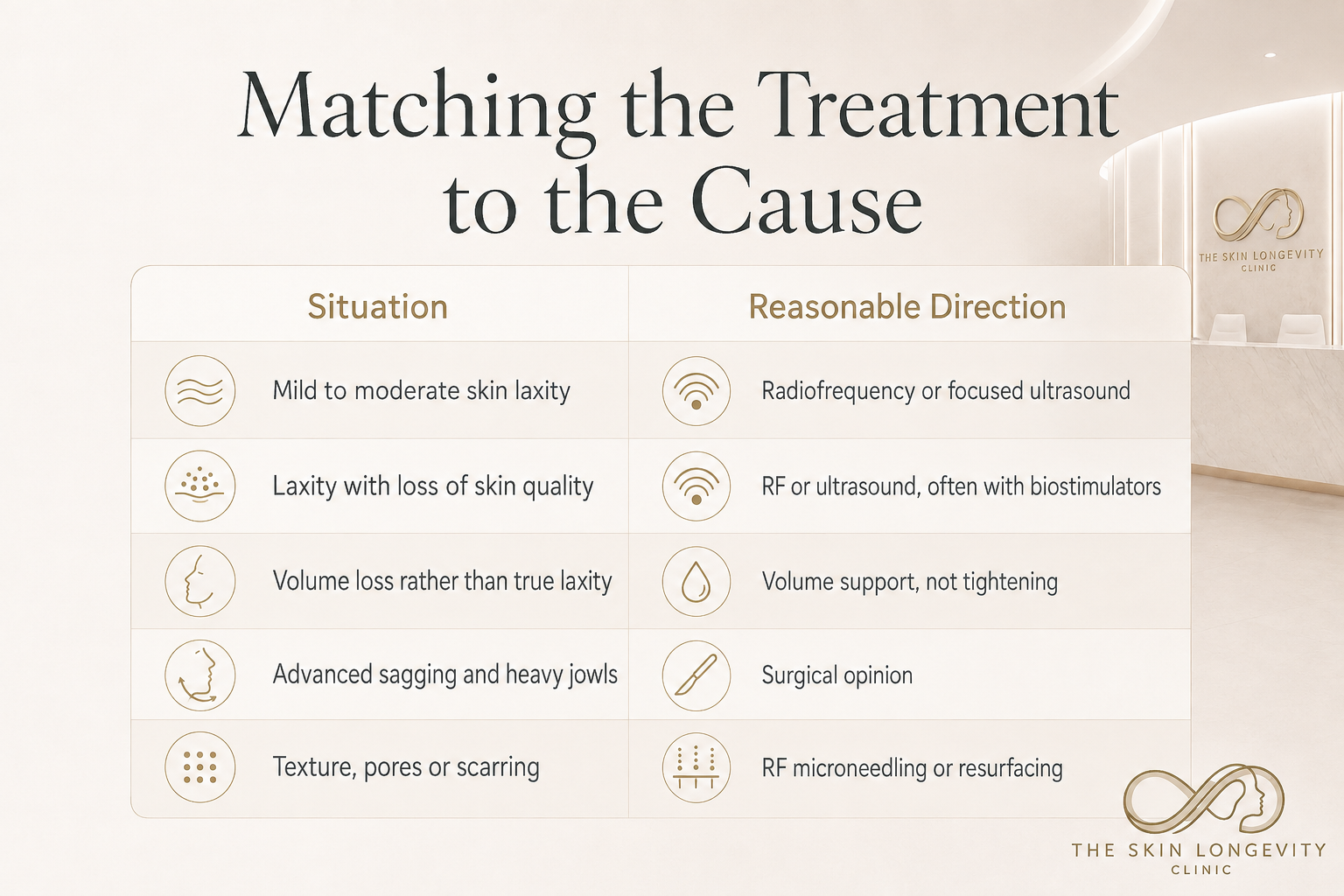
The right treatment depends on what is producing the visible change. XERF radiofrequency or focused ultrasound can suit mild to moderate laxity, while volume loss, acne scarring and advanced jowling require different treatment directions.
How to Choose non-surgical skin tightening and lifting treatments in Singapore
At The Skin Longevity Clinic, a full skin-tightening assessment covers facial proportions, skin laxity, dermal thickness, volume loss, fat distribution, dynamic muscle pull, neck involvement, pigment risk, inflammation and downtime tolerance. Treatments are then sequenced — stabilising skin quality first, then addressing structure, tightening, collagen support and longer-term maintenance — rather than performed all at once. This staged approach is central to how the clinic helps patients achieve natural-looking outcomes over time. For the clinic’s dedicated treatment page, see XERF in Singapore, and for ultrasound-based tightening see the clinic’s HIFU treatment page.
The right treatment is the one that fits the cause of your concern, not the one with the best marketing. The order that works is straightforward. Establish whether the problem is laxity or volume. Judge how severe it is. Then choose a treatment, or a combination, that matches. This is a clinical decision, which is why an assessment is worth more than a price comparison. If you are unsure where to start, a skin longevity assessment is a sensible first step.
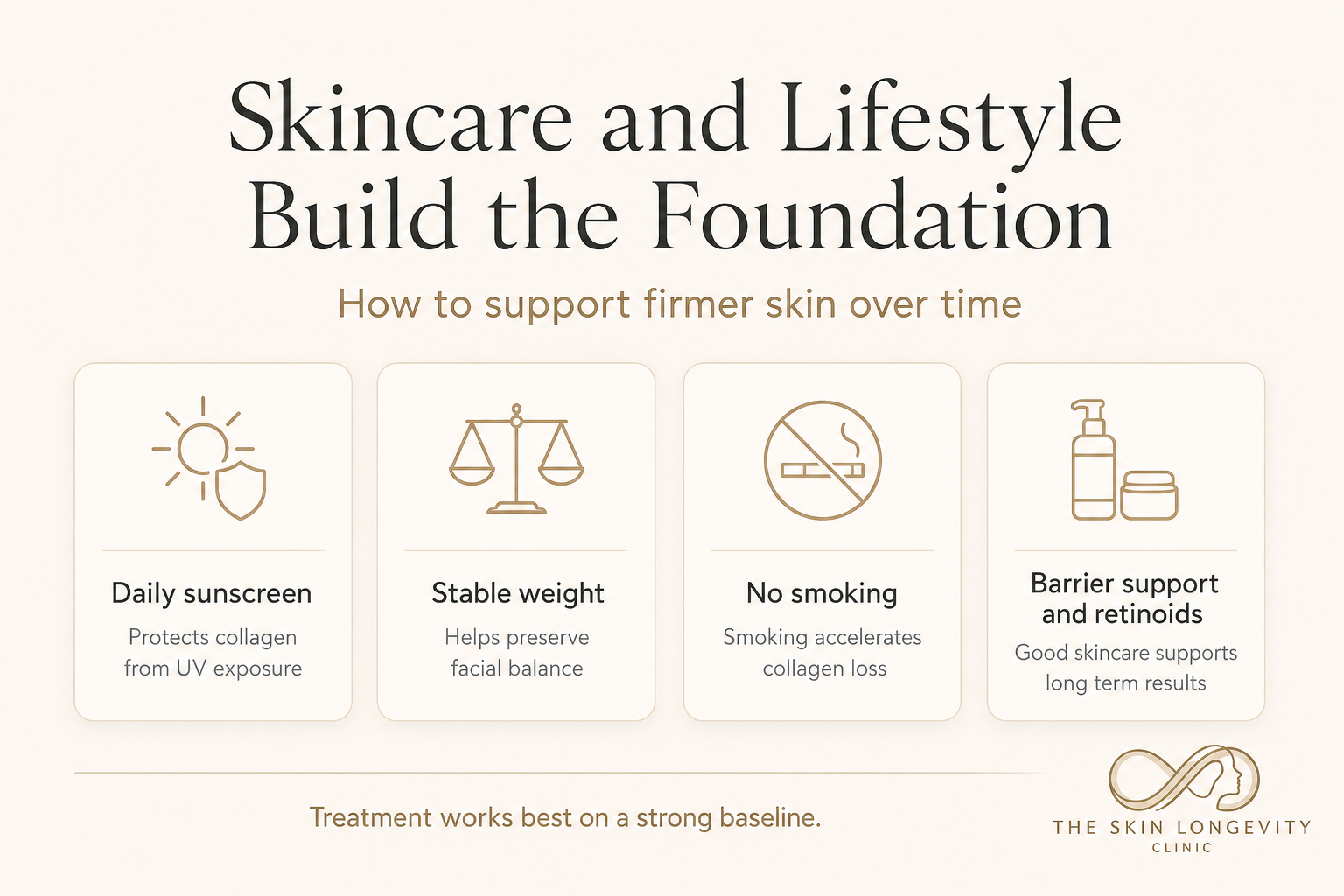
Daily sunscreen, a stable weight, avoidance of smoking and suitable barrier care help protect collagen and support longer-term skin tightening results. These measures complement XERF and other procedures but do not replace treatment for established laxity.
Skincare and Lifestyle: The Foundation of Firm Skin
No skin tightening treatment works in isolation. Whatever treatment you choose, the condition of your skin and your everyday habits influence both how well it responds and how long the result lasts.
Sun protection is the single most important habit. In Singapore’s climate, daily and consistent use of sunscreen protects against the ultraviolet exposure that drives collagen and elastin breakdown. Not smoking matters, because smoking accelerates collagen loss. A stable weight helps, since significant weight change alters the face. A sensible skincare routine, including ingredients that support the skin barrier and, where appropriate, retinoids, contributes over the long term.
None of this replaces a tightening treatment, but it forms the foundation on which a treatment builds. A clinic that discusses skincare and lifestyle alongside procedures is treating skin as a system, which is the more durable approach.
Questions to Ask Your Aesthetic Clinic or Doctor in Singapore
A short list of questions makes any skin tightening consultation more productive. It is reasonable to ask whether your concern is genuinely laxity or volume loss, since the answer changes the treatment entirely. It is reasonable to ask why a particular treatment is being recommended over the alternatives, and what result is realistic for your skin. It is reasonable to ask how many sessions are suggested and why, what the treatment will cost in full, and whether a review is included.
Perhaps the most revealing question is what the provider would advise if the honest answer were no treatment, or a surgical opinion. A provider who can answer that comfortably is one who is matching the treatment to your diagnosis rather than to a price list.
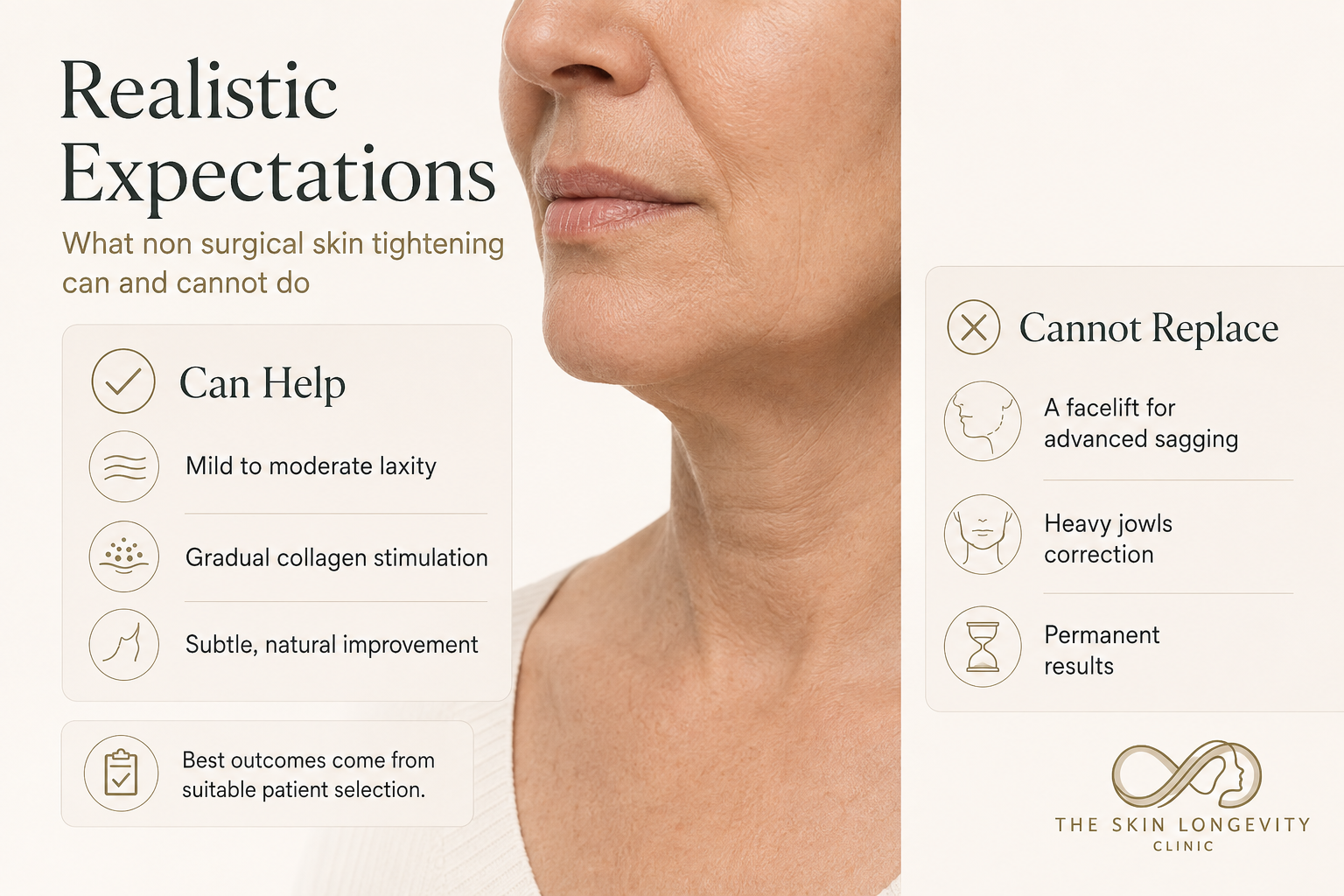
What can non-surgical skin tightening achieve? Treatments such as XERF can produce gradual, subtle improvement in appropriately selected mild to moderate laxity. They cannot replace a facelift for substantial excess skin or heavy jowls.
Why the Wrong Treatment Is the Real Expense
If you are unsure where to begin, a skin longevity assessment is a sensible first step.
When people compare skin tightening options in Singapore, the focus often falls on the price of each treatment. The larger cost is rarely on the price list. It is the cost of choosing a treatment that does not fit the problem. A course of tightening sessions for a face whose real issue is volume loss is not cheap, however reasonable each session looked, because it does not deliver the result. The same is true of any treatment used for the wrong concern. This is why assessment is not an optional extra. The time spent establishing what is actually causing your concern protects every dollar spent afterwards.
Frequently Asked Questions about skin tightening and lifting treatments
What is the best skin tightening treatment in Singapore?
There is no single best treatment, because the right choice depends on the cause and severity of your laxity. Radiofrequency, focused ultrasound, biostimulators and surgery all have a place. The best treatment is the one that fits your diagnosis, which is established at assessment.
Is non-surgical skin tightening permanent?
No. Non-surgical skin tightening improves laxity but does not stop ageing, so collagen continues to decline. Results are maintained over time with periodic treatment rather than being permanent.
At what age should I consider skin tightening?
There is no fixed age. Most people consider it when they first notice softening of the jawline or lower face, often from the late thirties onwards, though this varies. Earlier, milder laxity tends to respond better than advanced sagging.
Can skin tightening treatments be combined?
Yes. Different layers of the face age at different rates, and a combination, for example tightening with collagen support, can be appropriate. Sequencing matters, because doing too much too quickly can increase irritation, so combinations are best planned within an overall treatment plan.
What affects the cost of skin tightening in Singapore?
Cost depends on the technology used, the area treated, the number of sessions a plan needs and whether the price includes assessment and review. Energy-based treatments are usually priced per session or per treatment area; injectable biostimulators by the number of syringes. Two quotes are only comparable when they cover the same plan for the same diagnosis. The Skin Longevity Clinic quotes after assessment, once the treatment plan is known. Our guide to questions to ask an aesthetic clinic in Singapore covers how to compare a quote.
How many sessions of skin tightening are needed?
It depends on the treatment. Monopolar radiofrequency such as XERF is usually one to two sessions, with results developing over two to six months. HIFU is usually a single session repeated after a year or more. RF microneedling and collagen biostimulators are usually two to three sessions, four to twelve weeks apart. Treatments are repeated as ageing continues, not because the effect wears off suddenly.
Is HIFU or RF better for skin tightening?
Neither is better for everyone. In the one randomised head-to-head trial, monopolar radiofrequency and microfocused ultrasound produced similar improvement in face and neck laxity with similar satisfaction and side effects2. HIFU reaches deeper and suits brow and lower-face lifting; radiofrequency such as XERF treats the dermis and support layer with less discomfort and no needles, which is why it is the clinic’s first choice for most mild to moderate laxity. The choice depends on skin thickness, the layer that needs treating and your tolerance for discomfort. See XERF vs Ultherapy for a detailed comparison.
How should I read skin tightening reviews in Singapore?
Look for the concern the reviewer had, the device and settings used, the number of sessions, and how long after treatment the review was written. A review of a different concern, or taken in the first weeks when swelling flatters the result, says little about your likely outcome. Before-and-after photos are only useful when lighting, angle and expression match. Our XERF before and after guide explains what realistic results look like and when they appear.
References
Show all 8 references
- Rohrich RJ, Schultz KP, Chamata ES, Bellamy JL, Alleyne B. Minimally Invasive Approach to Skin Tightening of the Face and Body: Systematic Review of Monopolar and Bipolar Radiofrequency Devices. Plast Reconstr Surg. 2022;150(4):771–780. PMID 35877937.
- Alhaddad M, Wu DC, Bolton J, et al. A Randomized, Split-Face, Evaluator-Blind Clinical Trial Comparing Monopolar Radiofrequency Versus Microfocused Ultrasound With Visualization for Lifting and Tightening of the Face and Upper Neck. Dermatol Surg. 2019;45(1):131–139. PMID 30531187.
- Werschler WP, Werschler PS. Long-term Efficacy of Micro-focused Ultrasound with Visualization for Lifting and Tightening Lax Facial and Neck Skin Using a Customized Vectoring Treatment Method. J Clin Aesthet Dermatol. 2016;9(2):27–33. PMID 27047630.
- Weiss RA, Wang J, DiBernardo B, Bhatia AC. Clinical Outcomes Following Dual-Frequency Noninvasive Monopolar Radiofrequency Treatment for Facial Laxity and Lower Face Lifting: A Prospective Multicenter Study. Cureus. 2026;18(3):e104546. PMID 41930066.
- Erlich G, Dahan E, Wolf Y. Objective and subjective retrospective evaluation of XERF, a novel single-shot dual-frequency non-invasive monopolar radiofrequency. Lasers Med Sci. 2026;41(1):194. PMID 42611100.
- Nguyen L, Blessmann M, Schneider SW, Herberger K. Radiofrequency Microneedling for Skin Tightening of the Lower Face, Jawline, and Neck Region. Dermatol Surg. 2022;48(12):1299–1305. PMID 36449871.
- Yen CW, Lin C, Chien Y, Huang HW. Poly-L-Lactic Acid Skin-Tightening Protocol for Improvement of Lower-Face Laxity in Asian Patients: A Prospective Three-Dimensional Imaging and Ultrasound Assessment Study. J Craniofac Surg. 2026, online ahead of print. PMID 42922429.
- Guida S, Galadari H. A systematic review of Radiesse/calcium hydroxylapatite and carboxymethylcellulose: evidence and recommendations for treatment of the face. Int J Dermatol. 2024;63(2):150–160. PMID 37897174.
Related XERF and Skin Tightening Guides
These articles form a connected library on XERF and skin tightening at The Skin Longevity Clinic. You may also find the following guides helpful:
- XERF in Singapore: a complete guide
- XERF price in Singapore
- XERF treatment: the procedure explained
- XERF review: an evidence-based look
- XERF before and after results
- RF skin tightening in Singapore
- XERF vs Ultherapy compared
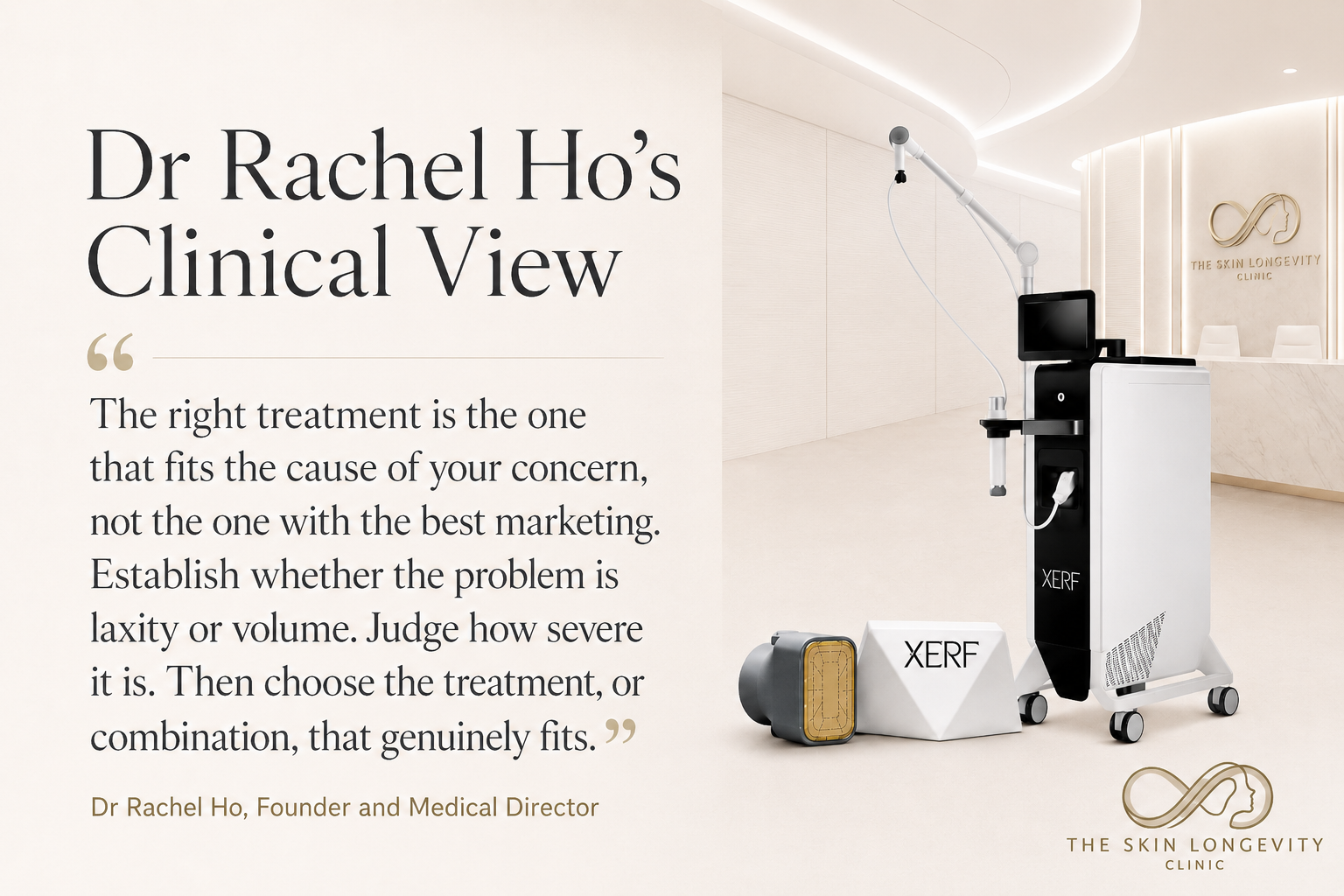
Dr Rachel Ho’s clinical view: The treatment should fit the cause of the concern rather than the strongest marketing claim. At The Skin Longevity Clinic near Orchard Road, assessment distinguishes true laxity from volume loss before XERF or another treatment is recommended.
Non-Surgical Skin Tightening Treatment Guides in Singapore
- XERF in Singapore: monopolar radiofrequency skin tightening for face and body
- RF skin tightening in Singapore: how radiofrequency tightens skin
- Non-surgical facelift in Singapore: combining treatments for lift without surgery
- Sagging skin and facial laxity treatment: jowls, jawline and neck laxity
- Lifting sagging skin: why some lifting treatments disappoint
- XERF vs Ultherapy: radiofrequency versus ultrasound skin tightening
Skin Tightening at The Skin Longevity Clinic
The Skin Longevity Clinic is a doctor-led practice in the Orchard area of Singapore that treats skin tightening as a clinical decision rather than a product choice. The clinic assesses the cause of your laxity first, then recommends the treatment, or combination, that genuinely fits. You can contact the clinic to arrange a consultation.