

10 Sep Pico Laser Results: How Many Sessions Before You See a Difference?
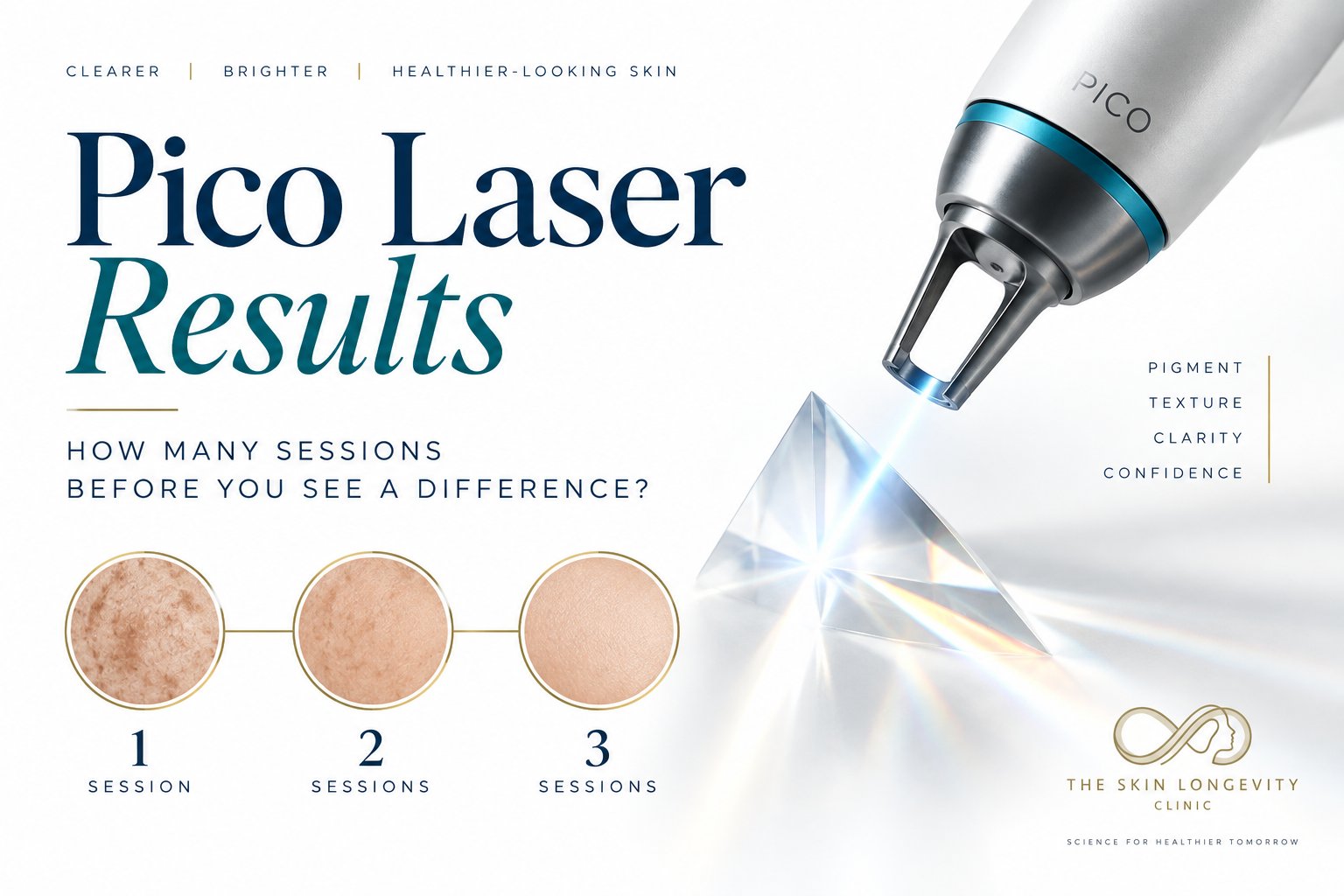
Pico laser can improve selected sun spots after one treatment, while studies of melasma and acne scars have evaluated courses of several sessions1,2,3. The treatment schedule and time needed to assess improvement differ between these concerns1,2,3.
For anyone considering pico laser in Singapore, it is reasonable to ask when a visible change should appear before committing to a course. Ask your doctor to identify the specific change being targeted and explain when progress will be reviewed.
How many pico laser sessions might you need?
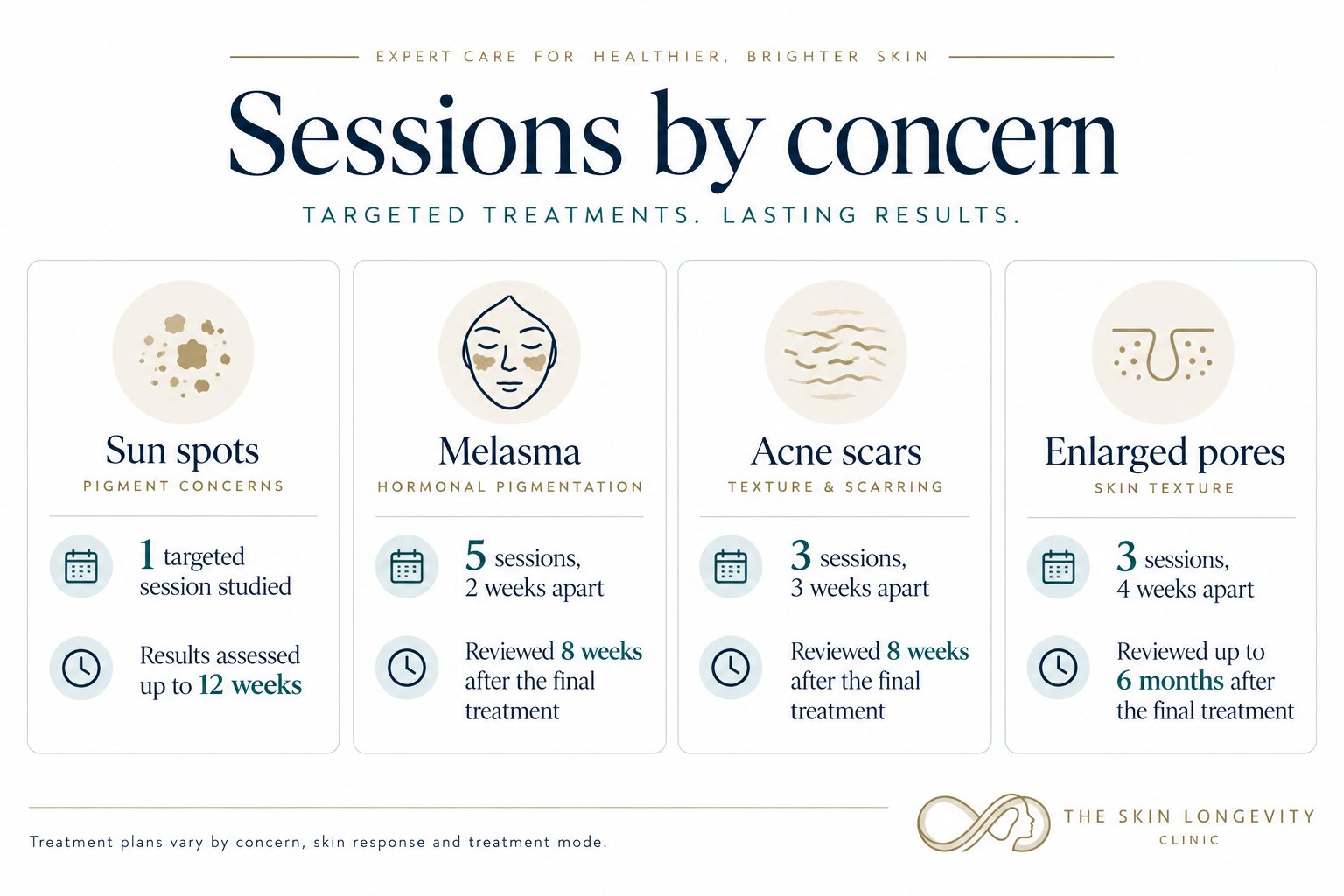
Published studies provide useful examples of treatment schedules, although they do not establish a standard number for every patient1,2,3,4. The table below distinguishes the number of treatments from the time researchers allowed before assessing the outcome.
| Concern and treatment studied | Published treatment schedule | When results were assessed |
|---|---|---|
| Sun spots treated with a 532 nm picosecond laser | One targeted treatment1. | Follow up at two, four, eight and twelve weeks1. |
| Melasma treated with a low energy 1064 nm picosecond laser | Five treatments, two weeks apart2. | During the course and eight weeks after the final treatment2. |
| Acne scars treated with a fractional 1064 nm picosecond laser | Three treatments, three weeks apart3. | At treatment visits and eight weeks after the final session3. |
| Enlarged pores treated with a fractional 1064 nm picosecond laser | Three treatments, four weeks apart4. | One, three and six months after the final session4. |
These are examples from particular studies, rather than recommended packages. The assessment dates show when researchers measured results, rather than the earliest time a difference could appear.
Can you see pico laser results after one session?
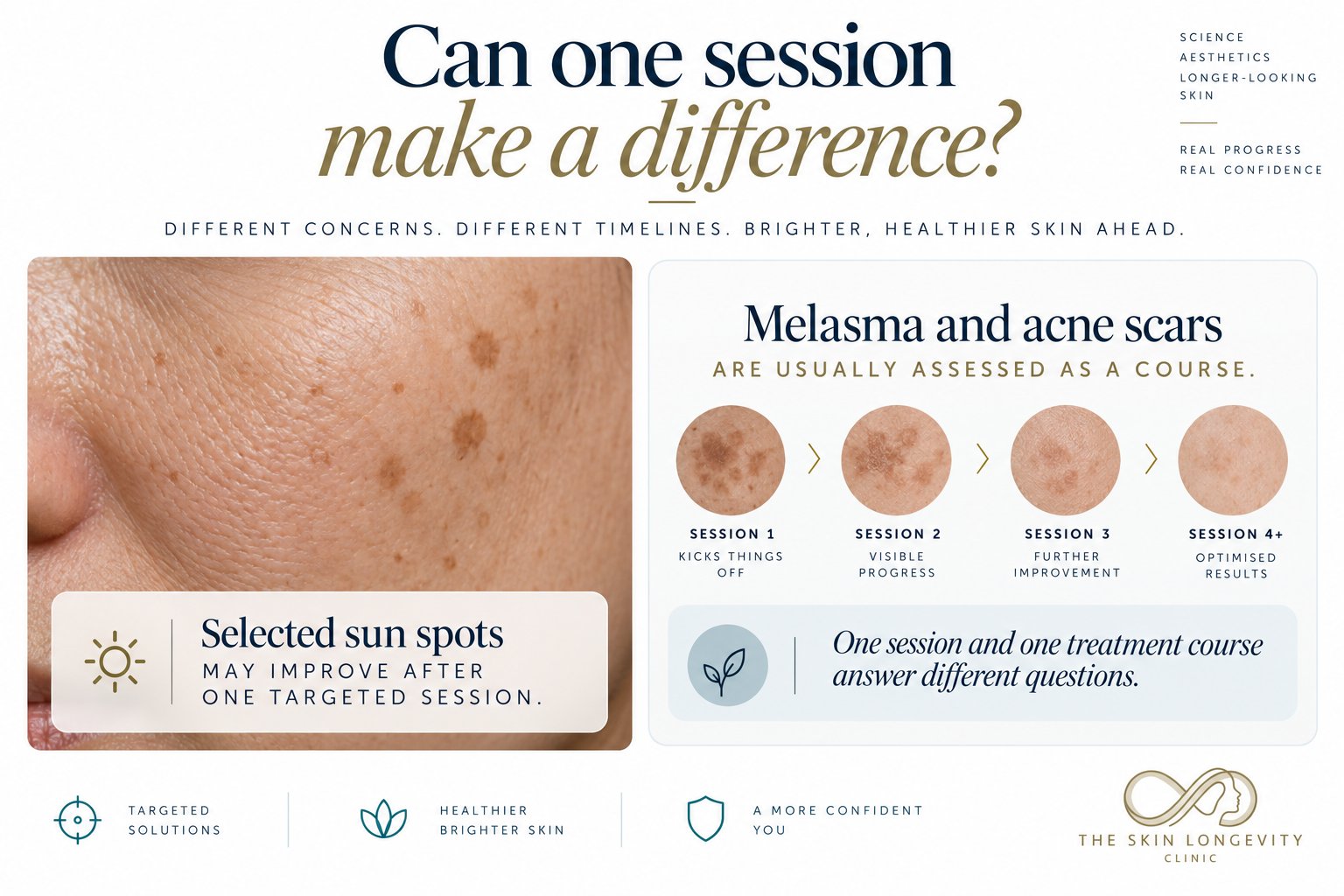
A randomised study of twenty Korean women found improvement in facial sun spots after one targeted picosecond treatment1. Researchers followed the participants for twelve weeks, assessing the treated pigmentation rather than relying on its appearance immediately after the procedure1.
That finding supports the possibility of improvement after one session for selected sun spots, rather than complete clearance of every type of pigmentation1. At your review, ask whether the original spots have become lighter, whether any remain and whether further treatment would be useful.
Our pico laser treatment guide explains suitability and the consultation process. Dr Rachel Ho’s review of pico laser discusses the evidence for different pigmentation concerns.
Why does the treatment mode affect the timeline?
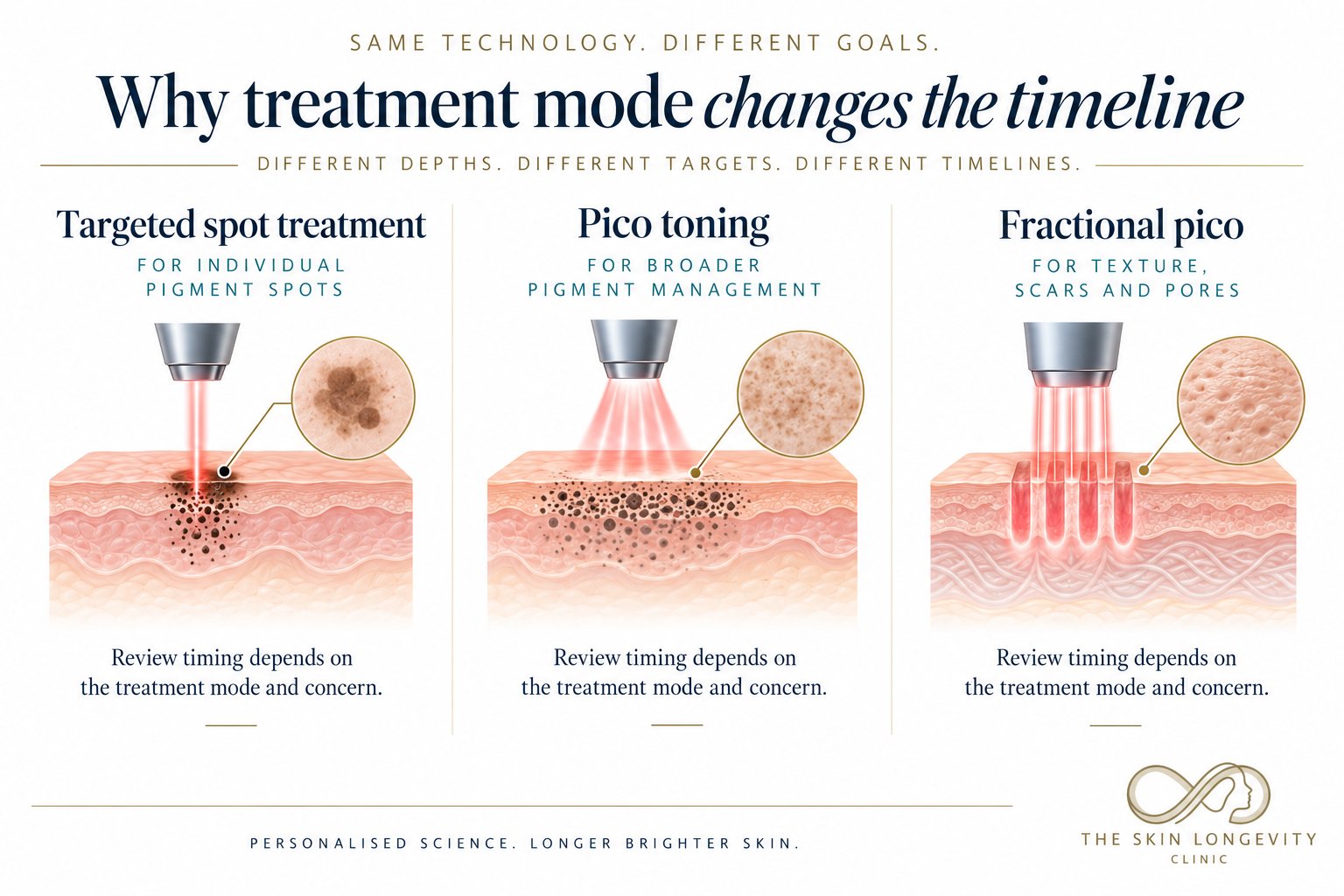
Treatment directed at individual pigment spots differs from fractional treatment, which uses specialised optics to concentrate energy into microscopic areas of the skin5. Fractional approaches have been studied for skin remodelling, acne scars and texture, with results depending on the wavelength, delivery system and treatment settings5.
Ask whether your appointment involves pigment toning, individual spot treatment or fractional treatment. When comparing two proposed courses, clarify whether they involve the same treatment mode and aim to improve the same concern.
The distinction between a lower energy toning treatment and a fractional treatment is set out in our guide to pico toning vs fractional pico laser.
When should acne scar and texture improvement be assessed?
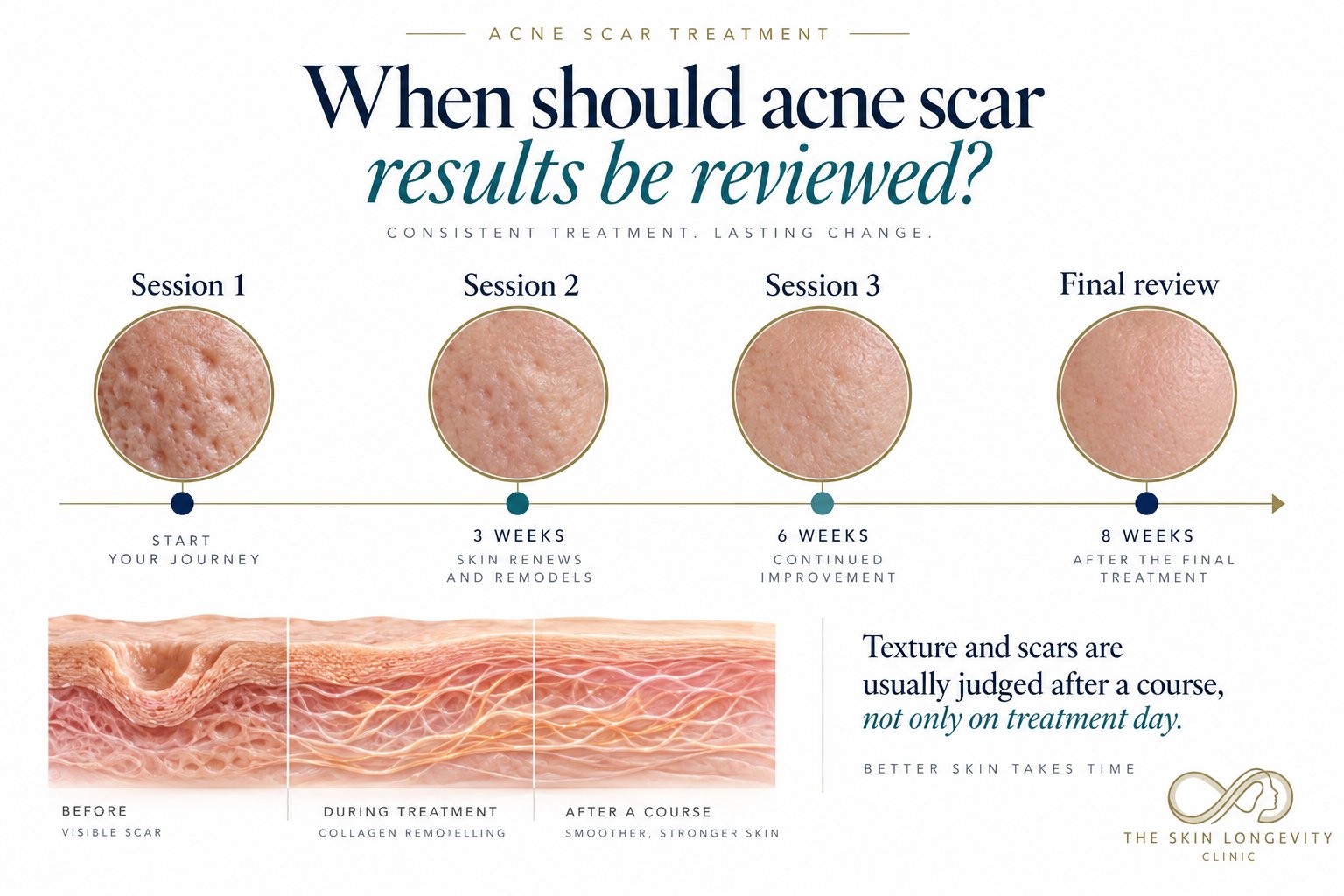
A small study of twenty two people, including ten treated for acne scars, evaluated three fractional pico laser sessions3. Scar assessments improved during the study, with the final evaluation performed eight weeks after the last treatment3. The study had no untreated comparison group, which limits how confidently its results can be generalised3.
In a separate study of twenty five people with enlarged pores, improvement in pore appearance continued between one and six months after the final fractional treatment4. This finding supports allowing time for assessment after a course, rather than judging the outcome only at the last appointment4.
For acne concerns, ask the doctor to assess colour and surface texture separately. Our guide to acne marks and acne scars explains the distinction and how it affects treatment choices.
How far apart should pico laser sessions be?
The two week interval used in the melasma study applied to a specific low energy protocol2. The fractional scar and pore studies used different treatment settings and longer intervals, so their schedules should be considered within their respective protocols3,4.
Ask for the proposed interval and review date before beginning treatment. Discuss how the schedule would be reconsidered if your skin responds differently from expected, rather than assuming that every appointment must proceed unchanged.
How should pico laser before and after photographs be compared?
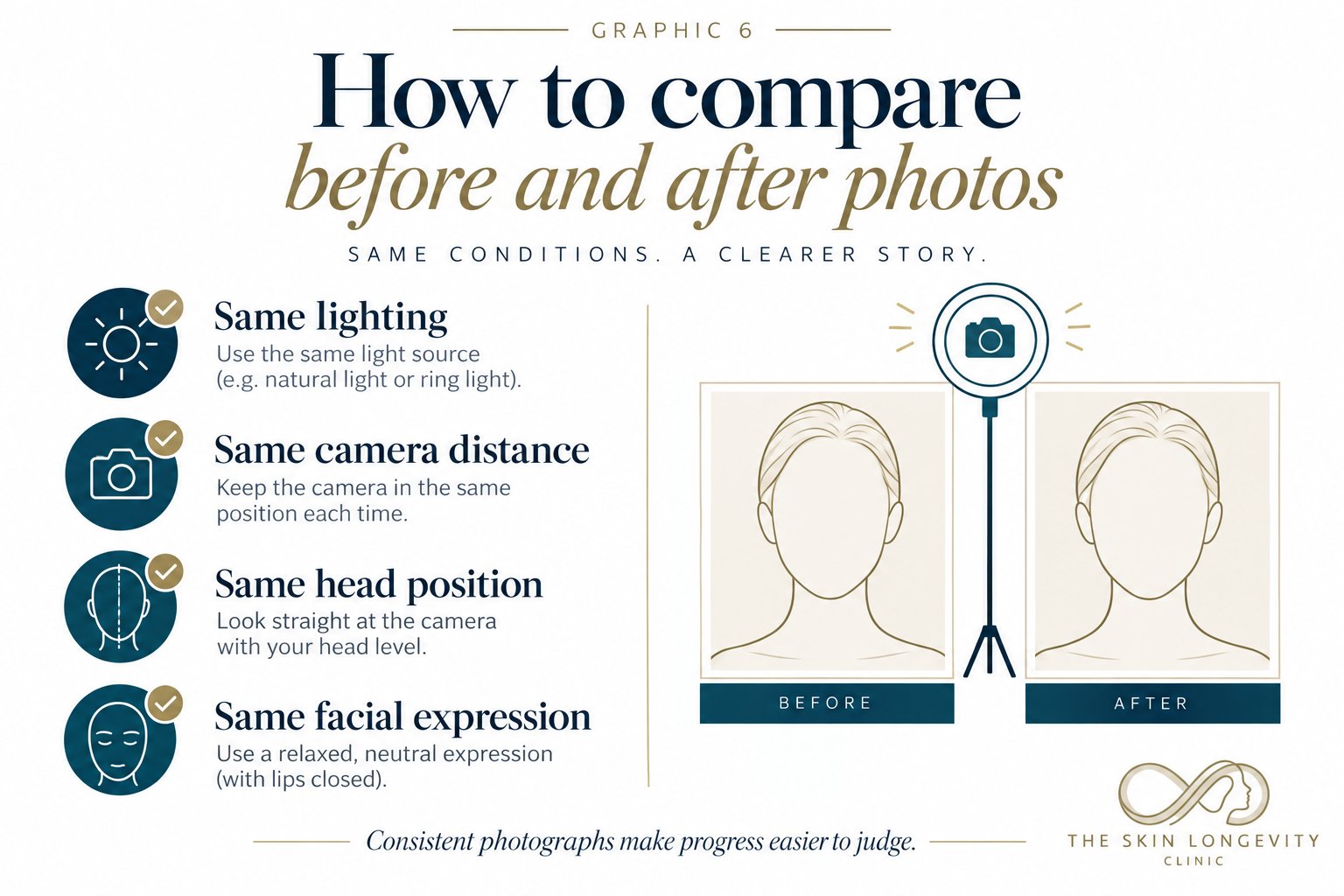
Consistent lighting, camera distance, head position and facial expression are important for reliable photographic comparisons6. Changes in these conditions can alter the apparent result independently of the treatment6.
Compare the same areas in photographs taken under similar conditions, and record how long each image was taken after treatment. Explain whether you notice a change in the original pigmentation, the texture or both, rather than relying only on a general impression of brighter skin.
For questions about the early appearance of treated skin, read our pico laser downtime and recovery guide. Keep the recovery discussion separate from the later assessment of how much the original concern has improved.
What if pico laser seems not to be working?
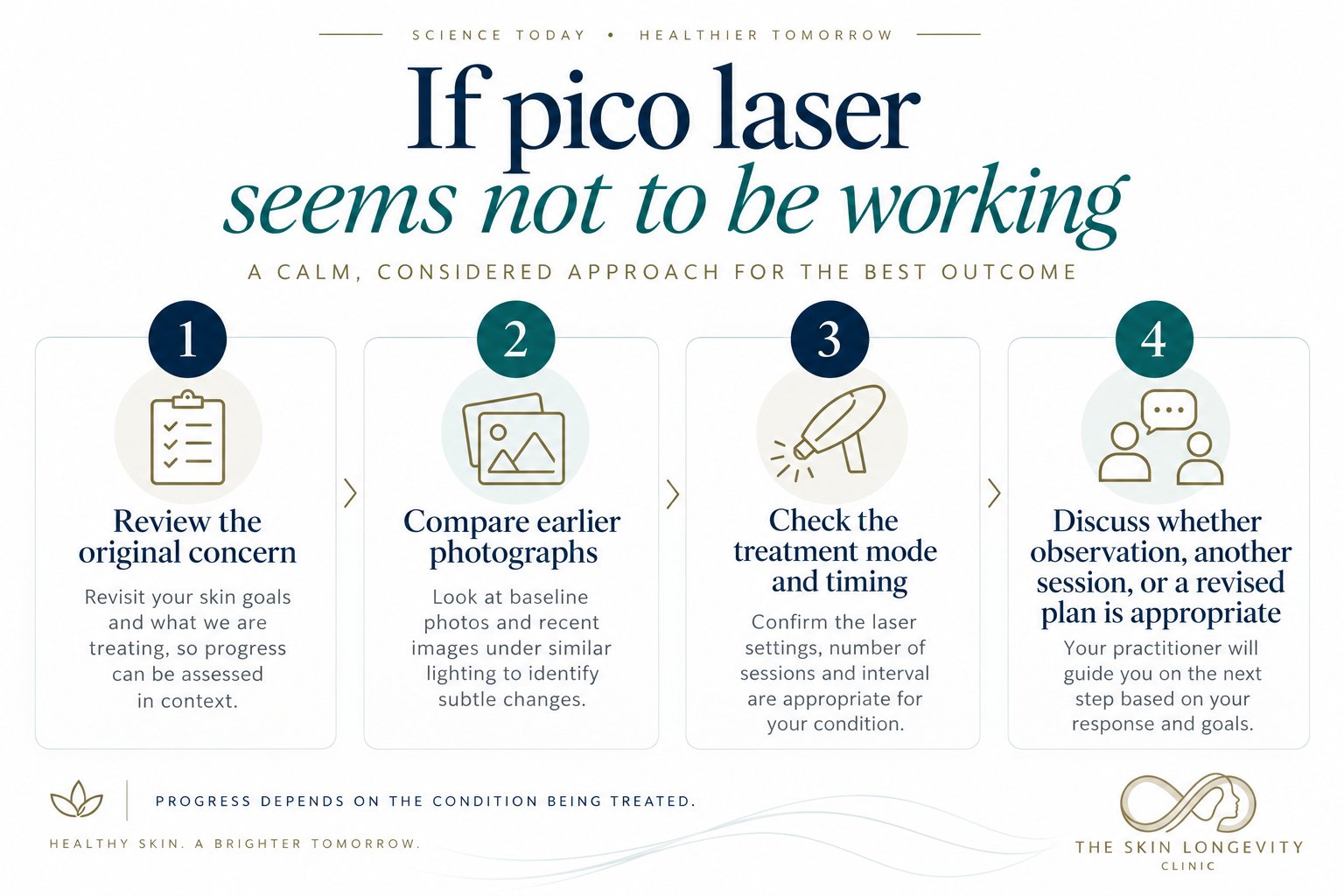
A review is worthwhile when the change is smaller than you expected. Bring earlier photographs and treatment records, and ask the doctor to compare them with the original treatment goal.
The evidence for pico laser varies across conditions and treatment configurations5. Research on fractional treatment for established post inflammatory pigmentation includes small reports, so session counts from sun spot studies should not be applied automatically to every post acne mark5.
Ask whether the next step should be further observation, another session or a revised treatment plan. Our article on stubborn pigmentation and dark spots after laser discusses the wider assessment when pigmentation persists or returns.
How long do pico laser results last?
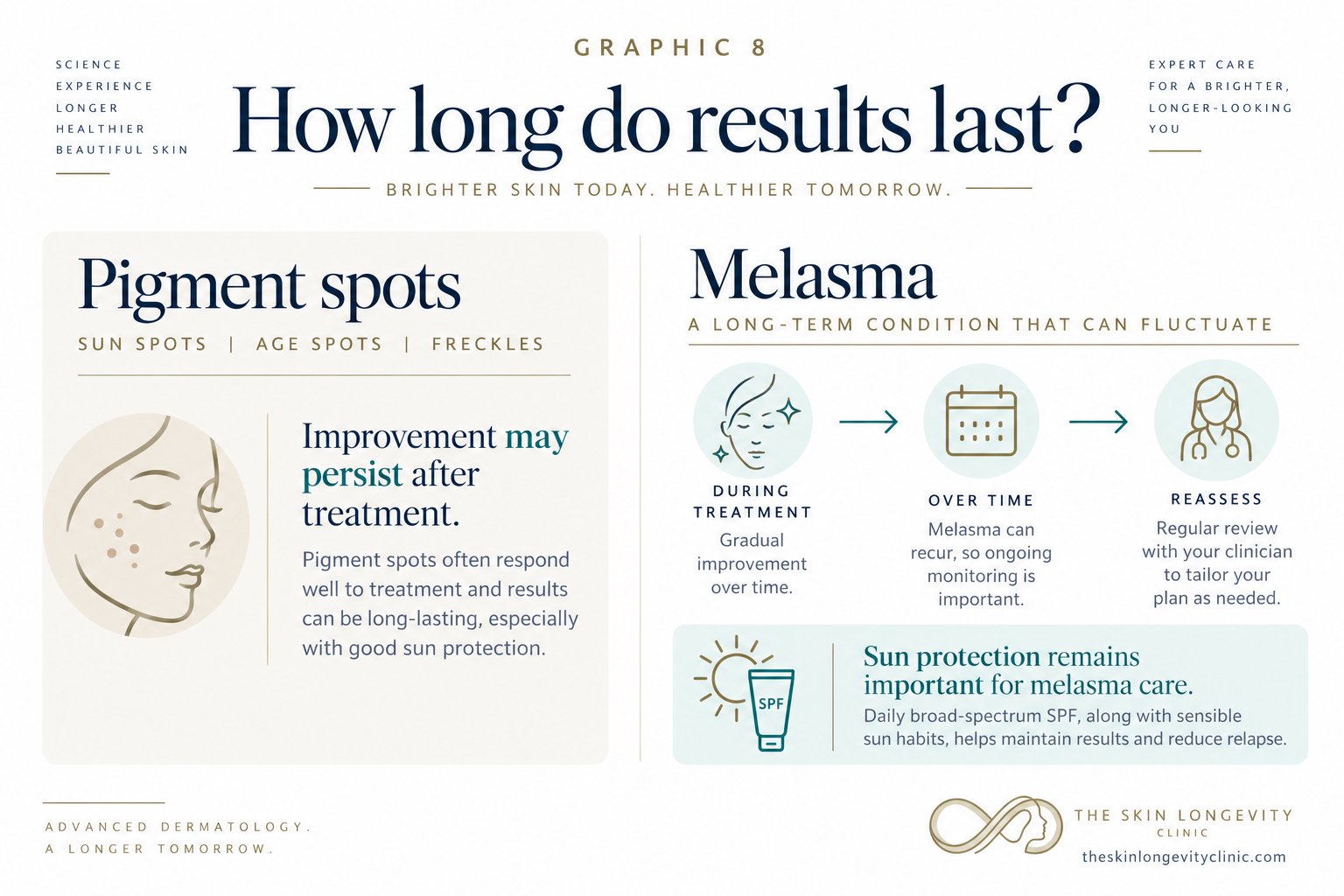
In the melasma study, pigmentation scores improved during treatment but increased again at the assessment eight weeks after the final session, while remaining better than baseline2. This illustrates why initial lightening and stability after treatment should be reviewed separately2.
Daily skin care also deserves attention when planning melasma treatment. A randomised trial in patients using hydroquinone found greater improvement with sunscreen protecting against ultraviolet and visible light than with ultraviolet protection alone7. That study evaluated skincare rather than laser maintenance, but supports discussing sun protection alongside the procedure7.
Our melasma treatment guide explains the role of ongoing care. At review, discuss whether further laser treatment is appropriate for the remaining pigmentation rather than assuming that maintenance sessions are automatically needed.
Planning a pico laser course at The Skin Longevity Clinic
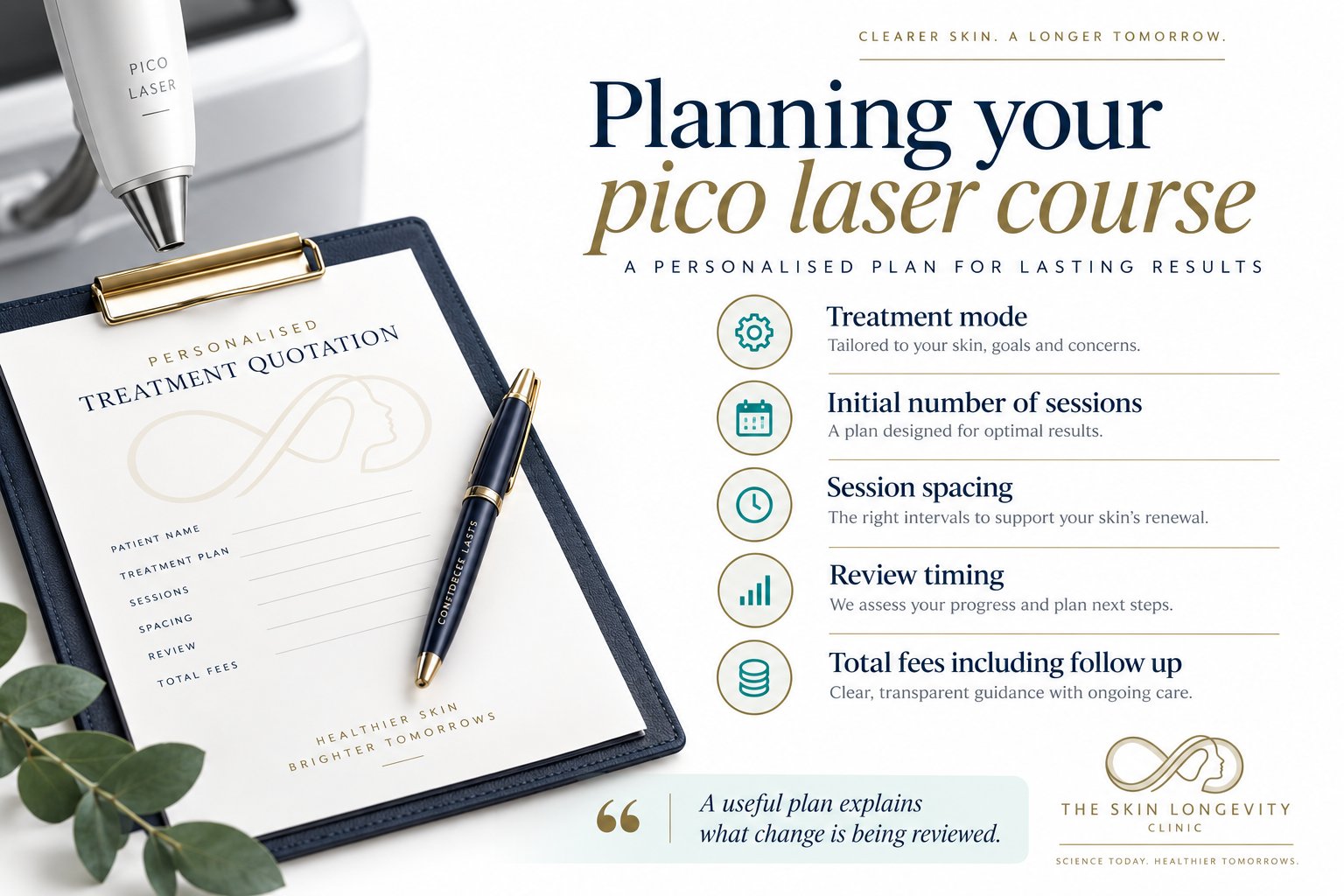
Before agreeing to a course, ask what improvement would justify continuing and when that decision will be reviewed. Clarify the proposed treatment mode, initial number of sessions, spacing and total fees, including consultation and follow up.
Our pico laser price guide explains what to check in a quotation. A useful plan gives you a way to judge progress and discuss the next step, rather than simply a number of appointments to complete.
References
-
Kim JY, Yang JH, Huh G, Choi YJ, Kim WS. A Split Face, Single Blinded, Randomized Controlled Comparison of 532 nm Picosecond Neodymium Doped Yttrium Aluminum Garnet Laser versus 532 nm Q Switched Neodymium Doped Yttrium Aluminum Garnet Laser in the Treatment of Solar Lentigines. Annals of Dermatology. 2020;32:8 to 13.
-
Lee SY, Kim HR, Park JS, et al. The Efficacy and Safety of a Low Fluence 1064 nm Picosecond ND YAG Laser Compared with Those of a Low Fluence Photoacoustic Therapy Pulsed Mode 1064 nm Q Switched ND YAG Laser for Treatment of Melasma: A Prospective Split Face Study. Dermatologic Therapy. 2023;2023:5961152.
-
Lee CH, Jin EM, Seo HS, Ryu TU, Hong SP. Efficacy and Safety of Treatment with Fractional 1064 nm Picosecond Laser with Diffractive Optic Element for Wrinkles and Acne Scars: A Clinical Study. Annals of Dermatology. 2021;33:254 to 262.
-
Palawisuth S, Manuskiatti W, Apinuntham C, Wanitphakdeedecha R, Cembrano KAG. Quantitative assessment of the long term efficacy and safety of a 1064 nm picosecond laser with fractionated microlens array in the treatment of enlarged pores in Asians: A case control study. Lasers in Surgery and Medicine. 2022;54:348 to 354.
-
Zhou Y, Hamblin MR, Wen X. An update on fractional picosecond laser treatment: histology and clinical applications. Lasers in Medical Science. 2023;38:45.
-
Callan PP, Wilson W. A standardised system of photography to assess cosmetic facial surgery. Australasian Journal of Plastic Surgery. 2021;4:8 to 21.
-
Castanedo Cazares JP, Hernandez Blanco D, Carlos Ortega B, Fuentes Ahumada C, Torres Álvarez B. Near visible light and UV photoprotection in the treatment of melasma: a double blind randomized trial. Photodermatology, Photoimmunology and Photomedicine. 2014;30:35 to 42.