

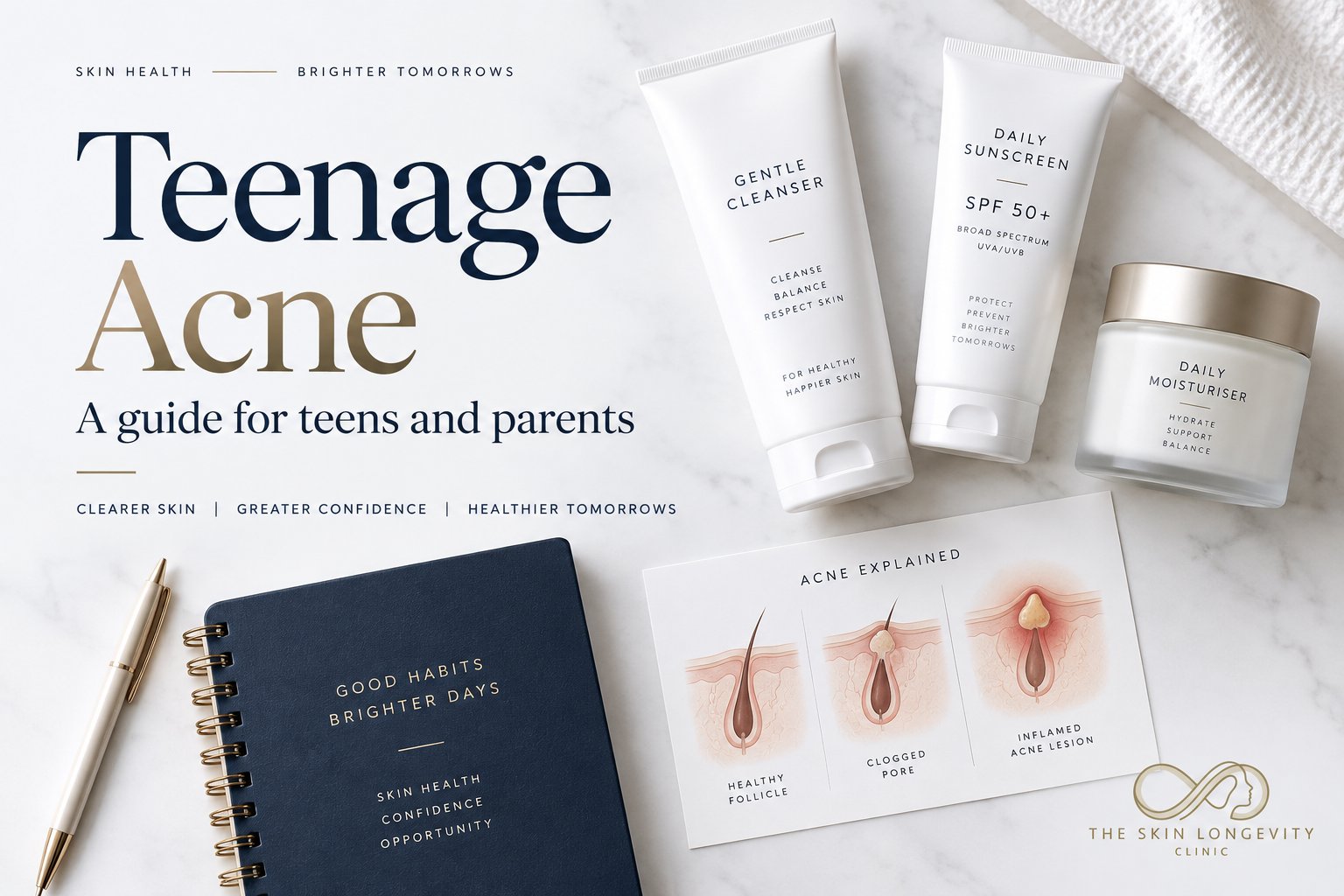
19 Sep Teenage Acne: A Guide for Teens and Parents in Singapore
Teenage acne is an inflammatory skin condition involving the hair follicles and oil glands, often developing around puberty1,3. Treatment can include benzoyl peroxide, topical retinoids and other medicines, selected according to the teenager’s age, acne severity and skin tolerance1,2.
For teenagers, the immediate concern might be painful spots, persistent forehead bumps or feeling uncomfortable in photographs. Parents may be wondering whether to try another cleanser or arrange a consultation.
A useful plan addresses both perspectives. This guide explains what teenage skin needs, how treatment is chosen and how to make the routine manageable around school and everyday life.
Why does acne develop during puberty?
Hormonal changes around puberty increase the activity of the sebaceous glands, which produce the skin’s natural oil3. Acne develops through a combination of follicular blockage, oil production, interactions with Cutibacterium acnes and inflammation1,4.
Family history also influences susceptibility1. Washing more often cannot address all these processes, and overly harsh cleansing can make treatment harder to tolerate1.
Acne sometimes begins before the teenage years, so age and pubertal development are part of the assessment3. An unusually early or abrupt presentation may need a different evaluation from the familiar pattern of adolescent breakouts3.
What does teenage acne look like?
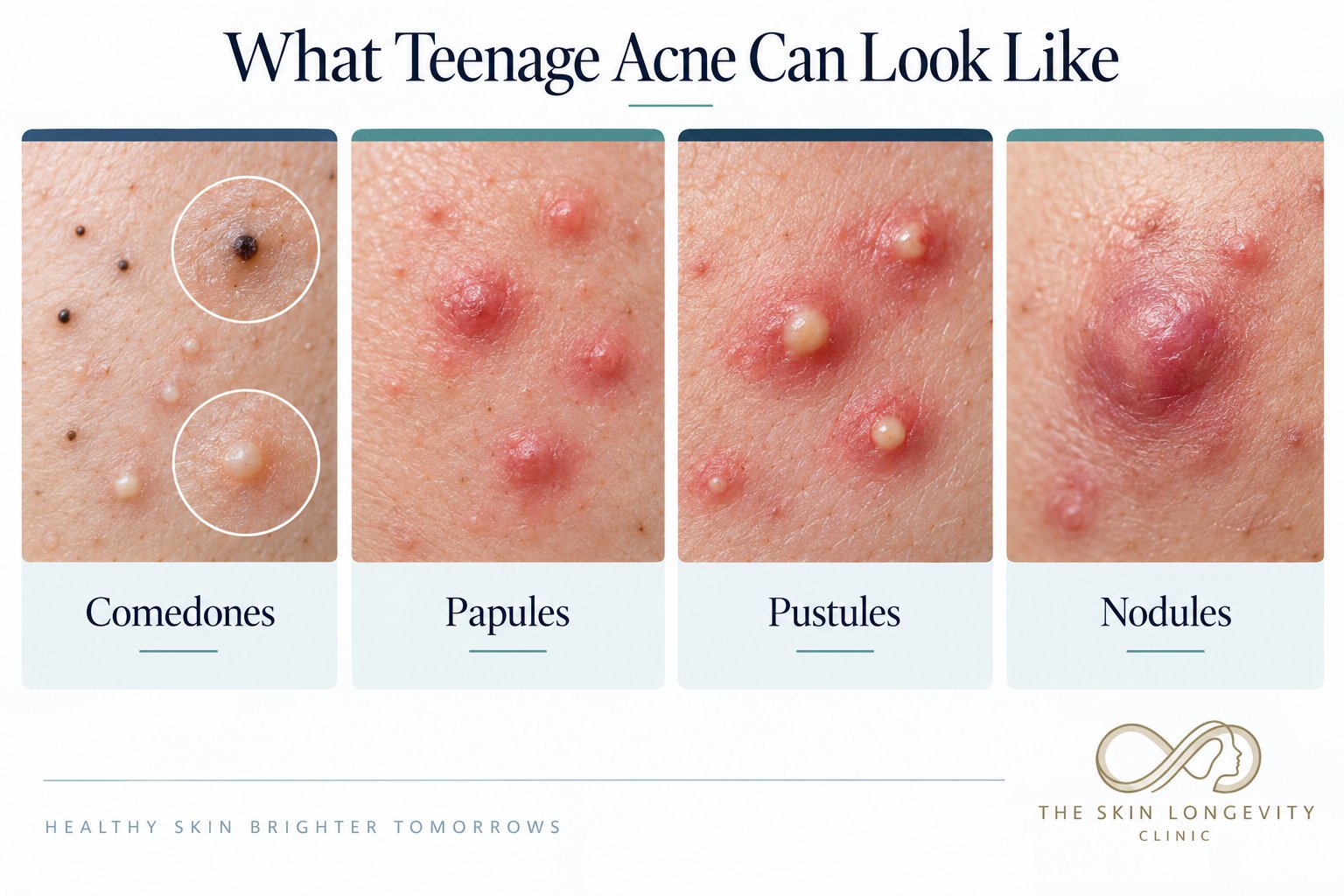
Teenage acne can involve blackheads, whiteheads, inflamed spots and deeper nodules, sometimes appearing together4. The face, chest and back should all be considered when assessing its extent4.
| What you might notice | What it may represent |
|---|---|
| Blackheads and small white or skin coloured bumps | Open and closed comedones, caused by blockage within the follicle4. |
| Red, raised spots | Inflammatory papules4. |
| Spots with a visible pus filled centre | Pustules4. |
| Deeper, tender lumps | Nodular acne, which warrants assessment because of discomfort and scarring risk4. |
The number of visible spots is only one part of severity. Pain, existing scars, the areas affected and the impact on daily life also influence treatment decisions2,4.
What should a teenage acne skincare routine include?
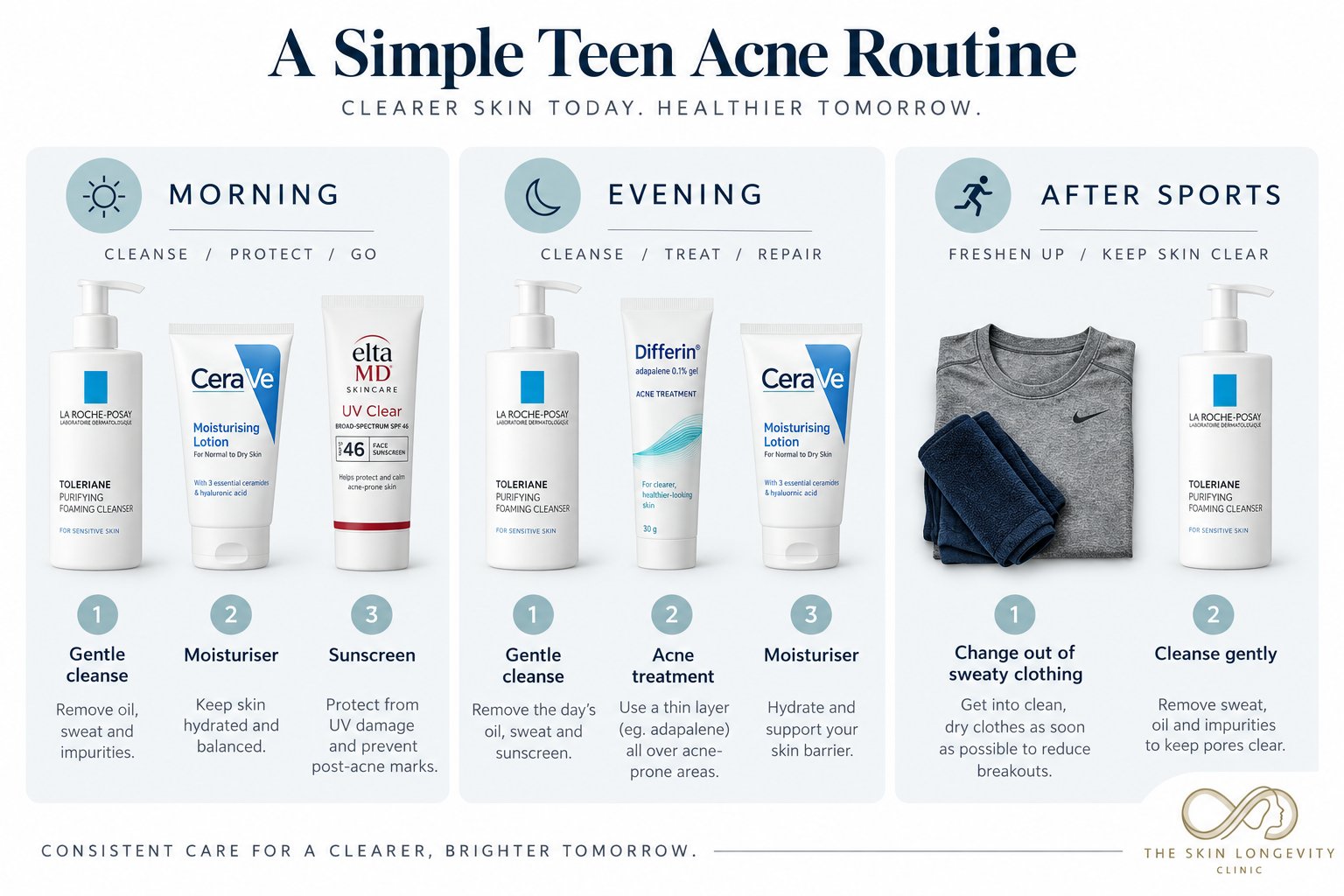
Start with gentle cleansing, a suitable moisturiser, sun protection and the acne treatment chosen for the individual1,3. Skincare supports treatment, while the acne medicine addresses processes such as follicular blockage and inflammation1,2.
A school day routine should be simple enough to follow consistently. Keep a written plan showing which products belong in the morning, which are used at night and how often the prescribed treatment should be applied.
| When | A practical starting point |
|---|---|
| Morning | Gentle cleansing, moisturiser as needed and a suitable broad spectrum sunscreen1. |
| Evening | Gentle cleansing, the agreed acne treatment and moisturiser, following the application instructions1,3. |
| After sports | Change out of sweaty clothing and cleanse gently when practical, particularly where equipment or clothing rubs against the skin7. |
Choose products labelled noncomedogenic, meaning they are formulated to be less likely to contribute to blocked pores1. Their texture and tolerability still matter, especially when treatment is already causing dryness1.
Does a teenager need an acne cleanser?
A cleanser containing an acne ingredient may be useful, but it should be chosen alongside the rest of the routine1,3. A gentle cleanser may be more comfortable when a separate acne medicine already provides the active treatment1.
Bring the products currently being used to the consultation. This helps identify repeated ingredients and makes the instructions more practical than simply adding another product.
What about toners, scrubs and skincare trends?
A 2025 study analysed 100 TikTok videos showing skincare routines created by children and teenagers6. Researchers identified frequent exposure to potentially irritating ingredients, although the study assessed the routines rather than measuring skin damage in every person featured6.
For someone already using acne medication, additional exfoliating toners and scrubs may increase irritation1. Choose each product for a clear purpose rather than recreate every step of an online routine.
Dr Rachel Ho’s article on children’s skincare and Gen Alpha beauty trends explores this issue further. Interest in skincare can be a useful starting point for a conversation about what the skin actually needs.
Which treatments work for teenage acne?
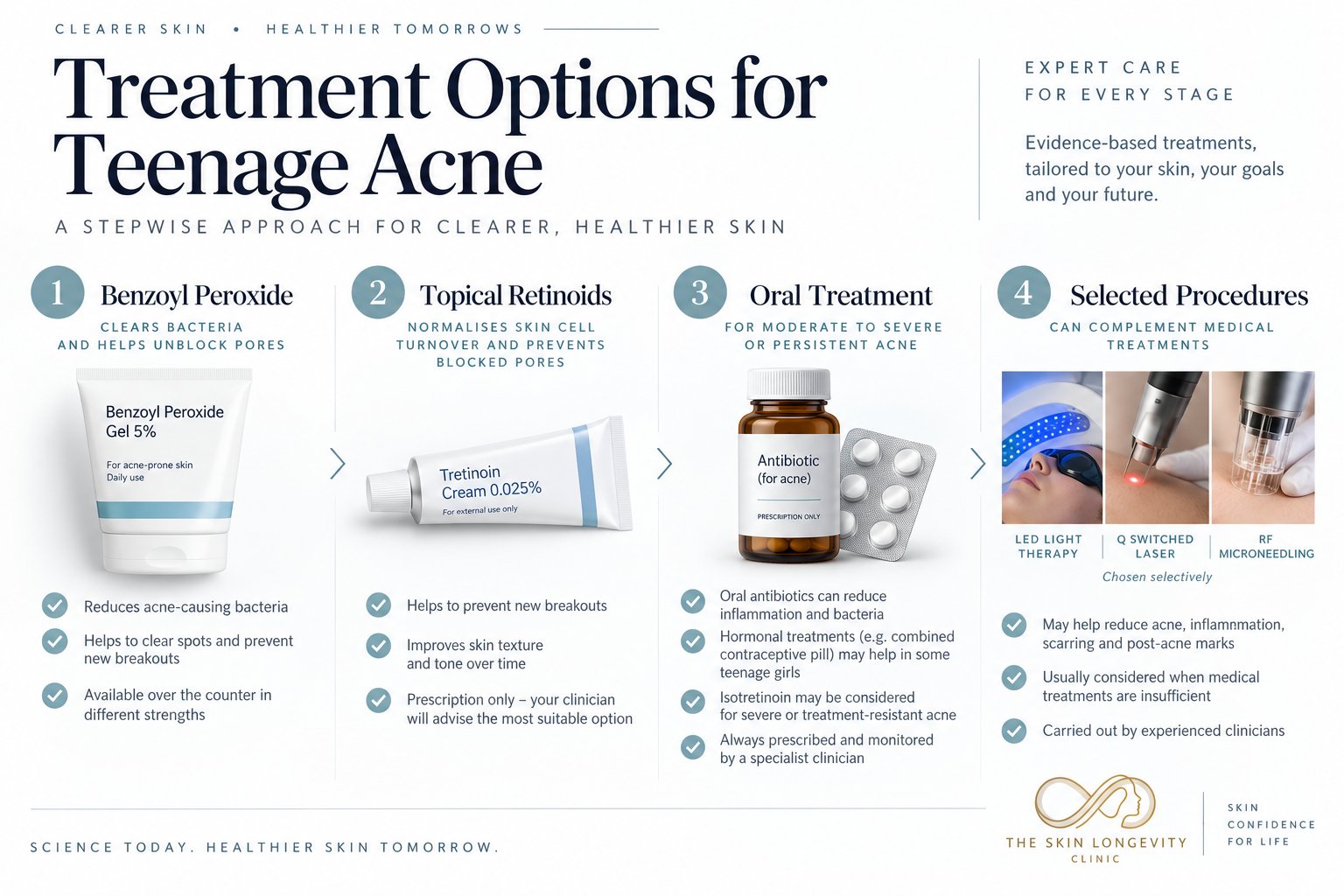
Treatment depends on the lesions present, their severity and previous response3. Pediatric acne recommendations include topical medicines, selected oral treatments and attention to the teenager’s ability to follow the plan3.
Benzoyl peroxide
Benzoyl peroxide is an established acne treatment that reduces acne associated bacteria2. It is also used alongside antibiotics to help limit antibiotic resistance2.
Dryness and irritation can occur, and the product may bleach towels or clothing1. The formulation and application schedule should therefore be chosen with tolerance in mind1.
Topical retinoids
Topical retinoids, including adapalene and tretinoin, help reduce follicular blockage and inflammation2. They are used for acne in suitable adolescents, with the particular preparation chosen according to age, skin condition and prescribing guidance3.
A retinoid used to treat acne has a different purpose from choosing cosmetic retinol for anti ageing. The decision should follow the medical indication rather than the assumption that every teenager should use retinol, or that every retinoid is unsuitable for young skin3.
Other topical treatments
Azelaic acid can be considered for acne, including when brown marks remain after inflammation4. A prescribed topical antibiotic may also be used for inflammatory lesions, usually with benzoyl peroxide rather than as prolonged treatment on its own2.
Follow the instructions about how much to apply and which areas to treat. Ask for a demonstration when the directions are unclear, particularly when more than one preparation has been prescribed.
What if acne treatment makes the skin dry or sore?
Dryness, redness and stinging can occur with topical acne medicines, particularly when treatment is introduced too quickly1,5. Depending on the preparation, a slower introduction, less frequent application or a different formulation may improve tolerance1,5.
A suitable moisturiser and gentle cleansing can help support the routine1. Dr Rachel Ho’s skin barrier guide explains why comfort matters when the skin becomes sensitive.
Increasing burning, a persistent rash or significant discomfort deserves an earlier review. Contact the prescriber rather than assuming that worsening irritation proves the treatment is working.
When are tablets considered for teenage acne?
Oral treatment may be appropriate when acne is more extensive, deeply inflamed, scarring or responding inadequately to topical treatment3,4. The discussion should explain the expected benefit, side effects and monitoring rather than treat tablets as a sign that earlier care has failed.
Oral antibiotics
An oral antibiotic such as doxycycline may be considered for suitable patients with inflammatory acne2. Antibiotics are used for a limited course alongside appropriate topical treatment, with a review point and a plan for ongoing control2,5.
Age, medical history and other medicines affect selection3. The teenager and parent should understand what to continue when the antibiotic course ends, rather than assume that antibiotics are a permanent routine5.
Hormonal treatment
Selected combined oral contraceptives or other hormonal approaches may be considered for suitable adolescents after an individual assessment3. Relevant factors include menstrual history, other symptoms, medical contraindications and treatment preferences3.
Hormonal testing is guided by the clinical findings rather than ordered automatically for every teenager with acne1. Mention significant menstrual concerns or other changes during the consultation so their relevance can be assessed.
Isotretinoin
Isotretinoin may be considered for severe, scarring or persistent acne that has responded inadequately to other treatment2,4. It requires a prescribing and monitoring plan, including discussion of dryness, relevant blood tests and psychological wellbeing1.
Pregnancy prevention is essential because isotretinoin must not be used during pregnancy1. These precautions should be explained directly and sensitively to the patient, with opportunities to ask questions.
How long does teenage acne treatment take to work?
Improvement commonly takes six to eight weeks to become noticeable, with an initial treatment review often arranged around 12 weeks5. The review considers new lesions, tolerability and how consistently the treatment has been used, rather than judging progress from one remaining spot5.
Contact the clinician sooner when acne is worsening, scars are appearing or treatment is difficult to tolerate. A planned review date is a checkpoint, rather than an instruction to continue through troublesome symptoms.
Acne can persist or recur, and maintenance treatment may be appropriate after improvement1,5. The plan should explain which parts of the routine continue and when they should be reassessed.
Can exams and stress worsen teenage acne?
A Singapore study published in 2007 followed 94 secondary school students with a mean age of 14.9 years8. Researchers compared stress, acne severity and sebum measurements before examinations and during a lower stress holiday period8.
Higher stress scores were modestly associated with more severe inflammatory acne, while sebum measurements did not differ significantly between the two periods8. This was an observational study, so it cannot establish that examinations caused each flare8.
The practical response is to make treatment easier to maintain during busy periods. Agree on a manageable routine before examinations, and arrange support when stress or skin concerns are becoming difficult to cope with.
How should teenagers manage acne around school and sports?
Heat, pressure, occlusion and repeated friction from clothing or equipment can contribute to acne like eruptions in athletes7. Protective equipment should remain in use, with attention to fit, cleanliness and the areas where it repeatedly rubs7.
Change out of damp sportswear when practical and cleanse gently after activity7. For a long school day, packing a clean shirt and planning when to shower may be more useful than repeatedly washing the face between lessons.
Back and chest breakouts are worth mentioning even when facial acne is the main concern. Our back and body acne guide explains the additional challenges of treating these larger, harder to reach areas.
Does diet cause teenage acne?
A systematic review found an association between higher dietary glycaemic load and acne, while findings about dairy intake were mixed9. The effects appeared to vary between populations, and further research is needed to clarify individual responses9.
A balanced diet is a sensible starting point. Discuss a consistent suspected food relationship with a clinician or dietitian before removing entire food groups, especially while a teenager is growing.
Acne treatment should also continue to address the skin itself. Dietary research does not establish that one restrictive eating plan will clear every teenager’s acne9.
Do teenagers need facials, lasers, chemical peels, ablation of sebaceous glands or LED treatment?
Procedures should have a defined purpose rather than become an automatic part of adolescent acne care. The 2024 American Academy of Dermatology guideline found insufficient evidence to make recommendations for chemical peels and laser or light based devices2.
Q switched laser for acne and brown acne marks
Q switched Nd:YAG laser may be considered for selected acne concerns and persistent brown marks left after breakouts14,15. It delivers short pulses of light, with the treatment approach chosen according to whether the concern is active acne or residual pigmentation14,15.
A 2026 clinical study in adults reported improvement in facial acne when Q switched laser treatment was used alongside oral antibiotic treatment14. Separately, a study involving 78 patients reported improvement in brown pigmentation remaining after acne following Q switched Nd:YAG laser treatment15.
For teenagers, the discussion begins with the acne pattern, skin tone, previous treatment and the particular concern that needs attention. Active breakouts and lingering brown marks may appear together, but the treatment plan should distinguish their different goals.
Our Q switched laser treatment guide explains the technology and treatment process. The acne marks and scars guide provides further information about the difference between residual colour and changes in skin texture.
RF microneedling for selective sebaceous gland ablation
Selective sebaceous gland treatment uses an insulated microneedle to deliver radiofrequency energy to individual oil glands associated with acne16. This creates a controlled thermal effect at the targeted depth, an approach described in medical research as selective sebaceous gland electrothermolysis16.
A randomised clinical study involving 63 participants who completed treatment found greater improvement in inflammatory acne at 12 weeks with this technique than with microneedling and extraction alone16. Participants in the radiofrequency group received three treatments at four week intervals16.
The doctor may consider this approach when particular inflamed follicles repeatedly become troublesome. The aim is targeted treatment of selected glands within a broader acne plan, with the teenager’s age, acne severity and previous response considered before recommending a procedure.
Read our guide to RF microneedling for selective sebaceous gland treatment for more about the technique. It explains how treating individual acne follicles differs from broader fractional RF microneedling used for scar texture.
LED light
A 2025 systematic review of six trials involving 216 participants found improvements with selected home or portable blue and red LED devices compared with controls10. Participants ranged from 12 to 50 years, so the findings concern a mixed age group rather than teenagers alone10.
Results depend on the device and treatment protocol, and evidence for one approach cannot establish the performance of every clinic treatment10. Any proposed LED course should explain its expected contribution alongside the existing acne plan.
Chemical peels
A systematic review of 12 randomised trials found that chemical peels may improve mild to moderate acne, although study quality and treatment methods varied11. The evidence was insufficient to establish one peeling approach as consistently superior11.
Our chemical peel guide explains suitability and recovery. For teenagers, the discussion should remain focused on the acne present and skin tolerance rather than achieving more visible peeling.
Facials and extractions
A facial or extraction may address selected surface blockages, but ongoing acne management also needs to consider inflammation and future lesion formation3. Repeated squeezing at home can add trauma, so persistent comedones are better discussed within the treatment plan1.
A procedure should also be understandable to the teenager receiving it. Ask what it is intended to achieve, what discomfort or recovery is expected and whether a simpler approach could meet the same need.
Will teenage acne leave marks or scars?
Flat red or brown marks differ from scars that change the skin’s texture4. Indented or raised scars need a different assessment from residual colour, even when they appear in the same area4.
Controlling active inflammation and avoiding picking are important parts of limiting further damage1. Developing scars are a reason to review treatment promptly rather than wait for adolescence to end2.
Our guide to acne marks and acne scars explains these differences. The immediate plan should address new breakouts while the residual changes are assessed separately.
How can parents help without adding pressure?
Start by asking how the teenager feels about their skin and what help they would find useful. Practical support might mean arranging an appointment, helping obtain treatment or making the routine easier to fit around school.
A qualitative study published in 2026 found that parents influenced access to acne advice and treatment, while young people often selected products using online information12. The interviews were conducted in England, so they describe those participants’ experiences rather than every family’s situation12.
Supportive, nonjudgemental communication and involving adolescents in decisions are important principles of treatment adherence13. Agree on reminders together rather than turning every conversation into a check on whether cream has been applied.
Keep the focus on comfort, inflammation and the teenager’s own priorities. Their concerns deserve attention even when a parent feels that the visible acne looks mild.
When should a teenager see a doctor for acne?
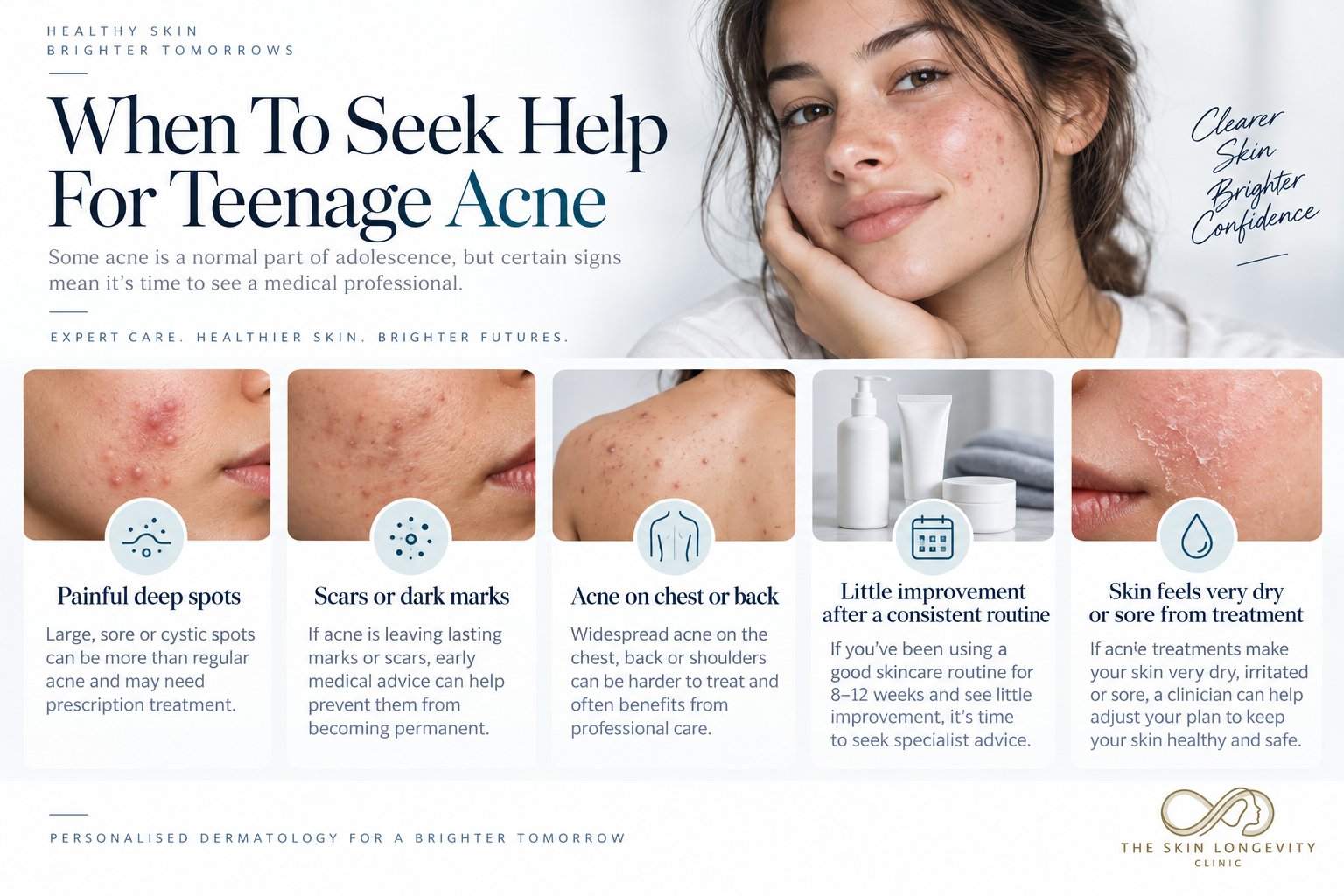
Arrange an assessment for painful nodules, developing scars, extensive acne or an inadequate response to a consistently used routine2,4. The effect on confidence, school participation and social activities also matters when deciding whether additional care is needed4.
Persistent low mood or withdrawal should be discussed alongside the skin concerns. Adolescents benefit from having their own experience heard, rather than allowing lesion counts alone to determine how seriously the problem is taken3,13.
Teenage acne assessment in Singapore
An acne consultation should review the teenager’s concerns, affected areas, previous products, treatment response and practical difficulties with the routine3. Bring the products or photographs of their labels, together with details of medicines and supplements.
The Skin Longevity Clinic’s acne assessment and treatment guide explains the broader consultation process. When arranging an appointment, share the teenager’s age and ask about parent attendance and the information to bring.
A manageable approach to teenage acne
The aim is a treatment plan that the teenager understands and can follow comfortably. It should explain what each product does, how to use it and when progress will be reviewed.
Parents can support that process without making clear skin a condition of confidence or participation. Treat the acne, take the teenager’s concerns seriously and keep the routine proportionate to what their skin needs.
References
-
Oon HH, Wong SN, Aw DCW, Cheong WK, Goh CL, Tan HH. Acne Management Guidelines by the Dermatological Society of Singapore. Journal of Clinical and Aesthetic Dermatology. 2019;12(7):34 to 50. PubMed Central (PMC)
-
Reynolds RV, Yeung H, Cheng CE, et al. Guidelines of care for the management of acne vulgaris. Journal of the American Academy of Dermatology. 2024;90(5):1006.e1 to 1006.e30. doi:10.1016/j.jaad.2023.12.017. The Academy’s accompanying summary details its treatment recommendations and procedural evidence limitations. JAAD
-
Eichenfield LF, Krakowski AC, Piggott C, et al. Evidence Based Recommendations for the Diagnosis and Treatment of Pediatric Acne. Pediatrics. 2013;131 Supplement 3:S163 to S186. doi:10.1542/peds.2013-0490B. PubMed
-
Eichenfield DZ, Sprague J, Eichenfield LF. Management of Acne Vulgaris: A Review. JAMA. 2021;326(20):2055 to 2067. doi:10.1001/jama.2021.17633. PubMed
-
Santer M, Burden Teh E, Ravenscroft J. Managing acne vulgaris: an update. Drug and Therapeutics Bulletin. 2024;62(1):6 to 10. doi:10.1136/dtb.2023.000051. PubMed Central (PMC)
-
Hales M, Rigali S, Paller AS, Liszewski W, Lagu T. Pediatric Skin Care Regimens on TikTok. Pediatrics. 2025;156(1):e2024070309. doi:10.1542/peds.2024-070309. PubMed
-
Emer J, Sivek R, Marciniak B. Sports Dermatology: Part 1 of 2. Traumatic or Mechanical Injuries, Inflammatory Conditions, and Exacerbations of Preexisting Conditions. Journal of Clinical and Aesthetic Dermatology. 2015;8(4):31 to 43. PubMed Central (PMC)
-
Yosipovitch G, Tang M, Dawn AG, et al. Study of Psychological Stress, Sebum Production and Acne Vulgaris in Adolescents. Acta Dermato Venereologica. 2007;87(2):135 to 139. doi:10.2340/00015555-0231. MJS Publishing
-
Meixiong J, Ricco C, Vasavda C, Ho BK. Diet and acne: A systematic review. JAAD International. 2022;7:95 to 112. doi:10.1016/j.jdin.2022.02.012. PubMed
-
Ershadi S, Barbieri JS. At Home LED Devices for the Treatment of Acne Vulgaris: A Systematic Review and Meta Analysis. JAMA Dermatology. 2025;161(5):552 to 555. doi:10.1001/jamadermatol.2025.0019. PubMed Central (PMC)
-
Chen X, Wang S, Yang M, Li L. Chemical peels for acne vulgaris: a systematic review of randomised controlled trials. BMJ Open. 2018;8(4):e019607. doi:10.1136/bmjopen-2017-019607. PubMed
-
Easton S, Essery R, Steele M, et al. Views and experiences of young people and their parents of managing acne: qualitative interview study. British Journal of Dermatology. Published online 18 July 2026. doi:10.1093/bjd/ljag284. OUP Academic
-
Taddeo D, Egedy M, Frappier JY. Adherence to treatment in adolescents. Paediatrics & Child Health. 2008;13(1):19 to 24.
-
Maghsoodloo D, Jafarzadeh A, Ghassemi M, Sadeghzadeh Bazargan A, Goodarzi A. Comparison of the Efficacy of Q Switched Versus Long Pulsed Fractional 1064 nm Nd:YAG Laser in the Treatment of Active Facial Acne: A Pilot, Double Blind, Randomized, Controlled, Split Face Study. Health Science Reports. 2026;9(4):e72354. doi:10.1002/hsr2.72354. Wiley Online Library
-
Zawar VP, Agarwal M, Vasudevan B. Treatment of Postinflammatory Pigmentation Due to Acne with Q Switched Neodymium Doped Yttrium Aluminum Garnet in 78 Indian Cases. Journal of Cutaneous and Aesthetic Surgery. 2015;8(4):222 to 226. doi:10.4103/0974-2077.172196. JCAS
-
Ahn GR, Kim JM, Park SJ, Li K, Kim BJ. Selective Sebaceous Gland Electrothermolysis Using a Single Microneedle Radiofrequency Device for Acne Patients: A Prospective Randomized Controlled Study. Lasers in Surgery and Medicine. 2020;52(5):396 to 401. doi:10.1002/lsm.23152. PubMed
-
US Food and Drug Administration. Potential Risks with Certain Uses of Radiofrequency Microneedling: FDA Safety Communication. 15 October 2025. Official safety guidance. fda.gov