


22 Sep Acne During Pregnancy, IVF and Egg Freezing: Causes and Treatment in Singapore
By Dr Rachel Ho | Aesthetic Doctor, Founder, The Skin Longevity Clinic, Singapore
Preparing for pregnancy brings plenty to think about, and an unexpected breakout can feel like one more decision to manage. You may be wondering whether to continue your usual skincare, change an acne medicine or seek help for inflamed acne. A clear treatment plan can make these choices easier, while keeping your fertility and maternity care prioritised.
Acne during pregnancy can be treated with appropriately selected skincare, prescription medicines and, in some circumstances, targeted clinic treatments1,2. The starting point is your stage of care, the type of acne and what you are already using1,2.
Our acne assessment and treatment guide explains the clinic’s wider approach to managing breakouts. This article focuses on the decisions that arise during pregnancy, IVF, egg freezing and breastfeeding.
Why can acne change during pregnancy?
Hormonal and physiological changes during pregnancy can influence oil production and inflammation, contributing to new breakouts or changes in existing acne1,6. The response varies, so treatment should follow what is happening to your skin rather than an assumed pattern for every pregnancy1,6.
Acne develops through a combination of follicular blockage, sebum production, bacterial activity and inflammation8. Understanding these contributing factors helps explain why treatment may involve more than changing a cleanser8.
Can IVF and egg freezing cause acne?
Acneiform eruptions, meaning breakouts resembling acne, have been documented during IVF3. In a prospective study of 200 patients undergoing IVF, 3% developed acneiform eruptions, although this single study cannot predict the likelihood for every fertility protocol3.
Ovarian stimulation changes steroid hormone production, providing a plausible context for skin changes during treatment4. Establishing why an individual breakout appeared still requires a review of the medicines, timing and skin findings, rather than attributing it automatically to one hormone.
Does progesterone support cause acne?
A breakout that begins after progesterone support is worth mentioning to your treating team. The IVF study documented skin changes but did not establish progesterone as the cause of its acneiform eruptions3.
Keep fertility medicines on the schedule prescribed by your fertility specialist, and contact that team before making changes. The acne discussion should focus on finding suitable care alongside the fertility plan.
Is acne during egg freezing managed differently from pregnancy acne?
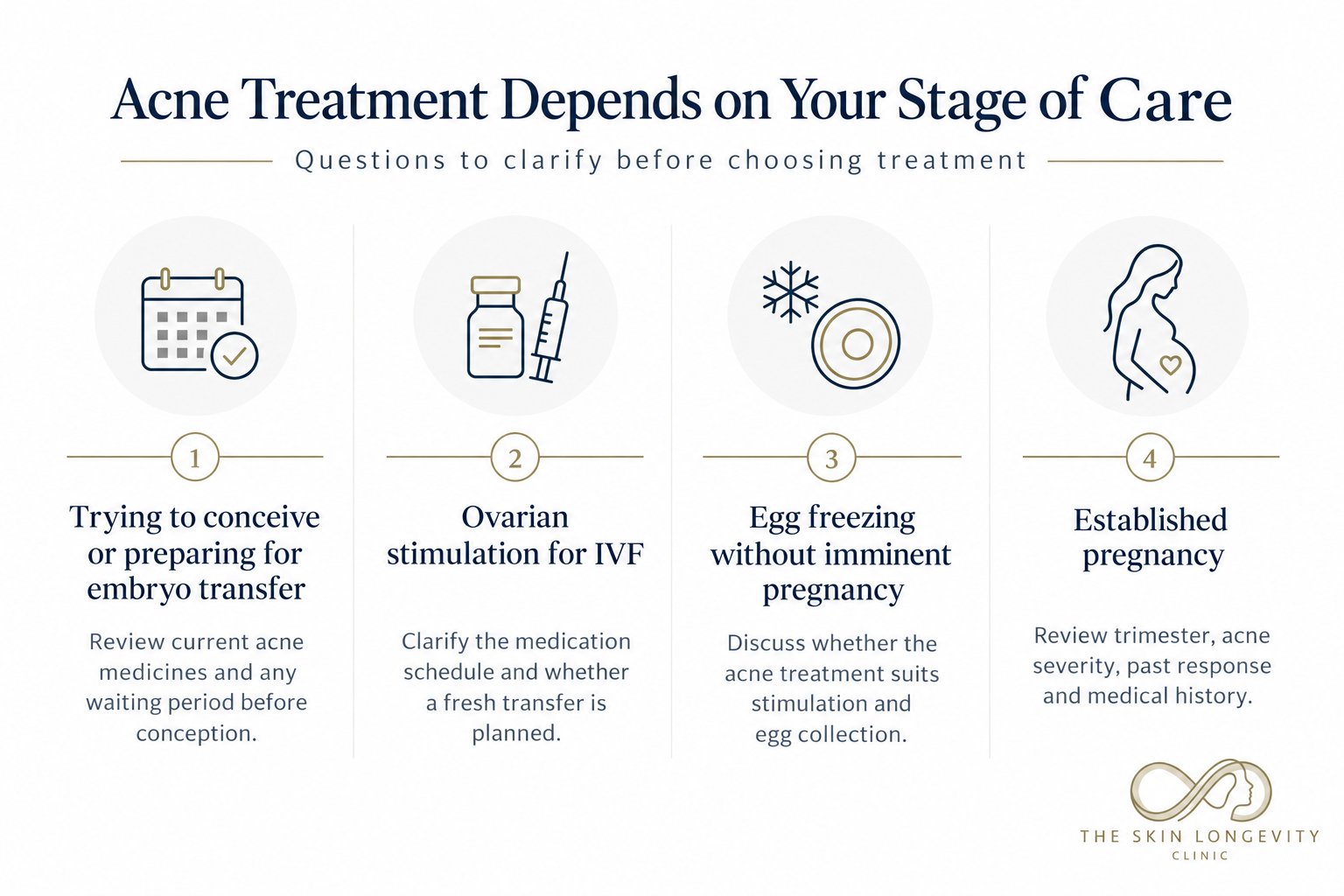
Egg freezing without an imminent pregnancy and IVF with a planned embryo transfer require different treatment discussions. Egg freezing stores unfertilised eggs, whereas embryo transfer introduces an embryo with the intention of establishing pregnancy5.
For a patient who is not pregnant and is freezing eggs without an upcoming transfer, some treatment decisions can be assessed differently. The stimulation medicines, collection schedule and possibility of pregnancy still need to be clarified with the fertility team.
| Stage of care | What to establish before choosing acne treatment |
|---|---|
| Trying to conceive or preparing for embryo transfer | Which medicines need changing and whether a waiting period is required before conception6. |
| Ovarian stimulation for IVF | Whether a fresh transfer is planned or embryos will be stored, alongside the current medication schedule. |
| Egg freezing without an imminent pregnancy | Whether the proposed acne treatment is appropriate during stimulation and egg collection. |
| Established pregnancy | The trimester, acne severity, previous response and relevant medical history1,2. |
Review your acne routine before embryo transfer rather than waiting for a positive pregnancy test6. Bring your fertility schedule and the names of prescription medicines, cosmetic retinoids and supplements to the consultation.
Can spironolactone be continued during egg freezing?
A retrospective study included 402 patients undergoing ovarian stimulation, of whom 83 continued spironolactone7. The researchers found no statistically significant differences in the numbers of eggs retrieved or mature eggs frozen compared with the relevant comparison groups7.
These findings are reassuring about the outcomes measured, while leaving questions about embryo development and pregnancy safety unanswered7. Continuing spironolactone during egg freezing should therefore be agreed with the fertility specialist and prescriber; it should be stopped before attempting pregnancy and avoided during pregnancy6,11.
What can pregnancy or fertility treatment acne look like?
Breakouts may include blackheads, whiteheads, inflamed bumps, pustules or deeper nodules, affecting the face, chest or back8. Their depth, extent and associated scarring help guide treatment, alongside how much the acne is affecting your comfort and confidence8.
Mention increased facial hair, scalp hair thinning or irregular periods that preceded fertility treatment, as these findings may make assessment for androgen excess relevant9. Your history helps distinguish an established hormonal pattern from a new skin change during treatment.
Which acne treatments can be used during pregnancy?
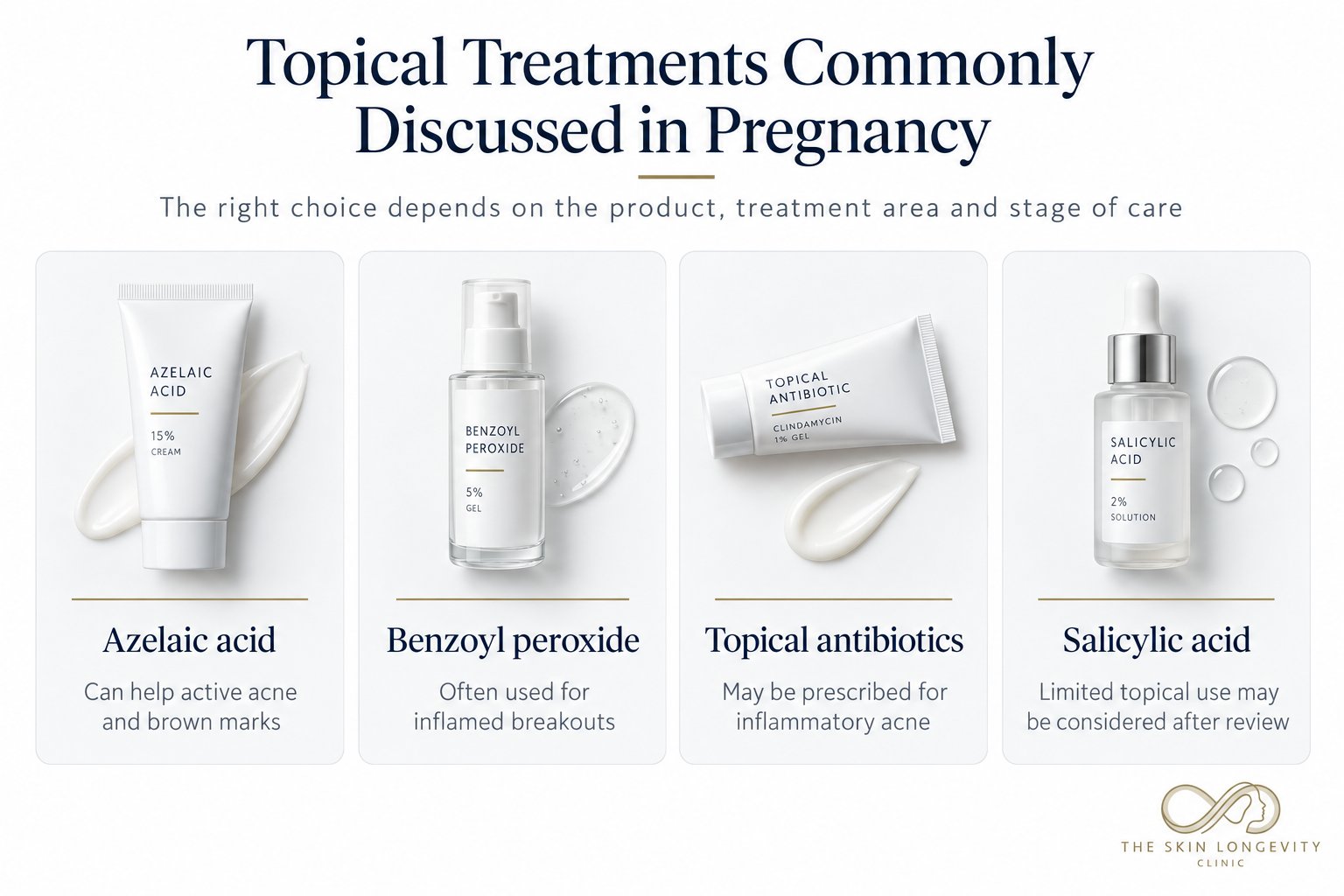
Several topical treatments can be considered during pregnancy, including azelaic acid, benzoyl peroxide and selected prescription antibiotics1,2. The complete formulation, treatment area and application schedule matter as much as the ingredient name1,2.
Pregnancy recommendations draw on clinical experience, observational evidence and knowledge of absorption, because direct treatment trials in pregnant patients are limited11. A product review helps translate that evidence into a manageable routine.
| Treatment | How it can help | Pregnancy consideration |
|---|---|---|
| Azelaic acid | Treats acne and can improve the brown marks left afterwards6. | Commonly considered an appropriate topical option1,2. |
| Benzoyl peroxide | Reduces acne associated bacteria and helps control inflammatory lesions12. | Can be considered in limited amounts after reviewing the product11. |
| Topical clindamycin or erythromycin | Prescribed for inflammatory acne10. | Usually combined with benzoyl peroxide to reduce the development of antibiotic resistance10,12. |
| Salicylic acid | Helps loosen blocked pores2. | Limited topical use may be considered; extensive application and strong professional peels require separate assessment6,11. |
Azelaic acid for acne and brown marks
Azelaic acid is a useful option when active breakouts occur alongside residual pigmentation6. It can address both concerns within the same treatment plan, provided the formulation and frequency suit your skin6.
Dr Rachel Ho’s azelaic acid guide explains the ingredient and differences between available formulations. Bring your current product to the consultation so its concentration and other ingredients can be reviewed.
Benzoyl peroxide and topical antibiotics
Benzoyl peroxide can be helpful for inflamed acne and is often used alongside a prescribed topical antibiotic10. The combination supports acne control while reducing the risk of antibiotic resistance10,12.
Check the full ingredient list of combination gels, because some also contain a retinoid that changes the pregnancy assessment11. Agree on an application schedule that your skin tolerates rather than choosing a stronger product simply because the acne is frustrating.
Can salicylic acid be used during pregnancy?
Limited use of topical salicylic acid can be considered after reviewing the product and treatment area11. A facial spot treatment involves a different exposure from prolonged application over large areas or beneath an occlusive covering6.
Professional salicylic acid peels use a different concentration and application protocol from everyday skincare14. These stronger peels are generally avoided during pregnancy, while other approaches can be selected for the acne being treated14.
What if topical skincare is not enough for acne during pregnancy, IVF or egg freezing?
More extensive or painful acne can still be treated during pregnancy. Selected oral antibiotics, including cephalexin or certain macrolides, may be considered according to the trimester, medical history and response to topical care1,2.
The prescription should have a clear purpose and review point, with an appropriate supporting topical routine10,12. Bring any supplements to the appointment too, particularly before adding zinc to prenatal vitamins.
Which acne medicines need to change before pregnancy?
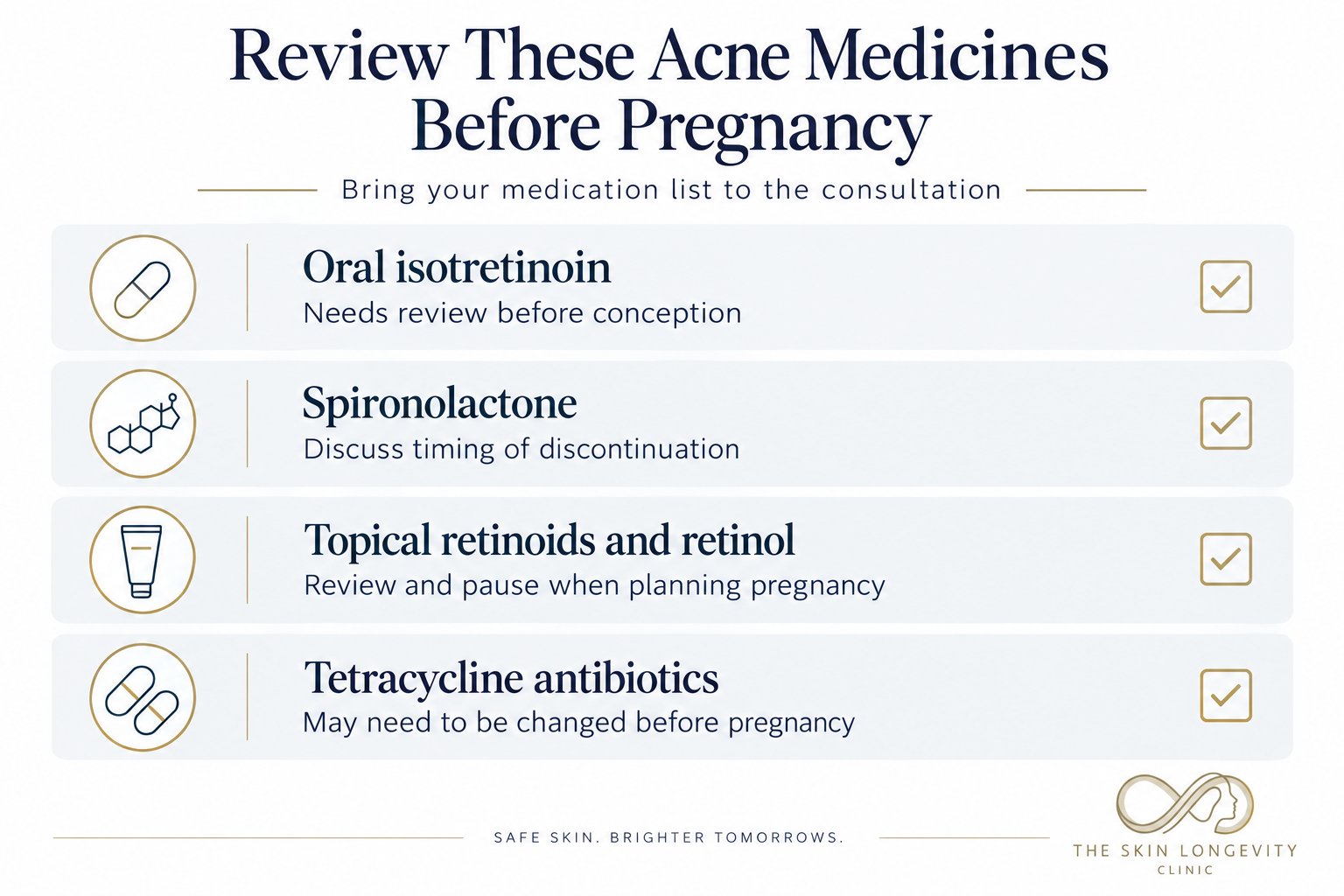
A medication review before conception creates time to choose an alternative and clarify any required waiting period6. The following medicines deserve specific attention rather than being continued simply because they previously controlled your acne11.
| Medicine | What to discuss |
|---|---|
| Oral isotretinoin | It is contraindicated during pregnancy. Wait at least one month after the final dose before attempting conception or embryo transfer, following the prescriber’s pregnancy prevention advice6. |
| Spironolactone | Arrange discontinuation before conception. A washout period of at least one month is recommended in the pregnancy acne review6. |
| Topical retinoids and cosmetic retinol | Review and pause these when planning pregnancy; topical retinoids are generally avoided during pregnancy6,11. |
| Doxycycline, minocycline and other tetracyclines | These are generally replaced for acne during pregnancy, with the timing of exposure relevant to assessment2,11. |
| Other oral antibiotics | Trimethoprim with sulfamethoxazole and fluoroquinolones are generally avoided for pregnancy acne; suitable alternatives require a prescribing review2. |
Confirm medication changes before the planned transfer or conception date. The fertility specialist and acne prescriber should work from the same treatment timeline6.
What should I do after an unplanned exposure?
Contact your prescriber and maternity team with the medicine name, route of administration, amount used and dates of exposure. These details allow the discussion to focus on what actually happened rather than assumptions about an ingredient category.
Stop oral isotretinoin immediately and seek prompt medical advice if pregnancy occurs while taking it11. An accidental topical exposure requires its own assessment and should be distinguished from taking an oral medicine11.
Can chemical peels, LED, injections or Q switched laser help?
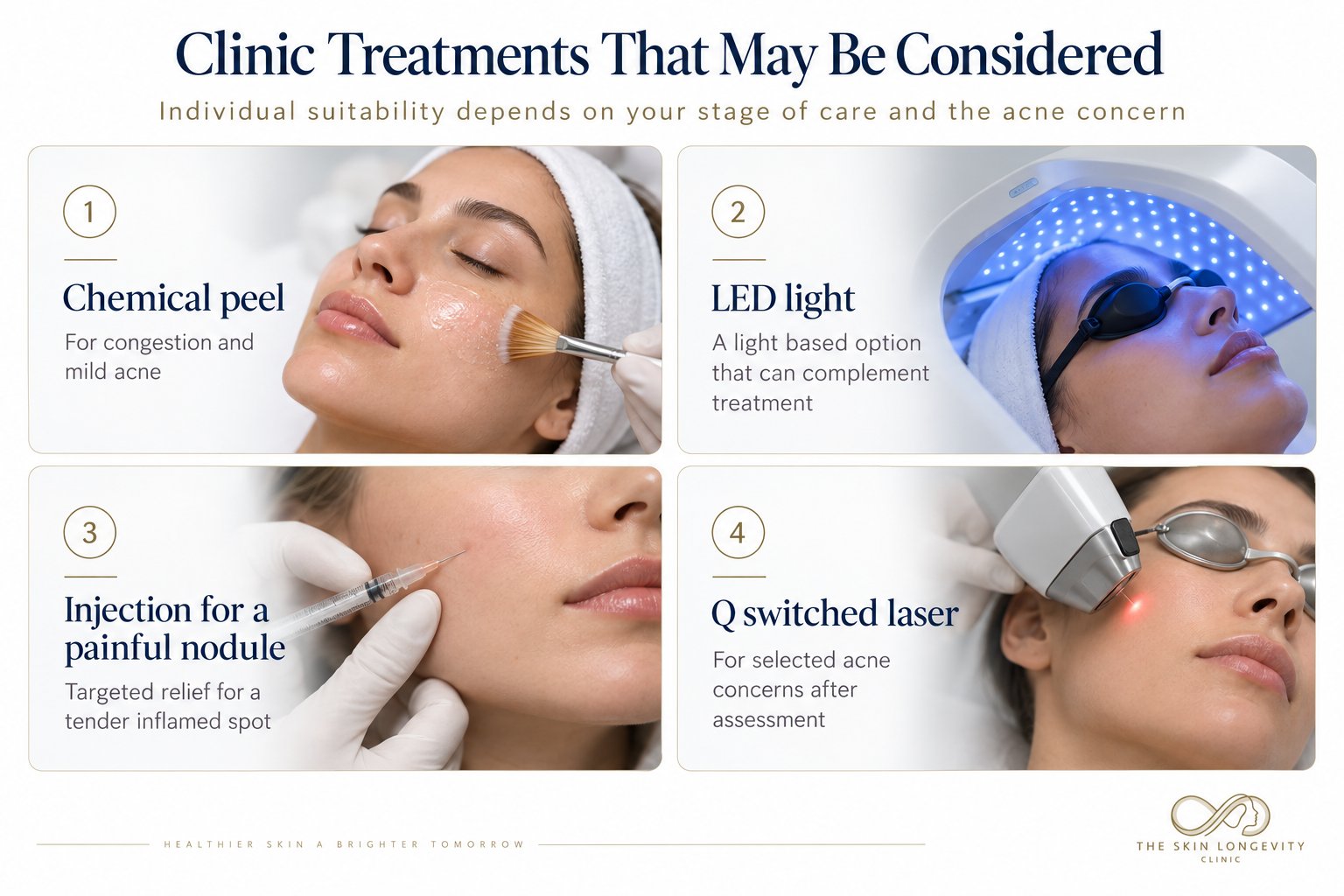
Clinic treatments can be useful when a particular concern needs additional attention. The discussion should establish what the procedure is intended to improve, whether it suits your current stage and how it fits alongside the rest of your acne care.
Superficial chemical peels for congestion and mild acne
A carefully selected superficial chemical peel can help improve blocked pores and mild acne13. A systematic review of randomised trials found benefits from several peeling agents, supporting their role as an additional treatment for suitable patients13.
For pregnancy, superficial glycolic or lactic acid peels on limited areas may be considered cautiously after assessment14. Our chemical peel treatment guide explains preparation, treatment and recovery. Discussing the proposed acid and timing helps you understand whether a peel belongs in the current plan or a later stage.
Blue and red LED light treatment for inflammatory acne
Blue and red LED light treatments offer a light energy based approach that can complement acne care without adding another topical medicine2. A systematic review of home LED devices found improvements in acne lesions, although those findings apply to the devices and protocols studied rather than every clinic or home device15.
Pregnancy reviews describe LED as an option for individual consideration, and the 2026 procedural review classifies photobiomodulation as acceptable with caution14. Read our LED light treatment for acne guide before your appointment. Ask how the response will be reviewed and what improvement would justify continuing treatment.
Steroid injections for a painful acne nodule
For acne cysts and nodule, a small intralesional corticosteroid injection can provide more rapid relief of inflammation and pain12. It treats the individual lesion directly and can be useful when cysts and nodules are causing disproportionate discomfort12.
Focused intralesional doses are expected to produce minimal systemic absorption, and this treatment may be considered during pregnancy after an individual medical assessment6. Our cystic acne guide explains how cysts and nodules are assessed. Your doctor can discuss whether an injection is appropriate, its local side effects and the surrounding treatment plan.
Q switched laser for selected acne concerns
Q switched 1064 nm Nd:YAG laser has been studied as an additional treatment for active acne16. In a small 2026 randomised study, acne severity improved with Q switched treatment alongside oral azithromycin, supporting further consideration of this combined approach in suitable patients16. Our Q switched Nd:YAG laser guide provides more information about laser treatments during pregnancy.
An acne skincare routine during pregnancy or fertility treatment
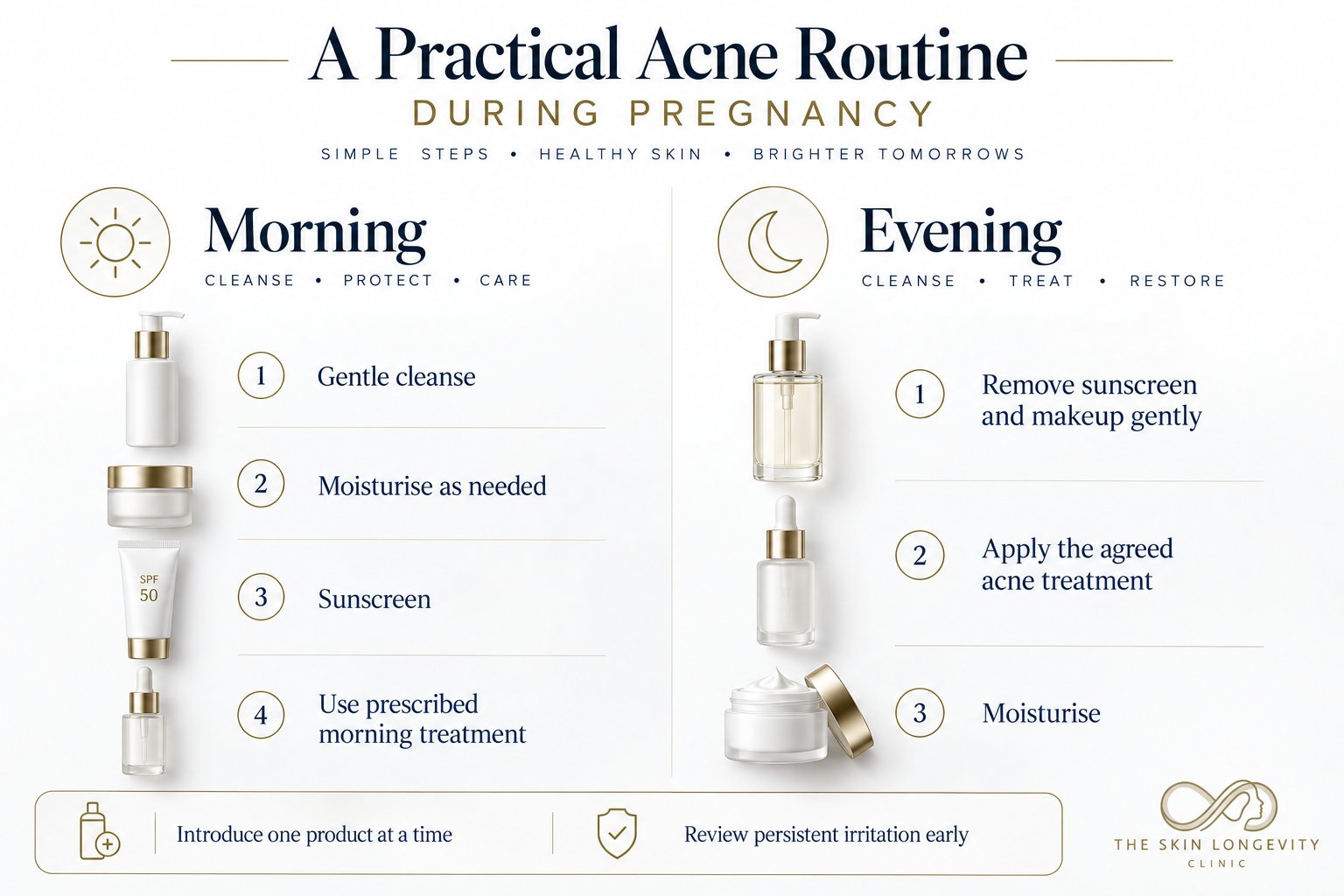
A manageable routine makes it easier to follow the agreed treatment and recognise which products suit your skin. Start with gentle cleansing, moisturiser, broad spectrum sunscreen and the acne treatment selected for your circumstances.
| Time | Suggested approach |
|---|---|
| Morning | Cleanse gently, moisturise as needed and apply sunscreen. Use prescribed morning treatment as directed. |
| Evening | Remove sunscreen and makeup gently, then apply the agreed acne treatment and moisturiser. |
| When introducing a product | Make one change at a time and check its full ingredient list. |
| When skin becomes uncomfortable | Review persistent stinging, redness or scaling before adding further exfoliation. |
Dr Rachel Ho’s pregnancy skincare guide covers broader questions about skincare and pigmentation. Use it alongside the acne plan agreed with your treating doctor.
Does acne treatment change during breastfeeding?
Breastfeeding requires a fresh medication review because potential exposure through milk and direct contact with treated skin differ from exposure during pregnancy6. Some options change after delivery, so your previous pregnancy plan should be reassessed rather than automatically continued or replaced6.
Tell your doctor that you are breastfeeding and mention any health concerns affecting your baby. Keep topical acne medicines away from the nipple and other areas the baby may touch or lick, and follow the instructions for each prescribed treatment6.
When should I see a doctor for acne during pregnancy or fertility treatments?
Arrange an assessment when acne is painful, extensive, persistent or beginning to leave scars, or when it is affecting your confidence and daily life8,12. A consultation can address both the immediate discomfort and the plan for reducing further breakouts.
A new widespread or itchy eruption during IVF also deserves review, because fertility treatment studies describe skin reactions other than acne3. Share these symptoms with your fertility or maternity team as well as the doctor assessing your skin.
Before the appointment, gather your fertility schedule, medication list, skincare products and details of previous acne treatment. Ask about the consultation fee and how any proposed medicines or procedures will be explained before proceeding.
A treatment plan that supports your skin and your fertility care
The aim is to make acne care one less uncertainty during a demanding time. Start by clarifying your stage of treatment, identifying the skin concern and agreeing on a practical plan with clear review points.
Read our acne treatment and assessment guide for the wider approach, or contact The Skin Longevity Clinic to arrange an appointment. Bring your fertility or pregnancy details so the discussion can focus on options appropriate to you.
In this series: acne care
- Acne treatment in Singapore: assessment and ongoing care
- Teenage acne
- Hormonal acne
- Adult acne
- Cystic acne
- Back and body acne
- Acne and a damaged skin barrier
- Retatrutide and acne breakouts
- Selective sebaceous gland ablation
- Can acne return after oil gland treatment?
- Chemical peels for acne
- Chemical peel aftercare
- LED light treatment
References
-
Rau A, Keri J, Murase JE. Management of Acne in Pregnancy. American Journal of Clinical Dermatology. 2024;25:465 to 471. doi:10.1007/s40257-024-00851-6
-
Kong YL, Tey HL. Treatment of Acne Vulgaris During Pregnancy and Lactation. Drugs. 2013;73:779 to 787. doi:10.1007/s40265-013-0060-0
-
Sood A, Sahu S, Karunakaran S, Joshi RK, Raman DK. Dermatological Manifestations in Patients Undergoing In Vitro Fertilisation: A Prospective Study. Journal of Cutaneous Medicine and Surgery. 2018;22(3):280 to 284. doi:10.1177/1203475417752370
-
Andersen CY, Ezcurra D. Human steroidogenesis: implications for controlled ovarian stimulation with exogenous gonadotropins. Reproductive Biology and Endocrinology. 2014;12:128. doi:10.1186/1477-7827-12-128
-
Human Fertilisation and Embryology Authority. Egg freezing. Patient information on egg collection and storage. Accessed September 2026.
-
Ly S, Kamal K, Manjaly P, Barbieri JS, Mostaghimi A. Treatment of Acne Vulgaris During Pregnancy and Lactation: A Narrative Review. Dermatology and Therapy. 2023;13:115 to 130. doi:10.1007/s13555-022-00854-3
-
Ghofranian A, Estevez SL, Dubois B, et al. Spironolactone use and oocyte maturation in patients undergoing controlled ovarian hyperstimulation. Journal of Assisted Reproduction and Genetics. 2024;41:1991 to 1996. doi:10.1007/s10815-024-03214-6
-
Eichenfield DZ, Sprague J, Eichenfield LF. Management of Acne Vulgaris: A Review. JAMA. 2021;326(20):2055 to 2067. doi:10.1001/jama.2021.17633
-
Cussen L, McDonnell T, Bennett G, et al. Approach to androgen excess in women: Clinical and biochemical insights. Clinical Endocrinology. 2022;97(2):174 to 186. doi:10.1111/cen.14710
-
Chien AL, Qi J, Rainer B, Sachs DL, Helfrich YR. Treatment of Acne in Pregnancy. Journal of the American Board of Family Medicine. 2016;29(2):254 to 262. doi:10.3122/jabfm.2016.02.150165
-
American Academy of Dermatology. Is any acne treatment safe to use during pregnancy? Patient guidance. Accessed September 2026.
-
Reynolds RV, Yeung H, Cheng CE, et al. Guidelines of care for the management of acne vulgaris. Journal of the American Academy of Dermatology. 2024;90(5):1006.e1 to 1006.e30. doi:10.1016/j.jaad.2023.12.017 The Academy’s official summary describes the recommendations for antibiotic stewardship and targeted corticosteroid injections.
-
Chen X, Wang S, Yang M, Li L. Chemical peels for acne vulgaris: a systematic review of randomised controlled trials. BMJ Open. 2018;8:e019607. doi:10.1136/bmjopen-2017-019607
-
Kovacs T, Nadir U, Goldenberg M, et al. Cosmetic Dermatology in Pregnancy and Lactation: A Risk Benefit Framework for Clinical Practice. International Journal of Dermatology. Published online 24 August 2026. doi:10.1111/ijd.70620
-
Ershadi S, Barbieri JS. At Home LED Devices for the Treatment of Acne Vulgaris: A Systematic Review and Meta Analysis. JAMA Dermatology. 2025;161(5):552 to 555. doi:10.1001/jamadermatol.2025.0019
-
Maghsoodloo D, Jafarzadeh A, Ghassemi M, Sadeghzadeh Bazargan A, Goodarzi A. Comparison of the Efficacy of Q Switched Versus Long Pulsed Fractional 1064 nm Nd:YAG Laser in the Treatment of Active Facial Acne: A Pilot, Double Blind, Randomized, Controlled, Split Face Study. Health Science Reports. 2026;9(4):e72354. doi:10.1002/hsr2.72354